- Sensory-neutrality is about baseline regulation: The goal is to remove erratic stimuli (flickering lights, high-contrast patterns, background hums) that drain your cognitive energy, allowing your nervous system to reset.
- Prioritize acoustic and light control first: Before buying aesthetic furniture, invest in heavy-duty blackout curtains and high-quality white noise machines, as these offer the highest return on investment for sleep quality.
- The “Visual Load” rule: For neurodivergent adults, clutter is not just messy; it is a source of constant visual input. Use “hidden storage” systems to keep surfaces clear and your brain off “high alert” mode.
You don’t need a formal diagnosis to realize that your bedroom environment is actively working against your ability to rest. If you are in your 30s or 40s, balancing the relentless demands of parenting, professional responsibilities, and the domestic mental load, your brain is likely already at its limit for processing sensory input. By the time you reach your bedroom at night, the last thing you need is more “noise”—whether that is literal sound, chaotic visual clutter, or poor lighting.
A sensory-neutral bedroom is not about creating a sterile hospital room or a bland, personality-free zone. It is about creating a “low-arousal” environment. For neurodivergent individuals—or anyone who feels perpetually overstimulated—this room serves as a sensory buffer. It is a space designed to minimize input so that your nervous system can finally drop its guard.
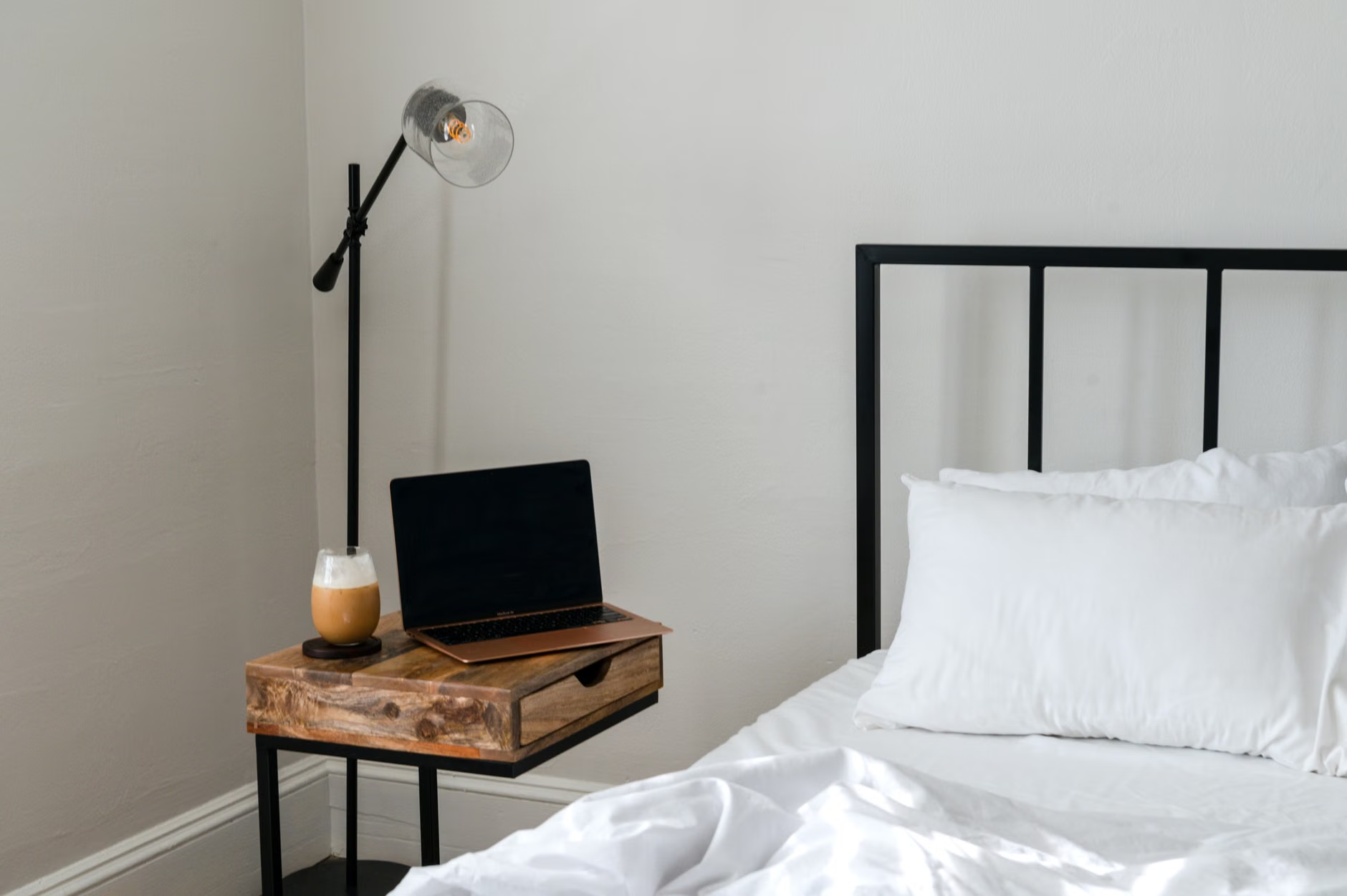
Why “Sensory-Neutral” is the Ultimate Productivity Tool for Parents
Most of us treat the bedroom as an afterthought. We focus on the living room or the kitchen because those are “public” spaces. However, if you are neurodivergent, your bedroom is your primary recovery station. When your environment is visually busy, your brain continues to process every item on your dresser, every uneven pile of laundry, and every shadow cast by poor lighting. This is what psychologists call “attentional demand.”
When you are already managing a household, your sensory threshold—the amount of input you can handle before becoming overwhelmed—is likely very low. A sensory-neutral bedroom keeps this threshold in mind. By reducing the number of competing stimuli, you are effectively lowering the “background noise” in your brain. This allows for faster transition into sleep and, perhaps more importantly, a higher quality of restorative rest that makes the next day’s parenting challenges more manageable.
Think of it as a “sensory reset.” If your day consists of loud toys, digital pings, and constant decision-making, your bedroom should be the polar opposite. It is not about deprivation; it is about intentionality. Every object in your room should serve a purpose or provide a calming, rather than stimulating, effect.
Establishing the Acoustic Foundation
Sound is often the most overlooked variable in sleep hygiene. For many adults, the “silence” of a room is actually filled with micro-sounds: the hum of a refrigerator in the next room, the distant traffic, or the settling of the house. These are the sounds that keep the nervous system in a state of hyper-vigilance.
To create a sensory-neutral acoustic environment, you need to move beyond simple silence and into “sound masking.” This doesn’t mean playing ambient music, which can actually be stimulating for some. It means using a constant, non-rhythmic sound source.
The Case for High-Quality White Noise
There is a difference between a cheap speaker playing a loop of rain sounds and a true electromechanical white noise machine. The former has a detectable pattern. Your brain, even while sleeping, is excellent at pattern recognition. If the “rain” loop resets every 30 minutes, your brain will subconsciously wait for that reset, which can disrupt deep sleep cycles.
For a truly sensory-neutral space, look for machines that use a physical fan to create sound. This produces a “true” white noise that is statistically more effective at masking sudden, jarring sounds like a child waking up or a car door slamming outside. If you live in an urban environment, consider acoustic curtains. These are heavy, multi-layered fabrics that act as a sound barrier for your windows. They are significantly more effective than standard blinds at dampening the noise of the outside world.
Visual Regulation: The “Surface-Clear” Method
Visual clutter is a silent stressor. If you look at your dresser and see a pile of mail, a charging cable, a stack of books, and a half-empty glass of water, your brain is subconsciously cataloging those items. It is asking, “What do I need to do with that?” even if you are trying to sleep.
The solution is the “Surface-Clear” method. In a sensory-neutral bedroom, the goal is to have zero items on horizontal surfaces that are not actively in use. This does not mean you cannot have decor; it means your decor should be curated and limited. Follow this decision matrix for your bedroom surfaces:
| Item Category | Strategy | Reasoning |
|---|---|---|
| Personal care/Daily use | Store in drawers | Removes visual clutter from the line of sight. |
| Tech/Charging | Hide in a dedicated box | Prevents the “tangled wire” stress response. |
| Books/Magazines | Keep in a closed cabinet | Reduces the pressure to “finish” reading them. |
| Decorative items | Limit to one focal point | Prevents visual overload while maintaining warmth. |
If you are struggling to keep your surfaces clear, ask yourself: “Does this item need to be here to make my morning easier?” If the answer is no, it belongs elsewhere. The bedroom should be a place where your eyes can rest without landing on a task list.
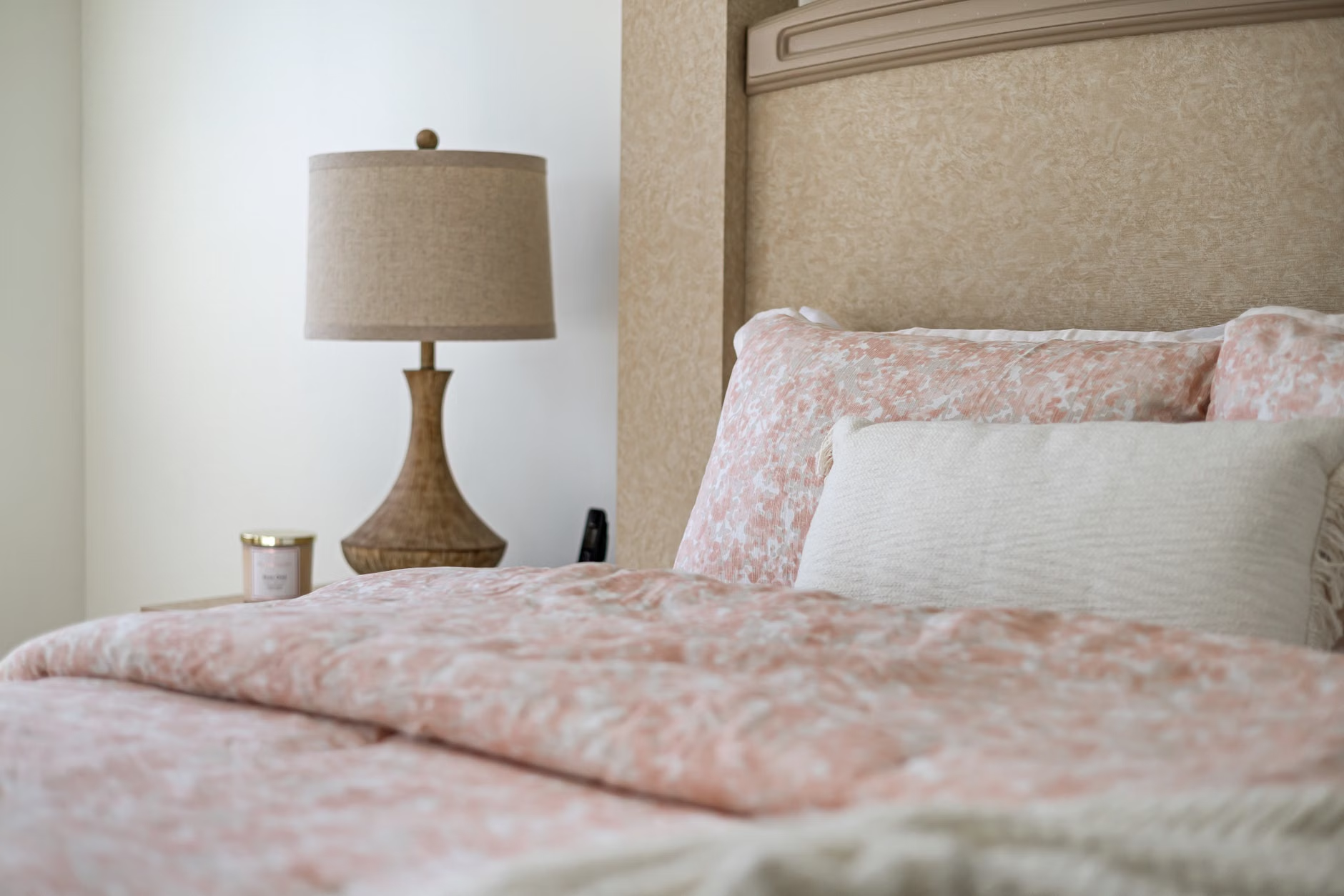
Lighting: Moving Beyond the “Big Light”
The overhead light—often called the “big light”—is the enemy of sensory regulation. It provides harsh, diffuse lighting that casts unflattering shadows and creates high-contrast areas that the brain has to process. For a sensory-neutral bedroom, you should aim for a “layered lighting” approach that keeps light sources low and warm.
Use floor lamps or table lamps with warm-toned bulbs (2700K or lower). These should be positioned so that the light reflects off a wall or is diffused through a shade, rather than shining directly into your eyes. If you struggle with waking up, consider a sunrise alarm clock that gradually increases light intensity. This mimics natural sunlight and helps regulate your circadian rhythm without the harsh shock of a bright overhead light.
One common mistake is using LED strips that change colors. While they look cool in photos, the shifting colors provide constant, changing visual input that can be overstimulating for neurodivergent individuals. Stick to a fixed, warm temperature that promotes melatonin production.
Managing Tactile Sensitivities
Touch is an often ignored sense, but for many people in their 30s and 40s, the physical sensation of bedding can be a major factor in sleep quality. If you find yourself constantly tossing and turning, it might be due to the “tactile load” of your bedding. Rough sheets, heavy or uneven blankets, or even the way your pajamas bunch up can create a sensory feedback loop that keeps you awake.
Invest in high-quality, breathable natural fibers like bamboo or organic cotton. These materials have a consistent texture that does not change as you move. If you have “restless leg” or general anxiety, a weighted blanket can be a game-changer. It provides deep pressure stimulation, which has been shown to help calm the nervous system. However, ensure the weight is appropriate for your body size—typically 10% of your body weight is the recommended starting point.
The Hidden Costs and Trade-offs
Creating a sensory-neutral bedroom requires an initial investment of time and money, and there are trade-offs. The most significant trade-off is functionality versus aesthetics. You might want that beautiful, open bookshelf because it looks great on social media, but if it creates visual clutter that stresses you out, it is not “neutral.”
Another overlooked variable is the “partner factor.” If you share your bedroom with a partner who does not share your sensory needs, you have to find a middle ground. This might mean having one side of the bed that is highly organized and “neutral” while the other side is more personalized. Use a room divider or simply commit to keeping the shared surfaces (like the dresser or nightstands) clear, while allowing your partner to have a dedicated “chaos zone” in a closet or a separate room.
Be careful of “optimization fatigue.” Do not try to change everything at once. Start with the lighting, then move to the acoustic environment, and finally address the visual clutter. If you try to overhaul the entire room in one weekend, you will likely end up more overwhelmed than when you started.
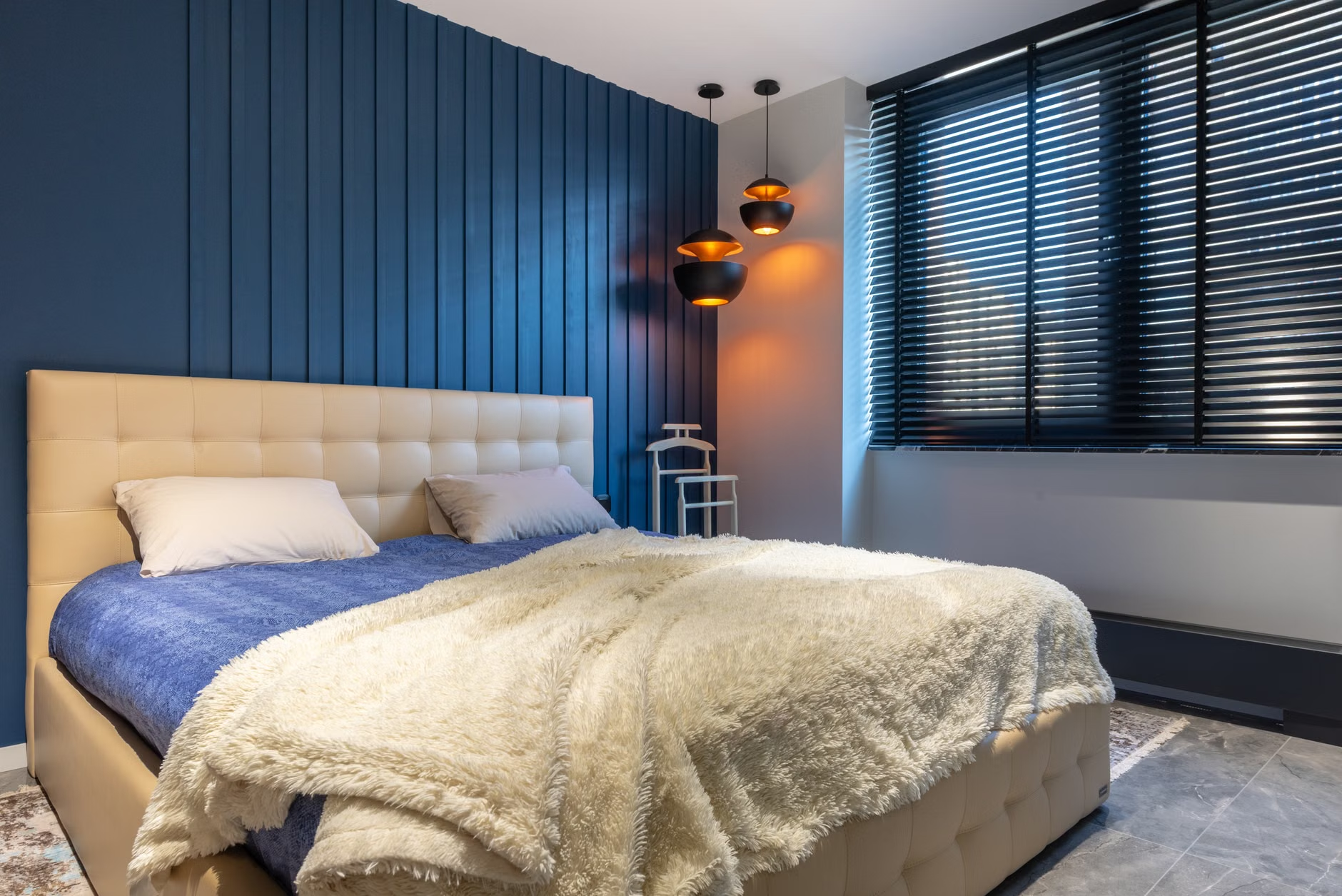
How to Maintain the “Neutral” State
A sensory-neutral bedroom is not a “set it and forget it” project. It requires a maintenance routine. Because you are living and potentially parenting in the same household, items will inevitably drift into the bedroom. Establish a “reset ritual” for the end of the day. This should take no more than 5 minutes.
1. The Sweep: Spend 60 seconds moving items that don’t belong in the bedroom back to their home.
2. The Surface Check: Ensure that your nightstand is clear of everything except what you need for the night (e.g., water, a book, a lamp).
3. The Light Adjustment: Turn off all overhead lights and switch to your low-level, warm lighting sources 30 minutes before you intend to sleep.
This ritual is not about “cleaning” in the traditional sense; it is about signaling to your brain that the day is over and that the sensory input is officially being throttled down. It is a psychological barrier that separates your “parent/worker” self from your “resting” self.
Common Misconceptions About Sensory-Neutral Design
There is a pervasive idea that sensory-neutrality means “minimalism” in the extreme sense—that you should live with almost nothing. This is not true. You can have items that you love, but they should be stored in a way that minimizes their visual impact when you are trying to relax. A closed cabinet is your best friend. It allows you to keep your favorite books or mementos without them cluttering your visual field.
Another misconception is that this type of design is only for people with specific sensory processing disorders. In reality, modern life is inherently overstimulating. Everyone, regardless of neurotype, can benefit from a space that is designed to minimize cognitive load. The principles of sensory-neutrality—clear surfaces, controlled lighting, and sound masking—are simply best practices for human biology.
Practical Next Steps for Your Bedroom
If you are ready to begin, do not start with a trip to the furniture store. Start with a “sensory audit.” Spend one night in your bedroom and pay attention to what draws your eye or what sounds annoy you. Do you notice the blue light from your charger? Is there a pile of clothes that you look at every night? Is the room too quiet, or is there a low-frequency hum from an appliance?
Once you have identified your primary “sensory triggers,” address them one by one. If it is the light, buy blackout curtains or a better lamp. If it is the noise, look into a white noise machine. If it is the clutter, buy a storage bin or a drawer organizer. The goal is to build a space that supports your nervous system, not one that demands more from it.
Remember, the goal is not perfection. The goal is to create a space that feels safe and quiet. If you can achieve that, you will find that your ability to handle the stresses of the next day increases significantly. You are essentially building a battery-charging station for your brain. Make sure it is a place where you actually want to spend time.
For more information on sensory processing and creating supportive environments, you can consult resources from organizations like the Sensory Processing Disorder Foundation or general sleep hygiene guidelines from the National Sleep Foundation. These sites provide a wealth of data on how environment impacts physiological health, which can help you fine-tune your approach as you continue to adjust your space.
Frequently Asked Questions
1. Is a sensory-neutral bedroom too boring for a couple?
Not at all. You can add personality through textures (throws, rugs, wall hangings) rather than through visual clutter or high-contrast patterns. A room can be “calm” and still be aesthetically pleasing. The goal is to avoid “visual noise” that keeps your brain in a state of high alert, not to remove your personality from the space.
2. Can I achieve a sensory-neutral space on a tight budget?
Absolutely. Most of the changes are behavioral or low-cost. Using bins you already have, rearranging your lighting to be warmer, and using a free white noise app (or an old fan you already own) can make a huge difference. You don’t need expensive furniture; you just need to be more intentional about how you use the space you already have.
3. How do I handle sensory-neutrality when I have young children who often end up in my bed?
This is a common challenge. If your children are often in your room, try to extend the “sensory-neutral” principles to their sleeping area as well. Use the same low-level lighting and white noise. If they bring toys into your room, designate a specific, lidded bin for those toys so that they can be “put away” at the end of the day, keeping the visual field clear for your own rest.
Creating a sensory-neutral bedroom is an act of self-care that pays dividends in your daily capacity to handle the world. By removing the unnecessary, you are creating room for the rest you genuinely need. Start small, stay consistent, and watch how your mood and energy levels shift when your environment finally stops asking for your attention.