- Proximity is not community: Living in a high-rise guarantees physical closeness, but building a “micro-community” requires intentional, low-stakes social bridges rather than forced group activities.
- Leverage the “Third Space” gap: Use underutilized building facilities like lobbies, roof terraces, or mail areas as primary touchpoints to transition from “stranger” to “acquaintance.”
- Start with utility-based interactions: Successful micro-communities grow from shared practical needs—like tool sharing or group grocery orders—rather than purely social ones.
If you live in a high-rise apartment, you likely know the paradox of urban living: you are physically closer to your neighbors than almost anyone else in history, yet you probably don’t know the names of the people living on your floor. For parents in their 30s and 40s, this distance isn’t just an inconvenience; it’s a missed opportunity for safety, resource sharing, and mental health support.
Building a “micro-community”—a small, localized network of neighbors you can actually rely on—is not about becoming best friends with everyone in the building. It is about creating a “safety net of convenience.” It’s the difference between having no one to help when you’ve locked yourself out or needing to hire a sitter for a 30-minute errand, and having a neighbor you can swap favors with. Let’s look at how to build this intentionally without being the “creepy neighbor” who knocks on every door.

The Psychology of the High-Rise Barrier
Why is it so hard to connect in a modern apartment? Sociologists often point to the “elevator effect.” We spend our time in transit zones—lobbies, hallways, parking garages—where the unspoken social rule is “keep your head down and your eyes on your phone.” These spaces are designed for efficiency, not interaction. When we view our hallways as transit corridors rather than living extensions of our homes, we unconsciously signal to others that we are not open to engagement.
To break this, you don’t need a building-wide party committee. You need to identify your “micro-sphere.” This usually encompasses your immediate neighbors (three doors in each direction and the units directly above and below you). These are the people whose lives overlap with yours in the most practical ways—you share the same ventilation, the same noise levels, and the same elevator wait times. This shared reality is your foundation.
The “Low-Stakes” Bridge Technique
The biggest mistake people make is trying to jump from “stranger” to “social event” too quickly. A dinner party invitation to someone you’ve only nodded at in the elevator is often perceived as an intrusion. Instead, use the “Low-Stakes Bridge” method. This involves creating a brief, non-intrusive interaction that allows the other person to opt in or out without social pressure.
Example Strategy: The “Package Check”
If you see a neighbor struggling with packages or heading to the mail room, a simple, “Hey, have you noticed if the delivery lockers are working today? I’ve been having trouble with mine,” is significantly more effective than a “Hi, I’m your neighbor from 4B.” It provides a shared problem to solve. If they engage, great. If they give a one-word answer, you haven’t forced a social obligation on them.
High-rises are packed with “dead space”—underused amenities that, if programmed correctly, become natural hubs for connection. If your building has a roof terrace, a courtyard, or even a wide landing, these are your primary tools. The goal here is to create “passive presence.” This means being in these spaces at predictable times so that your neighbors become accustomed to seeing you, which builds a sense of safety and familiarity.
| Facility Type | Social Potential | How to Use It |
|---|---|---|
| Mailroom/Lobby | High (Frequent) | Be a “regular” at a specific time; offer a nod or brief comment. |
| Roof/Courtyard | Medium (Planned) | Read a book or work on your laptop there for 30 minutes. |
| Gym/Pool | Low (Performance-based) | Keep it to brief pleasantries; people are usually “in the zone.” |
The key here is predictability. If you go to the lobby to collect mail every Tuesday at 6:00 PM, you will eventually start seeing the same people. This frequency creates the “mere-exposure effect,” a psychological phenomenon where people tend to develop a preference for things or people just because they are familiar with them. You aren’t “networking”; you are just becoming a known entity in the building.

The Power of the “Micro-Favor”
Once you’ve moved from “stranger” to “acquaintance,” the next step is the “Micro-Favor.” This is a request that takes less than two minutes to fulfill and carries no significant burden. Asking a neighbor to keep an eye on a package while you’re at work, or asking if they know a reliable local plumber, creates a small social debt. Importantly, it also signals that you are someone who is also willing to help.
For parents, this is vital. A neighbor who knows you is more likely to help you out in a pinch—like grabbing a forgotten item from the store or keeping a spare key. However, ensure you establish boundaries early. A true micro-community relies on reciprocity, not exploitation. If you ask for a favor, always offer one in return, even if it’s just, “Let me know if you ever need someone to hold a package for you.”
Digital Tools vs. Physical Reality
Many buildings now have apps or private Facebook groups. While these are excellent for logistical issues (like reporting a broken elevator or a noise complaint), they are often poor at fostering genuine community. Digital groups can quickly become hubs for venting or passive-aggressive complaints, which can sour your perception of your neighbors before you’ve even met them.
Decision Rule: Use digital groups for information (building maintenance, local news, lost pets), but use physical, face-to-face interactions for relationship building. If you see a neighbor complaining about a building issue in the group, use that as a topic for a face-to-face conversation. “Hey, I saw your post about the water pressure—it’s been driving me crazy too.” This bridges the digital and physical divide.
Managing Boundaries and Privacy
In a high-rise, privacy is a premium. The fear of “that neighbor who won’t stop talking” is real. To maintain your own peace while building a community, be clear about your availability. You can be a friendly neighbor without being a constant companion. Use “time-boxed” interactions. For example, if you are chatting in the hallway, you can gently conclude it by saying, “It was great chatting, but I’ve got to get back to the kids/work. See you around!”
If you find that a neighbor is overstepping, the best approach is direct but polite boundary-setting. “I’m so sorry, I’m right in the middle of getting the kids ready for bed, so I can’t chat right now, but let’s catch up later.” This shows that you value the connection but have specific limits on your time.
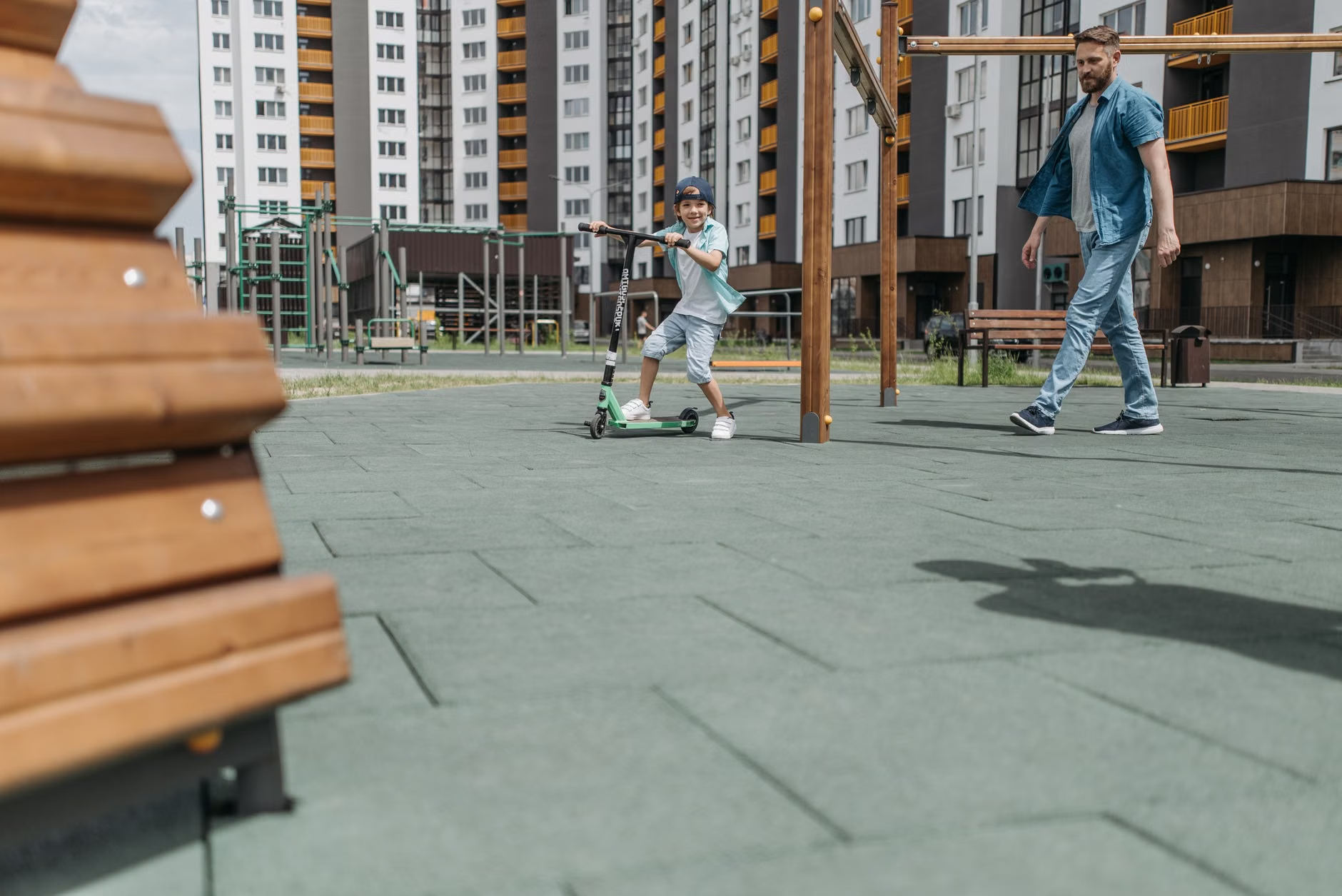
Addressing the “Parenting” Factor
For parents in their 30s and 40s, the playground or the communal play area is the most powerful tool in your kit. Unlike the lobby, which is a transit zone, these are “destination zones.” You are already there to watch your children. This creates a natural, low-pressure environment for conversation. You aren’t there to “socialize”; you are there to supervise. This makes it much easier to strike up a conversation with other parents because the focus is on the children.
Common mistake: Trying to force a playdate immediately. Instead, focus on the “shared struggle.” Commenting on the playground equipment, the weather, or a local school event is a low-stakes way to gauge if the other parent is interested in talking. If they engage, great. If they are busy, they will give you a short answer, and you can easily return to watching your child without any awkwardness.
When Things Go Wrong: Dealing with Difficult Neighbors
Building a micro-community doesn’t mean you will get along with everyone. High-rise living brings together people with vastly different lifestyles. You will have neighbors who are loud, neighbors who leave trash in the hallway, or neighbors who are simply unfriendly. The key to a healthy micro-community is not to “fix” these neighbors but to build your circle around the ones who are compatible.
If a neighbor is consistently causing issues, do not try to “fix” them yourself. Use the building’s official channels. Your goal is to foster a positive, supportive environment, not to act as a building manager. By focusing your energy on the positive connections, you create a “community bubble” that makes the building feel like a home, regardless of who else lives there.
The “Silent Support” Model
Sometimes, the best form of community is “silent support.” This is when you and your neighbors look out for each other without needing to be close friends. It’s the neighbor who holds the elevator door for you because they see you have groceries. It’s the neighbor who leaves a note on your door if they saw a delivery person drop your package. This is the bedrock of a safe high-rise environment. It doesn’t require intimacy, just a shared understanding of common courtesy and mutual benefit.
Actionable Steps to Get Started This Week
Don’t try to change your entire building culture in a day. Start small. Here is your roadmap for the next seven days:
- Day 1-2: Practice the “Elevator Nod.” Make eye contact and smile at the people in your elevator. Don’t worry about starting a conversation yet; just make yourself a familiar face.
- Day 3-4: Identify your “Micro-Sphere.” Who are the three neighbors closest to your unit? Try to learn their names if you don’t know them. A simple, “Hi, I’m [Name] from [Unit], just wanted to say hello,” is perfectly acceptable.
- Day 5-6: Use a “Low-Stakes Bridge.” Ask a neighbor a simple question about the building or the area.
- Day 7: Assess. Did you have any positive interactions? If so, try to remember those neighbors’ names. If not, don’t worry—try again next week.
The beauty of the high-rise is that it is a dense, concentrated environment. You don’t need a huge group to make it feel like a community. Even three or four households who look out for each other can transform the experience of living in a 50-story building. It turns a “unit” into a “home.”
Frequently Asked Questions
1. What if my neighbors are completely uninterested in connecting?
That is perfectly fine. Many people choose high-rise living specifically for the anonymity it provides. If you’ve made a genuine, low-pressure effort and they don’t respond, don’t take it personally. Move on to other neighbors or focus on your own life. You only need a very small group to build a successful micro-community.
2. How do I handle safety concerns when sharing favors with neighbors?
Start with very small, low-risk favors. There is a big difference between asking someone to hold a package and giving them a spare key to your home. Only move to higher-trust favors once you have established a long-term, reliable relationship. Always trust your intuition; if someone makes you feel uncomfortable, maintain a polite, professional distance.
3. Should I create a WhatsApp group for my floor?
Think carefully before doing this. A group chat can quickly become a source of stress if it’s filled with noise, complaints, or spam. If you do create one, keep it strictly for essential building information or safety alerts. For social connection, face-to-face interactions are far more effective and less prone to misunderstandings.
Building a community in a high-rise is a marathon, not a sprint. It’s about the small, consistent actions that turn a building of strangers into a neighborhood of neighbors. Keep your expectations grounded, start with low-stakes interactions, and focus on the people who are naturally in your daily path. You’ll be surprised at how much safer and more connected you feel in just a few months.
For more information on urban living and community dynamics, you can explore resources from the Urban Institute or local government guides on residential community building, which often provide tips on fostering neighborhood cohesion.