- Darkness is non-negotiable: The best viewing occurs during a new moon; plan your tour at least three days before or after the new moon phase to ensure maximum visibility.
- Motion triggers the glow: Bioluminescence is a defense mechanism; you must disturb the water (by kayaking, splashing, or paddling) to see the light, as it won’t just “glow” on its own.
- Manage your expectations: Camera sensors often capture more light than the human eye; prepare your children for a subtle, magical sparkle rather than the neon-bright neon photos seen on social media.
Bioluminescence is one of nature’s most effective ways to teach children about marine biology, chemistry, and environmental stewardship, but it is also one of the most misunderstood travel experiences. If you are a parent trying to balance a hectic work-life schedule with the desire to provide your children with “awe-inspiring” educational experiences, you have likely seen the viral videos of glowing blue waves. However, the reality of these tours involves variables that can either result in a core memory or a frustrated, tired family.
Understanding the Biology: Why the Ocean Glows
To turn this outing into a science lesson, you first need to explain to your family that the “glow” isn’t magic—it is a chemical reaction. Most bioluminescent tours take place in bays or lagoons where high concentrations of dinoflagellates, a type of plankton, reside.
These organisms contain a chemical called luciferin. When they are physically disturbed by a boat, a paddle, or your hand, they react with oxygen in the water to produce a flash of blue light. This is a survival strategy. In the wild, this light acts as a “burglar alarm,” attracting larger predators to eat whatever is trying to eat the plankton. When you understand that the water glows because it is defending itself, the experience becomes much more than just a light show; it becomes a lesson in ecological survival.
The “New Moon” Rule: Why Timing is Everything
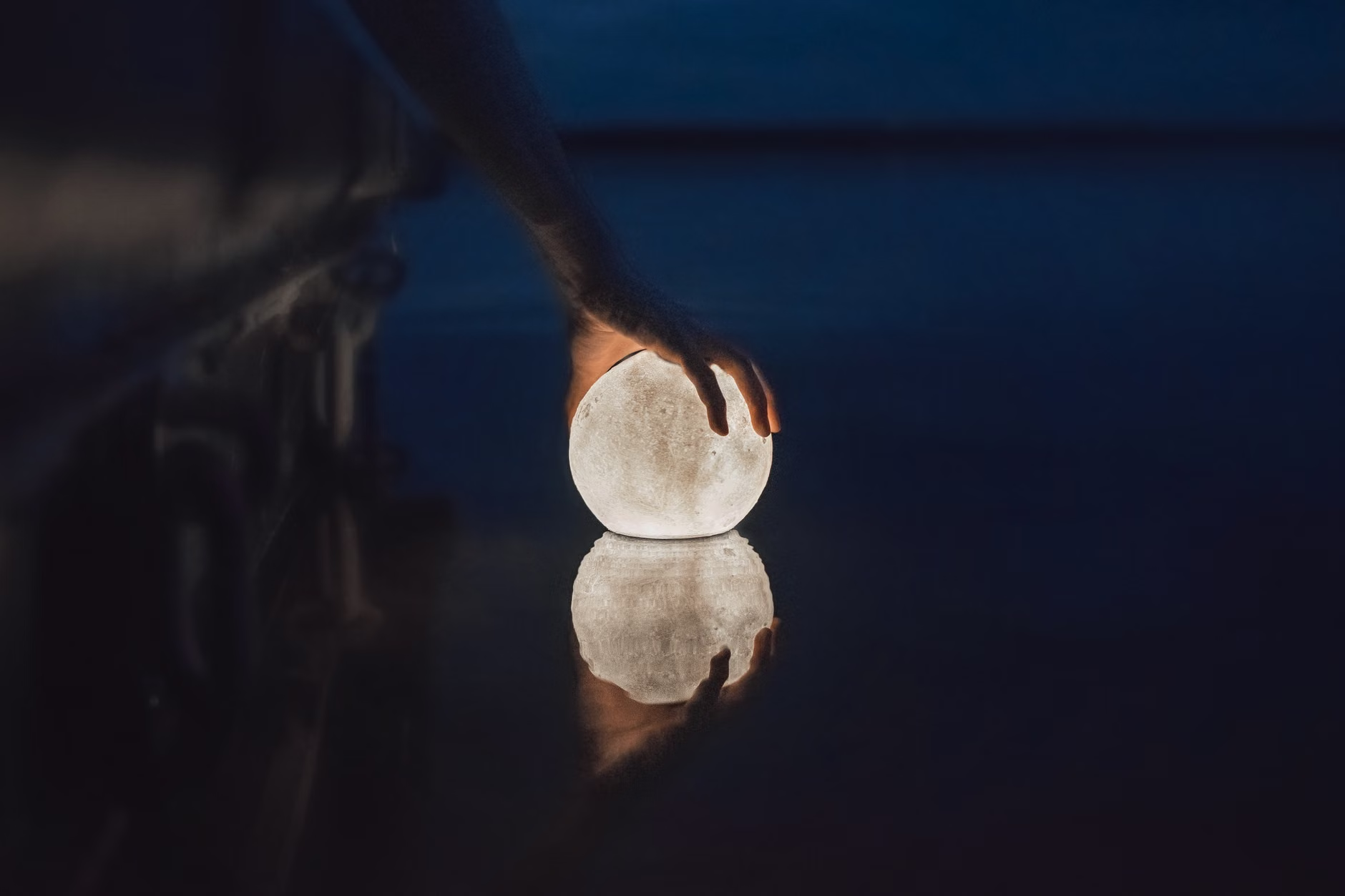
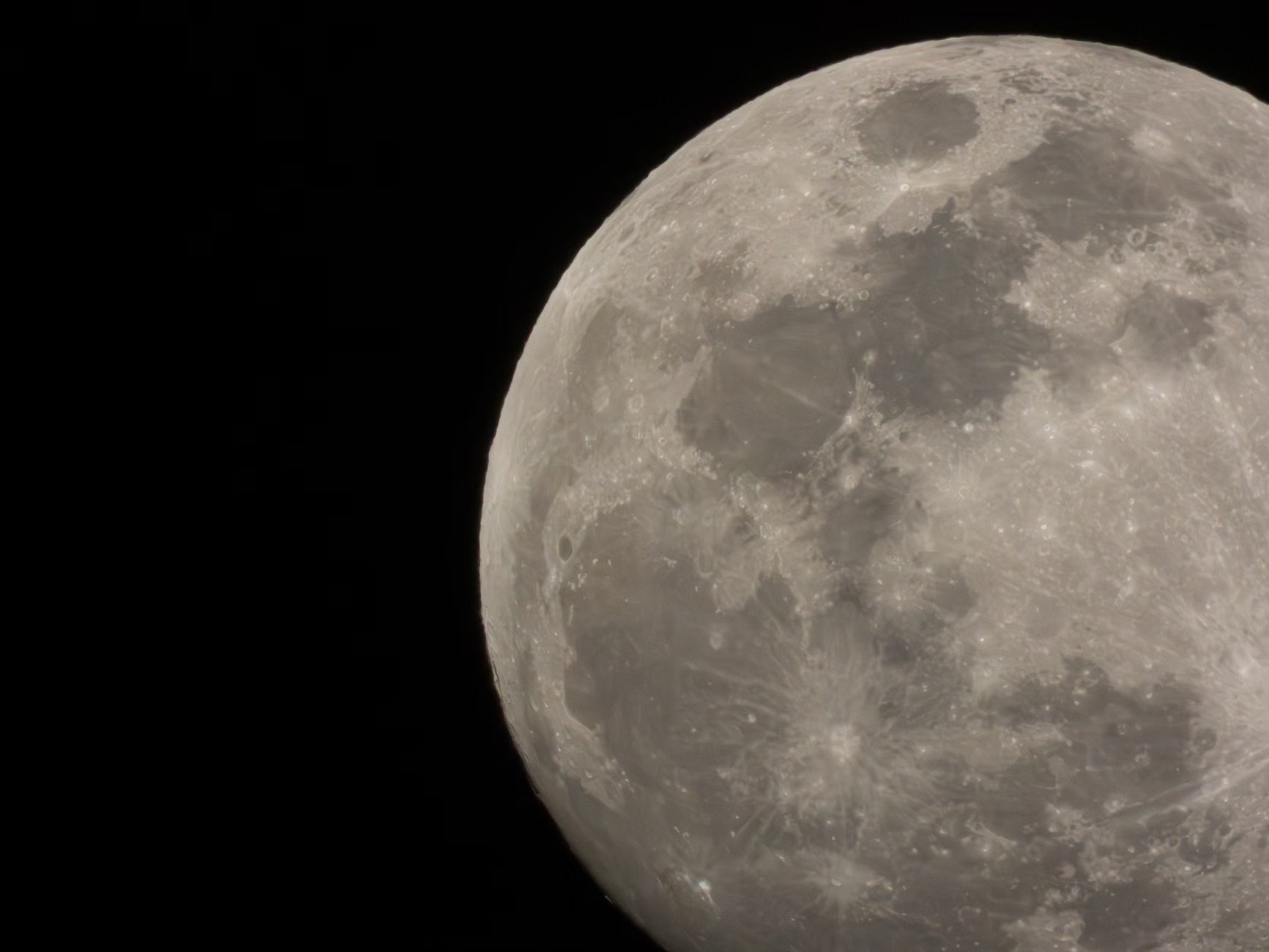
The most common mistake families make is booking a tour during the wrong phase of the moon. Bioluminescence is relatively dim. Even a quarter-moon can wash out the effect, making the water look like ordinary, dark liquid. If you want the “Avatar-like” experience you see online, you must prioritize the lunar calendar.
The Strategy: Aim for the “New Moon” window. This is the period when the moon is invisible in the night sky. In practical terms, look for a tour date that falls within three days before or after the official New Moon date. If you book during a full moon, you will likely be disappointed, regardless of how “active” the plankton are that night.
Furthermore, weather matters. Heavy rainfall can dilute the concentration of plankton, and strong winds can churn the water in a way that makes the bioluminescence appear scattered rather than concentrated. Always check the local forecast for “calm, dark, and clear” conditions.
Logistics: Kayaking vs. Boat Tours with Kids
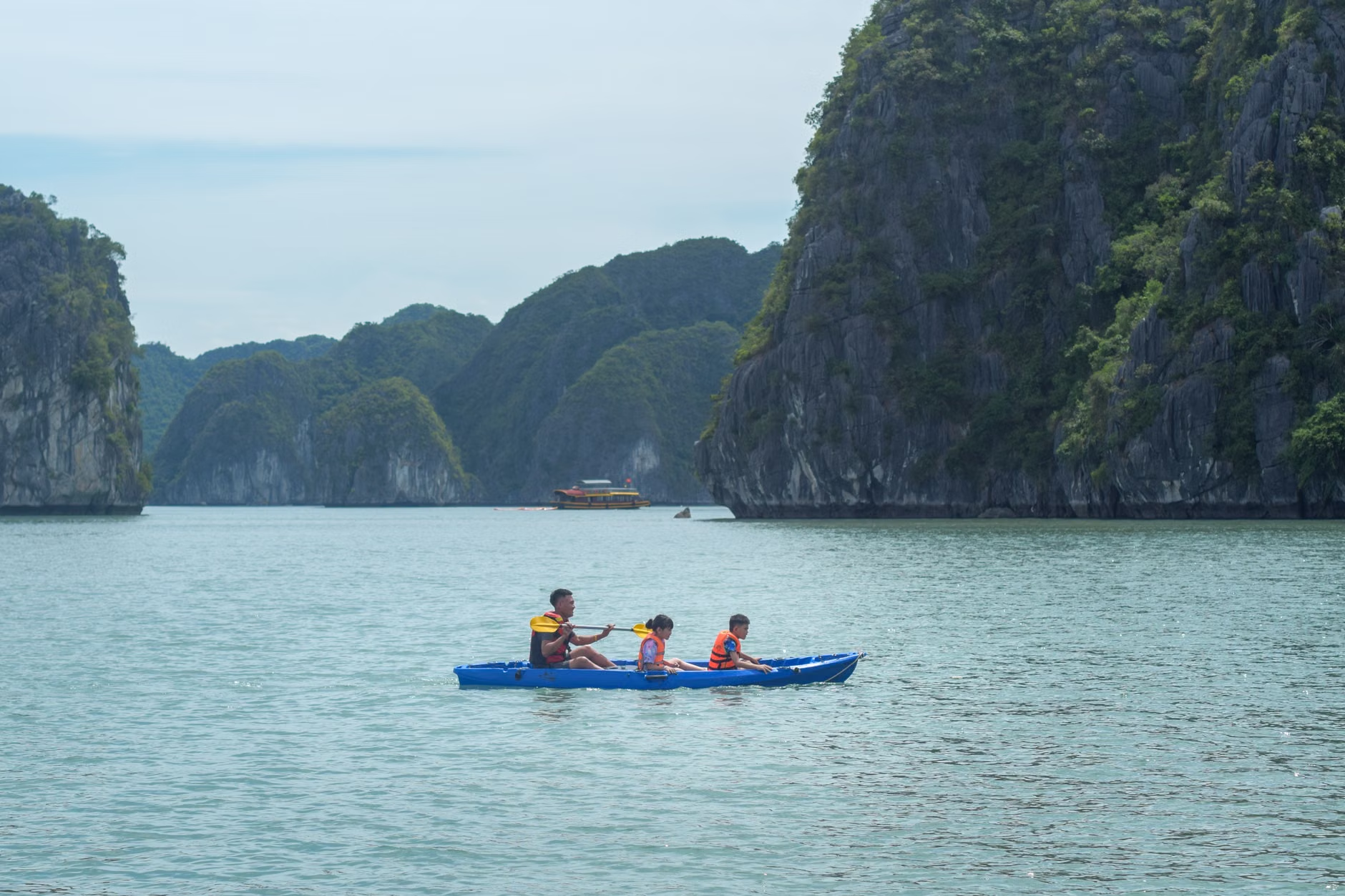
When selecting a tour provider, you are essentially choosing between two modes of transport: the individual kayak or the larger, motorized, or guided boat. For parents in their 30s and 40s, this choice depends entirely on the age and temperament of your children.
| Feature | Guided Kayak Tour | Group Boat Tour |
|---|---|---|
| Engagement | High; kids control the movement. | Low; passive observation. |
| Physical Effort | High; requires paddling stamina. | None; sit and watch. |
| Best Age | 10+ years old. | All ages, including toddlers. |
| Safety | Requires constant supervision. | Easier to manage multiple kids. |
If you have children under 8, I strongly recommend the boat tour. Kayaking requires a level of coordination and stamina that can lead to “meltdown territory” if your child gets tired halfway through. A boat tour allows you to focus on the science and the view without worrying about whether your child is drifting away or struggling with a paddle.
Managing Expectations: The “Social Media vs. Reality” Gap
As parents, we often want the “perfect” photo to document the trip, but bioluminescence is notoriously difficult to capture. Most smartphones cannot pick up the faint blue glow without a tripod and a long-exposure setting. If you spend your entire tour fumbling with your camera settings, you will miss the moment.
The Reality Check: Explain to your kids that the bioluminescence will look like “sparkles” or “fireflies in the water” rather than a neon light bulb. By setting the bar for a “magical sparkle” rather than a “glowing neon ocean,” you protect your family from disappointment. Encourage them to focus on the sensation of the water and the sound of the night environment instead of trying to capture a perfect shot for social media.
Practical Preparation: A Checklist for Parents
Planning a late-night excursion requires more than just showing up. Because these tours often happen in remote, marshy, or coastal areas, you need to be prepared for the environmental factors that can ruin a trip for a child.
- Bug Spray: These areas are almost always mosquito-heavy. Use a DEET-free or kid-safe repellent, but apply it before you get to the launch site.
- Clothing: Even in tropical regions, the water can feel cool at night, especially if you are sitting in a kayak. Dress in layers. Avoid cotton if possible; moisture-wicking material is better if you get splashed.
- Waterproof Gear: Keep a dry bag for your car keys and essential items. You will get wet. Assume that anything you bring will end up with at least a few drops of salt water on it.
- Red Flashlights: If you need light, use a red light. White light ruins your “night vision” (the process where your eyes adjust to the dark). It takes about 20 minutes for your eyes to fully adjust to the dark; one flash of a bright white phone screen will reset that clock.
The Hidden Science: Why This Matters Beyond the Glow
Beyond the immediate “wow” factor, this is a perfect time to talk to your kids about water quality. Bioluminescent dinoflagellates are sensitive. They are often threatened by light pollution (from nearby resorts or cities) and chemical runoff (from fertilizers or sunscreen).
When you use “reef-safe” sunscreen, you are protecting the very organisms that provide this light. This is a tangible, real-world connection between your child’s choices—like wearing the right sunscreen—and the health of the ocean. It shifts the conversation from “look at the pretty lights” to “how do we take care of the home of these tiny creatures?”
Troubleshooting Common Issues
What happens if you arrive and see nothing? First, remain calm. Sometimes, the plankton are “resting” or the water isn’t being agitated enough. Ask your guide to move the boat or paddle more vigorously. If the water is still dark, it may be due to a recent storm or a chemical imbalance in the water. Most reputable tour operators will offer a “re-book” policy if the visibility is near zero. Always check the fine print of your booking regarding “no-show” or “no-glow” policies before you commit your payment.
Another common issue is the “motion sickness” factor. Even in a calm bay, the gentle rocking of a small boat can affect kids who are prone to nausea. If your child gets car sick, they will likely get boat sick. Consider a non-drowsy motion sickness band or medication an hour before the tour begins, just in case.
Long-term Value: Turning a Tour into a Curiosity Habit
The goal of a bioluminescent tour shouldn’t just be the 90 minutes you spend on the water. Use it as a springboard. When you get home, look up videos of other bioluminescent phenomena, such as deep-sea anglerfish or fireflies in your own backyard. Compare the “why” behind each one. Are they using light for the same reason? Is it for protection, hunting, or mating?
This type of follow-up activity reinforces the science lesson and turns a “vacation activity” into a “learning lifestyle.” It encourages your children to look at the world around them as a series of mysteries waiting to be solved rather than just things to be looked at.
Final Thoughts: Is It Worth the Effort?
Is a bioluminescent tour worth the late nights, the potential for mosquitoes, and the logistical headache? For most families, yes—but only if you go in with the right mindset. If you treat it as a high-stakes, “must-get-the-photo” event, you will likely be stressed. If you treat it as a quiet, scientific exploration of one of the ocean’s most fascinating secrets, it becomes an experience that your kids will talk about for years.
Prioritize the moon cycle, choose the right vessel for your family’s age group, and focus on the “why” rather than the “what.” By doing so, you are not just taking a trip; you are building a foundation of curiosity that will last long after the blue glow fades from the water.
Frequently Asked Questions
1. Do I need to be a strong swimmer to go on a bioluminescent tour?
No, you do not need to be a strong swimmer. You will be required to wear a life jacket (PFD) at all times while on the water. If you are nervous, choose a larger, stable boat tour rather than a kayak. The tours are designed to be safe for non-swimmers, provided you follow the captain’s instructions regarding staying seated.
2. Can I use my phone to take photos of the bioluminescence?
Most standard smartphone cameras will struggle to capture the glow because it is very faint. If you have a manual mode on your phone, set your ISO to 1600 or higher and use a long exposure (at least 5–10 seconds), but you must have a stable surface or a tripod. Honestly? Skip the photos. The light is so subtle that the “glow” is often better experienced with your eyes than through a screen.
3. Are there specific seasons for these tours?
Bioluminescence is a year-round phenomenon in many tropical and subtropical areas, but it is often more concentrated during the warmer months when the plankton can reproduce more rapidly. However, the moon phase is a much more critical factor than the season. Check local reports for the specific region you are visiting, as some bays have “peak” months based on water temperature and salinity.
For further reading on marine ecosystems and bioluminescence, visit the Smithsonian Ocean Portal for scientifically backed insights on how these organisms function.