- Risk is not the same as hazard: Risk-assessment frameworks teach children to identify manageable challenges, whereas hazards are hidden dangers that must be removed.
- The “Danger” paradox: Allowing children to experience small, controlled risks—like climbing a slightly wobbly tree—actually prevents more serious injuries by developing their spatial awareness and decision-making skills.
- Practical Application: You can apply the “Nature-Play” framework by shifting from “Be careful!” (vague) to “How stable does that rock feel under your foot?” (analytical).
If you have ever spent an afternoon at a modern, standardized playground, you have likely heard the chorus: “Be careful!” It is the default setting for most of us in our 30s and 40s. We see our children inching toward the top of a climbing frame or balancing on a curb, and our internal alarm bells go off. We want them to be safe, so we intervene. We wrap them in soft rubber flooring and monitor every pivot. But here is the uncomfortable truth: by removing all risk, we are inadvertently stripping away the very environment children need to learn how to keep themselves safe.
The “Nature-Play” risk-assessment framework isn’t about letting your kids run wild in traffic. It is a structured, evidence-based approach to outdoor play that distinguishes between manageable risk—which builds resilience—and unacceptable hazards—which lead to injury. It is a shift from helicopter parenting to “gardening” parenting: you don’t grow the plant, you just create the environment where it can grow strong on its own.
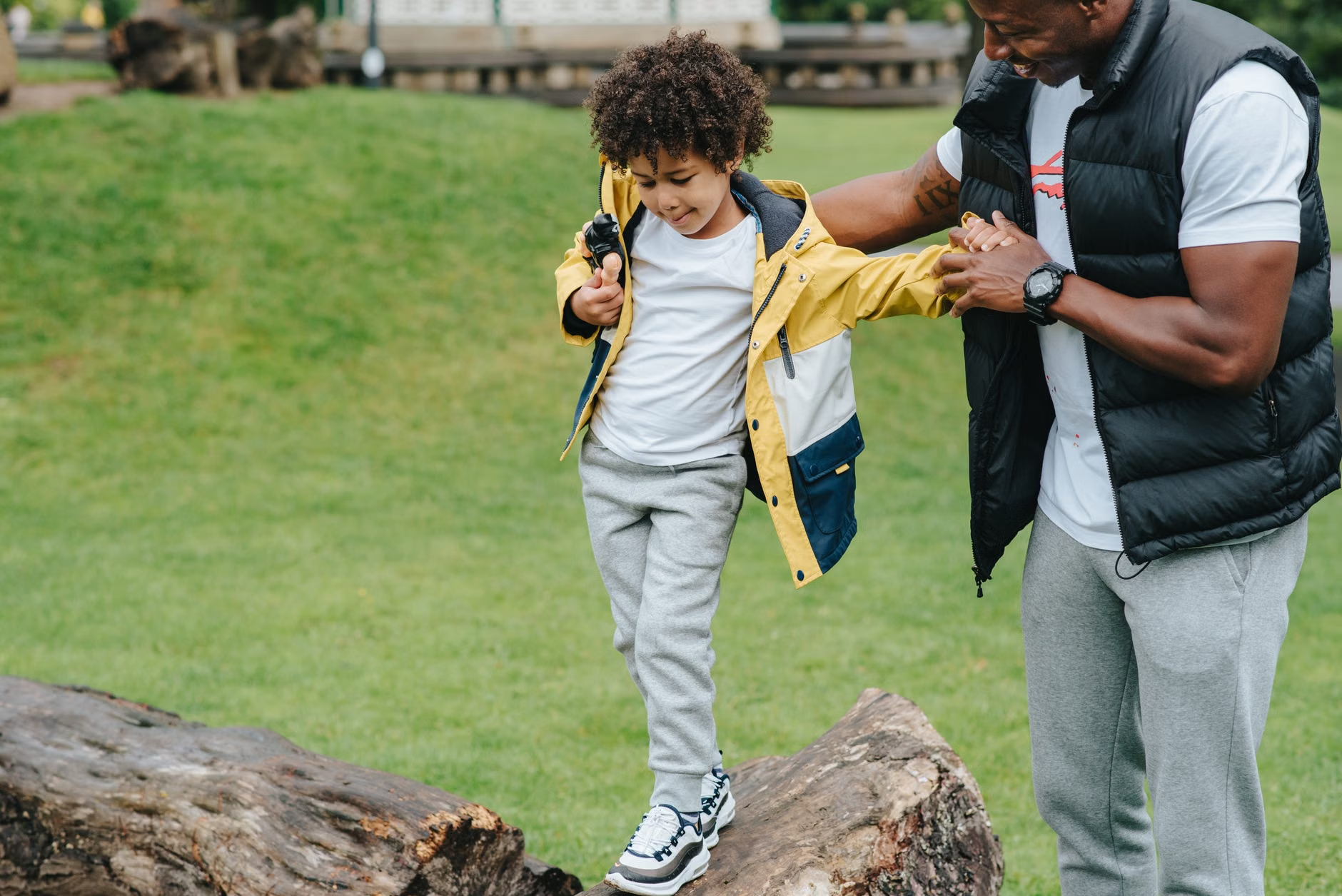
Understanding the Difference Between Risk and Hazard
To implement this framework, you first need to stop using the words “risk” and “hazard” interchangeably. In the context of play, they are polar opposites in how they serve a child’s development.
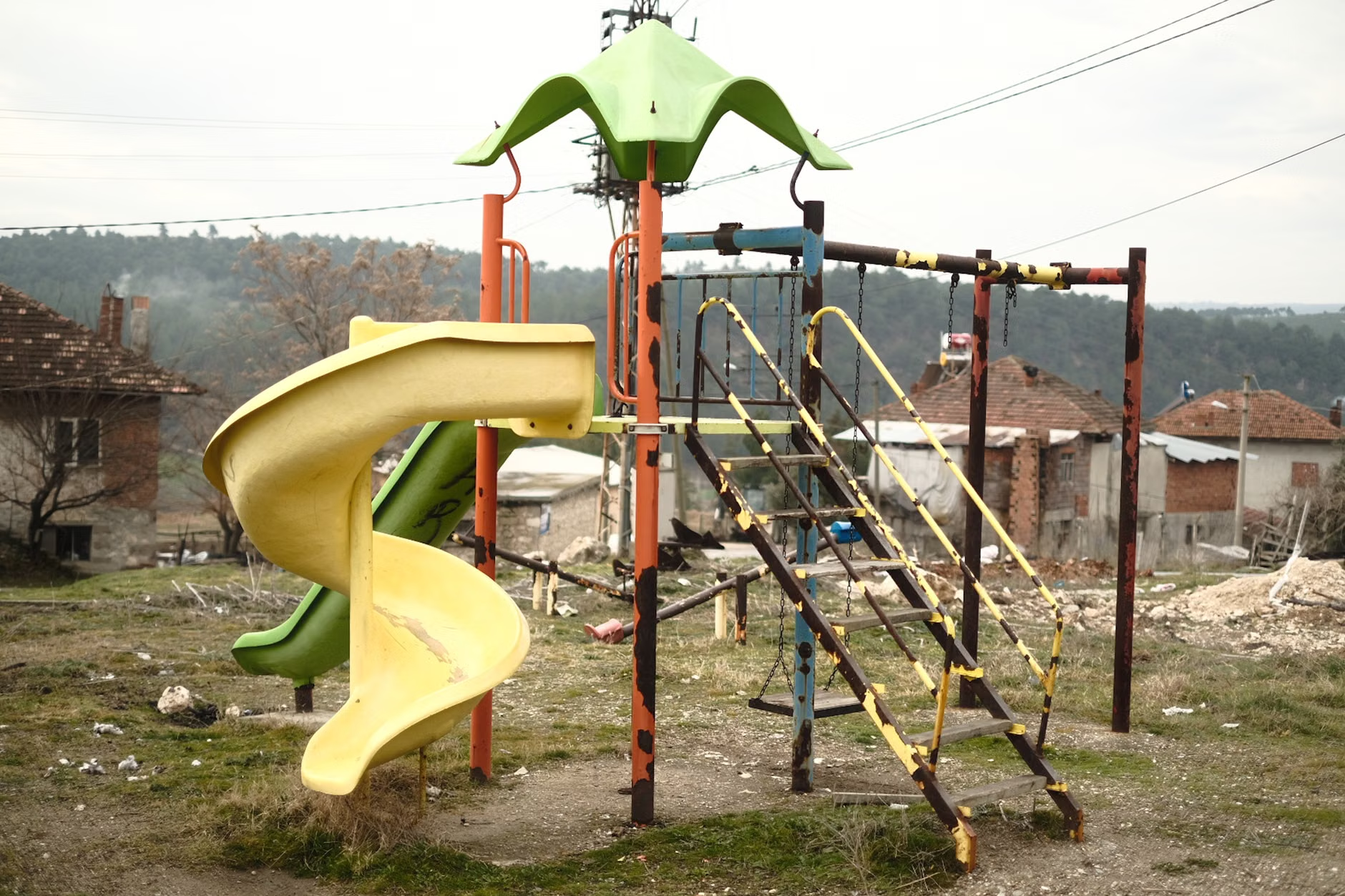
A Hazard is something that a child cannot see, identify, or manage. Think of a rusted piece of metal with a sharp edge, a deep hole hidden in tall grass, or a piece of equipment that is structurally unsound. These are things that “jump out” at a child. They offer no developmental value because there is no lesson to be learned from them—they are simply dangerous. These should be removed or avoided entirely.
A Risk, on the other hand, is a challenge that is visible and understandable. When a child looks at a tree and decides, “Can I reach that branch?” they are performing a complex, split-second risk assessment. They are calculating their own strength, the height, the distance, and the stability of the branch. This is “risky play.” It is exactly the kind of cognitive and physical exercise that builds the neural pathways required for real-world problem solving.
If you see a playground and your first thought is, “That looks dangerous,” pause. Ask yourself: Is it a hazard, or is it a risk? If the structure is sturdy but high, that is a risk. It’s an opportunity for your child to learn their limits. If the structure is swaying because a bolt is missing, that is a hazard. That is a failure of maintenance, not an invitation for play.
The Four Pillars of Risky Play
Researchers in early childhood development, particularly those following the work of Ellen Sandseter, have categorized “risky play” into specific archetypes. Understanding these helps you identify what your child is actually practicing when they seem to be “acting out” or doing something “scary.”
| Type of Play | What the Child is Learning | How to Support It |
|---|---|---|
| Great Heights | Spatial awareness and fear management | Check for clear landing areas; avoid “helping” them up. |
| High Speed | Velocity control and momentum | Ensure the path is clear of other kids/hazards. |
| Dangerous Tools | Precision, focus, and respect for materials | Model proper handling; supervise the first few attempts. |
| Rough and Tumble | Social boundaries and emotional regulation | Intervene only if someone is clearly distressed or hurt. |
When you see your child engaging in these, the urge to intervene is strong. The “Nature-Play” framework suggests a different approach: Observation before interference. Instead of shouting, “Get down!” watch for 30 seconds. Are they looking at where they are stepping? Do they have a firm grip? If the answer is yes, they are in a flow state of learning. If you interrupt them, you break that focus and, ironically, make them more likely to fall because they are now startled by your voice.
Shifting Your Vocabulary: From “Be Careful” to “What Do You See?”
The phrase “Be careful” is essentially useless. It tells the child that something is wrong, but it provides no actionable data. It creates anxiety without providing a solution. To move toward a risk-assessment mindset, you need to replace your “warning” language with “inquiry” language.
When you see your child doing something that makes your stomach drop, try these alternatives:
- Instead of “Be careful!”: Ask, “How does that rock feel under your foot? Is it slippery?”
- Instead of “Don’t climb that!”: Ask, “What is your plan for getting down once you reach the top?”
- Instead of “You’ll fall!”: Ask, “Do you have a good grip with both hands?”
These questions force the child to stop and perform their own internal risk assessment. You are not telling them what to do; you are teaching them how to think. This is the essence of the framework. You are coaching them to scan their environment, assess the stability of the terrain, and evaluate their own physical capabilities. This is a skill that will serve them far better than a lifetime of being told exactly when to move and when to stop.
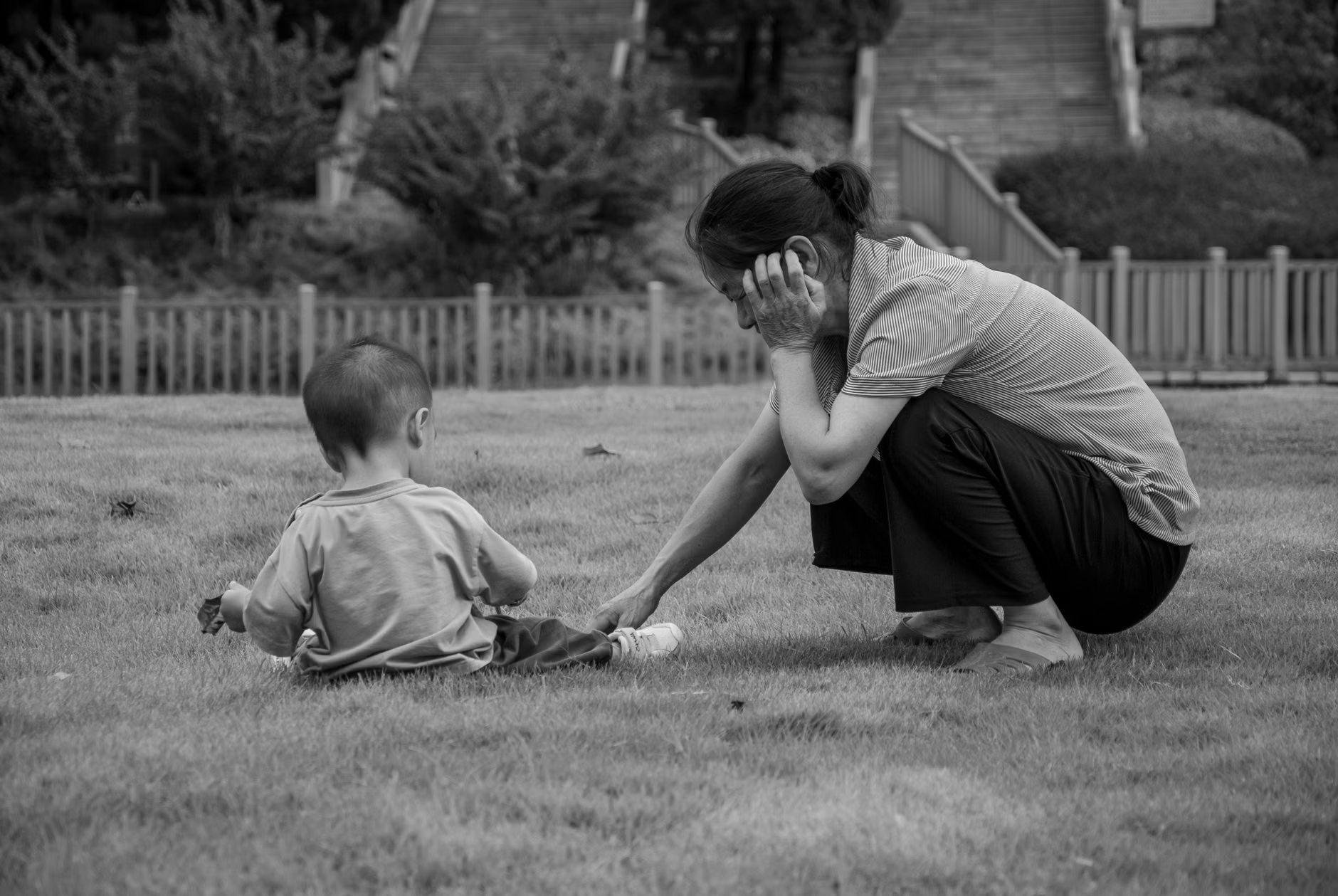
The Role of ‘Loose Parts’ in Urban Playgrounds
One of the biggest limitations of modern, manufactured playgrounds is their rigidity. A plastic slide is a plastic slide. It only does one thing. This is called “fixed play.” While safe, it is intellectually stagnant. The Nature-Play framework heavily advocates for “loose parts”—sticks, stones, pinecones, fabric, crates, and rope.
Why do these matter? Because they are unpredictable. A heavy rock might roll when you step on it. A branch might snap if you put too much weight on it. This unpredictability is the ultimate teacher. When a child plays with loose parts, they are constantly recalibrating their balance and their expectations. They are learning physics in real-time.
In an urban environment, you might not have access to a sprawling forest. That is fine. Many cities are now implementing “nature-play” zones in public parks. If your local park is just a standard metal-and-rubber set, look for the edges. Are there bushes? A dirt patch? A pile of wood chips? Encourage your child to play there rather than on the main equipment. The “danger” of a dirt hill is far lower than the “danger” of a high-speed metal slide, but the developmental benefits of climbing the hill are significantly higher.
Common Mistakes Parents Make (And How to Avoid Them)
Even with the best intentions, it is easy to fall into traps. The most common mistake is selective risk-taking. This is when parents allow their child to climb a tree but panic when they see them running on a slightly uneven sidewalk. This inconsistency confuses the child about what constitutes a real risk.
Another mistake is the “shadowing” effect. This is when you are physically right behind your child, hands hovering inches from their back. This is not supervision; it is an intrusion. It tells the child, “I don’t trust you to handle this.” If you are so nervous that you feel the need to shadow them, it means the activity is currently beyond their skill level. In that case, instead of hovering, suggest a smaller, more manageable version of the task. If they want to climb a big tree, find a smaller one first. If they want to jump off a high wall, find a curb.
Finally, avoid the “it depends” trap. Many parents feel that safety is subjective. It isn’t. Safety is about competence-to-task matching. A four-year-old on a high balance beam is a risk. A ten-year-old on that same beam is not. Assess the task against your specific child’s current abilities, not against some universal standard of “safety.”
The Long-Term Payoff: Resilience and Emotional Regulation
Why go through all this effort? Why not just let them play on the safe, rubber-matted slide and keep our blood pressure low? Because the world is not made of rubber.
Children who are allowed to experience, navigate, and overcome minor risks develop a higher sense of “self-efficacy.” They learn that they can handle difficult situations. They learn that their bodies are capable of incredible things. When they encounter a real-world challenge later in life—a difficult academic problem, a social conflict, or a physical obstacle—they don’t freeze. They have a history of “doing hard things” to draw upon.
Furthermore, there is a strong link between outdoor, risky play and reduced anxiety. When a child is constantly told that the world is dangerous and that they need help to navigate it, they internalize that message. They become anxious, dependent, and risk-averse. By embracing the Nature-Play framework, you are essentially telling your child: “I believe in your ability to figure this out.” That is a powerful message to send.
Implementing the Strategy: A Step-by-Step Guide for This Weekend
You don’t need a special certification to start this. You can begin this weekend at your local park. Here is your plan:
- The 5-Minute Rule: When you arrive at the playground, sit on a bench for 5 minutes before you let your kids go. Watch the flow of the park. Identify the hazards (the broken swing, the glass in the sand) and clear them if possible.
- The “Go” Signal: Once the area is cleared of hazards, tell your child, “I’m going to sit here and read/watch. You explore. If you need me, call me, but otherwise, you’re the leader today.”
- The “Check-in” Protocol: If they start doing something that scares you, don’t yell. Walk over to them calmly. Ask the inquiry questions we discussed earlier. If you still feel the risk is too high, suggest a modification (e.g., “That branch looks a bit thin. Can we find a thicker one to test your weight on?”).
- The Post-Game Review: On the way home, ask them, “What was the most challenging part of the playground today?” This helps them process their experience and reinforces their decision-making process.
You will be surprised at how quickly they adapt. Children are natural risk-assessors. They have spent millions of years evolving to survive in environments far more complex than a city park. We just need to stop getting in their way.
Let’s be honest: one of the biggest hurdles isn’t the kids—it’s the other parents. You might feel judged when you aren’t hovering over your child. You might hear comments like, “Aren’t you worried they’ll get hurt?”
This is where your confidence in the framework comes in. You aren’t being negligent; you are being intentional. You can politely explain, “I’m working with them on their risk-assessment skills so they can learn to judge their own limits.” Most parents, once they hear that it’s a deliberate developmental strategy rather than “not caring,” will actually soften. You might even find yourself starting a trend at your local park.
Remember, the goal isn’t to be the “cool” parent or the “neglectful” parent. The goal is to be the parent who prepares their child for the real world. A child who learns to navigate a park with confidence is a child who will eventually navigate adulthood with the same resilience.
Common Misconceptions About Outdoor Risk
There is a persistent myth that “safer is better.” In almost every aspect of development, this is false. Just as the immune system needs exposure to bacteria to function correctly, the brain and body need exposure to manageable risk to function correctly. Without it, we create a generation that is physically clumsy and emotionally fragile.
Another misconception is that natural playgrounds are harder to maintain. In reality, they are often cheaper and more durable. A log is a log. It doesn’t need to be repainted or have its rubber surface replaced. It ages with the environment. If you are an advocate for your local park, consider proposing a “nature play” area to your local council. Many cities are actively looking for low-cost, high-impact ways to improve urban green spaces.
Finally, don’t worry about the “what ifs.” What if they fall? What if they get a scrape? A scrape is a small price to pay for a lesson in gravity. A bruise is a temporary badge of honor that teaches a child about their own physical boundaries. We aren’t looking for injury; we are looking for the experience of challenge.
Final Thoughts: The Most Important Lesson
The most vital thing to remember is that this isn’t about the playground equipment. It’s about the relationship you are building with your child. When you trust them to take risks, they learn to trust themselves. That trust is the foundation of everything else—their confidence, their independence, and their ability to handle the inevitable challenges of life.
So, next time you are at the park, take a deep breath. Let them climb that tree. Let them balance on that rock. Let them be the explorers they were meant to be. You’ll be surprised at how much they—and you—are capable of when you stop worrying about the “what ifs” and start focusing on the “what next.”
Frequently Asked Questions
- Q: At what age should I start allowing “risky” play?
A: You can start as soon as your child can move independently. A toddler wobbling while walking on an uneven surface is already doing “risky” play. The scale of the risk should simply match their physical development. - Q: How do I handle it if my child gets hurt while I’m using this framework?
A: It happens. If they get a minor scrape, treat it calmly. Ask them, “What happened? What could you do differently next time?” This turns a painful experience into a learning opportunity, which is the cornerstone of the framework. - Q: Are there any environments where this framework doesn’t apply?
A: Yes. High-traffic areas, near deep water, or in places with known environmental toxins (like lead in soil) are hazards, not risks. Always apply common sense to environmental safety while allowing for developmental risk in play.
For more information on the research behind risky play and child development, visit the Outdoor Play Canada resources or explore the Play Scotland toolkit for managing risk in play.