The most successful zero-proof gathering is defined not by what is missing from the glass, but by the intentionality of the hospitality provided. When you host a social event where alcohol is not the centerpiece, you shift the focus from “getting a buzz” to fostering genuine connection, which is often exactly what our busy lives in our 30s and 40s demand.
- Curate, Don’t Substitute: Treat non-alcoholic drinks as standalone culinary creations rather than “watered-down” versions of cocktails.
- Manage Cultural Expectations: Communicate the menu clearly beforehand to avoid awkward surprises for guests who expect traditional alcohol.
- Elevate the Experience: Use high-quality glassware, fresh garnishes, and complex flavor profiles to signal that the event is a deliberate, premium experience.
We have all been there: the Sunday morning after a social event where the “hangover tax” makes parenting a toddler or managing a Monday morning meeting feel like climbing a mountain. As we move into our 30s and 40s, the trade-off between a glass of wine and the next day’s productivity often shifts. Yet, the desire for community remains. Hosting a “zero-proof” event isn’t about abstinence as a moral stance; it is about creating a space where people can socialize without the subsequent physiological drain.
Beyond the Mocktail: Designing a Sophisticated Beverage Program
The biggest mistake in zero-proof hosting is viewing the beverage menu as an afterthought—usually just a bottle of soda or juice in a plastic cup. If you want your guests to feel like they are at a “real” party, you need to apply the same rigor to your non-alcoholic menu that you would to your wine list.
What is a Zero-Proof Menu? It is a curated selection of drinks that offer complexity, bitterness, acidity, and mouthfeel—the four pillars of a satisfying cocktail. When you remove alcohol, you remove the “burn” and the depth that ethanol provides. You must replace these with ingredients that provide a similar sensory experience.
Why it matters: If a guest is holding a drink that looks and tastes like a well-crafted cocktail, they are significantly less likely to feel the “social void” that often occurs when someone isn’t drinking alcohol. It keeps the ritual of the clinking glass and the sipping experience intact.
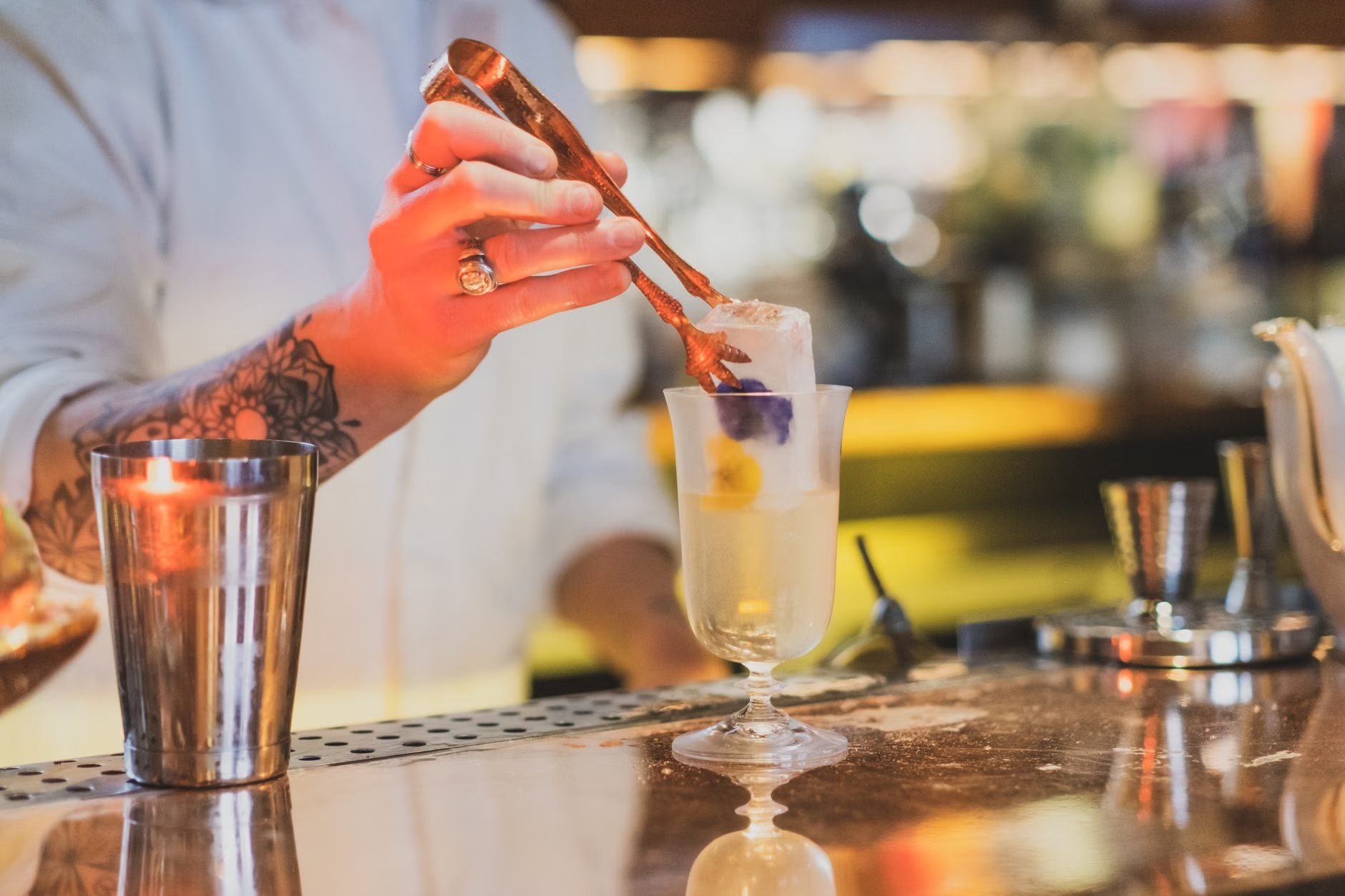
Building the “Flavor Bridge”
To create a drink that feels “grown-up,” you need to focus on complexity. Here is a simple decision matrix for building your menu:
| Component | Role | Examples |
|---|---|---|
| The Bitter | Mimics the complexity of spirits | Tonic water, non-alcoholic bitters, gentian root tea |
| The Acid | Provides “bite” and structure | Verjus, shrub (fruit vinegar), fresh lime/lemon juice |
| The Spice/Botanical | Adds depth and aroma | Fresh ginger, cardamom pods, star anise, rosemary |
A practical example: Instead of serving plain soda, create a “Garden Tonic.” Combine 4oz of high-quality tonic water (which provides the bitterness), 1oz of a house-made cucumber-mint syrup (the aromatics), and a splash of verjus (the acidic brightness). Serve it in a chilled coupe glass with a sprig of slapped mint. The act of “slapping” the mint releases the essential oils, creating an olfactory experience that triggers the brain to register the drink as a premium event.
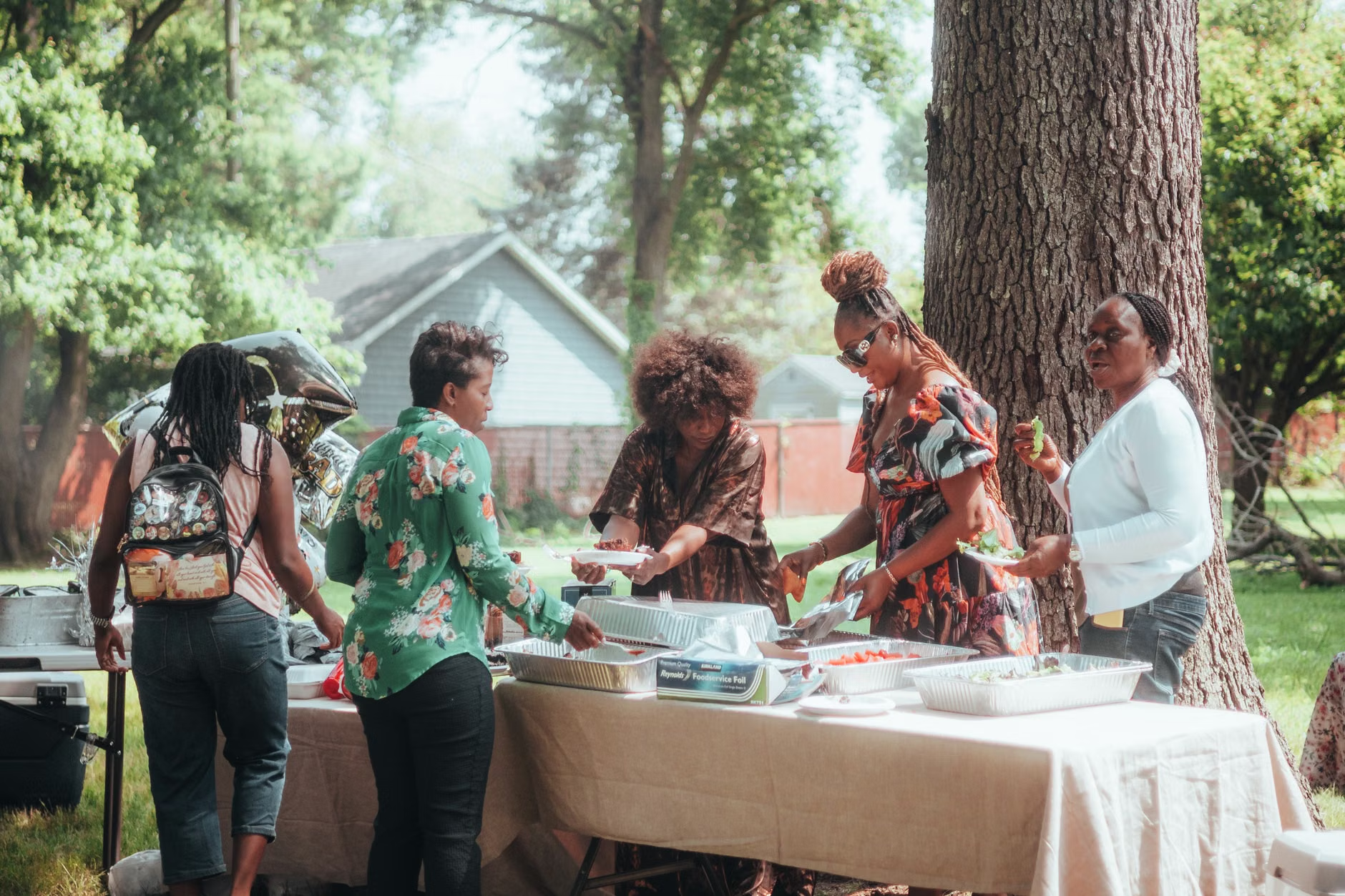
When hosting a multicultural group, “zero-proof” can mean different things to different people. In some cultures, alcohol is heavily tied to hospitality; in others, it is strictly forbidden for religious or health reasons. Navigating this requires transparency and a “host-first” mindset.
The Communication Rule: Never surprise your guests with a zero-proof menu. If you are inviting friends who expect a traditional bar, send a note a week before: “We are hosting a zero-proof dinner party this Saturday. We’ve curated an incredible menu of artisanal non-alcoholic pairings, and we can’t wait to share them with you.”
Why this is essential: By framing it as a “curated menu” rather than a “lack of alcohol,” you change the narrative from restriction to exploration. It signals that you have put effort into the evening, which minimizes the perception that you are being “cheap” or “restrictive.”
Handling the “But Where is the Wine?” Question
There will always be someone who asks for a glass of wine. Your response should be firm but hospitable. You are not a restaurant, and you are not a bartender; you are a host in your own home. If you have decided on a zero-proof evening, stick to it. “We’ve decided to focus on these non-alcoholic pairings tonight because they highlight the flavors of the meal so well” is a perfectly acceptable, polite, and authoritative response.
The Economics of Zero-Proof: Hidden Costs and Value
A common misconception is that zero-proof hosting is cheaper. If you are buying premium non-alcoholic spirits (like Seedlip, Lyre’s, or Ghia), you will find that they are often priced similarly to mid-range gin or tequila. Why? Because the process of distilling non-alcoholic botanicals is technically complex and labor-intensive.
The Hidden Value: You are paying for the “drinking experience” without the alcohol. However, you can control costs by making your own syrups and shrubs. A bottle of high-end non-alcoholic spirit can cost $30–$40. A homemade shrub (fruit, sugar, and vinegar) costs a fraction of that and provides the “kick” that guests often crave.
Decision Criteria for Budgeting:
- The “Time-Poor” Host: If you are busy with work and parenting, invest in one or two high-quality non-alcoholic spirits. They are a “plug and play” solution that guarantees a professional result.
- The “Creative” Host: If you have time to prep, focus on house-made infusions. They offer a unique, personalized touch that store-bought bottles cannot replicate.
Setting the Stage: Glassware and Presentation
In the world of zero-proof, the glass is 50% of the experience. If you serve a complex ginger-lime shrub in a plastic tumbler, it will taste like soda. If you serve it in a crystal rocks glass with a large, clear ice cube and a dehydrated orange wheel, it becomes a cocktail.
What to do: Audit your glassware. You don’t need a massive collection, but ensure you have the basics: coupe glasses for “up” drinks (served without ice) and heavy-bottomed rocks glasses for “on the rocks” drinks. The weight of the glass in the hand is a tactile signal to the brain that the beverage is substantial.
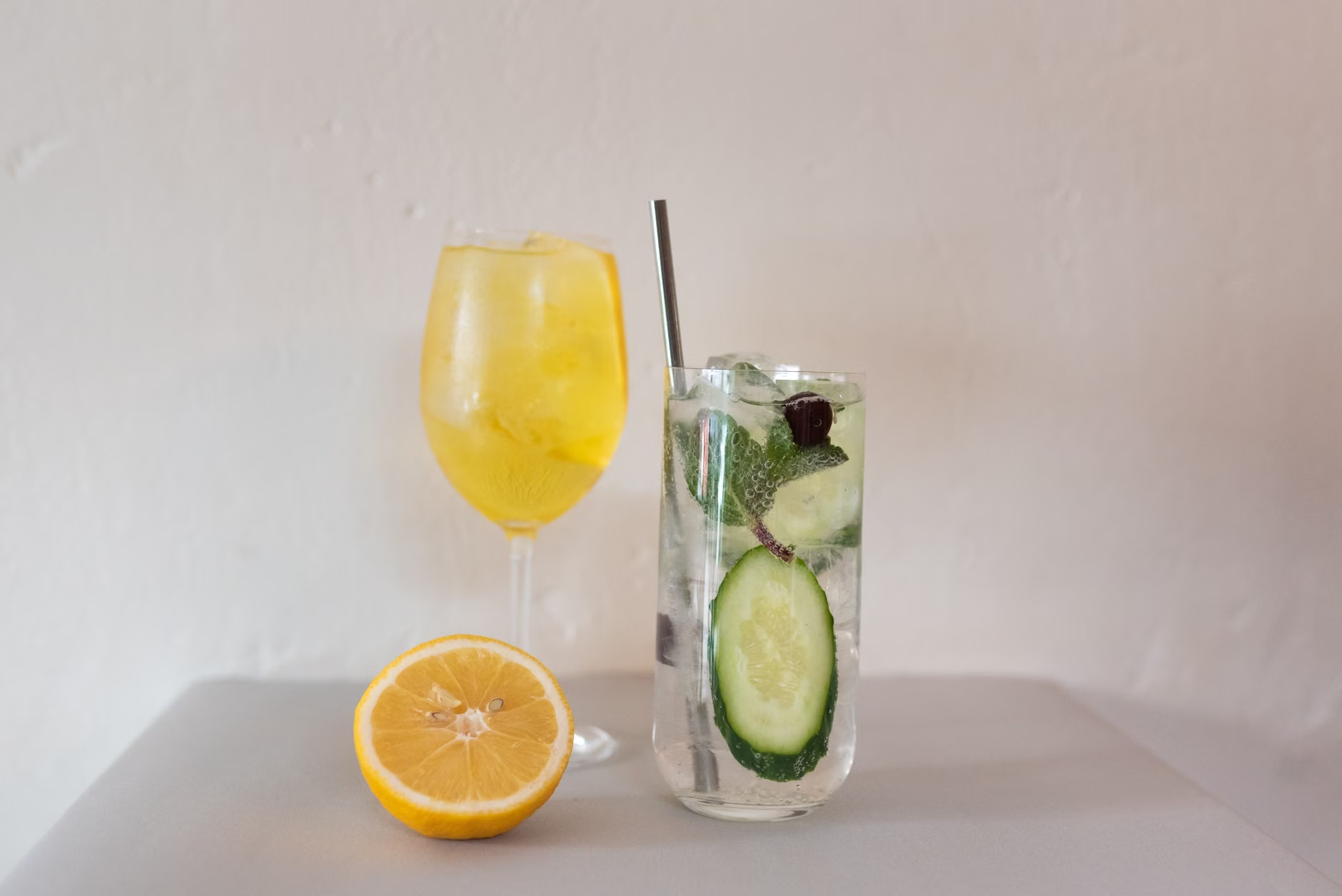
The “Ice Strategy”
One of the most overlooked variables in home hosting is ice. If you have a busy household with kids, you likely use a standard refrigerator ice maker. These cubes are often small, cloudy, and filled with “freezer air” (which imparts a stale taste). For a zero-proof event, buy a silicone mold that makes large, clear cubes. They melt slower and look significantly more professional. It is a small detail that elevates the entire aesthetic of the evening.
Managing the Energy of the Room
Alcohol is often used as a “social lubricant”—it helps people relax and lowers inhibitions. Without it, the burden of “lubricating” the conversation falls on the host. This is where your role changes from bartender to facilitator.
Practical steps for high-engagement hosting:
- Curate the Environment: Lighting is everything. Dim the overheads and use lamps. A brightly lit room feels like a conference room; a dimly lit room feels like a lounge.
- The “Conversation Anchor”: Have a clear activity or a “tasting flight.” If you are serving a mocktail pairing, explain the ingredients of each drink as you serve it. This gives guests an immediate, shared topic of conversation.
- Food Pairing: Pair your drinks with food that requires engagement. Grazing boards, DIY taco bars, or interactive appetizers keep people moving and talking, which naturally fills the space that alcohol-induced chatter usually occupies.
Common Pitfalls and How to Avoid Them
Even with the best intentions, hosting can go sideways. Here are three common mistakes and how to fix them:
| Mistake | Why it happens | The Fix |
|---|---|---|
| The “Juice Box” Trap | Relying on pre-made juices that are too sweet | Balance every juice with an acid (vinegar/lime) and a bitter (tonic/bitters). |
| The “Empty Hand” | Guests feeling awkward without a drink | Ensure a “welcome drink” is ready the moment they walk through the door. |
| The “Apology” | Over-apologizing for the lack of booze | Own your choice. Your confidence makes the guests feel comfortable. |
When you avoid these traps, you move from being a host who is “accommodating” to a host who is “curating.” There is a world of difference between saying, “Sorry, we don’t have alcohol,” and “I’ve put together a menu of really interesting botanical drinks for tonight.”
The Long-Term Impact on Your Social Circle
Hosting zero-proof events, even occasionally, can have a profound impact on your social circle. You might find that your friends start to appreciate the clarity of the morning after. Many of our peers in their 30s and 40s are quietly looking for ways to reduce their alcohol intake without becoming hermits. By hosting these events, you are providing a “safe harbor” for people to socialize differently.
The Hidden Trade-off: You will notice that the conversations become deeper. Alcohol tends to keep conversations on a “shallow but fast” level. Without it, you may find that the pacing of the evening slows down, and the topics become more meaningful. This is not a bug; it is a feature. Embrace the slower pace.
Refining Your Approach: A Step-by-Step Guide for Your Next Event
If you are ready to host your first zero-proof gathering, follow this workflow to ensure success:
Phase 1: The Concept (2 weeks out)
Select a theme. Is it a “Mediterranean Sunset” with herbal, citrusy drinks? Or a “Spiced Winter” theme with ginger, cloves, and dark fruit shrubs? A theme helps you narrow down your ingredient list.
Phase 2: The Shopping (1 week out)
Visit a local specialty grocery store. Look for high-end tonic waters (like Fever-Tree or Q), fresh herbs, and interesting vinegars. If you choose to buy a non-alcoholic spirit, read the labels carefully. Some are designed to be sipped neat, while others are designed for mixing. Ensure your purchase aligns with your drink menu.
Phase 3: The Prep (24 hours out)
Make your syrups. A simple syrup is just equal parts sugar and water, simmered until dissolved. Add your herbs (rosemary, thyme, mint) while it cools to infuse the flavor. Prep your garnishes—dehydrate citrus wheels in a low-temperature oven or simply slice fresh fruit and keep it in an airtight container.
Phase 4: The Execution (Event Day)
Set up a “drink station” where guests can see the ingredients. It turns the drink-making into a performance. If you have guests who are particularly interested, let them “build” their own drink from the components you’ve provided.
Final Thoughts on Mindful Hosting
The goal of zero-proof hosting is not to create a “sobriety event,” but to curate a high-quality experience that respects your guests’ well-being and your own. In our 30s and 40s, we are constantly balancing the demands of career, family, and personal health. The social events we host should contribute to our well-being, not subtract from it.
By focusing on the quality of ingredients, the aesthetics of the presentation, and the intentionality of the atmosphere, you can host gatherings that are just as sophisticated as any cocktail party. Start small. Perhaps your next brunch or casual dinner is the perfect opportunity to test out a zero-proof menu. You might be surprised at how much your friends appreciate the effort—and how much they enjoy the clarity of the next day.
The most important takeaway: You are the host. Your energy and confidence dictate the tone of the room. If you treat the zero-proof menu as a premium, thoughtful choice, your guests will treat it with the same respect. Don’t apologize for the menu; celebrate it.
Frequently Asked Questions
1. Can I just serve mocktails for part of the night and then bring out alcohol?
While you can, it’s generally better to commit to a “zero-proof” theme for the entire event. Switching to alcohol halfway through can confuse the “social pacing” of the night and often leads to people drinking more than they intended. If you want to offer alcohol, it’s better to have a clear “BYOB” policy or a separate bar, but for a true zero-proof experience, consistency is key.
2. What if my guests are offended by the lack of alcohol?
It is very rare for a guest to be genuinely offended by a host’s choice of menu. If a friend is insistent, they are likely just accustomed to a specific routine. Address it with kindness: “I’m really excited to share these new botanical drinks I’ve been experimenting with tonight.” Most people will be curious enough to try them. If they are truly unhappy, they can always host their own event next time!
3. Are there any specific health or safety concerns I should consider?
For the vast majority of guests, non-alcoholic drinks are perfectly safe. However, always be mindful of food allergies (e.g., if you are using nuts or specific botanicals). Additionally, if you are using non-alcoholic spirits, check the labels for sugar content or natural extracts if you have guests with strict dietary restrictions like diabetes. Providing a simple list of ingredients for each drink is a thoughtful and safe practice.
For more information on the rise of the zero-proof movement and the science of flavor, you can explore resources from NielsenIQ on the No-and-Low Alcohol Market, or research culinary techniques for botanical infusions through Serious Eats’ beverage guides.