The most effective way to eliminate vacation burnout isn’t choosing a more “relaxing” destination, but changing how you arrive: by trading the high-stress environment of airports for the rhythmic, predictable pace of coastal rail travel.
- The “Door-to-Destination” Efficiency: Rail travel eliminates the “two-hour pre-flight” rule, allowing you to arrive at city-center stations and start your vacation immediately.
- Hidden Cost Savings: When you factor in the cost of airport transfers, baggage fees, and the premium for last-minute airport food, rail travel often matches or beats budget airlines for families.
- The Cognitive Reset: Slow-adventure rail itineraries provide a transition period that allows parents to decompress, which is impossible during the high-alert state of air travel.
If you are in your 30s or 40s, you likely know the specific, sharp frustration of a family airport day. It’s the constant headcount, the liquid-limit anxiety, the “is the stroller going to make it” gamble, and the inevitable 45-minute wait for a rental car line. By the time you reach the beach, you’ve already spent a full day’s worth of emotional labor.
Slow-adventure rail travel is not about “saving time” in the traditional sense. It is about reclaiming your sanity. It turns the journey into a legitimate part of the holiday rather than a hurdle to clear. When you take the train, you aren’t just moving from point A to point B; you are moving through a landscape at a pace that allows you to actually see it.
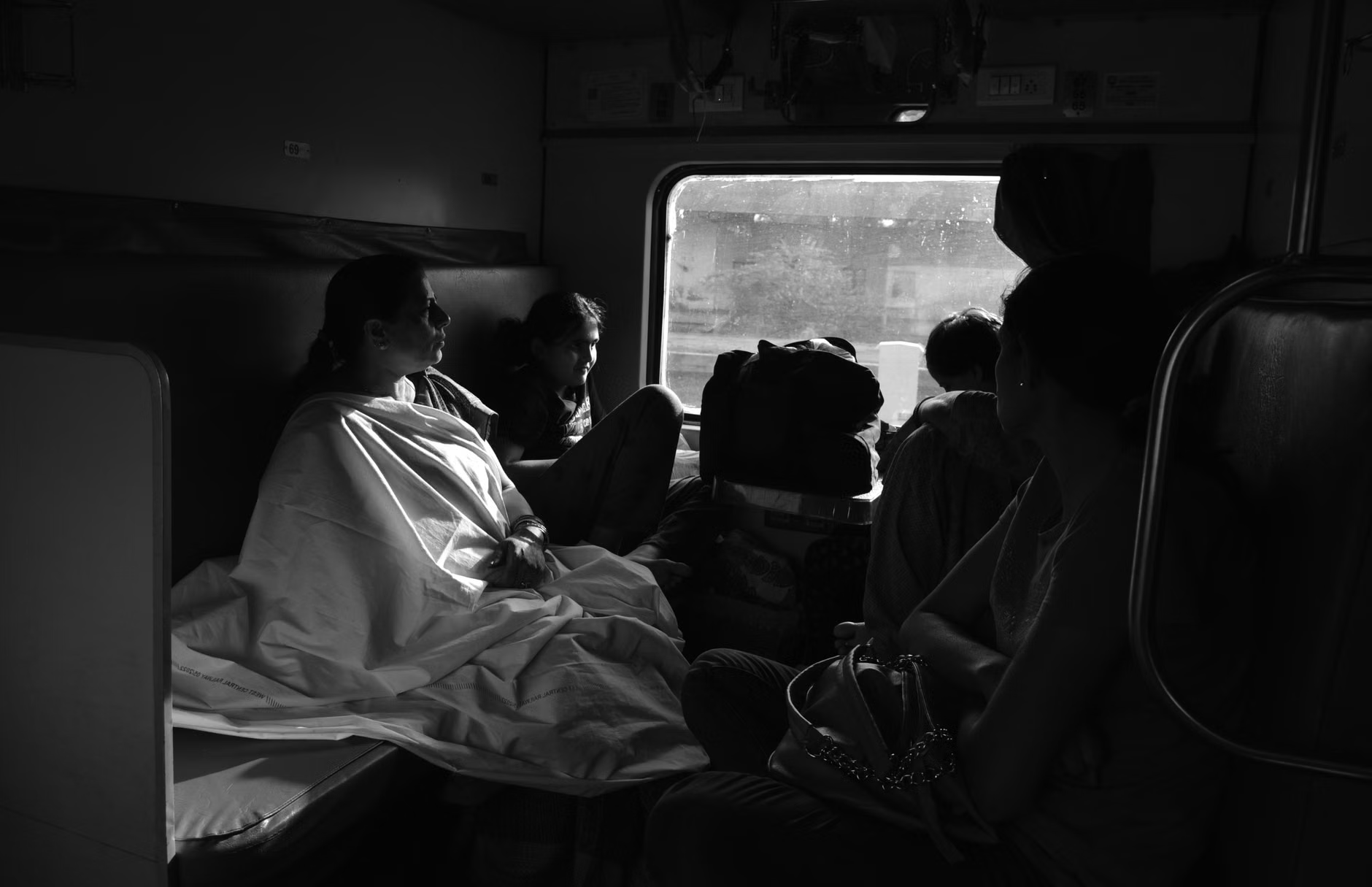
Why Rail Travel Wins for Modern Parents
For parents juggling professional responsibilities and domestic management, the cognitive load of a flight is immense. You are managing logistics, security, and the erratic moods of children in a sterile, high-pressure environment. Rail travel shifts this dynamic entirely.
Consider the “transition period.” On a train, you have space. You aren’t confined to a seat with a seatbelt sign on for three hours. You can walk to the café car, stretch, or pull out a board game. This is the difference between arriving at your coastal destination in a state of frayed nerves versus arriving feeling like you’ve already had a proper break.
Furthermore, rail networks are typically integrated into the heart of coastal towns. You skip the “last mile” problem of finding a taxi or a shuttle from an airport that is often located 30 to 60 minutes outside the city center. You step off the platform, and you are often within walking distance of your hotel or the local transit hub.
The Math of “Slow” vs. “Fast”
We often equate “fast” with “better,” but in family travel, speed is a trap. Let’s look at a typical comparison for a 400-mile coastal trip:
| Factor | Air Travel | Rail Travel |
|---|---|---|
| Pre-trip prep | 2-3 hours (security, check-in) | 20-30 minutes (arrival at platform) |
| Physical space | Cramped, restricted | Spacious, movement permitted |
| Arrival location | Remote airport | City center / Coastal hub |
| Stress level | High (logistics-heavy) | Low (rhythmic, predictable) |
The “slow” in slow-adventure doesn’t mean you are losing time. It means you are spending your time more effectively. You aren’t wasting hours in security queues. You are sitting at a table with your partner, looking out at the coastline, and actually having a conversation.
Designing Your Coastal Slow-Adventure Itinerary
Planning a rail-based trip requires a shift in mindset. You are no longer looking for the fastest flight; you are looking for the most scenic route. The goal is to integrate the movement of the train with the destination itself.
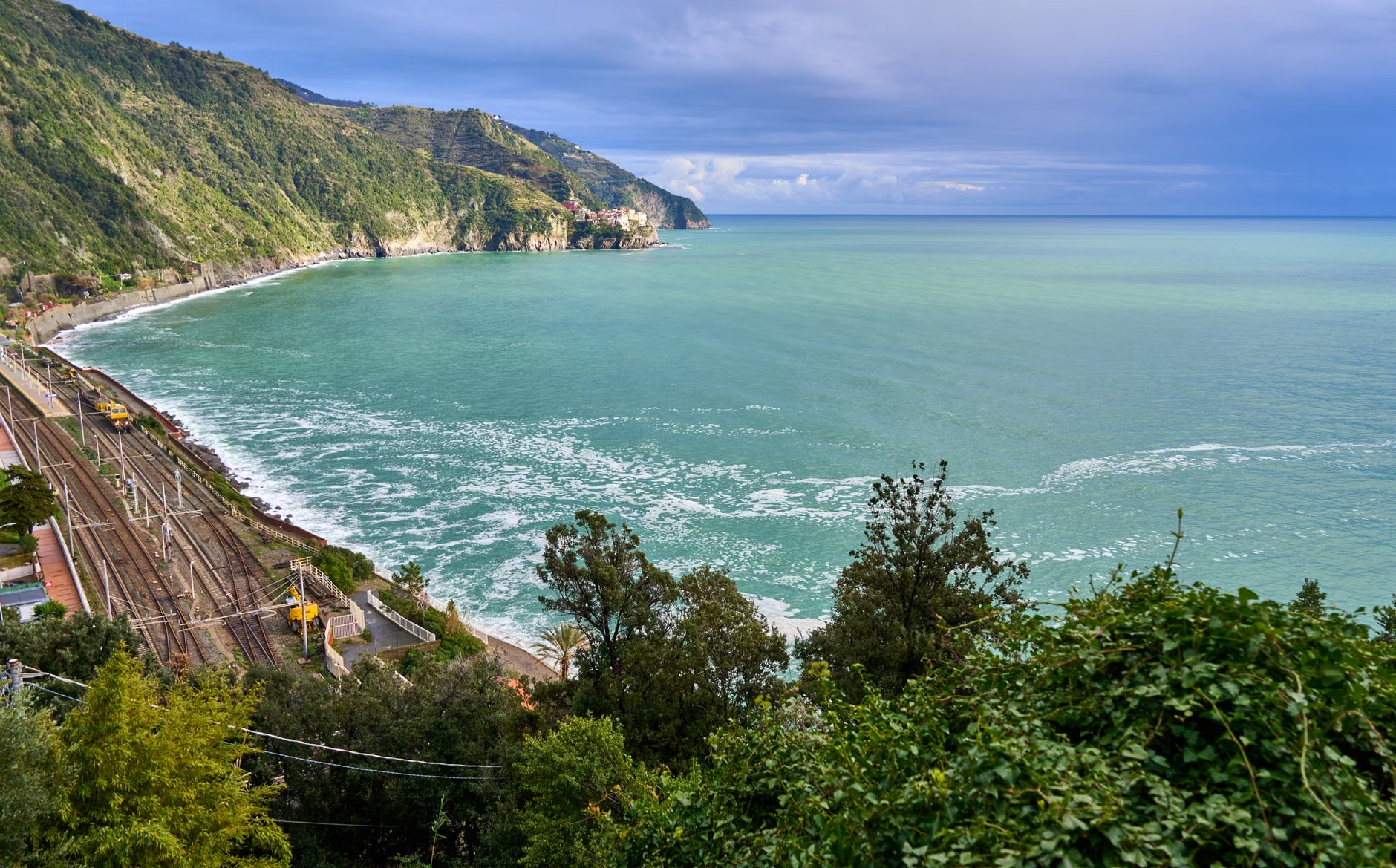
Step 1: Identify the “Scenic Corridor”
Not all rail lines are created equal. When researching your destination, prioritize lines that hug the coast. For example, in Europe, the routes along the French Riviera or the coastal lines in Portugal (like the Lisbon to Cascais route) offer views you simply cannot see from 30,000 feet. In the U.S., the Pacific Surfliner is a classic example of a route where the journey is the attraction.
Step 2: The “Hub and Spoke” Strategy
Don’t try to see the entire coast in one go. Choose one central coastal town with excellent rail connectivity. Use this town as your “hub.” From here, you can take short, 30-minute regional train hops to explore nearby beaches or villages. This eliminates the need to constantly pack and unpack your family’s luggage, which is the single biggest cause of travel fatigue.
Step 3: Account for the “Platform Gap”
One common mistake is overestimating how much luggage you can handle. Even with rail travel, you are responsible for your bags. If you have two young children, keep your gear to one large checked-style bag and one backpack per adult. Rail stations often have stairs or long platforms; you need to be mobile enough to move your family quickly if the platform changes.
The Hidden Costs and Trade-offs
While rail travel is often touted as the “sustainable” choice, it isn’t always the cheapest. However, you must account for the hidden costs of flying. When you fly, you pay for airport parking, expensive airport food, and usually a taxi or rental car at the other end. These costs add up quickly.
Rail travel costs are usually fixed once you buy the ticket. There are no surprise “baggage weight” fees or “seat selection” surcharges in the same way budget airlines operate. However, consider the “booking window.” Unlike flights, where prices fluctuate wildly based on algorithms, many national rail operators have specific windows for booking. Booking 60 to 90 days in advance usually nets you the best “saver” fares.
Another trade-off is the schedule. You have fewer options than you do with flights. You might have to plan your day around a 10:00 AM departure. For some, this is an inconvenience; for others, it is a forced structure that actually helps prevent the “what do we do today?” morning scramble.
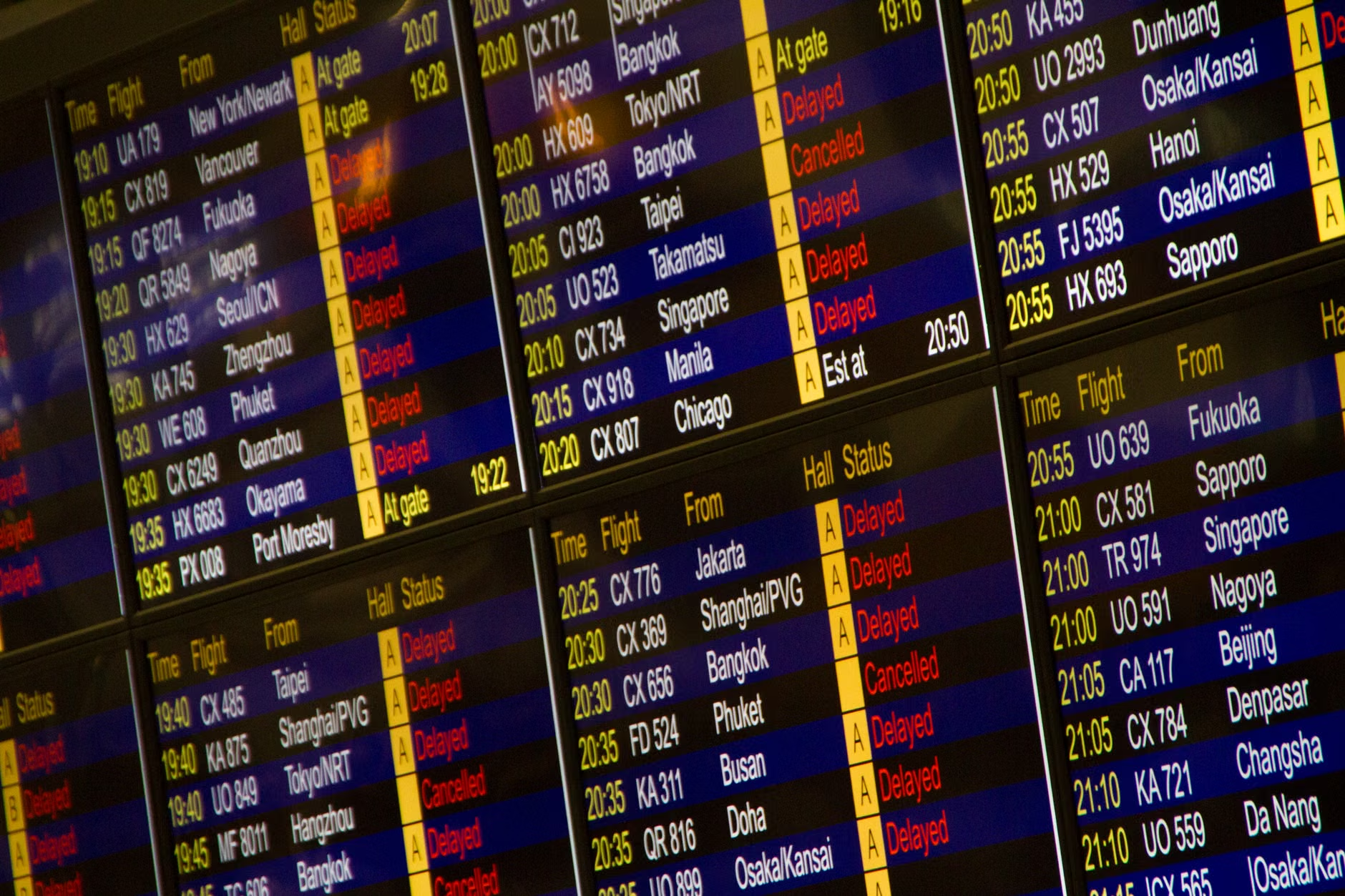
Practical Tips for the “Rail-Ready” Parent
To make this work, you need to treat the train like a moving living room. Here are three rules I follow when planning these trips:
- The Power Strip Rule: Most trains have limited outlets. A small, compact power strip allows you to charge your phone, your partner’s phone, and the kids’ tablets from a single outlet. It’s a lifesaver.
- The “Food-First” Policy: Never rely on the train’s bistro car to feed a hungry child. It’s expensive, the selection is often limited, and the queue can be long. Pack a “picnic kit” with high-protein snacks, fresh fruit, and water bottles. Treat the meal on the train as part of the fun.
- The Download-in-Advance Protocol: Don’t rely on train Wi-Fi for streaming. It is notoriously unreliable. Download all movies, shows, and games onto your devices while you are still at home on high-speed internet.
If you are worried about the kids getting restless, remember that the train offers something the plane doesn’t: the ability to walk. If a child gets fussy, you can take them for a walk to the next carriage. That simple change of scenery is often enough to reset their mood.
Managing Expectations and Potential Pitfalls
Rail travel is not a perfect, fairy-tale experience. Delays happen. Strikes (particularly in Europe) can be a factor. The best way to handle this is to build a “buffer” into your itinerary. If you need to be at your destination by 6:00 PM, aim for a train that arrives by 3:00 PM. This gives you a three-hour cushion for any unforeseen delays.
Also, understand the difference between high-speed rail and regional rail. High-speed trains are efficient but can feel like flying—you are in a tunnel or a concrete corridor for most of the trip. Regional rail is slower, stops more often, and gives you a much better view of the local landscape. For a “slow-adventure” trip, I almost always prefer the regional route, even if it adds an hour to the travel time.
Finally, check the accessibility of your station. If you are traveling with a stroller or heavy luggage, check the station’s website to see if there are elevators or ramps. Most major stations have them, but smaller, charming coastal stops might only have stairs. A quick Google Maps “Street View” check of the station entrance can save you from a very sweaty, stressful arrival.
The Psychological Shift of Slow Travel
There is a unique type of satisfaction that comes from traveling by rail. It satisfies a human need for movement that doesn’t feel like “rushing.” When you look out the window, you see the transition of the landscape—the urban sprawl turning into farmland, then into the rolling hills, and finally the glint of the ocean.
This visual transition helps your brain recalibrate. You are moving at a speed that allows your eyes to process the world. This is the antithesis of the “binge-travel” culture where we try to cram as many cities into a single week as possible. By choosing a coastal rail itinerary, you are committing to a style of travel that prioritizes your well-being over your “check-list” of sights.
For parents, this is crucial. We spend our lives in a state of high alert, managing schedules and expectations. The train provides a temporary, protected space where you don’t have to be “in charge” of the environment. The train conductor is in charge. The tracks are in charge. You are just along for the ride.
Moving Forward with Your Next Getaway
If you’ve been feeling the strain of the traditional “fly-and-flop” vacation model, it’s time to try something different. You don’t need to commit to a month-long cross-continent odyssey. Start with a weekend. Find a coastal town within a 3-to-5-hour train ride from your home, book a ticket, and see what happens when you actually allow yourself to arrive slowly.
The goal isn’t to be a “hardcore traveler.” The goal is to return home feeling like you’ve actually had a break. If you can step off that train, breathe in the sea air, and realize you aren’t exhausted, you’ve already won.
For more information on planning your specific route, check the official rail operator websites for your region, such as Amtrak for the U.S. or Eurail for European connections. These sites provide detailed route maps and booking tools that are essential for any rail-based trip.
Frequently Asked Questions
Q: Is rail travel really cheaper for a family of four?
A: It depends on how you calculate the cost. While base ticket prices can be higher than budget airlines, you save significantly on baggage fees, airport transfers, and the premium for convenience (like airport parking). When you calculate the “total trip cost” including the “last mile” transport, rail is often more competitive than people assume.
Q: What should I do if my kids get bored on a 4-hour train ride?
A: Treat the train as a mobile play space. Unlike a plane, you can move around. Bring non-messy activities like coloring books, card games, or audiobooks. The key is to manage the environment—bring your own healthy snacks and pre-downloaded entertainment so you aren’t reliant on the train’s limited onboard offerings.
Q: How do I handle luggage on a train?
A: The golden rule is “manageability.” If you cannot carry your luggage up a flight of stairs, it’s too heavy. Pack for a 1-week trip even if you are going for 2 weeks; most hotels offer laundry services. Aim for one primary suitcase per adult and one personal bag per person. This keeps you agile enough to navigate stations and platforms without needing a trolley.
SoCooly note: Always verify your specific train operator’s luggage policies before you leave, as some high-speed lines have stricter baggage limits than regional trains.