The most effective way to improve your child’s concentration at home isn’t by enforcing stricter screen-time rules, but by physically separating their “work” space from their “living” space to trigger a psychological transition into focus mode.
Key Takeaways for Your Study Nook
- Psychological Anchoring: A dedicated, fixed study space creates a neural association between location and task, significantly reducing the “warm-up” time needed to start schoolwork.
- Sensory Regulation: Controlling visual and auditory stimuli is more important than the quality of the furniture; even a small corner can be optimized with noise-canceling tools and neutral color palettes.
- The 80/20 Rule of Organization: Invest 80% of your effort into decluttering the line of sight and 20% into ergonomic seating to minimize physical fatigue during long study sessions.
If you have spent the last few months watching your child shift from the kitchen table to the sofa, then to the bedroom floor, all while struggling to finish a single math worksheet, you aren’t alone. We often mistake the lack of progress for a lack of discipline, when in reality, it is a lack of environmental architecture. In our 30s and 40s, we understand the value of a home office. Yet, we frequently assume children can focus anywhere. The reality is that children, especially those in primary or early secondary education, lack the executive function to filter out household background noise—the hum of the refrigerator, the television in the next room, or the general chaos of daily life.
Why the “Quiet-Zone” is Non-Negotiable for Deep Work
The concept of a “Quiet-Zone” isn’t about complete silence; it is about predictable stimulation. When a child works in a multi-purpose area like a kitchen table, their brain is constantly processing peripheral information: “Is that person walking by?” “What is that smell from the kitchen?” “Is someone talking?” This is known as “attentional blink”—a phenomenon where the brain fails to register a stimulus because it is already busy processing another. By creating a dedicated study nook, you are essentially reducing the cognitive load on your child’s brain, allowing them to dedicate their finite mental energy to the task at hand rather than to ignoring their surroundings.
Consider the difference between a high-traffic area and a controlled nook. In a high-traffic area, a child has to exert “top-down” control to stay focused. This is exhausting. By the time they have spent 30 minutes trying to focus at the kitchen table, their mental battery is already drained. In a dedicated “Quiet-Zone,” the environment does the heavy lifting, allowing the child to enter a state of “flow” much faster. This isn’t just about grades; it’s about reducing the friction in your daily routine.
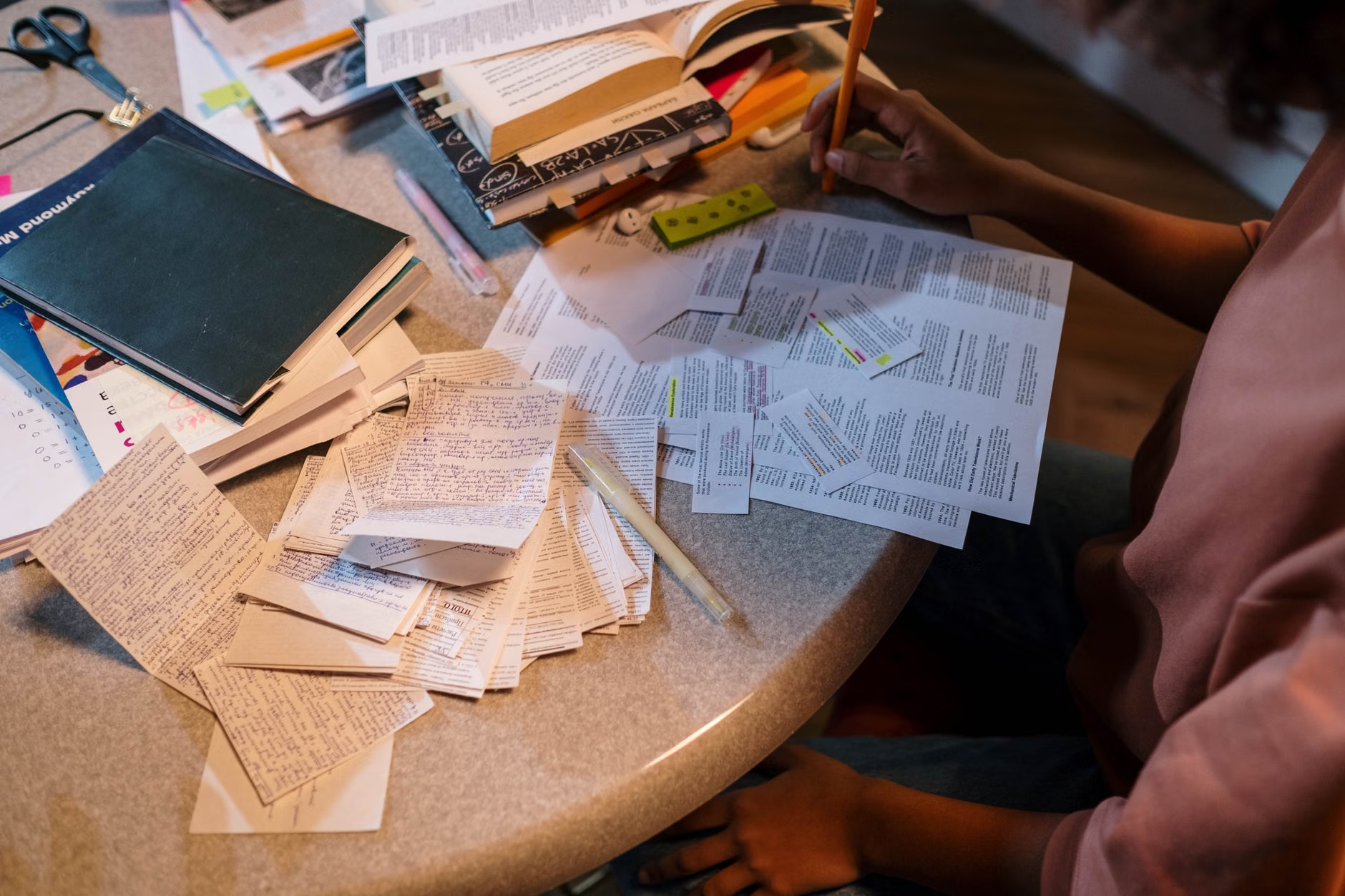
Planning Your Physical Space: The Geometry of Focus
You don’t need a spare bedroom to build a functional study nook. In fact, large, open spaces can often be more distracting than smaller, contained ones. The goal is to create a “cocoon” effect. When selecting a location, look for “dead zones” in your home—the space under a staircase, a quiet corner of a bedroom, or even a section of a hallway that doesn’t see much foot traffic. The key is to ensure the space is dedicated. If the desk is also where they eat lunch, the brain will never fully associate it with deep work.
When measuring your space, remember that the “active zone” for a child is roughly 80cm to 100cm wide. Anything larger becomes a dumping ground for clutter, and anything smaller feels claustrophobic. If you are working with a tight space, prioritize vertical storage. Shelves above the desk can hold books and supplies, keeping the primary work surface clear. A clear surface is the single biggest contributor to a clear mind.
Comparison: The “Kitchen Table” vs. The “Dedicated Nook”
| Feature | Kitchen Table (Common Pitfall) | Dedicated Quiet-Zone (Recommended) |
|---|---|---|
| Visual Distractions | High (Traffic, household items) | Low (Limited to workspace) |
| Setup/Cleanup Time | High (Must clear before/after meals) | Zero (Everything stays in place) |
| Mental Association | Social/Dining | Academic/Focus |
| Ergonomics | Poor (Often adult-sized chairs) | Adjustable/Correct height |
The takeaway here is clear: the kitchen table is a “context-switching” nightmare. Every time your child sits down, they have to mentally reconfigure the space. In a dedicated nook, the “on-ramp” to studying is significantly shorter. You want to reach a point where sitting in that chair is a physical trigger for the brain to stop fidgeting and start working.
Sensory Management: Controlling the “Noise Floor”
Noise is the enemy of focus, but it is rarely the noise you think. It isn’t just loud sounds; it’s the inconsistency of sound. A vacuum cleaner is loud, but it is a steady, predictable sound. A conversation in the next room is intermittent and unpredictable, which is much more distracting because the brain is hard-wired to try and “decode” speech.
To manage this, you don’t necessarily need expensive soundproofing. Start with the “three-layer” approach:
- Absorb: Use soft surfaces. A rug under the desk chair, a fabric wall hanging, or even a bookshelf filled with books can act as a sound absorber.
- Mask: Use white noise or nature sounds. A simple, inexpensive white noise machine or a playlist of “brown noise” (which is deeper and less harsh than white noise) can create a consistent sound floor that masks the intermittent, distracting sounds of the house.
- Block: If the environment is particularly noisy, noise-canceling headphones are the gold standard. They don’t have to be top-of-the-line; even entry-level over-ear headphones provide a significant barrier to auditory distraction.
Beyond sound, consider lighting. Avoid harsh, overhead fluorescent lights if possible. They are known to cause eye strain and can contribute to feelings of fatigue. A dedicated desk lamp with a warm-to-neutral color temperature (around 3000K to 4000K) focuses the light on the work surface, creating a “spotlight” effect that naturally draws the eye toward the book or laptop and away from the rest of the room.

The Ergonomics of Endurance
We often focus so much on the “look” of a study area that we ignore the physical mechanics. If a child is uncomfortable, they will move. If they move, they lose their focus. It is that simple. The most common mistake is using a standard dining chair. These are designed for sitting for 30–60 minutes, not for hours of focused study. A child’s feet should be firmly planted on the ground. If they are dangling, they are using core muscles just to stay stable, which leads to early fatigue.
If you don’t want to buy an expensive ergonomic chair, use a footrest. A simple box or a stack of books under their feet can make a standard chair significantly more comfortable. The height of the desk is equally important. When typing or writing, the elbows should be at a 90-degree angle. If the desk is too high, they will hunch their shoulders, leading to neck and back strain. If it is too low, they will slouch, which restricts breathing and reduces alertness.
Another overlooked variable is “visual clutter.” We tend to fill shelves with toys, posters, and decorations. While this might look “fun,” it is a disaster for focus. Keep the wall in front of the desk as neutral as possible. If you must have decorations, place them to the side or behind the child, where they aren’t in the direct line of sight when the child is looking at their work. The “less is more” philosophy is not just an aesthetic choice; it is a productivity strategy.
Implementing the “Transition Ritual”
Once the space is built, how do you get them to use it? This is where the “Transition Ritual” comes in. Just as we have a morning coffee routine to signal the start of our workday, children need a sensory trigger to enter “study mode.” This could be as simple as putting on a specific pair of noise-canceling headphones, turning on the desk lamp, or even a specific 5-minute playlist that they play only when it is time to work.
This ritual serves as a psychological “boundary.” It tells the brain, “The time for play is over; the time for focus has begun.” This is particularly effective for children who struggle with transitions. By making the start of study time a structured event rather than a command, you reduce the resistance that often comes with “time to do your homework.”

Troubleshooting Common Roadblocks
Even with the best setup, you will hit snags. Let’s look at the most common ones and how to solve them.
The “I’m Bored” Syndrome: If your child is constantly leaving the nook, the issue might be the nature of the work. If the work is too difficult, they will seek an escape. If it is too easy, they will seek stimulation. The nook is a tool for focus, not a magic cure for engagement. If they are struggling, check if the task is broken down into manageable chunks. If they have a 2-hour project, help them break it into four 30-minute sessions with a 5-minute break in between.
The “Technological Temptation”: If the study nook includes a computer, it is a gateway to distraction. Use software-based blockers during study hours. Tools like “Cold Turkey” or built-in parental controls on macOS and Windows can restrict access to gaming sites or YouTube during designated school hours. The goal is to make the “wrong” choice difficult and the “right” choice easy.
The “Shared Space” Conflict: If you are working from home in the same room, the distraction goes both ways. You are a distraction to them, and they are a distraction to you. In this case, use visual barriers. A folding room divider or a strategically placed bookshelf can create a physical wall between your workspace and theirs. It’s a simple, low-cost solution that provides the necessary psychological separation.
The Hidden Cost of “Multitasking”
One of the most persistent myths in modern parenting is that children can “multitask” their way through homework while listening to music, checking messages, or having the TV on in the background. Research into cognitive load theory consistently shows that “media multitasking”—the practice of juggling multiple streams of information—is detrimental to learning. When a child divides their attention, they aren’t just doing two things at once; they are performing “task switching,” which incurs a significant “switching cost.”
Every time they look away to check a notification or respond to a sound, it takes an average of 15 to 20 minutes to reach the same level of focus they had before the distraction. If this happens three times in an hour, they have spent the entire hour in a state of “shallow” processing. They might finish the assignment, but they aren’t learning the material. The Quiet-Zone is the antidote to this. By creating a space where the only option is to focus, you are helping them develop the neural pathways for deep, sustained attention—a skill that will serve them far better than any single assignment.
Action Plan: From Chaos to Calm in 7 Days
If you want to implement this, don’t try to do it all in one afternoon. Overhauling a space can be stressful. Follow this 7-day schedule to ensure it sticks.
- Day 1: Audit. Walk through your home and identify the three quietest, least-trafficked spots. Evaluate them for light, power outlet access, and potential for a desk.
- Day 2: Declutter. Choose one spot and remove everything currently in it. Clear the floor, clear the surfaces. A blank canvas is essential for planning.
- Day 3: The Foundation. Install the desk and ensure the seating is ergonomically sound. If the child is small, add a footrest.
- Day 4: Lighting & Sound. Install the desk lamp and test the lighting. Introduce the noise-masking solution (headphones or white noise machine).
- Day 5: The “Ritual” Setup. Sit down with your child and explain the purpose of the space. Let them choose one “focus object”—a plant, a specific stress ball, or a piece of art—to personalize the space without cluttering it.
- Day 6: The “Soft Launch.” Have them do a low-stakes task in the space, like reading a book or drawing, to get used to the environment.
- Day 7: Full Implementation. Move the schoolwork into the space. Use the “Transition Ritual” to start the first full session.
Refining the Environment Over Time
The “Quiet-Zone” is not a static installation. It should evolve with your child. As they grow, their needs will change. A primary schooler might need more space for physical manipulatives (like blocks or counters), while a secondary student will need more space for a laptop and reference materials. Re-evaluate the setup every six months. Is the desk still the right height? Is the lighting still adequate? Has the “Quiet-Zone” become a storage bin for junk?
A common mistake is assuming the “Quiet-Zone” is a punishment. Never use it as a place for “time-outs.” If the child associates the study nook with negative emotions, they will naturally avoid it. Keep it associated with achievement, calm, and progress. Celebrate the completion of tasks there. When they finish a hard project, acknowledge it: “You worked really hard in your nook today; I noticed how focused you were.” This positive reinforcement is what makes the space sustainable.
Final Thoughts on Building Focus
Creating a “Quiet-Zone” is a deliberate act of parenting in an age of constant distraction. It requires us to be intentional about our home environment, to prioritize function over aesthetic, and to respect the cognitive limits of our children. You are not just building a desk in a corner; you are building a habit of focus that will pay dividends for years to come. Start small, be consistent, and remember that the goal is to make the environment work for you, not against you.
For more information on the impact of environment on learning, you can refer to the research on educational environments provided by the OECD, which highlights how physical space influences student outcomes. Remember, the best study nook is the one that actually gets used. Keep it simple, keep it clean, and keep it consistent.
Frequently Asked Questions
Q: My home is too small for a dedicated desk. Can I use a portable setup?
A: Yes, but with a caveat. If you must use a portable setup, use a “focus kit”—a specific box or tray that contains everything needed for study (pencils, laptop, notebook). When it’s time to study, the tray is placed on the table. When done, it is packed away. This “pack-in, pack-out” system mimics the psychological boundary of a permanent desk.
Q: Should I allow music while they study?
A: It depends on the child and the music. Generally, avoid music with lyrics, as the brain’s language centers will try to process the words, which competes with reading or writing. Instrumental music, lo-fi beats, or nature sounds are better options. If they insist on music, test it: if their progress slows down or they seem distracted, switch to white noise.
Q: How do I handle the transition if my child resists the new space?
A: Resistance often comes from a lack of ownership. Involve them in the design process. Let them choose the lamp, the color of the desk organizer, or the type of noise-canceling headphones. When they feel like they “own” the space, they are much more likely to use it. Start with short, 15-minute sessions to build the habit before expecting them to spend hours there.