The “zero-proof” movement has officially moved beyond a fleeting trend, becoming a permanent fixture in global nightlife that allows you to enjoy a sophisticated social experience without the next-day brain fog or the parenting-induced exhaustion of a hangover.
- Quality over quantity: Modern zero-proof drinks use complex distillations, bitters, and botanicals rather than just sugary fruit juices.
- Social integration: Mocktail lounges are designed for the “sober curious” demographic, meaning you don’t have to sacrifice atmosphere or status to avoid alcohol.
- The “Morning After” advantage: Choosing zero-proof options eliminates the physiological strain of ethanol, which is particularly beneficial for those balancing high-pressure careers and young children.
If you are in your 30s or 40s, you have likely noticed a shift in how your social circle approaches “going out.” The days of feeling obligated to nurse a lukewarm beer just to have something in your hand are fading. You’ve got a meeting at 8:00 AM, a toddler who wakes up at 6:00 AM, or simply a desire to actually remember your conversations. Yet, you still crave the ritual of a well-crafted drink—the clinking of ice, the aromatic garnish, the ritual of decompression.
This is where the zero-proof lounge enters the picture. It is not just about “not drinking”; it is about elevating the experience of the non-alcoholic beverage to the same level of prestige as a classic cocktail bar.
What Actually Defines a “Zero-Proof” Experience?
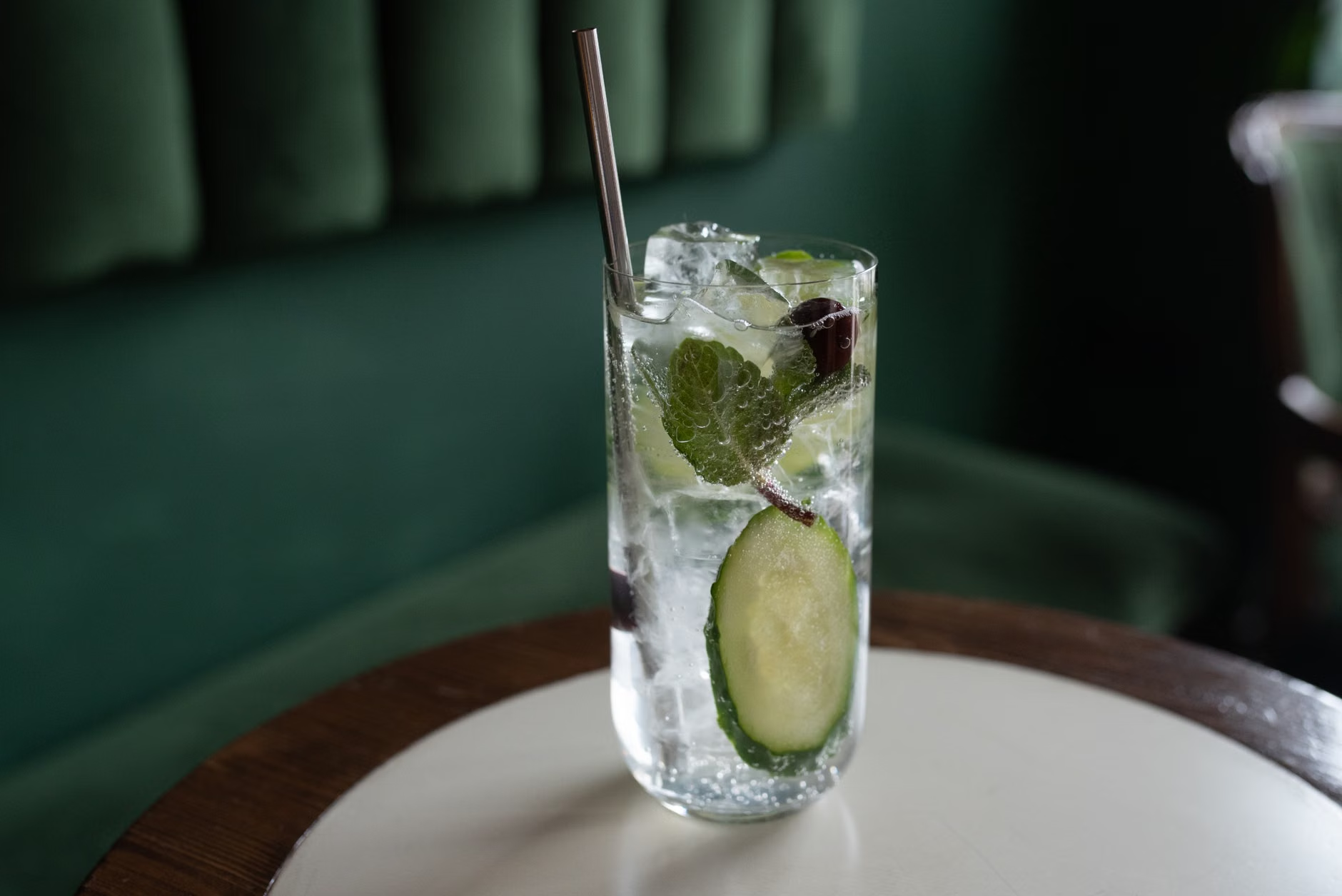
There is a massive difference between a mocktail and a zero-proof cocktail. A mocktail is often what you get at a standard chain restaurant: a mix of soda, pineapple juice, and grenadine that tastes like a sugar bomb. It is essentially a “kid’s drink” in a fancy glass. A zero-proof cocktail, by contrast, is a deliberate construction. It uses non-alcoholic spirits—distilled with botanicals, juniper, spice, or smoke—to mimic the complexity and “mouthfeel” of alcohol.
When you walk into a dedicated zero-proof lounge, you aren’t just ordering a drink; you are engaging with mixology. These venues prioritize the “adult” palate. They use house-made shrubs, fermented teas, rare bitters, and even non-alcoholic vermouths. The goal is to provide that “burn” or “bite” that we associate with alcohol, often achieved through ginger, chili, or specific botanical extracts, without the ethanol.
For someone in their 30s or 40s, this distinction is crucial. You want to feel like you are participating in the social ritual, not sitting at the “kids’ table.” When you order a drink that has undergone a week-long infusion process, you are participating in a craft, and that changes the entire psychological experience of the evening.
The Physiology of the “Sober Curious” Shift
Why is this happening now? The rise of the zero-proof movement is closely tied to a shift in how we view our personal performance. In your 20s, a hangover was an inconvenience. In your 30s and 40s, a hangover is a structural failure in your life. With the combined pressures of career advancement, property ownership, and parenting, our margins for error are razor-thin.
Alcohol is a sedative, but it is a disruptive one. It ruins sleep architecture—specifically REM sleep. Even one or two drinks can prevent your brain from entering the restorative stages of sleep you need to be a present parent or a sharp professional the next day. The zero-proof movement is, at its core, a biohacking trend. It is the realization that you can have the social lubrication and the sophisticated environment of a lounge without the metabolic cost of alcohol.
Consider the trade-off:
| Factor | Traditional Cocktail | Zero-Proof Cocktail |
|---|---|---|
| Social Ritual | High (Expected) | High (Refined) |
| Next Day Performance | Variable (Often Impaired) | High (Unimpaired) |
| Caloric/Sugar Load | High | Moderate (Usually lower) |
| Price Point | High | High (Due to ingredients) |
The price point is a common point of contention. People often ask, “Why should I pay $15 for a drink with no alcohol?” The answer lies in the labor and the ingredients. Non-alcoholic spirits are expensive to produce because they require complex distillation processes to extract flavor without the fermentation that creates alcohol. You are paying for the artistry and the premium ingredients, not the ethanol content.
If you find yourself in a high-end lounge that doesn’t explicitly label itself as “zero-proof,” don’t assume you are stuck with soda water. The best way to navigate these menus is to look for the “base” of the drink. Avoid anything that looks like a fruit punch. Instead, look for ingredients like “tonic,” “bitters,” “vermouth,” “syrup,” or “infused tea.”
Here is a simple decision rule for ordering:
- If you want something refreshing: Ask for a tonic-based drink with house-made citrus peels or botanical bitters.
- If you want something “moody” or complex: Ask for a drink featuring smoke (like Lapsang Souchong tea) or spice (like ginger or chili).
- The “Off-Menu” Hack: A good bartender will appreciate the challenge. If you say, “I’m not drinking tonight, but I love the profile of a Negroni—can you make me something bitter and herbaceous without the gin or vermouth?” you will almost always get a stellar result.
Common mistake: Do not ask for a “mocktail.” The term carries baggage. Instead, use terms like “zero-proof cocktail,” “non-alcoholic craft drink,” or “spirit-free selection.” It changes the bartender’s perception of what you are looking for.
The Social Dynamics of Not Drinking
One of the biggest hurdles for people in their 30s and 40s is the social stigma. We grew up in a culture where not drinking was seen as “weird” or “prudish.” However, that dynamic is shifting rapidly. In many major cities, the person who chooses not to drink is now seen as the one with the most self-control or the one who is “ahead of the curve.”
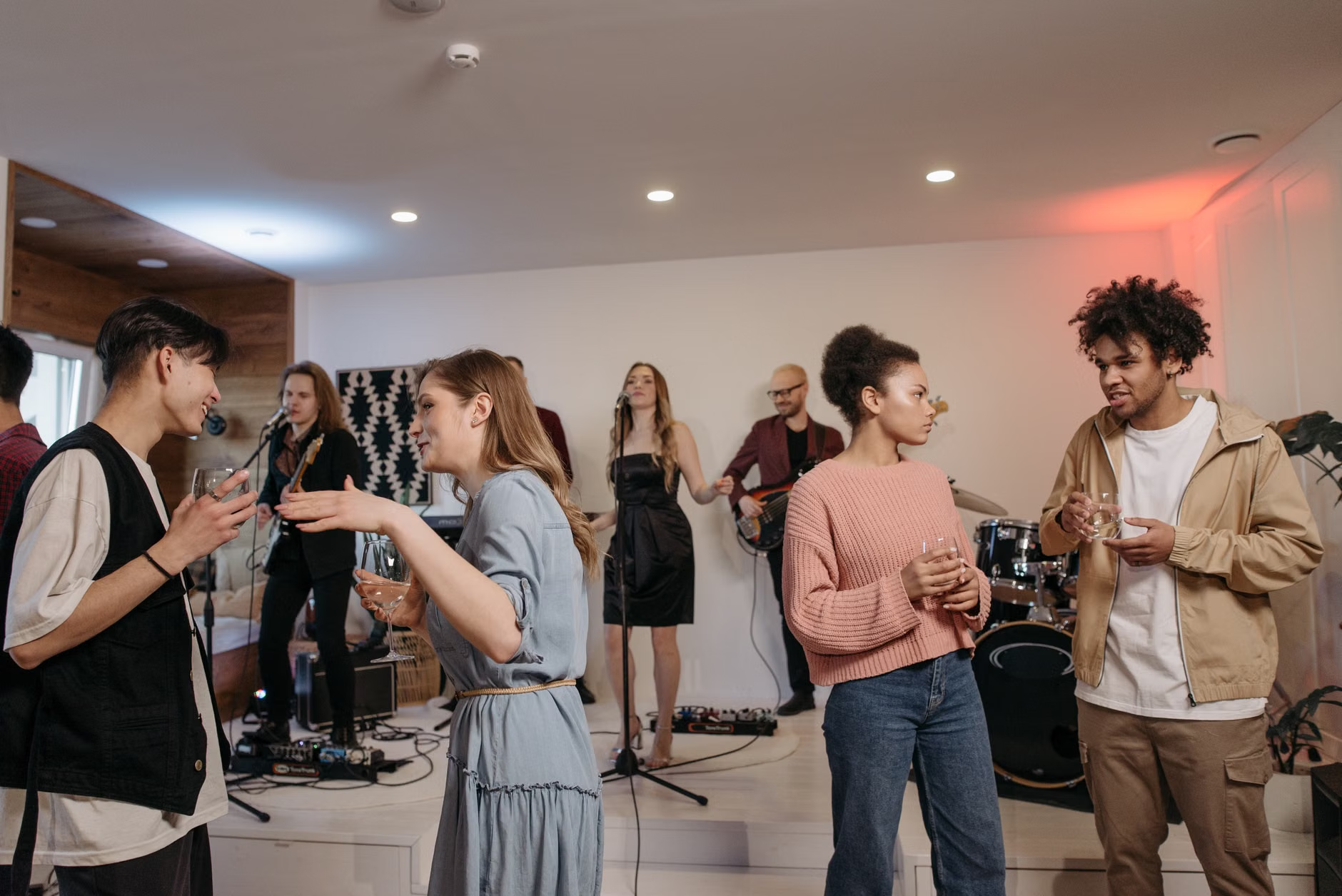
If you are worried about the social pressure of a night out, remember that most people are far more focused on their own drinks than on yours. If you are holding a glass that looks like a cocktail—and in a zero-proof lounge, it will—nobody is going to ask questions. You have effectively neutralized the social friction of “why aren’t you drinking?”
This is particularly useful at networking events or corporate dinners. You can stay sharp, keep your networking game on point, and not worry about the “alcohol-induced honesty” that can sometimes ruin a professional reputation. You get all the social benefits of the lounge environment without any of the risks.
Building Your Own Zero-Proof Lounge at Home
You don’t always need to go out to enjoy this trend. Building a “zero-proof bar cart” is one of the most rewarding home projects for a busy parent. It gives you a space to retreat to at the end of the day that feels like a reward.
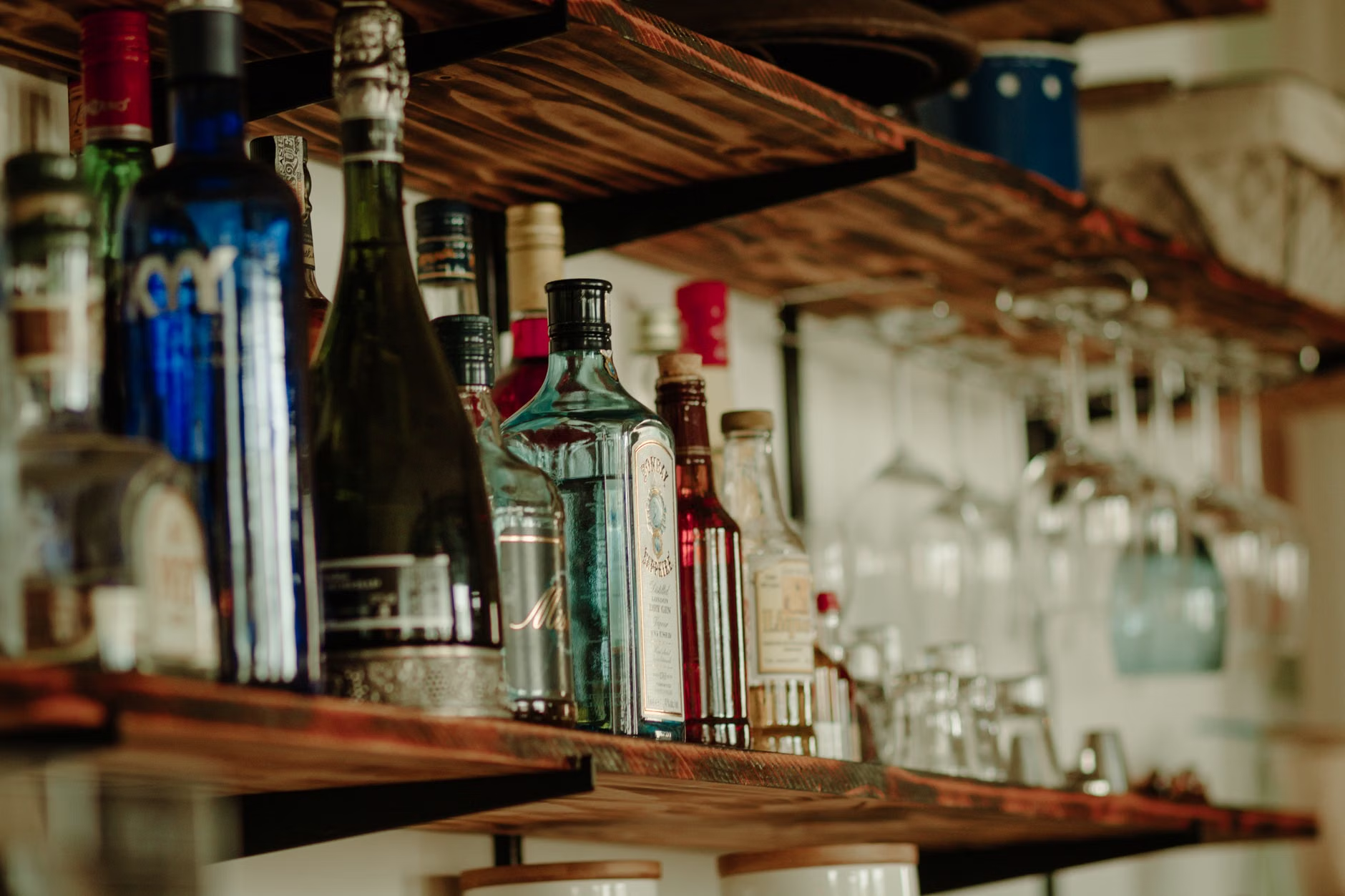
To start, you don’t need much. Focus on three categories:
- The Spirit Alternative: Invest in one high-quality non-alcoholic spirit. Brands like Seedlip, Lyre’s, or Ghia are leading this space. Pick one that matches your preference (e.g., something juniper-forward for gin lovers, or something bitter for aperitif lovers).
- The Bitters: This is the secret weapon. Most bitters contain trace amounts of alcohol, but because you use only a few drops, the impact is negligible. If you are strictly avoiding all alcohol, seek out “alcohol-free bitters” or use high-quality citrus oils.
- The Mixer: Don’t settle for supermarket tonic water. Buy artisanal tonics or make your own simple syrups with herbs from your garden—rosemary, thyme, or basil.
When you have these three elements, you can create a drink that is genuinely satisfying. It’s not about mimicking the buzz; it’s about the sensory experience of a complex, layered drink that signals to your brain that the workday is officially over.
The Hidden Variables: Why This Matters for Your 40s
As we move into our 40s, our metabolism slows down. The “empty calories” of alcohol—which are often hidden in sugary mixers—become more problematic. A single glass of wine or a cocktail can contain 150–250 calories. If you are trying to maintain a healthy weight while balancing a sedentary office job and a hectic parenting schedule, those calories add up. Zero-proof cocktails are often significantly lower in sugar and calories, making them a much more “aligned” choice for a balanced lifestyle.
Furthermore, there is the issue of “social anxiety.” Many people drink to manage social nerves. By switching to zero-proof, you are forced to engage with your environment and your company more authentically. It’s a form of mindfulness. You learn to navigate social settings without the crutch of a chemical relaxant. This is a skill that, once mastered, makes you a more confident person in every other area of your life.
One overlooked variable is the “ritual of transition.” Many of us use a drink to mark the boundary between “Work You” and “Parent/Home You.” If you stop drinking, you often lose that boundary. By replacing the alcohol with a zero-proof drink, you keep the ritual intact. You are still signaling to your brain that it is time to relax, but you are doing it in a way that doesn’t compromise your health.
Practical Next Steps
If you are ready to explore the zero-proof movement, don’t try to change everything overnight. Start by visiting one reputable zero-proof lounge or bar in your city. Observe what they are doing. Ask the bartender about the ingredients. Learn what you like. Is it the bitterness? The spice? The carbonation?
Once you know your palate, start experimenting at home. A simple “zero-proof spritz” (non-alcoholic aperitif, club soda, and a splash of citrus) is the perfect entry point. It’s quick, it’s refreshing, and it’s a great way to wind down after a long day of juggling professional and parental responsibilities.
Remember, the goal isn’t to be “perfectly sober” if that isn’t your goal; the goal is to be intentional. It’s about choosing when and how you drink, and ensuring that your social life supports your long-term health rather than working against it. You deserve a night out that leaves you feeling refreshed the next morning, not depleted.
Frequently Asked Questions
Q: Are all zero-proof drinks completely alcohol-free?
A: Most “non-alcoholic” spirits are distilled to contain less than 0.5% ABV, which is the legal threshold in many countries (including the US and parts of the EU) for a beverage to be labeled “non-alcoholic.” This is similar to the amount of alcohol found in a ripe banana or a glass of orange juice. If you have a medical condition that requires strictly 0.0% alcohol, always check the label or ask the bartender specifically.
Q: Is the zero-proof movement just a passing fad?
A: Data from global beverage trends suggests otherwise. The market for non-alcoholic drinks is projected to grow significantly over the next decade. This is driven by long-term shifts in health consciousness and a growing preference for “mindful drinking” among younger generations, which is now being adopted by Gen X and Millennials. It is a structural shift, not a temporary trend.
Q: How can I tell if a bar has good zero-proof options before I go?
A: Check their website menu. If a bar takes their zero-proof program seriously, they will list it as a dedicated section on their menu rather than hiding it in the “soft drinks” list. If you don’t see anything, check their Instagram or social media—modern, cocktail-forward bars often highlight their zero-proof creations there to attract the “sober curious” crowd.
For more insights on modern lifestyle shifts and wellness, keep following SoCooly. We are here to help you navigate the complexities of life in your 30s and 40s, one intentional choice at a time.
Sources:
World Health Organization: Alcohol Fact Sheet
National Institute on Alcohol Abuse and Alcoholism: Alcohol Facts and Statistics