By 2027, the “smart-grid” is no longer a futuristic concept for utility companies; it is the primary tool you will use to reclaim control over your household’s rising monthly energy costs. The core shift is simple: your home is evolving from a passive consumer of electricity into an active participant in the energy market, where you can automate your consumption to save money during peak price hours and even earn credits by feeding stored energy back into the grid.
Three Key Takeaways for 2027 Energy Management:
- Dynamic Pricing is Default: Utilities are moving away from flat rates; by 2027, you must use an automated “energy hub” to shift high-consumption chores to off-peak hours to avoid 30-50% price spikes.
- Vehicle-to-Home (V2H) is the New Battery: If you own an EV by 2027, your car is no longer just for driving; it is a 60kWh+ home battery that can power your essential appliances during grid outages or expensive peak windows.
- Hardware Interoperability is Mandatory: Avoid proprietary “walled garden” ecosystems; ensure your smart appliances and energy management systems use open standards like Matter to prevent being locked into a single, potentially obsolete, hardware manufacturer.
If you are in your 30s or 40s, you likely remember when the “smart home” was just about controlling your living room lights with a voice assistant. That was the hobbyist phase. We have now entered the utility-grade phase. With energy prices globally remaining volatile and the electrification of heating and transportation accelerating, the smart-grid is the bridge between your family’s comfort and a budget that doesn’t collapse under the weight of utility bills.
Understanding the Shift: Why Your Home Needs to Think for Itself
The traditional power grid was designed for a one-way flow: power plant to household. The 2027 smart-grid is a two-way conversation. As more households install solar panels and home battery storage, the grid becomes decentralized. Your utility company now needs you to manage your energy usage so they don’t have to fire up “peaker plants”—expensive, inefficient power stations that run only when demand is highest.
Why does this matter to you? Because utilities are increasingly rewarding households that help them balance this load. If your dishwasher, EV charger, and heat pump can communicate with the grid, they can throttle back during moments of high stress. In return, you pay lower rates. If you aren’t using these tools, you are effectively paying the “premium” price for your electricity, subsidizing those who are.

Think of it like this: your home is now a mini-factory. You have inputs (grid power, solar, wind) and outputs (appliances, EV charging, HVAC). A smart-grid energy management system acts as the plant manager. It knows that electricity is cheap at 3:00 AM, so it tells your EV to charge then and holds off on running the dishwasher until the solar panels hit peak production at noon.
The Evolution of Home Energy Hardware: Beyond the Smart Thermostat
In the early 2020s, many of us bought a smart thermostat and called it a day. By 2027, that is insufficient. The modern energy-managed home requires a three-tier setup to be truly effective:
1. The Energy Orchestrator (The Brain)
This is a central hub that connects to your utility’s API (the digital pipeline for data). It monitors real-time pricing and weather forecasts. If it sees a storm approaching that might disrupt the grid, it ensures your home battery is charged to 100% and minimizes non-essential loads. Popular platforms in 2027 act as the “control room” for your home.
2. Smart Load Control (The Muscles)
This is where things get practical. Instead of just turning a device on or off, “smart load controllers” are circuit-level devices that allow your hub to prioritize power. For example, if your home battery is low and the grid is expensive, the system might automatically disable the pool pump or the secondary water heater while keeping the refrigerator and the home office power circuits live.
3. Bidirectional Charging (The Reservoir)
If you are shopping for an electric vehicle in 2027, ensure it supports V2H (Vehicle-to-Home). This is the “killer app” of home energy. An average EV battery can power a typical home for two to three days. When you plug in at night, the car acts as a buffer. If the grid price spikes, the house pulls power from the car. When the price drops, the car charges back up. It is essentially a high-capacity battery that you happen to drive to work.
Real-World Scenarios: Managing the “Parenting Peak”
Let’s look at a hypothetical scenario for a family of four. It is 6:00 PM. The kids are home from school, the oven is on for dinner, the AC is running, and someone is plugging in an EV. In 2024, this would be a “peak load” event, likely triggering a high-tier utility price.
In 2027, your smart-grid setup handles this automatically. The system detects the heavy load and checks the current grid status. It sees that electricity rates are at their daily maximum. It automatically executes a pre-set rule: “During peak, prioritize cooking and cooling, but pause the EV charging and delay the dishwasher cycle until 9:00 PM.”
The result? You don’t have to change your habits, but your bill looks like you did. The inconvenience of waiting for the dishwasher is mitigated by the fact that the machine starts when the energy is cheapest, often saving you enough to pay for a streaming subscription or a small treat for the kids each month. These small, automated decisions compound.

Common Pitfalls and How to Avoid Them
The biggest mistake homeowners make is buying “smart” devices that don’t talk to each other. If you buy a smart dryer from Brand A, a solar inverter from Brand B, and a home battery from Brand C, and they all require their own separate apps, you haven’t built a smart-grid home—you have built a “notification nightmare.”
Decision Rule: Look for the “Matter” or “EEBUS” certification. These are communication protocols that ensure your devices speak the same language. If a device doesn’t support an open standard, you are betting on that manufacturer to keep their servers running and their software updated for the next 10 years. That is a risky bet.
Another pitfall is “over-automating.” Do not set your system to cut power to your home office during a work meeting just because the price of electricity bumped up slightly. Always set “critical loads” that the system is forbidden from touching, regardless of the price. Your home office, medical equipment, and security system should always remain powered. Energy management is about optimization, not deprivation.
| Strategy | Initial Cost | Effort Required | Potential Savings |
|---|---|---|---|
| Manual (Turning things off) | Low | High (Daily) | Low (Inconsistent) |
| Smart Thermostat Only | Low | Low | Moderate |
| Full Home Orchestration (2027 Standard) | High | Minimal (Set & Forget) | High (Significant) |
The table above illustrates a clear trade-off. While the upfront investment for a full orchestration system is higher, the “effort” cost is the primary factor for busy parents. You don’t have time to check electricity prices every afternoon. You need a system that acts on your behalf.
The Hidden Costs and Unexpected Trade-offs
Be aware of the “Software Subscription Trap.” As hardware becomes more commoditized, many companies are shifting to subscription models for their advanced energy-saving features. You might buy a smart panel, but find that you have to pay $10/month to see the “pro-level” analytics or to enable the automated peak-shaving features.
Before you purchase any device, check the manufacturer’s policy on subscription fees. If a device requires a cloud subscription to function as a smart device, consider it a “rental” rather than an asset. Look for hardware that offers local control, meaning it can make decisions even if your internet goes down.
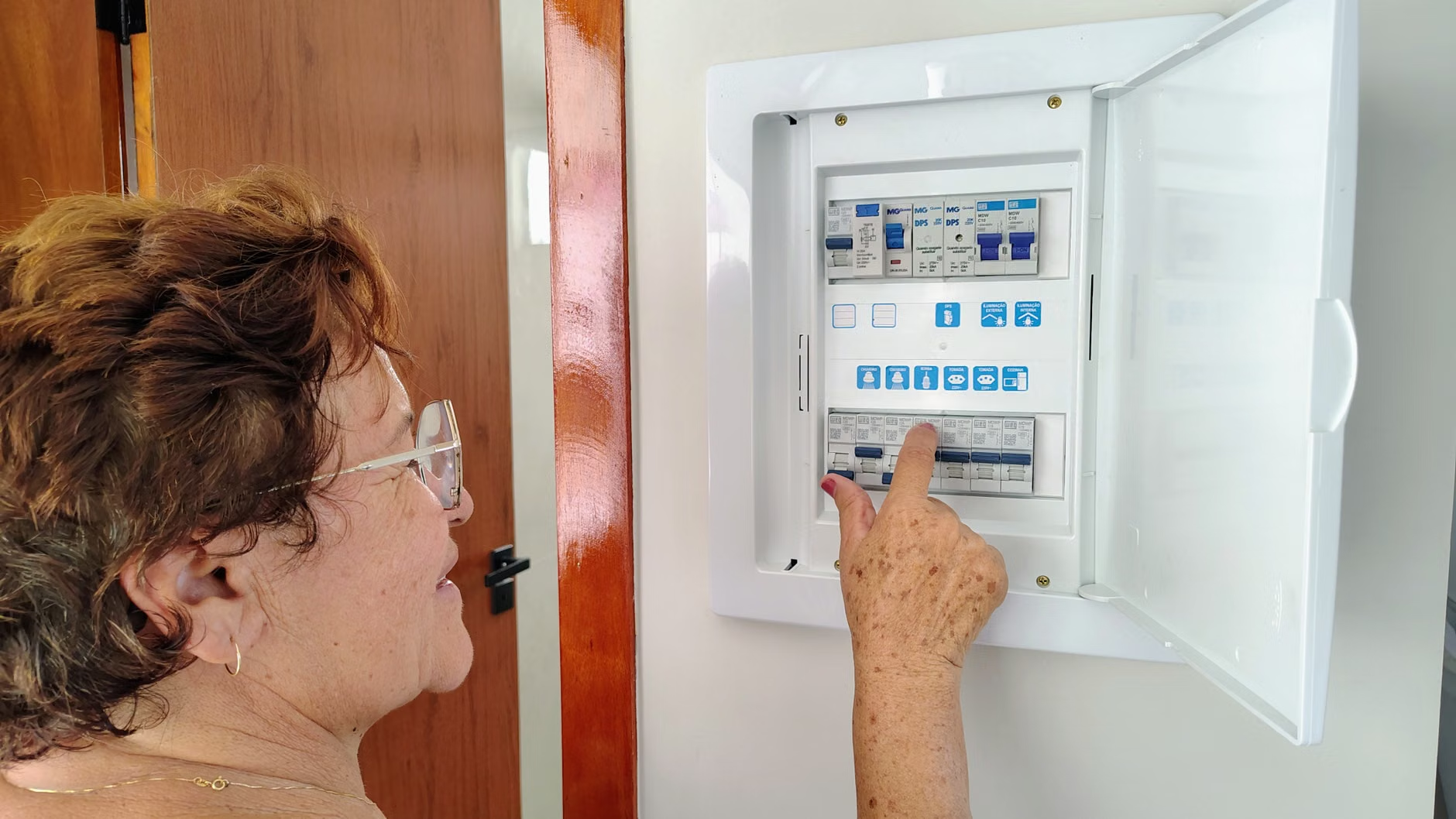
Also, consider the physical space. A smart electrical panel or a battery bank is not a small, aesthetic item. It takes up wall space in your garage or utility room. Plan for the installation before you buy. Many homeowners find that their older electrical service panels need an upgrade to handle the high current demands of a 2027-style energy setup. Budget for an electrician to inspect your main breaker capacity before you commit to a major hardware purchase.
Step-by-Step: How to Future-Proof Your Home Today
You don’t need to do everything at once. In fact, doing so is often a recipe for frustration. Follow this phased approach:
- Audit Your Current Load: Install a non-invasive energy monitor (like those that clamp onto your main breaker) to see exactly where your energy is going. You might be surprised to find that an old freezer in the garage is costing you more in electricity per year than it’s worth.
- Upgrade Your Thermostat and Lighting: These are the “low-hanging fruit.” If they aren’t smart, they are likely wasting energy.
- Choose Your Ecosystem: Pick one robust smart-home platform (e.g., Home Assistant, Apple Home, or a specialized energy management provider) and ensure your future purchases are compatible.
- Invest in Load Control: When you replace your next major appliance—like a water heater or HVAC unit—ensure the replacement is “grid-ready.” Most modern heat pumps, for example, have a “Demand Response” port that allows the utility to signal them to lower power consumption during emergencies.
By following these steps, you are not just “buying tech.” You are building an infrastructure that will pay for itself over the next decade. Energy costs are unlikely to drop significantly in the coming years due to infrastructure upgrades and the transition to renewables. The smart-grid is your insurance policy against those rising costs.
Frequently Asked Questions
1. Is it worth upgrading my old appliances just to get “smart” features?
Generally, no. If your current appliance is functioning well, the energy savings from a “smart” version won’t cover the cost of the replacement. Wait until your current appliance reaches the end of its life, and then make the “grid-ready” feature a non-negotiable requirement for your new purchase.
2. Can I use these smart-grid systems if I live in an apartment or condo?
It is more difficult, but not impossible. You can still use smart plugs for individual devices and smart thermostats if your HVAC system is independent. However, the “smart panel” level of control is usually restricted to single-family homes. Focus on individual device automation if you are a renter.
3. What happens if my internet goes down? Will my house stop working?
A well-designed smart-grid system should have “local execution.” This means the hub makes decisions based on local data and pre-set rules even without an internet connection. Always check the product specifications for “offline mode” or “local control” capabilities before buying. Avoid products that are purely “cloud-dependent.”
Moving Forward
The transition to a smart-grid home isn’t about becoming a tech expert; it’s about being a savvy household manager. By 2027, the homes that are the most comfortable and the least expensive to run will be the ones that effectively automate their energy usage. Start by monitoring your current habits, prioritize open-standard hardware, and treat your home’s energy management as a long-term investment in your family’s financial resilience.
You have the power to turn your home into an efficient, self-regulating asset. Start small, stay focused on compatibility, and keep an eye on your long-term energy goals rather than just the latest gadgets. The grid is changing—make sure your home is ready to handle it.
For more information on demand response programs and how to participate in your specific region, consult your local utility provider’s website or the national energy department portal (e.g., energy.gov for US readers, or your local equivalent). These programs often provide rebates for the very hardware that makes a smart-grid home possible.