By 2027, the “Right-to-Repair” movement will transition from a niche hobbyist debate into a standardized global reality, forcing major tech manufacturers to provide you with the parts, tools, and manuals necessary to fix your own devices rather than forcing a costly replacement.
- Manufacturers must provide repair manuals: By 2027, proprietary “secret” repair guides will become public, allowing you to troubleshoot issues that previously required a “Genius Bar” or professional service center visit.
- Software locks will be restricted: The practice of “parts pairing”—where a device refuses to work because you replaced a battery with one not authorized by the manufacturer—is being legally phased out in major jurisdictions.
- Design for disassembly: New electronics will be engineered with modularity in mind, meaning that replacing a cracked screen or a degraded battery will move from a “professional-only” task to a standard, accessible household chore.
If you have ever stared at a smartphone with a shattered screen or a laptop battery that refuses to hold a charge for more than an hour, you know the frustration of the “planned obsolescence” cycle. You are quoted $400 for a repair that costs $50 in parts, or you are told the device is “vintage” and no longer supported. This isn’t just an inconvenience; it is a significant drain on your household budget, especially when you are juggling the tech needs of a growing family.
The upcoming 2027 regulatory landscape is designed to break this cycle. As laws like the EU’s Ecodesign for Sustainable Products Regulation and various U.S. state-level Right-to-Repair bills reach full maturity, the landscape of home tech is shifting. This isn’t just about saving the planet—it’s about regaining control over the expensive hardware you already own.
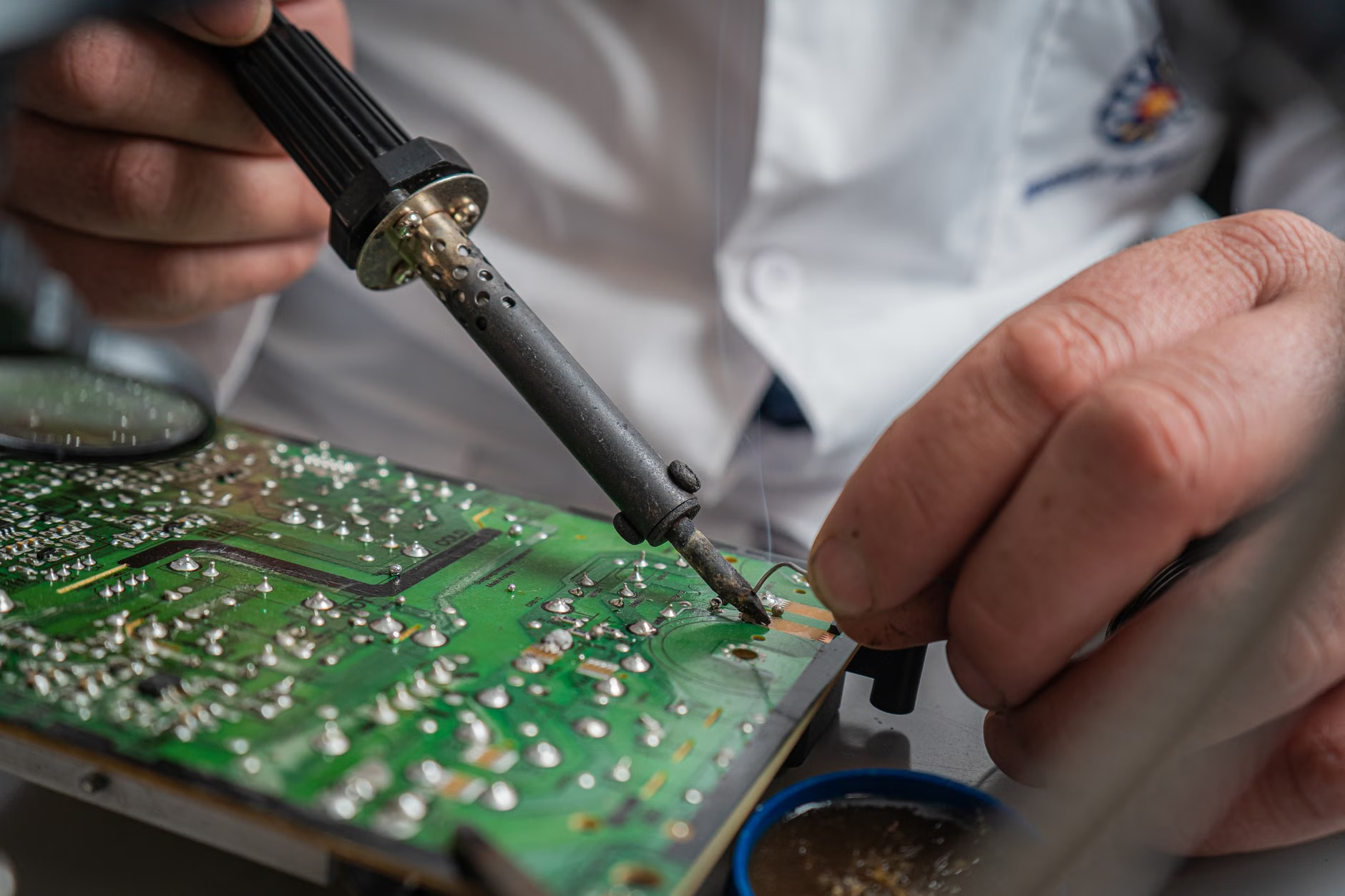
Understanding the Shift: Why 2027 is the Turning Point
For the past decade, the tech industry has operated under a model of “black box” manufacturing. Devices were glued, soldered, and software-locked to ensure that only authorized service providers could perform repairs. This created a monopoly on maintenance. However, by 2027, the legal requirements for manufacturers are changing fundamentally.
The core of the change lies in the legal definition of “repairability.” Regulators are now moving toward mandates that require companies to provide spare parts for a minimum of 5 to 7 years after a product is discontinued. Furthermore, they are banning “software serialization,” which is the technical term for when a manufacturer blocks a third-party part from functioning via software code. In 2027, if you buy a battery from a reputable third party, your phone will be legally required to accept it as functional.
For a parent in their 30s or 40s, this means you can realistically extend the lifecycle of a tablet or gaming console from two years to five or six. When you multiply those savings across four or five devices in your home, we are talking about thousands of dollars in reclaimed budget over the next decade.
What “Right-to-Repair” Actually Looks Like in Your Daily Life
It is easy to imagine that this law means everyone will suddenly become a master technician, but that isn’t the reality. Instead, it means that the barrier to entry for a simple repair is being lowered. Think of it like the difference between changing a car tire and rebuilding an entire transmission.
In 2027, “repairability” will be a key marketing metric, much like battery life or camera quality is today. You will likely see “Repairability Scores” on the boxes of new appliances and gadgets. A device with a score of 8/10 will mean that the battery is accessible without heat guns, the screen is held by screws rather than permanent adhesive, and the software is open to third-party calibration.
The Scenario: The “Kid-Proof” Tablet Dilemma
Imagine your child drops their tablet. In 2024, you might have been told that the cost of screen replacement is nearly the cost of a new device. By 2027, because of these laws, the manufacturer is required to sell you the screen module as a standalone part and provide a step-by-step digital guide on how to swap it. You won’t need a degree in electrical engineering; you will just need a standard set of precision drivers and a bit of patience. This shift transforms a “total loss” into a 30-minute Saturday morning project.

Comparing the Old Model vs. The 2027 Standard
To understand the magnitude of this shift, consider the following comparison of how we handle broken tech today versus how we will handle it in the near future.
| Feature | The “Old” Way (Pre-2027) | The 2027 Standard |
|---|---|---|
| Spare Parts | Restricted to authorized centers only. | Available for purchase by the general public. |
| Software Locks | Parts “pairing” disables features. | Software must support third-party parts. |
| Repair Guides | Proprietary and hidden. | Publicly accessible and mandatory. |
| Design | Glued/Permanently sealed. | Modular/Disassembly-friendly. |
This table illustrates a fundamental shift in power. When you hold the manual and can buy the parts, you are no longer a “consumer” in the passive sense; you become the owner of your hardware. The most important takeaway here is that you should start looking for repairability scores before you make your next major tech purchase. Don’t just look at the specs; look at the design philosophy.
The Hidden Costs and Trade-offs of DIY Repair
While the Right-to-Repair movement is a massive win for consumers, it is important to avoid the “DIY Trap.” Just because you can repair something doesn’t always mean you should. There are nuances to this new era that are often overlooked in the excitement of the legislation.
First, there is the issue of safety. Lithium-ion batteries, when mishandled, are dangerous. While manufacturers are making them easier to replace, they remain volatile components. If you are not comfortable working with small, potentially hazardous components, do not force yourself to do it just to save a few dollars. The “Right-to-Repair” also means that independent repair shops will have access to the same tools and manuals as the manufacturer.
This is a critical insight: The biggest beneficiary of these laws might not be the individual DIYer, but the local, independent repair shop. In 2027, you will have more options than just the “Official Manufacturer Store.” You will be able to take your device to a local shop that can perform the repair at a fraction of the cost, using genuine parts, because they are no longer legally blocked from doing so.
Common Mistakes to Avoid
- Ignoring the Warranty: Even with Right-to-Repair, opening a device improperly can void your warranty. Always check the specific manufacturer’s policy on “user-serviceable parts” before you start prying.
- Buying the Wrong Tools: Precision electronics require specific drivers (Pentalobe, Torx, etc.). Using a standard household screwdriver will strip the tiny screws and turn a minor repair into a disaster.
- Skipping the Documentation: Even if you are “handy,” never skip reading the official manual. Modern devices have delicate ribbon cables that can be snapped in a split second if you don’t know where they are located.
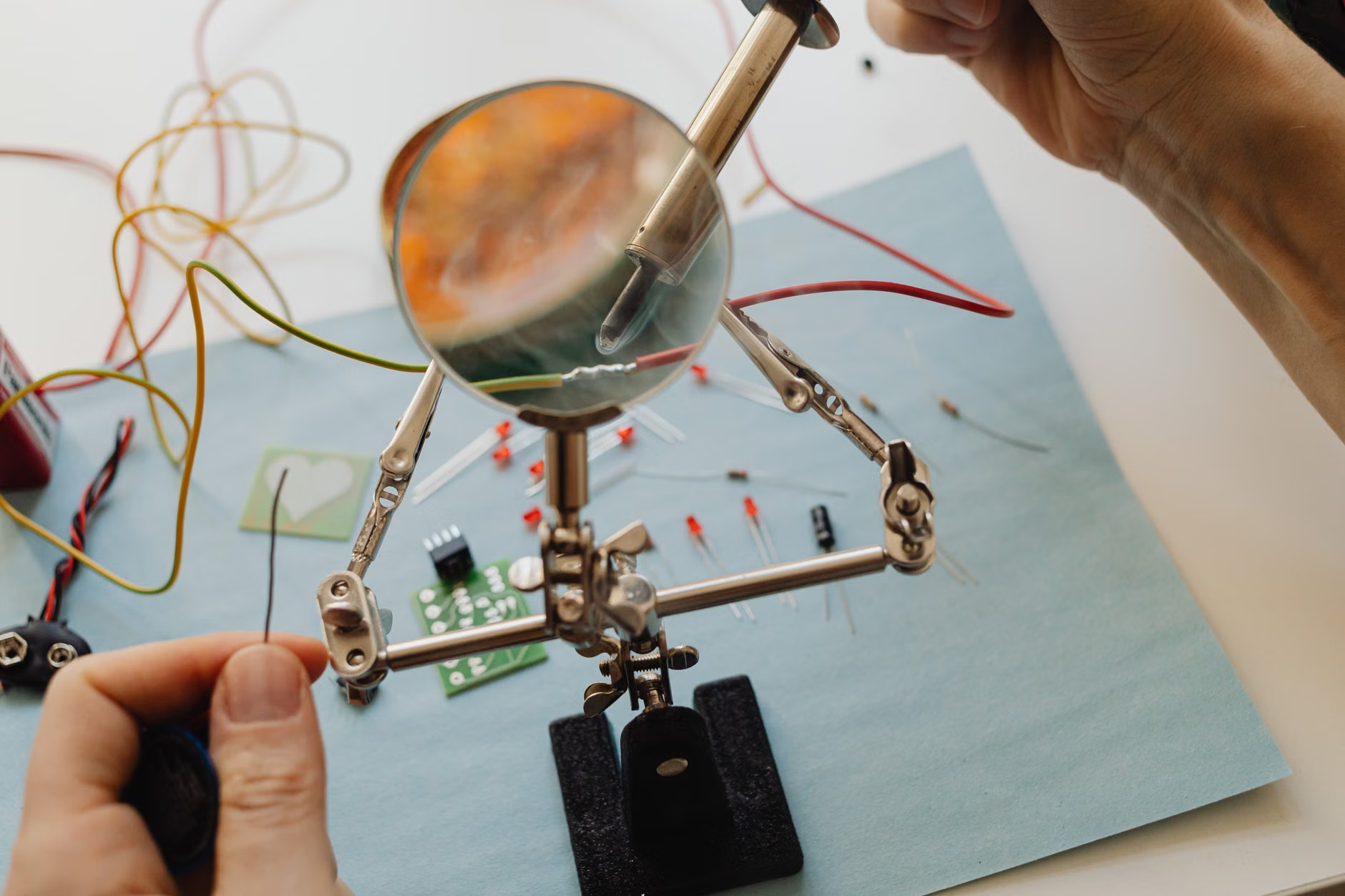
How to Prepare Your Household for the 2027 Transition
You don’t have to wait until 2027 to start benefiting from this trend. The industry is already shifting as companies prepare for the upcoming regulations. Here is how you can position your family to take full advantage of this new era.
1. Build a “Tech Library”: Start keeping the boxes and manuals for your electronics. In the future, these will contain the QR codes or links to the official repair portals. If you are digital-only, start a folder in your cloud storage titled “Device Manuals and Schematics.”
2. Invest in a Quality Repair Kit: You don’t need a professional lab, but you do need a decent set of precision tools. Look for a kit that includes a spudger (for prying), a suction cup, and a wide variety of bits. A one-time investment of $30–$50 will pay for itself the first time you avoid a $200 service fee.
3. Prioritize Modular Brands: When you are shopping for new appliances or phones, look for brands that are actively advertising their repairability. Some companies are already leaning into this as a competitive advantage. If a company makes it impossible to find out if a battery is replaceable, they are likely not a company you want to support in this new era.
4. Learn the Difference Between “Serviceable” and “User-Replaceable”: There is a difference. A “user-replaceable” battery is one you can swap in seconds. A “serviceable” battery is one that requires a bit of effort but is designed to be accessible. Understanding this distinction will help you set realistic expectations for your repairs.
The Economic Reality: Is It Always Cheaper to Repair?
A common misconception is that repairing is always the most economical choice. However, as a parent, your time is also a currency. If a repair takes you five hours of frustration and research, and a refurbished replacement is only $100 more, you have to weigh the trade-off.
In 2027, the market will likely see a rise in “Repair-as-a-Service.” Because parts are more available, the competition between repair shops will drive prices down. My recommendation for most families in their 30s and 40s is this: Use the Right-to-Repair laws to force down the price of professional repairs. You don’t have to do the work yourself to benefit from the law. You can now walk into an independent shop and say, “I know the part costs $20 and the manual is public; I’m happy to pay for the labor, but I won’t pay the ‘proprietary’ markup.”
This is the true power of the 2027 regulations. It changes the conversation from “I have no choice but to buy a new one” to “I have options.”
FAQ: Common Questions About the Future of Repair
Q: Will my old devices from before 2027 be eligible for these new protections?
A: Generally, no. The laws typically apply to new models released after the legislation takes effect. However, the increased availability of parts and manuals for newer models often creates a secondary market that can help you source parts for older devices as well.
Q: Does “Right-to-Repair” mean I can fix my own car or smart home appliances?
A: Yes, the scope of these laws is quite broad. It covers everything from smartphones and laptops to home appliances like refrigerators and washing machines. The goal is to move away from “disposable” consumer goods across all categories.
Q: What if I break my device while trying to fix it myself?
A: This is the risk of DIY. The law gives you the *right* to try, but it does not protect you from the consequences of your own mistakes. Always start with low-stakes repairs—like replacing a watch battery or a simple laptop component—before moving on to complex devices like smartphones.
Final Thoughts: Embracing the Shift
The transition toward more repairable technology is a long-overdue correction in our consumer culture. For those of us raising families, it represents a path toward more sustainable living and smarter financial management. By 2027, the ability to maintain our own devices will be a standard skill, much like basic home maintenance or cooking.
Don’t be intimidated by the technical jargon or the fear of breaking things. The goal of these regulations is to make technology transparent and accessible. Start small, stay informed, and remember that every time you choose to fix a device rather than replace it, you are not just saving money—you are casting a vote for a future where we own our technology, rather than the other way around.
For more information on the specific legislation in your region, check the official resources from the European Commission’s Ecodesign pages or the U.S. Federal Trade Commission’s recent reports on repair restrictions. Staying updated on these policies will give you the upper hand as a consumer in the years to come.