- Night trains save a hotel night: By choosing a sleeper, you effectively combine travel and accommodation costs, which often offsets the premium price of a private cabin.
- Booking windows matter: Unlike flights, high-demand sleeper routes (like the Austrian Nightjet or Japanese Sunrise Express) sell out months in advance; book at the earliest possible release date.
- Privacy is the priority: For families with children, booking a private compartment—even if it costs more—is the single most important factor for a successful, stress-free journey.
If you have spent any time scrolling through travel forums lately, you have likely noticed a trend that feels like a throwback to a more romantic era: the return of the sleeper train. In Europe, the expansion of the Nightjet network is making headlines, while in Asia, high-speed rail lines and refreshed sleeper classics are offering a compelling alternative to short-haul flights. For parents in their 30s and 40s, the appeal is obvious. The idea of tucking the kids into a bunk, falling asleep in one city, and waking up in the heart of another sounds like a logistical miracle compared to the airport security gauntlet.
But how does this hold up when you are actually traveling with a toddler who needs a specific bedtime routine, or a pre-teen who demands Wi-Fi and personal space? The reality of “slow travel” is rarely as picturesque as an Instagram reel. It requires a different kind of planning, a higher tolerance for unpredictability, and a clear understanding of what you are actually paying for. Let’s look at the revival of the night train and whether it is a genuine upgrade for your next family holiday or just a nostalgic trap.
The Financial Calculus: Is the Night Train Actually Cheaper?
The most common misconception about sleeper trains is that they are a “budget” travel option. If you compare a single seat on a night train to a budget airline flight, the train will almost always look expensive. However, that is the wrong comparison. To evaluate the true cost, you must view the night train as a bundled service: it is your transportation and your hotel room for the night.
Consider a family of four traveling from Paris to Berlin or Tokyo to Izumo. If you fly, you pay for the flight, the airport transfers, and at least one night in a hotel. If you take the train, you pay for the fare and the cabin supplement. In many cases, the total cost for the train is either equal to or slightly higher than the air-plus-hotel combo. The real “savings” are not necessarily in dollars or euros, but in the value of your time. You avoid the check-in lines, the baggage claim wait, and the hotel checkout/check-in shuffle. When you arrive at your destination at 7:00 AM, you are already there—ready to hit the city, rather than waiting for a 3:00 PM hotel check-in.
However, there is a hidden cost: food and comfort. Train dining cars are notoriously expensive and often limited. If you rely on the onboard bistro for every meal, your “budget” travel plan will quickly unravel. The pro move? Pack your own dinner and breakfast supplies. Think of it like a picnic in a cabin. This isn’t just about saving money; it’s about control. When you are stuck on a train with children, having the exact snacks they like is the difference between a relaxing journey and a meltdown.
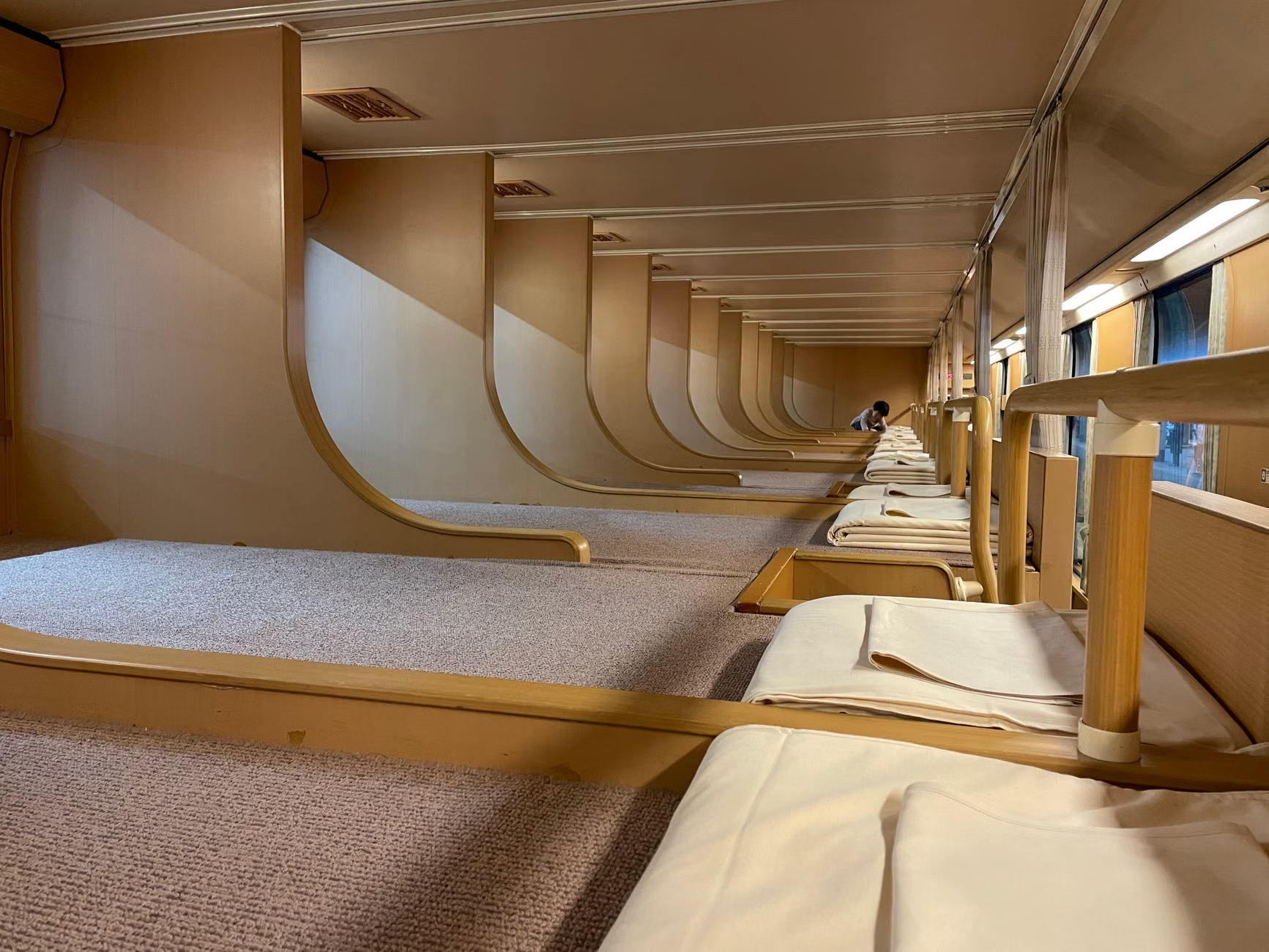
The biggest hurdle to the night train revival isn’t the experience itself; it is the booking process. Modern rail systems are fragmented. In Europe, while platforms like Thello or ÖBB Nightjet have simplified things, you are still often dealing with multiple national rail operators. In Asia, services like the Sunrise Express in Japan are legendary but notoriously difficult to book for international tourists because they often require physical presence or very specific local booking portals.
The Golden Rule: Book when the window opens. Most major rail operators release tickets 60 to 90 days in advance. If you wait until a month before your trip, the private compartments—the ones that make family travel possible—will be gone. You will be left with the choice of sharing a cabin with strangers or sitting in a standard recliner seat. For a family, sharing a cabin with strangers is a non-starter. It eliminates the ability to manage your children’s sleep, noise levels, and personal space.
When booking, look for specific “family” or “private” cabin options. Do not just book four berths in a shared carriage. Most modern sleeper trains offer a “Couchette” (more basic) or a “Sleeper” (deluxe). The “Sleeper” category usually includes a small sink, sometimes a shower, and a private lock. If you are traveling with children under 10, the “Sleeper” category is worth every penny. You gain the ability to lock your door, which provides a level of security and peace of mind that a basic couchette simply cannot match.
| Category | Pros | Cons | Best For |
|---|---|---|---|
| Private Sleeper | Privacy, secure locking, private sink/shower, quiet. | Expensive, limited availability. | Families with young children. |
| Couchette | Affordable, social atmosphere. | Shared space, communal bathrooms, noise. | Adults or older teens. |
| Reclining Seat | Cheapest option. | Very uncomfortable for long nights. | Budget-only travelers. |
Managing Expectations: The “Slow Travel” Reality
If you are used to the efficiency of a high-speed train or the speed of a jet, the night train will feel slow. It is meant to be. The train often takes a circuitous route, and it stops at various stations throughout the night. If you are a light sleeper, the rhythmic clatter of the tracks and the occasional lurch of the train as it shifts tracks might keep you awake. This is the reality of the experience. It is not a silent, smooth glide; it is a mechanical, moving environment.
How to handle the noise: Bring noise-canceling headphones for everyone, including the kids. Even if they don’t want to listen to music, the white noise of the headphones can mask the sound of the train and the voices of other passengers in the hallway. Also, consider the timing of your arrival. If the train arrives at 5:30 AM, do you have a plan? Most hotels will not let you check in until 3:00 PM. Have a strategy: find a local gym that offers day passes for a shower, or identify a luggage storage facility at the main train station. Do not assume you can just “walk into” a hotel at dawn.
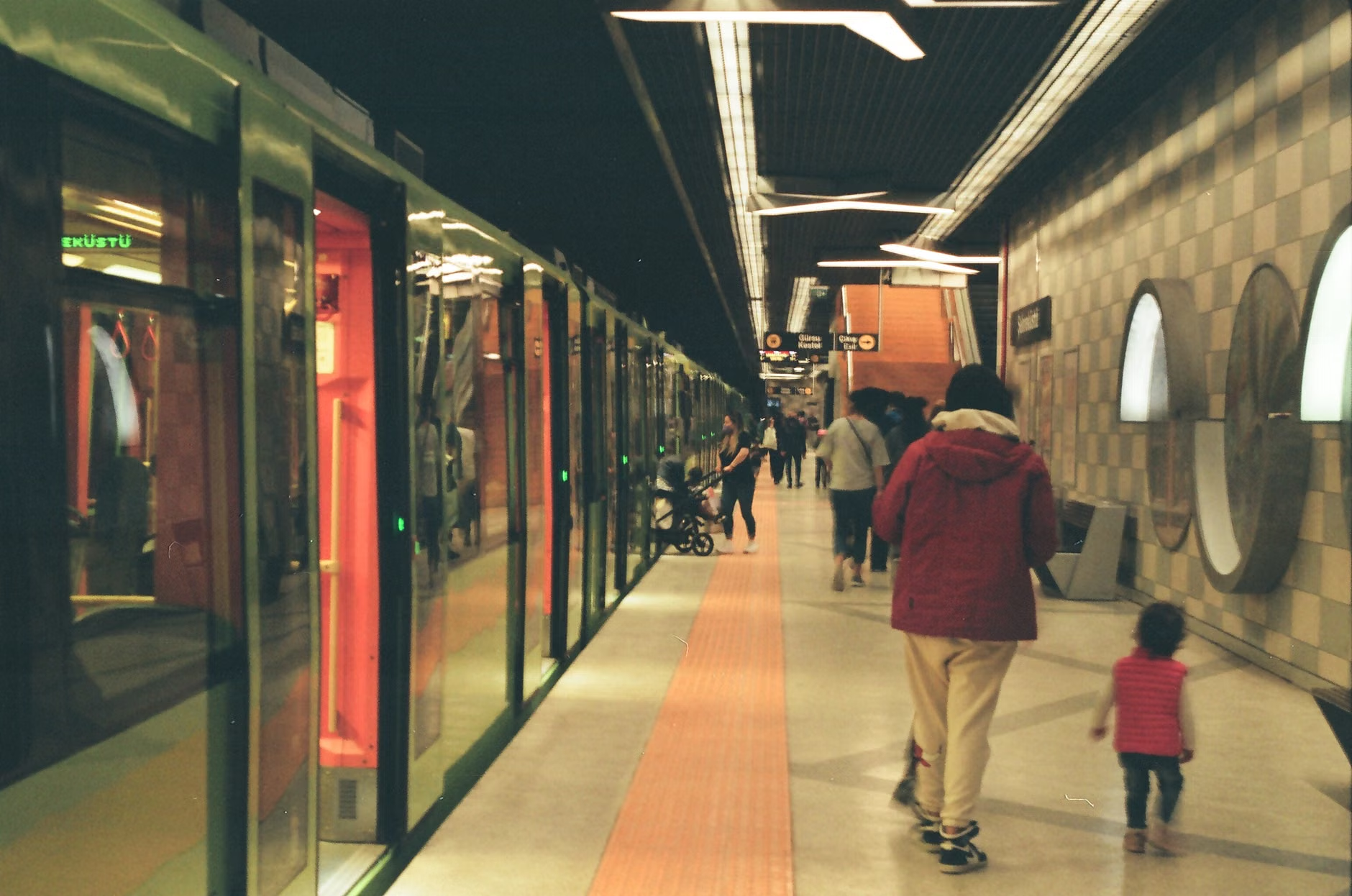
The Unseen Benefits: Why We Do It Anyway
Despite the potential for a restless night, many families are returning to night trains for reasons that go beyond the balance sheet. First, there is the environmental impact. As many families in their 30s and 40s become more conscious of their carbon footprint, the train offers a significantly lower-emission alternative to regional flights. It is a tangible way to teach children about sustainable travel choices.
Second, there is the experience of the journey. In a car or a plane, the travel time is “dead time.” You are staring at the back of a seat or the highway. On a train, the landscape changes. You can walk around. You can stand in the vestibule and watch the sun come up over a mountain pass. It turns the transit into a core part of the vacation memory. For children, the novelty of sleeping on a bunk bed on a moving train is an adventure in itself. It changes the narrative from “are we there yet?” to “look what we are passing.”
Third, it provides a structured environment. In an airport, you are constantly moving, scanning screens, and following instructions. On a train, once you are in your cabin, you are “home.” You can unpack your bag, put on comfortable clothes, and stay there for 10 hours. There is a sense of stability that is rare in modern travel.
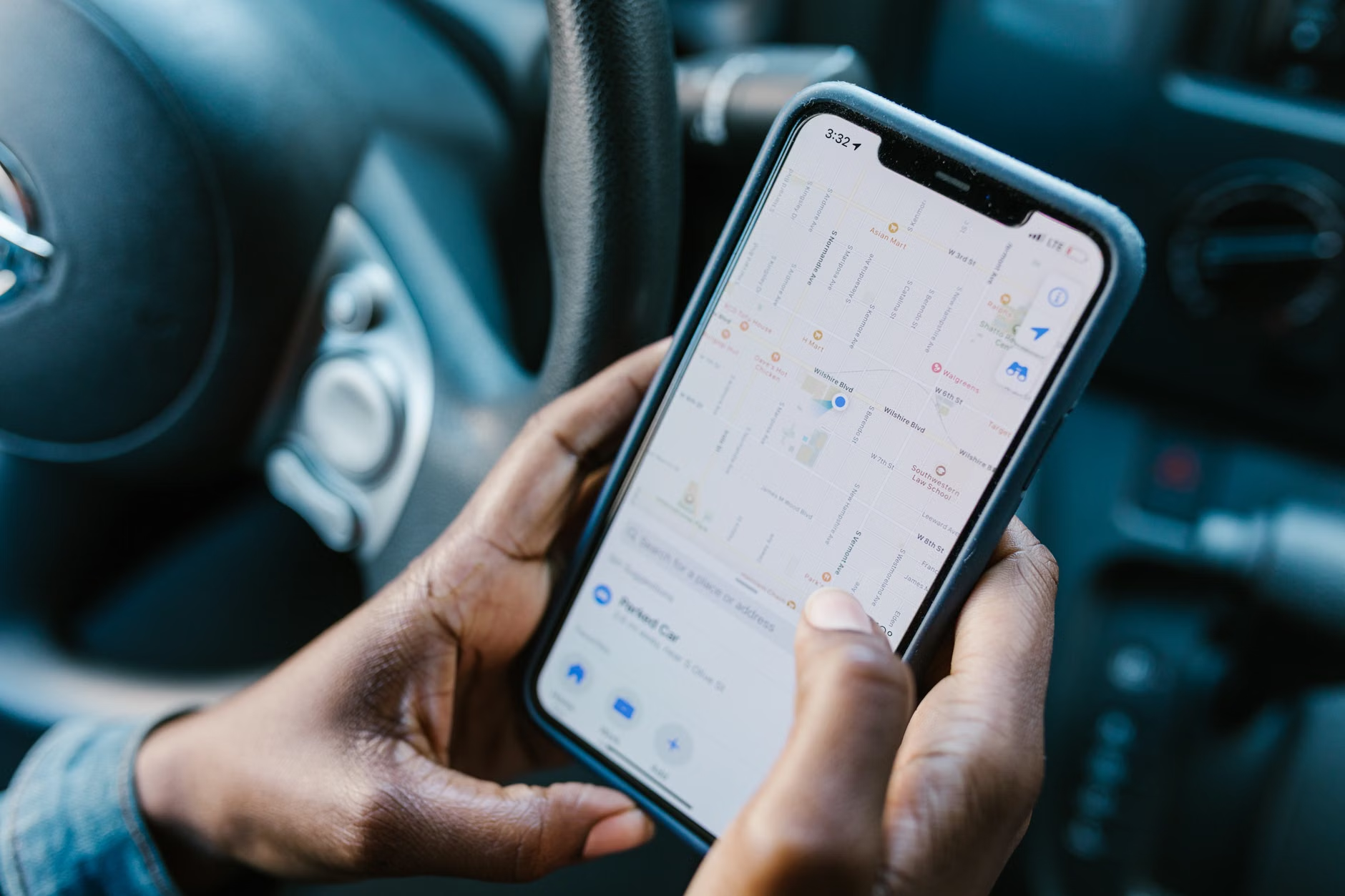
Actionable Steps for Your Next Booking
If you are ready to book your first night train, treat it like a serious operation. Here is your step-by-step checklist to ensure it goes smoothly:
- Identify the Route: Check if a direct sleeper service exists. Websites like The Man in Seat 61 (seat61.com) are the gold standard for unbiased, detailed route information. Do not rely solely on generic travel booking sites; they often miss the smaller, national rail operator options.
- Verify the Cabin Layout: Before you pay, look at the diagram of the carriage. Does the cabin have its own door lock? Is the bathroom down the hall or in the room? For families, “en-suite” is the goal.
- Pack the “Night Kit”: Do not pack your main luggage in a way that makes it hard to access. Pack a “train bag” with pajamas, toothbrushes, eye masks, and chargers. Keep this bag at the top of your pile. You do not want to be digging through a suitcase in a cramped cabin at 10:00 PM.
- Prepare for the Arrival: As mentioned, have a concrete plan for the first four hours after arrival. If you arrive at 6:00 AM, have a breakfast spot picked out that opens early, or confirm your hotel will hold your bags.
- Double-Check the Requirements: Some international trains require you to show your passport to the conductor when you board, especially if crossing borders. Have your documents easily accessible in the same place as your tickets.
One common mistake is expecting the train to be a hotel-quality experience. It is not. It is a train. The beds might be narrower than you are used to, and the climate control can be tricky. If you approach it with the expectation of a “glamping” adventure rather than a luxury hotel stay, you will be much happier. The goal is to maximize the time you get at your destination, not to spend the whole time in the cabin.
The Verdict: Is It Right for Your Family?
The night train revival is not for everyone. If your family struggles with tight spaces or requires a very specific, temperature-controlled environment for sleep, you might find the experience stressful. However, if you are looking to avoid the friction of modern air travel and want to add a unique, memorable element to your next trip, it is an excellent choice. The key is in the preparation. By booking a private cabin early, packing your own high-quality snacks, and having a clear post-arrival plan, you can turn a potentially chaotic transit into the highlight of your vacation.
As you plan, remember that this is a slower, more deliberate way to see the world. It requires patience and a bit of a sense of humor when things don’t go perfectly. But in an age where travel is often reduced to a frantic rush from point A to point B, the night train offers something rare: the chance to actually enjoy the distance in between. It is a reminder that the vacation doesn’t have to wait until you arrive; it can start the moment you step onto the platform.
Frequently Asked Questions
Q: Will my children be safe in a sleeper cabin?
A: Modern sleeper trains are generally very safe. Most private cabins have internal deadbolts or locking mechanisms that only you can control from the inside. However, always keep your valuables (passports, wallets) on your person or in a small bag under your pillow while you sleep. Treat the cabin like a hotel room: lock the door whenever you leave, even for a quick trip to the restroom.
Q: What happens if the train is delayed?
A: Train delays are a reality of rail travel. If you have a tight connection to another train or a pre-booked tour, always build in a “buffer” of at least 3-4 hours. If your sleeper train is significantly delayed, most rail operators have protocols for compensation or assistance, but you should always check the specific carrier’s policy on their website before you book.
Q: Is there Wi-Fi on these trains?
A: It varies wildly. Some modern Nightjet or high-speed sleeper services offer decent Wi-Fi, but many older carriages have spotty or non-existent connectivity. Never rely on train Wi-Fi for work or essential travel planning. Download all your movies, maps, and documents to your devices before you board. Think of the train as a “digital detox” zone.
For more detailed route maps and booking advice, you can visit the official ÖBB Nightjet site for Europe or the JR East portal for Japan. Always verify cross-border requirements on local government travel advisory pages before departure.