The most effective way to disconnect from the relentless pace of modern life in your 30s and 40s is not by booking a luxury resort, but by engaging in “slow-adventure”—specifically, low-intensity, multi-hour kayaking that forces your brain to recalibrate its internal clock.
- Prioritize Stability Over Speed: For recreational slow-adventure, choose a “sit-inside” or “sit-on-top” boat with a wide beam; tracking speed doesn’t matter when your goal is sensory decompression.
- The 3-Hour Rule: Aim for a 3-hour window on the water. Anything less is a workout; anything more without training leads to physical fatigue that masks the psychological benefits.
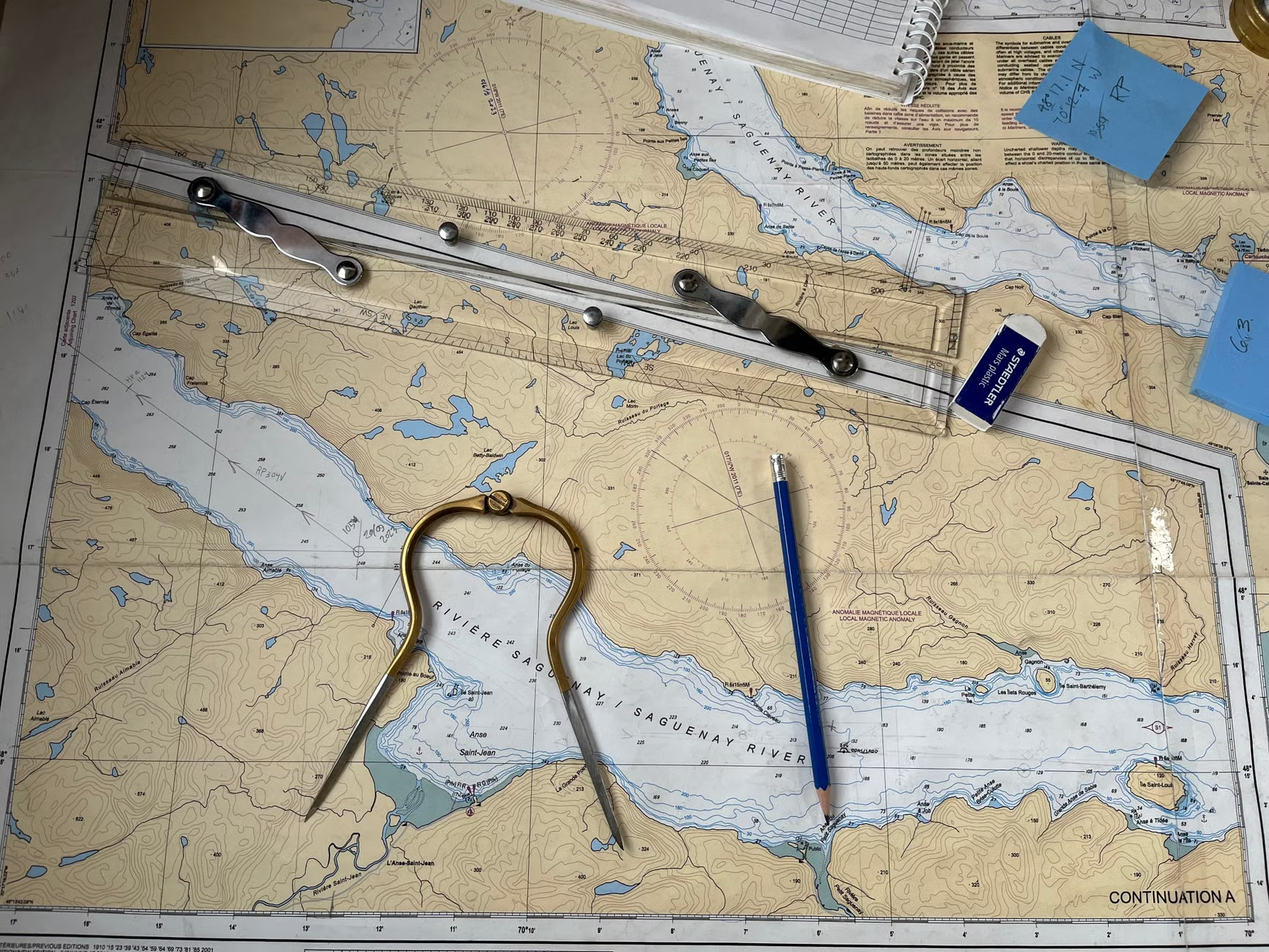
- Digital Minimalism is Mandatory: Your phone belongs in a dry bag, not in your hand. Use a physical map or a pre-downloaded offline GPS track to prevent notification-driven anxiety.
Why Slow-Adventure is the Only Reset You Need
If you are currently balancing a career, a mortgage, and the shifting demands of parenting, your brain is likely operating on “high-alert” mode. We are conditioned to optimize every minute. When we take a weekend off, we often treat it like a project, filling it with itineraries, reservations, and “must-see” spots. This is not rest; it is just a change of scenery for the same stressed-out brain.
Slow-adventure is the antithesis of this. It is a philosophy of movement that prioritizes the quality of the experience over the distance covered. When you are in a kayak, you cannot multitask. If you stop paddling, you drift. If you lean too far, you risk tipping. This forced focus on the immediate physical environment—the sound of the paddle breaking the surface, the temperature of the air, the flow of the current—acts as a natural mindfulness practice. You aren’t just “relaxing”; you are forcing your nervous system to switch from the sympathetic (fight or flight) to the parasympathetic (rest and digest) state.
Choosing the Right Vessel for Your Reality
The biggest mistake newcomers make is buying the “coolest” looking kayak. In the world of slow-adventure, the most expensive, narrow, sea-faring carbon fiber kayak is actually the worst tool for the job. You want a boat that acts as a stable platform for observation, not a high-performance vehicle.
For most readers, a recreational kayak (typically 9 to 12 feet long) is the ideal choice. These boats are wider, which increases stability, and they have larger cockpits, which makes getting in and out much easier—a significant factor if you aren’t as flexible as you were in your 20s.
| Feature | Recreational Kayak (Recommended) | Touring/Sea Kayak |
|---|---|---|
| Stability | High (Excellent for beginners) | Low (Requires balance/skill) |
| Primary Goal | Relaxation & Observation | Distance & Speed |
| Ease of Transport | Easier (Lighter, shorter) | Difficult (Longer, heavier) |
| Ideal Waters | Ponds, slow rivers, calm lakes | Open ocean, large bays |
If you are renting, look for “sit-on-top” kayaks if you are in a warmer climate or a shallow, calm area. They are virtually unsinkable and offer a sense of freedom that “sit-inside” models don’t. However, if you are in a cooler region (like parts of Northern Europe or Canada), a “sit-inside” kayak will keep your lower half dry and warm, which is essential for maintaining that “slow” state of mind.
Planning Your Route: The Art of the “No-Destination” Trip
Many people fail at adventure because they plan a destination. They want to get from Point A to Point B. In slow-adventure, the goal is to return to the start. This removes the performance pressure of “finishing” the route. When choosing a location, look for “flatwater” environments. These are bodies of water without significant current or tides.
Step-by-Step Selection:
- Check the Flow: Use local government water monitoring sites (e.g., USGS Water Data in the US or Environment Agency data in the UK) to check current speeds. Anything over 1-2 knots can quickly become a struggle for an untrained paddler.
- The Wind Factor: Wind is the enemy of the slow paddler. If the forecast predicts winds over 10-12 mph, cancel the trip. It will transform your peaceful drift into a battle against the elements.
- Access Points: Ensure your launch site has a “soft” entry—a sandy beach or a low-profile dock. Avoid steep, rocky embankments that require you to drag your boat through mud or sharp stone, as this creates immediate physical stress before you even start.
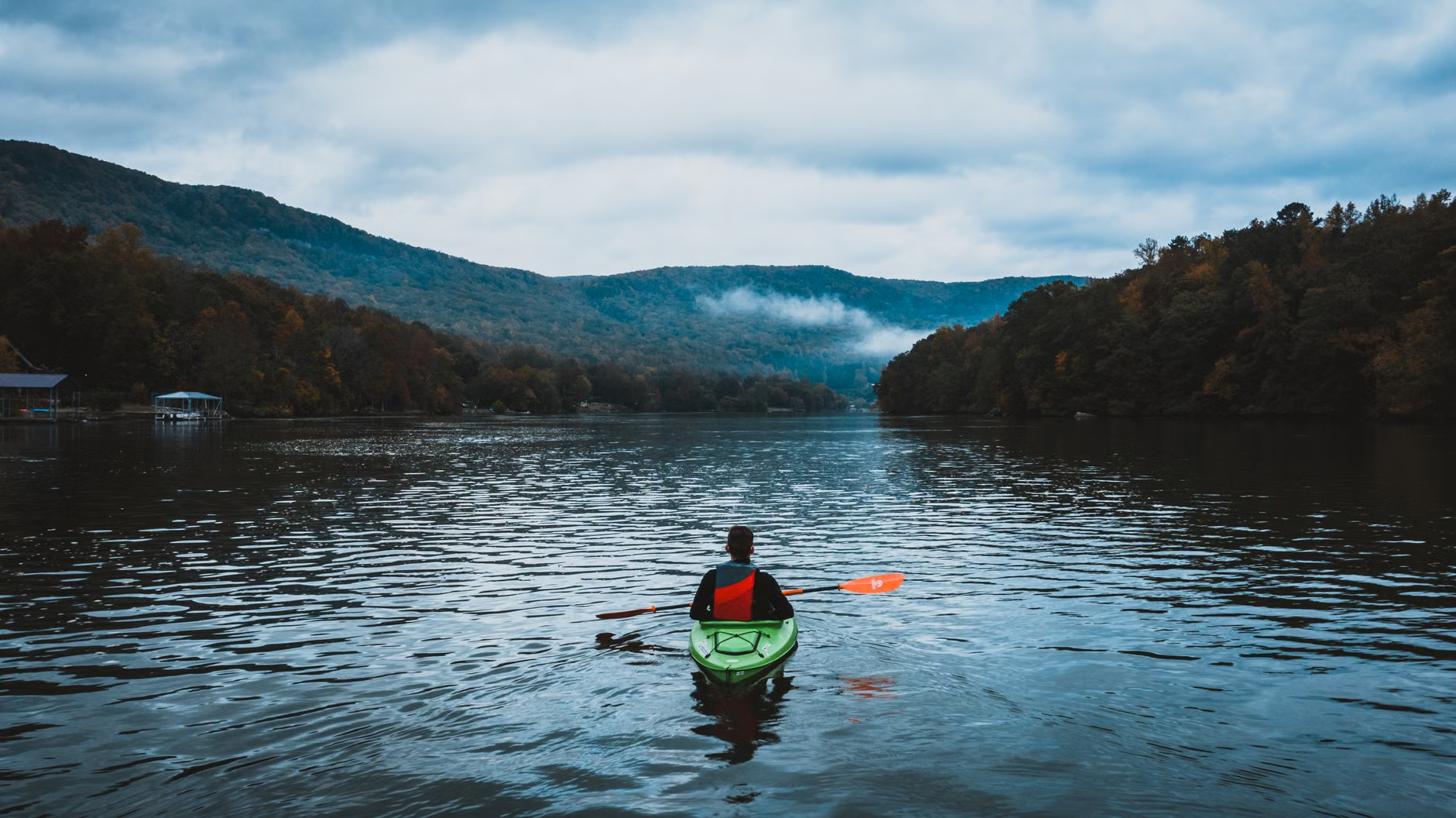
Once you are on the water, don’t just paddle. Paddle for 15 minutes, then drift for 15. The “drift” is where the magic happens. It allows you to observe the shoreline, the birds, and the patterns of the water. This is the “slow” part of the adventure. If you find yourself constantly checking your watch or your GPS to see how much “progress” you’ve made, you are doing it wrong.
Managing the Practicalities: Gear, Safety, and Hidden Costs
Because you are in your 30s or 40s, you likely value comfort and safety more than you did when you were younger. Don’t compromise on these. A sore back from a bad seat or a blistered hand will ruin your mental reset.
The “Must-Haves” for the Adult Paddler:
- A High-Back Seat: Most rental kayaks have cheap, flat seats. If you are buying your own, prioritize a seat with adjustable lumbar support. It makes a world of difference for your posture.
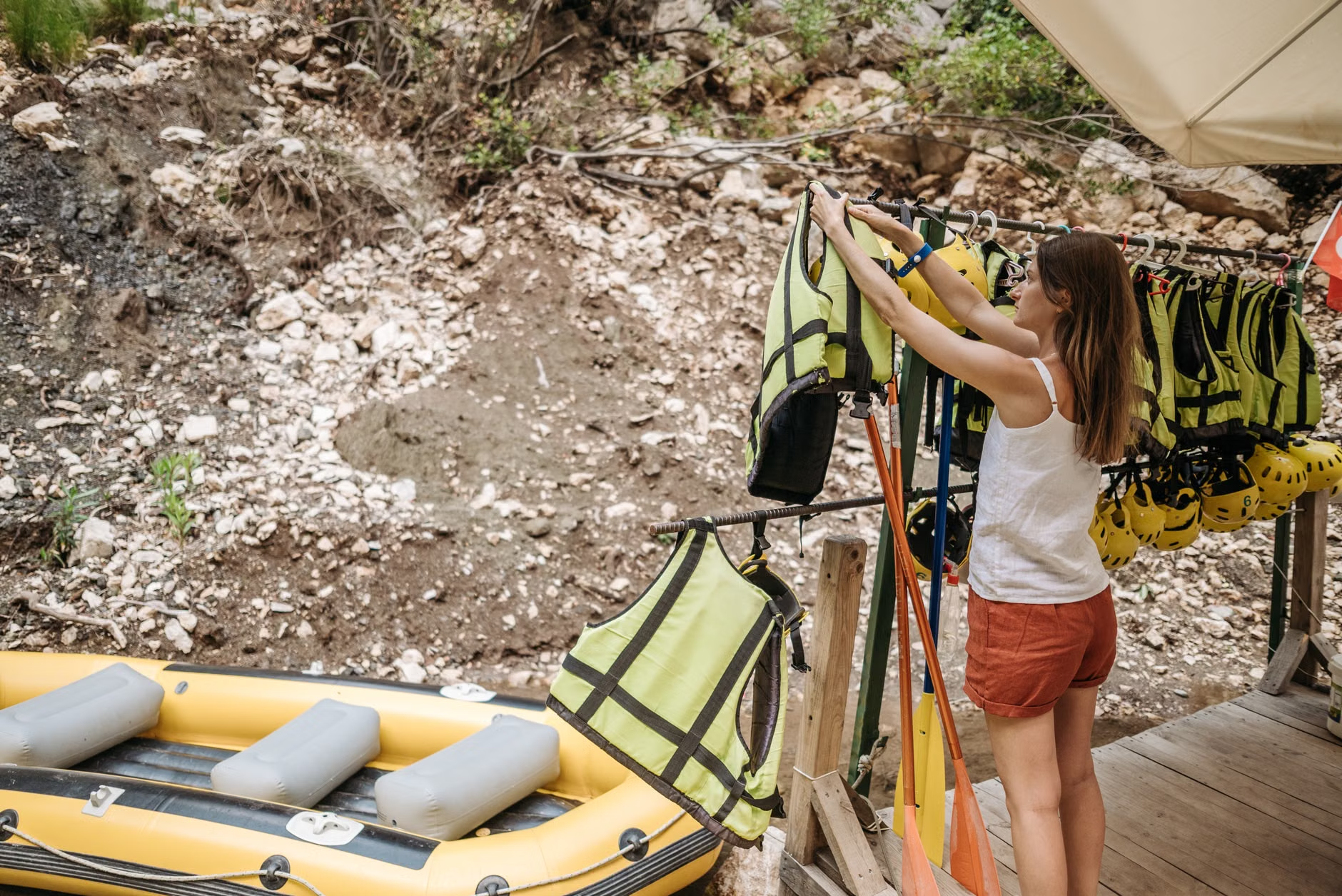
- The Personal Flotation Device (PFD): Do not view this as a bureaucratic requirement. A comfortable, well-fitting PFD (look for one designed for paddling, not sailing) provides a sense of security that actually helps you relax.
- Dry Bag Essentials: Always carry a small dry bag containing a first aid kit, a high-calorie snack (like trail mix), a spare light layer of clothing, and a whistle. Even on a “safe” lake, these items are your insurance policy against anxiety.
Common Mistake: Overestimating your physical endurance. If you haven’t been to the gym in a few months, don’t plan a 10-mile day. Your shoulders and core will protest by the second hour. Stick to a 2-3 mile loop. The objective is to feel refreshed, not to be so sore the next day that you can’t pick up your kids or work at your desk.
The Psychological Shift: Why We Need This Now
The “always-on” nature of modern professional life means we are constantly processing information. We are in a state of continuous partial attention. When you are on a kayak, the information flow is restricted to the physical world. This is a form of sensory deprivation that is remarkably hard to find anywhere else.
Research into “blue space”—natural environments with water—suggests that proximity to water has a restorative effect on the human brain, lowering cortisol levels and improving mood. Unlike a park or a forest, water is dynamic. It moves, it reflects light, and it makes sound. This provides a “soft fascination,” a psychological term for a state where we are engaged but not stressed, allowing our brains to recover from the “hard fascination” of screens and deadlines.
If you find that you cannot stop thinking about your email or your to-do list while on the water, try the “5-4-3-2-1” grounding technique: identify 5 things you can see (the ripples, the trees, the clouds), 4 things you can feel (the paddle, the seat, the wind, the sun), 3 things you can hear (water, wind, birds), 2 things you can smell (damp earth, pine), and 1 thing you can taste (water). This forces your brain out of the abstract future and into the concrete present.
Logistics for Parents: Making it Work
If you have children, the “slow-adventure” model needs a slight adjustment. You cannot force a “slow” pace on a bored child. If you are taking your family, the goal shifts from “personal decompression” to “shared connection.”
Use a tandem (two-person) kayak if the kids are young. It allows you to control the pace while the child gets to experience the water. Keep the trip short—no more than 60-90 minutes. Bring snacks. If they get bored, the trip ends. Do not try to push through for the sake of your own “me time.” The key to long-term success with family outdoor hobbies is ensuring the kids associate the water with fun, not with being trapped in a boat while a parent tries to “find themselves.”
Addressing the Hidden Hurdles
One overlooked variable is post-paddling fatigue. You might feel great while you are on the water, but once you step onto dry land, your equilibrium can be temporarily off, and your muscles might stiffen up. This is called “land legs.” Give yourself 20 minutes to sit by the water and stretch before you try to load the boat back onto your car or drive home. Drink more water than you think you need; the combination of sun and physical exertion is dehydrating, and dehydration is a primary cause of that “post-adventure” headache.
Another hurdle is the transportation barrier. If you don’t own a truck or a roof rack, the idea of owning a kayak seems impossible. Look into “inflatable kayaks.” Modern materials have made these incredibly durable and stable. They deflate into a backpack-sized bag that fits in the trunk of a sedan. They aren’t as fast as hardshells, but for slow-adventure, they are perfect. They remove the barrier of entry, allowing you to go from your house to the water in under 30 minutes.
Final Takeaways and Next Steps
The beauty of slow-adventure is that it requires very little maintenance and provides a very high return on investment for your mental health. You don’t need to be an athlete. You don’t need to travel to a remote wilderness. You just need a quiet piece of water, a few hours of time, and the willingness to let go of the need to “achieve” during your downtime.
Your immediate action plan:
- Weekend 1: Find a local rental shop, not a big-box store. Talk to the staff. Tell them you are a beginner looking for a “slow, stable experience.” They will guide you to the right boat.
- Weekend 2: Go alone. It is significantly harder to achieve a true mental reset if you are constantly talking to a partner or managing a group.
- Weekend 3: Establish your “kit.” Once you know you like it, invest in your own PFD and a high-quality dry bag. These two items alone will make your experience safer and more comfortable.
Stop waiting for the “perfect” time to take a break. The perfect time is the next available Saturday morning, before the rest of the world wakes up. The water is waiting, and it doesn’t care about your inbox.
Frequently Asked Questions
Q: Is it safe to kayak alone if I’m not an expert?
A: Yes, provided you stick to “flatwater” (small lakes, ponds, or slow-moving rivers) and stay close to the shore. Always tell someone where you are going and when you expect to return. Wearing a PFD at all times is the single most important safety rule for solo paddlers.
Q: How do I transport a kayak if I don’t have a large vehicle?
A: You have three options: rent at the water’s edge to avoid transport entirely, buy an inflatable kayak that packs into a trunk, or purchase a set of “foam blocks” that strap onto the roof of any standard car to carry a hardshell kayak safely.
Q: What should I do if I get tired or the weather changes?
A: Always have a “bailout” plan. Before you launch, identify at least two or three points along the shore where you can safely pull over and wait out a storm or take a break. If you feel tired, you have gone too far; turn around immediately. Never fight the wind or the current.
Sources and further reading: