Key Takeaways for the Transition
- The “Structure Gap”: The most common challenge is not academic, but the shift from child-led, open-ended play to teacher-led, time-constrained routines.
- Maintain the “Nature Anchor”: Keep at least one consistent outdoor habit (like a weekend trail walk) to provide a psychological buffer during the adjustment phase.
- Advocate for Autonomy: When choosing a school, look for institutions that prioritize “active learning” or “inquiry-based” models to better align with the freedom your child experienced in nature-based environments.
The transition from a nature-based preschool to a formal primary school is often more jarring for the parent than the child. If your child has spent their formative years climbing trees, counting pinecones, and learning math through the physical manipulation of sticks and stones, the sudden shift to a desk, a rigid schedule, and standardized assessments can feel like a cold splash of water. You aren’t just changing schools; you are shifting the fundamental philosophy of how your child interacts with the world.
The transition is rarely about academic readiness. Most children who thrive in nature programs possess high levels of resilience, problem-solving skills, and physical coordination. The challenge lies in the “Structure Gap”—the psychological and physical shift from high-autonomy environments to high-compliance environments. Understanding this gap is the first step in ensuring your child doesn’t lose their spark as they enter the formal education system.
Understanding the Shift in Learning Philosophy
Nature-based programs typically operate on the principle of emergent curriculum. This means the lesson plan is dictated by what the children find, observe, or question on any given day. If a bird’s nest is discovered, the lesson shifts to biology and empathy. Primary schools, conversely, operate on a standards-based curriculum. There is a fixed set of learning goals that must be met by specific dates, regardless of whether a bird’s nest is currently distracting the class.
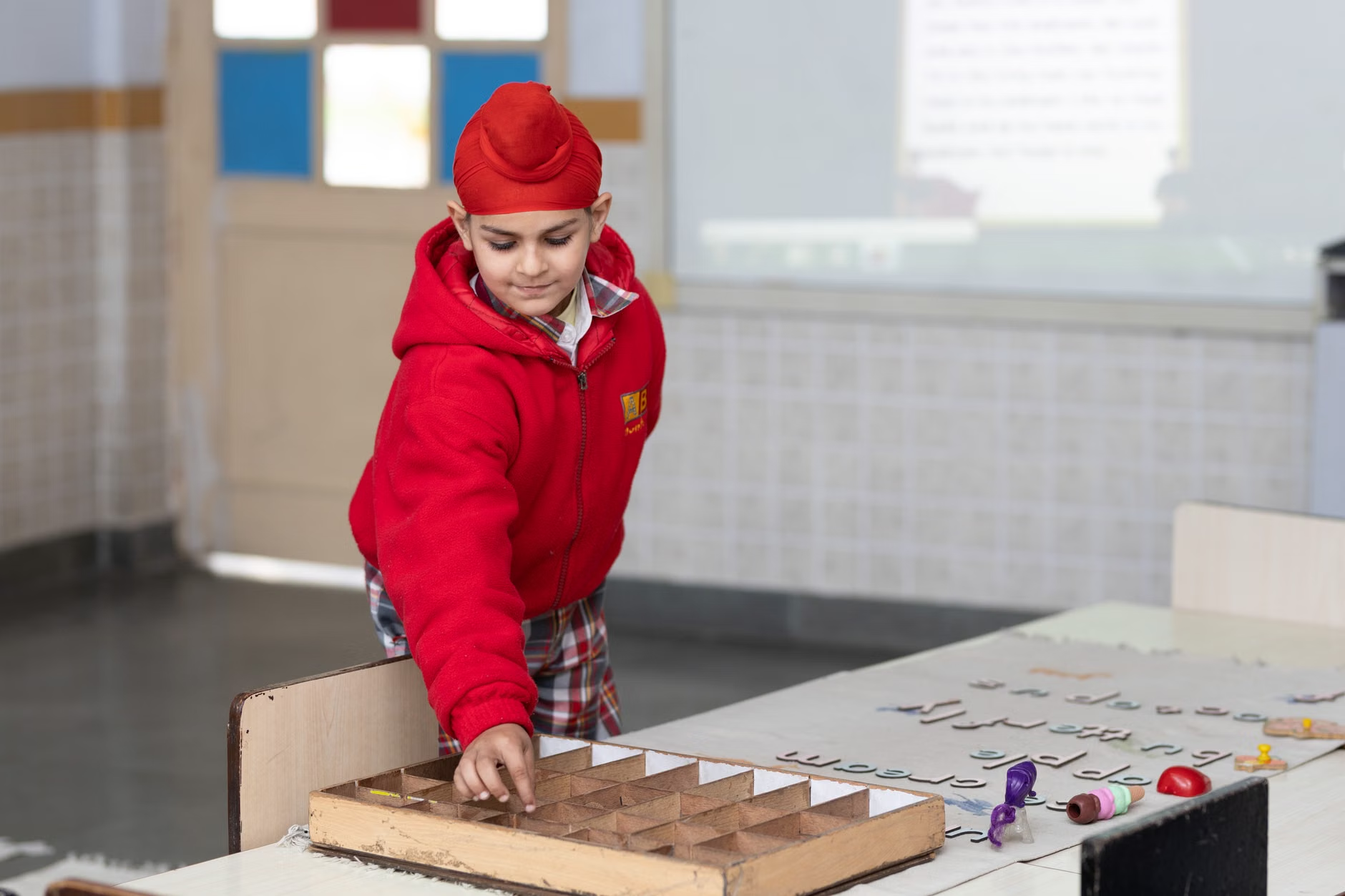
For a child used to the freedom of the forest, the classroom can feel like a sensory deprivation chamber. Research from organizations like the Children & Nature Network suggests that children who spend significant time outdoors develop better executive function—the mental processes that enable us to plan, focus attention, and juggle multiple tasks. However, these children often struggle when that executive function is redirected from “how do I cross this stream” to “how do I sit still for 45 minutes.”
The Reality Check: You should not expect your child to adapt perfectly in the first month. In fact, if they are “too” compliant, it might be a sign they are suppressing their natural curiosity to fit in. Look for signs of “school fatigue”—lethargy or irritability after school—which are normal indicators that they are using a massive amount of mental energy to manage the shift in pace and autonomy.
Bridging the Gap: Practical Strategies for Parents
To help your child navigate this transition, you need to act as a bridge. This doesn’t mean you should try to turn your home into a classroom. Instead, you need to provide a “decompression zone.” When a child spends six hours in a room with fluorescent lights and strict rules, the last thing they need is a parent who mimics that structure at home.
1. The “After-School Decompression” Rule
Implement a strict “no-questions” hour immediately after pickup. Avoid asking, “What did you learn today?” or “Did you sit still?” Instead, prioritize physical movement. If the school is in an urban area, find the nearest park or even a quiet patch of grass. Let them run, jump, or just stare at the sky. This is not “extra” time—it is a critical part of their cognitive recovery.
2. Translating Nature Skills to Academic Tasks
When your child complains about the boredom of learning to read or write, validate their feelings without validating the idea that school is “useless.” Help them see the connection. For example, if they are learning to categorize objects in math, relate it to the way they used to categorize leaves or stones by size, texture, and color. Use their existing mental frameworks to anchor new, more abstract concepts.
3. Managing Sensory Transitions
Nature schools are tactile and auditory-rich. Primary classrooms are often visually cluttered with posters, charts, and strict auditory rules (raising hands). If your child is struggling, observe if they are sensitive to the change in sound levels. Some children benefit from small, discreet items like “fidget stones” (natural, smooth river rocks) that they can keep in their pocket to touch when they feel overwhelmed by the lack of sensory variety in the classroom.
| Feature | Nature-Based Preschool | Primary School | How to Bridge the Gap |
|---|---|---|---|
| Autonomy | High (Child-led) | Low (Teacher-led) | Encourage “choice time” at home. |
| Pacing | Flow-based | Schedule-based | Use visual timers for home tasks. |
| Environment | Dynamic/Outdoor | Static/Indoor | Prioritize outdoor time on weekends. |
| Problem Solving | Physical/Tactile | Abstract/Symbolic | Use physical items for math/logic. |
Choosing the Right School Environment
If you have not yet selected a primary school, the “nature-school transition” is a filter you should use. Not all primary schools are created equal. Look for schools that advertise “inquiry-based learning” or “project-based learning” (PBL). These models are much more compatible with the mindset of a child coming from a forest program.
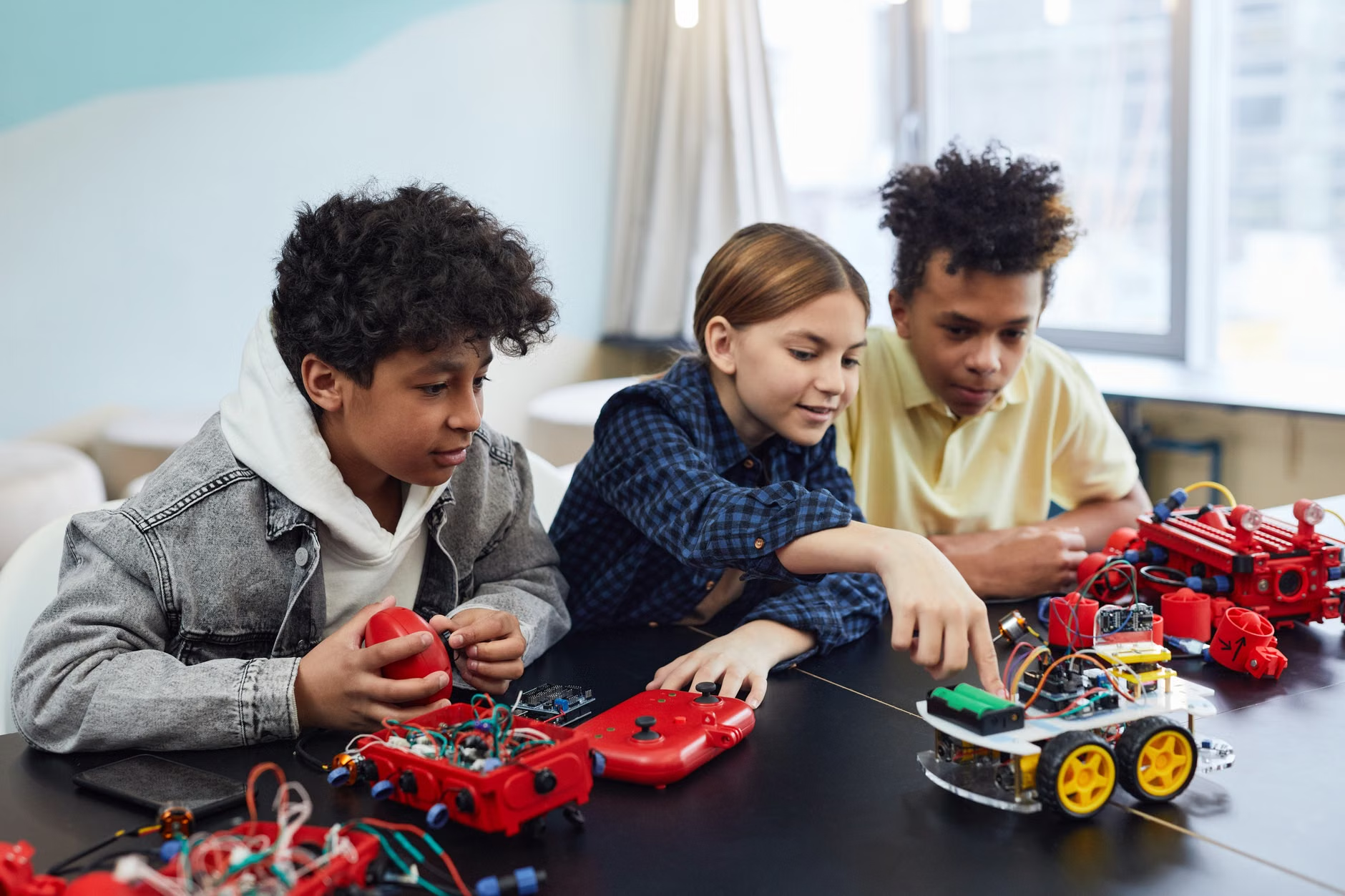
In a PBL environment, students might spend three weeks studying the local water cycle. They will go outside to take water samples, record data, and then return to the classroom to analyze it. This keeps the “nature” element alive while introducing the rigor of data collection and academic reporting. Avoid schools that rely heavily on worksheets and rote memorization, as these are the exact antithesis of the critical thinking skills nurtured in nature-based settings.
A Common Mistake: Parents often choose a school based on prestige or test scores, ignoring the “cultural fit” for their child’s personality. If your child is a kinetic learner who needs to move to think, a school that demands 90 minutes of seated desk work will likely lead to behavioral labels like “distracted” or “disruptive,” when in reality, the child is simply mismatched with the environment.
Addressing the “Academic Anxiety” Trap
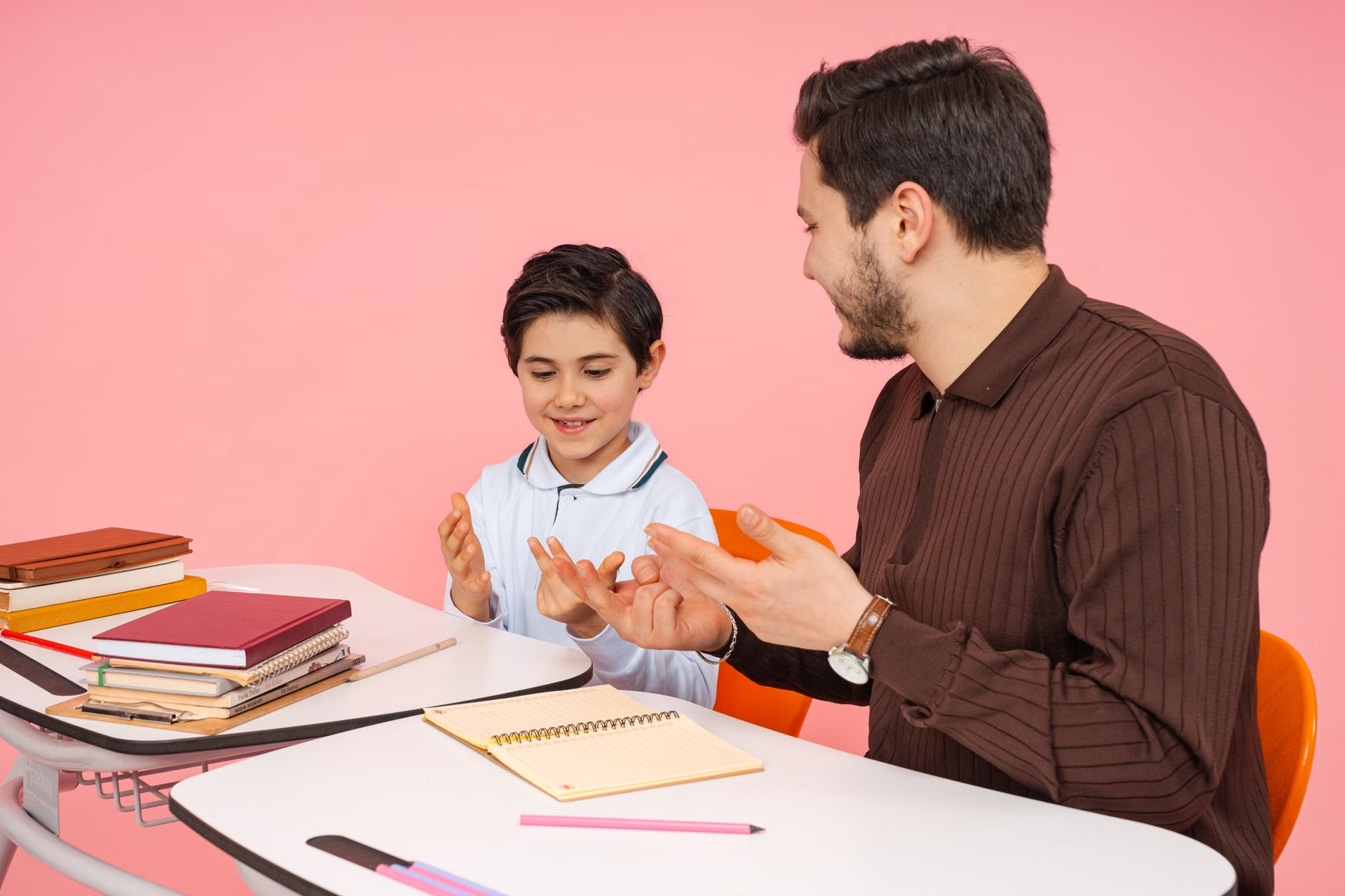
There is a persistent myth that children from nature schools are “behind” in literacy and numeracy. This is rarely true in the long run. While they may not have memorized their sight words as early as children in intensive academic preschools, they often possess superior spatial reasoning and social-emotional intelligence. These are the “hidden” building blocks of long-term academic success.
If your child seems to be struggling with reading or writing, resist the urge to panic and start high-pressure tutoring. Instead, look at the why. Is it a lack of fine motor skill development? Many nature-based kids have incredible gross motor skills (climbing, balancing) but may need more practice with fine motor tasks (using pencils, scissors). You can address this through “nature-play” at home—threading leaves on a string, using tweezers to move seeds, or drawing in the sand with sticks. These activities build the exact muscles needed for writing without the pressure of a workbook.
The Importance of the “Nature Anchor”
As your child enters the formal system, they will likely experience a loss of agency. They go from being the “explorer” of their world to a “student” in someone else’s world. To counter this, establish a “Nature Anchor.” This is a recurring, non-negotiable outdoor ritual that remains entirely under your child’s control.
It could be a Saturday hike where they choose the route, or a small patch of the backyard where they are allowed to dig, build, and leave their creations undisturbed. This anchor provides a psychological “reset.” It reminds them that they are still capable, creative, and autonomous beings, even if they spend their weekdays following a bell schedule.
The Hidden Trade-Off: Keep in mind that maintaining this anchor may mean sacrificing other “enrichment” activities like piano lessons or organized sports. You have to decide what provides the most value for your child’s mental health. If the goal is to keep them grounded and curious, the “nothingness” of the forest is often more valuable than the “busyness” of an extracurricular class.
Step-by-Step Transition Checklist
To make the transition manageable, break it down into these four phases. You don’t have to do everything at once.
- Phase 1: Observation (Month -1): Visit the new school with your child. Focus on the physical space. Where is the bathroom? Where do they put their shoes? Where is the nearest green space? Familiarity with the physical environment reduces the “stranger” anxiety of the first day.
- Phase 2: Routine Alignment (Month 1): Introduce a “morning loop” at home that mimics the school routine. This doesn’t mean being rigid, but it means having a predictable sequence: wake up, breakfast, pack bag, leave. This builds the executive function needed to manage the classroom routine later.
- Phase 3: The Decompression Period (Months 1-3): As mentioned, prioritize physical activity after school. If your child is exhausted, give them grace. It is not “laziness”; it is a massive cognitive adjustment.
- Phase 4: Periodic Reflection (Month 3+): Ask your child specific questions about their day. Instead of “How was school?”, ask “What was the most interesting thing you saw outside today?” or “What was the hardest thing you had to do?” This helps them process their experience and helps you identify where they might need more support.
Common Misconceptions About Nature-Based Education
One of the biggest misconceptions is that nature-based education is “unstructured.” It is actually highly structured, but the structure is environmental rather than procedural. In the forest, if it rains, you must learn to shelter yourself. If you don’t wear your boots, your feet get cold. These are natural consequences. In a primary school, the consequences are often social or administrative (e.g., “you didn’t finish your worksheet”).
This is a difficult shift for children because the consequences in school often feel arbitrary. You can help your child by explaining the why behind school rules. “We sit in our chairs because we need to share the space safely, just like we had to stay on the trail to protect the forest floor.” By framing school rules as “community agreements” rather than “dictates,” you help your child maintain their sense of self-respect and cooperation.
Advanced Insights: The Role of Teacher-Parent Communication
Your child’s teacher may not have experience with children coming from nature-based programs. They might perceive your child’s desire to move, touch, or talk through problems as “inattentiveness.” You have a role here as an advocate. During the first parent-teacher meeting, be proactive.
Explain: “My child has spent their early years in an environment where they were encouraged to move and interact with their surroundings to learn. They are still developing the ability to sit still for long periods. If you notice them struggling, could we try a quick ‘movement break’ or find a way to incorporate more tactile learning into their tasks?”
Most teachers are open to these suggestions if they are framed as a collaborative effort to help the child succeed. Do not approach the teacher as an adversary or as a critic of their methods. Approach them as a partner who knows the child’s “learning language” better than anyone else.
Managing Social Dynamics
Nature-based schools often have smaller, more intimate group sizes. Primary schools are often much larger, with more complex social hierarchies. Your child may find the “playground politics” of a large primary school overwhelming. In the forest, children often play in mixed-age groups, which naturally fosters mentorship. In a primary school, children are often strictly segregated by age.
If your child is struggling socially, encourage them to look for “the helpers” or children who share their interests. You can also facilitate “playdates” with children from their class, but try to keep these playdates in an outdoor setting if possible. It’s easier to build a friendship when you are both focused on a task—like building a fort or catching bugs—rather than just “talking.”
The Long-Term Perspective
Remember that the transition period is temporary. By the end of the first year, your child will likely have integrated the “school” mindset with their “nature-explorer” personality. The goal is not to trade one for the other, but to help them become a hybrid learner: someone who can sit at a desk and write a report, but who also knows how to look at a tree and wonder about the world.
If you see your child becoming overly anxious, losing their spark, or developing a deep-seated dislike for learning, do not be afraid to revisit your school choice. Sometimes the environment is simply not a fit. But before jumping to that conclusion, give it time. The human brain is incredibly plastic, and children are often more resilient than we give them credit for.
Finally, trust your gut. You know your child better than any curriculum guide or standardized test. If you feel that they are losing their curiosity, prioritize the “Nature Anchor.” Remind them (and yourself) that their worth as a person is not measured by their ability to follow a schedule, but by their ability to observe, think, and engage with the world around them.
Frequently Asked Questions
1. My child seems to be “behind” in reading/writing compared to peers. Should I be worried?
In most cases, no. Children from nature-based programs often have a different developmental trajectory. While they may start formal literacy later, they often catch up quickly once they have mastered the necessary fine motor skills and developed the required focus. If they are showing signs of genuine distress or frustration, consult with a teacher about specific, play-based interventions rather than jumping to intensive academic drilling.
2. How can I help my child if they find the school environment too loud or crowded?
Sensory overload is common during the transition. You can help by “down-regulating” their nervous system after school. Avoid immediate extracurricular activities. Create a quiet, low-stimulation space at home. If the school allows it, ask if your child can use noise-canceling headphones during independent work time, or provide them with a small, sensory-friendly item (like a smooth stone or a piece of textured fabric) to keep in their pocket for grounding.
3. What if my child refuses to go to school because they “hate the rules”?
This is often a reaction to a loss of autonomy. Instead of dismissing their feelings with “school is important,” try to validate the frustration: “I know it’s hard to go from being the boss of your own time to following someone else’s rules.” Then, focus on the aspects of school they do control—their friendships, their choice of books, or their lunchtime activities. Remind them that school is a temporary part of their day, and the “real” exploration happens in the time they have left.
For further reading on the benefits of outdoor education and cognitive development, see the resources provided by the Children & Nature Network. Always check your local school district’s policy on learning accommodations if you feel your child’s needs are not being met by the standard curriculum.