The most effective way to maintain a high-quality professional wardrobe without contributing to the environmental and financial drain of fast fashion is to shift from “buying new” to “circulating quality” through structured clothing swaps.
- Quality over Quantity: Successful professional swaps rely on a “one-in, one-out” curation rule, ensuring only high-quality, durable garments enter the rotation.
- The “Capsule” Standard: Focus on swapping timeless, versatile pieces that fit your lifestyle rather than trendy items that lose their appeal after a single season.
- Logistics Matter: Treat your swap like a professional meeting; clear communication about sizing, brand quality, and garment condition prevents the common pitfall of “dumping” unwanted clutter.
If you are in your 30s or 40s, you likely know the frustration of opening a closet full of clothes and feeling like you have “nothing to wear.” Between the demands of a career, parenting, and maintaining a household, the last thing most of us want to do is spend hours browsing online retail sites, only to receive items that don’t fit well or fall apart after three washes. The “fast fashion” cycle is a trap: it promises convenience but delivers clutter and long-term expense.
The solution isn’t just “buying better”—it’s rethinking how we acquire our clothes. Clothing swaps, when done correctly, are not just about getting free stuff. They are a strategic, sustainable way to refresh your professional image while decluttering your life. Let’s dive into how to make this work for your busy schedule.
Why the Traditional Retail Model Fails the Modern Professional
The modern retail landscape is designed to keep you in a constant state of consumption. Algorithms track your preferences, and trends change so rapidly that a garment purchased in March often feels “dated” by July. For a professional in their 30s or 40s, this is a recipe for a bloated closet and a drained bank account.
Consider the “hidden cost” of fast fashion: it isn’t just the price tag. It is the time spent browsing, the emotional energy of managing returns, and the eventual guilt of discarding low-quality items that end up in landfills. According to the United Nations Environment Programme, the fashion industry is responsible for 2-8% of global carbon emissions. By choosing to swap, you are actively opting out of this cycle.
The real-life impact of shifting to a swap-based model is immediate: you gain a curated selection of clothes that have already been “tested” for durability. If a blazer has survived a year in someone else’s closet and still looks good, it’s likely to survive yours, too. This is the ultimate “slow-fashion” hack—using the collective wisdom of your peers to filter out the low-quality items that retail stores try to push on you.
Setting the Rules: How to Organize a High-Quality Swap
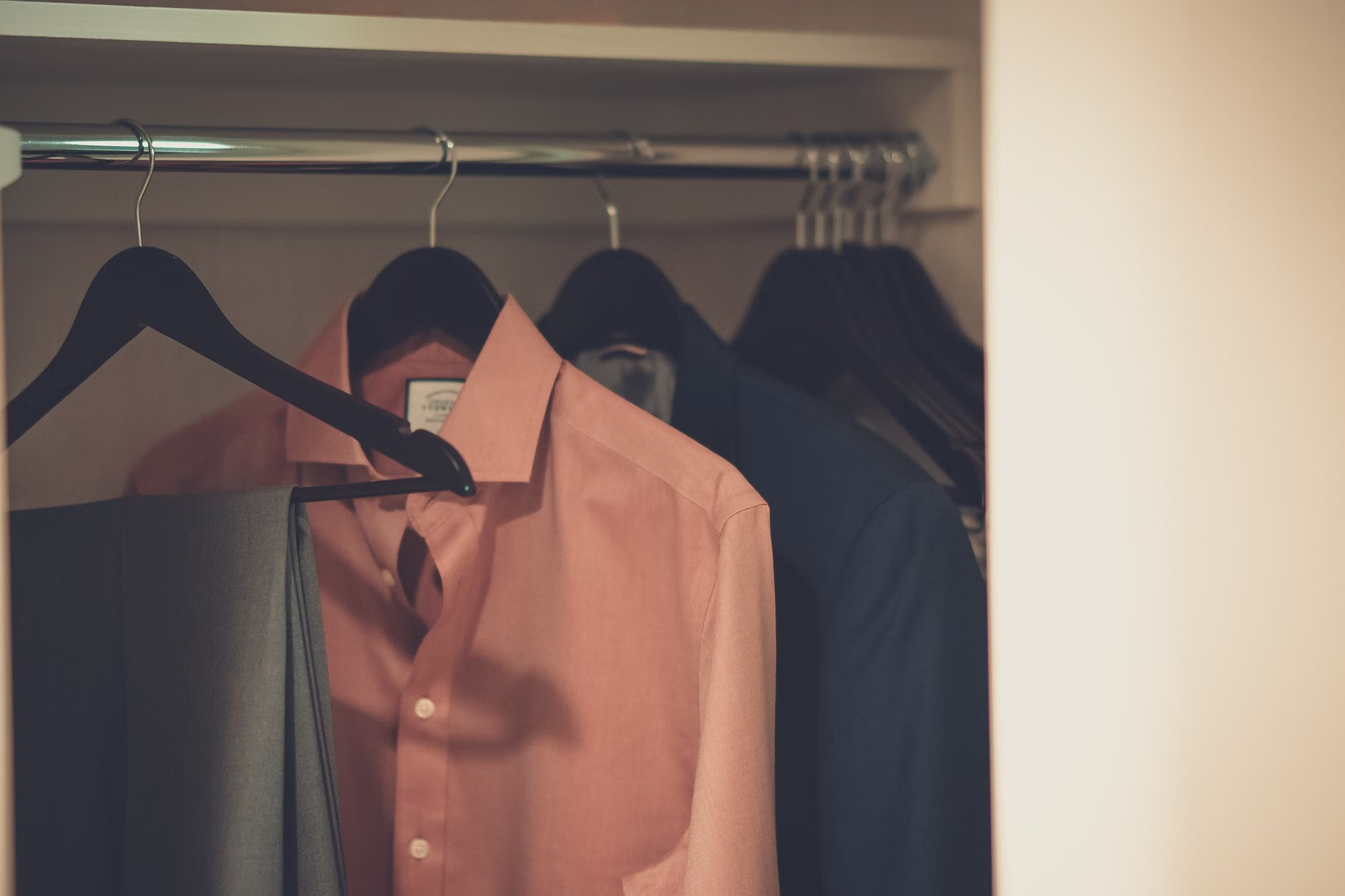
If you’ve ever been to a “clothing swap” that felt more like a chaotic rummage sale, you’ve seen the primary reason why people give up on them. To make a swap effective for professionals, you must implement strict ground rules. You aren’t just getting rid of old clothes; you are curating a resource for your community.
The “Friend-of-a-Friend” Rule: Only invite people who share your standard for quality. If you wouldn’t feel comfortable lending a piece of clothing to this person, they probably shouldn’t be at your swap. This ensures that the garments brought to the event are clean, pressed, and in excellent condition.
The Essential Swap Logistics Table
| Requirement | Standard | Why it Matters |
|---|---|---|
| Condition | No stains, tears, or missing buttons. | Prevents the “junk” accumulation that ruins the experience. |
| Brand Quality | Focus on mid-range or sustainable brands. | Ensures fabric longevity and professional style. |
| Presentation | Items must be freshly laundered and hung. | Shows respect for the next owner and maintains item value. |
| Quantity | Cap at 5-10 items per person. | Prevents overwhelming the space and encourages thoughtful selection. |
When you set these standards, you shift the event from a “discarding” activity to a “curating” activity. Before the event, ask participants to send photos of their top three items. This builds excitement and allows attendees to get an idea of the style and sizes available before they even walk through the door.
Managing the “Capsule” Mindset in a Swap Environment
The biggest mistake people make at swaps is “collecting”—taking home items just because they are free. This is the exact opposite of the slow-fashion philosophy. Instead, you need to approach a swap with a capsule wardrobe mindset. Before you go, look at your current closet. What is missing? Do you need a neutral-colored blazer? A pair of trousers that fit perfectly for meetings? A high-quality silk blouse?
Decision Rule: If you wouldn’t pay full price for it in a store, don’t take it home. If it doesn’t fit your professional identity or your current lifestyle (e.g., you work from home but keep buying stiff, formal wear), leave it behind.
Common mistakes include taking items that need “minor repairs.” While the intention is noble, as a busy professional, you likely don’t have the time to take items to a tailor. If it doesn’t fit or look right immediately, it will likely end up in your “to-fix” pile for months, only to be discarded later. Be ruthless. If it isn’t an “instant yes,” it’s a “no.”

Integrating Technology for Efficient Swapping
You don’t always need a physical event to make a swap happen. In the digital age, you can scale this up using simple tools. Many professionals now use private WhatsApp or Telegram groups, or even shared Google Sheets, to swap items with a smaller, trusted circle. This is particularly useful for parents who need to rotate clothes quickly but don’t have time to organize a social event.
Step-by-Step for Digital Swapping:
- Create a dedicated group: Keep it small (5-10 people) to ensure high trust.
- Cataloging: Use a shared document where members post photos, brand names, and measurements.
- The “Hold” System: Use a simple comment system (“Claimed by Sarah”) to track items.
- Logistics: Coordinate drop-offs during school pick-up or work commutes to minimize extra travel time.
This digital approach allows you to participate in slow fashion without the “event fatigue.” It turns the process into a background activity, integrated into your existing social or professional network.
The Hidden Costs and Trade-offs
Is swapping always better? Let’s be realistic. There are hidden trade-offs. The most significant is the loss of “returnability.” When you buy a garment from a retailer, you have the safety net of a return policy. When you swap, that item is yours forever. If you take home a piece that doesn’t actually fit into your daily rotation, you are now responsible for donating or re-swapping it.
Another overlooked variable is the “sunk cost of time.” Organizing a high-quality event takes effort. If your time is extremely limited, the cost of organizing a swap might outweigh the financial benefit of the clothes you gain. In this case, joining an existing, well-managed swap or using a digital platform is far more efficient than starting your own from scratch.
Finally, there is the social risk. Swapping with friends or colleagues can sometimes lead to awkwardness if someone feels their item was “rejected” or if there’s a disagreement over the quality of a trade. This is why having clear, pre-agreed rules—like the ones in our table—is vital. It removes the personal element and makes the process objective.
Developing Your Long-Term Swap Strategy
To make this a sustainable part of your life, you need to view your wardrobe as a living system. A wardrobe is not a static collection of objects; it is a set of tools for your daily life. As your career evolves and your family grows, your needs change. A clothing swap is the perfect mechanism to handle this transition.
Consider the “seasonal audit.” Twice a year—perhaps when the weather changes—perform a deep dive into your closet. Identify pieces that no longer serve you. Are they still in good condition? If so, they are prime candidates for your next swap. By doing this regularly, you prevent your closet from becoming a graveyard of past versions of yourself.
Actionable Next Step: This weekend, pick five high-quality items you haven’t worn in six months. Don’t throw them away. Research local swap groups in your area or reach out to three friends to propose a “curated closet” exchange. You aren’t just cleaning out a closet; you are building a more sustainable future for your professional and personal life.
Remember, the goal is not to have more clothes. The goal is to have the right clothes, and to keep them in circulation as long as possible. When you take the pressure off “buying new,” you’ll find that your personal style actually becomes more consistent, more authentic, and much easier to manage.
Frequently Asked Questions
1. How do I handle people who bring low-quality or damaged items to a swap?
The best way to handle this is to establish a “curation check” at the beginning of the event. If you are the organizer, politely inform participants in advance that items with stains, heavy wear, or damage will be set aside for donation rather than included in the swap. It is helpful to have a clear “Donation Box” ready for items that don’t meet the standard, which removes the personal sting of rejection.
2. What if I am the only one with a specific professional style?
This is a common concern. If your style is highly niche, you might find that your local swap group doesn’t have much for you. In this case, focus on “accessory swapping” (scarves, belts, bags) or look for industry-specific networking groups where the professional dress code is similar to yours. Alternatively, use digital platforms to find a wider, more specialized network of swappers.
3. How do I ensure I don’t end up with more clutter than I started with?
Adopt a strict “in-and-out” policy. For every item you bring home from a swap, you must commit to removing at least one item from your current closet. This forces you to be critical about what you add to your collection. If you don’t have space for a new item, you aren’t allowed to take it, regardless of how nice it is. This keeps your wardrobe balanced and functional.
For further reading on the environmental impact of your wardrobe and how to build a more sustainable lifestyle, you can explore the United Nations Environment Programme’s resources on fashion waste. Taking small, consistent actions in how you manage your clothes is one of the most effective ways to reduce your personal carbon footprint while keeping your professional image sharp and authentic.