- Preparation over Spontaneity: Off-grid coastal camping requires a minimum of 48 hours of planning for water, power, and waste management to ensure safety and comfort.
- The “Tech-Detox” Paradox: Bringing essential safety technology (satellite communicators, power banks) is not a contradiction to off-grid living; it is a prerequisite for responsible parenting in remote areas.
- Environmental Stewardship: Coastal ecosystems are fragile; strictly following “Leave No Trace” principles is the only way to ensure these locations remain accessible for future generations.
If you are reading this, you are likely at that stage in life where your weekends oscillate between managing household chores and desperately trying to carve out quality time with your children. The idea of “off-grid” coastal camping sounds like the perfect antidote—a silent beach, no Wi-Fi, and the rhythmic sound of waves. But let’s be honest: the romanticized version of camping rarely aligns with the reality of sand in the tent, a toddler who refuses to sleep in a sleeping bag, and the sudden realization that you have no cell service when you need to check a weather update.
Off-grid coastal camping is not just about “unplugging.” It is a logistical operation. For parents in their 30s and 40s, the difference between a transformative family bonding experience and an exhausting nightmare usually comes down to how you manage the gap between your expectations and the harsh realities of remote wilderness.
The Logistical Reality of Coastal Isolation
Most people underestimate the specific challenges of the coast. Unlike mountain or forest camping, coastal environments are dynamic. The tide, the salt air, and the wind are constant variables that can change your itinerary in minutes. When you are truly off-grid—meaning no running water, no electrical hookups, and limited cellular reception—every mistake is amplified by the distance from help.
The Rule of Three for Coastal Safety: You must have a plan for water, a plan for power, and a plan for communication. If you lack any one of these, you are not “roughing it”—you are being irresponsible. In a coastal setting, humidity and salt-spray also wreak havoc on electronics and food preservation. You need to treat your gear with more care than you would in a dry, inland forest.
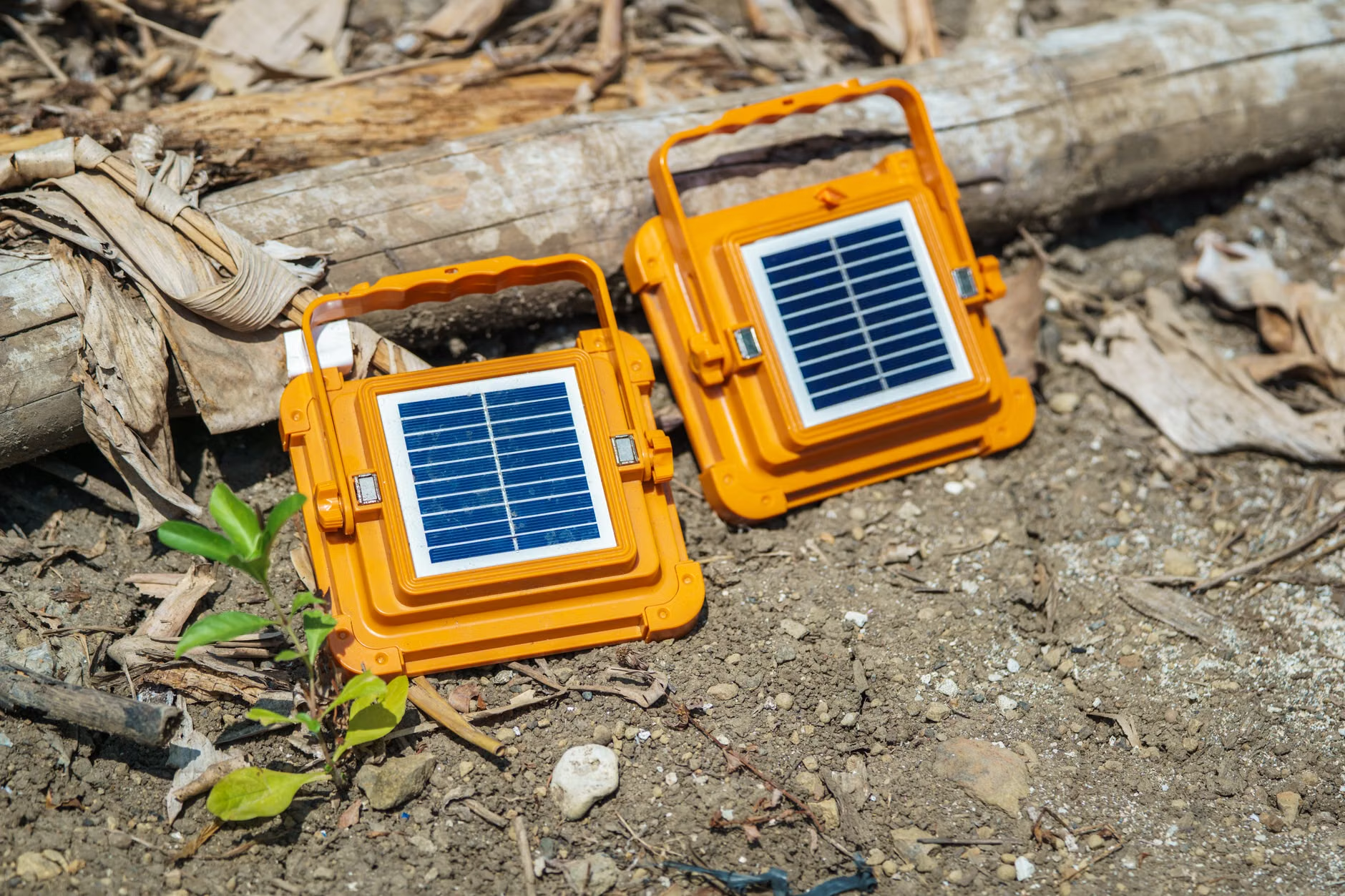
Power and Connectivity: Striking the Right Balance
There is a common misconception that off-grid means “no technology.” For a family, this is a dangerous mindset. You need reliable power for lighting, potential medical devices, and, crucially, communication. If you are 20 miles from the nearest paved road, a dead phone battery isn’t just an inconvenience; it’s a security failure.
Choosing Your Power Setup:
| Option | Best For | Trade-off |
|---|---|---|
| Portable Power Station (Lithium) | Running laptops, lights, and small appliances. | Heavy and requires recharging via solar. |
| Solar Power Banks | Keeping phones and GPS devices topped up. | Slow charge, dependent on direct sunlight. |
| Satellite Communicator | Emergency messaging where cellular fails. | Subscription cost and device investment. |
For parents, the most important piece of tech isn’t a portable speaker; it is a satellite-based SOS device. Services like Garmin inReach or Zoleo allow you to send check-in messages to family members or trigger an emergency response regardless of cell tower coverage. Do not rely on your smartphone’s “Emergency SOS” features if you are heading into truly remote coastal zones, as they often require a specific line-of-sight to satellites that might be obscured by coastal cliffs or dense shoreline vegetation.
Water Management: The Lifeline of the Coast
One of the most frequent mistakes is underestimating water consumption. A typical adult needs at least 3 liters of water per day for drinking and basic hygiene, and children often need more when playing in the sun. If you are camping for three days, a family of four needs nearly 40 liters of water. That is 40 kilograms of weight. If you cannot park your vehicle right next to your campsite, you are looking at a grueling carry-in.

The Filtration Strategy: Relying solely on stored water is safe but bulky. A gravity-fed filtration system (like the Platypus GravityWorks or Sawyer Squeeze) is an essential backup. However, a major “gotcha” for coastal camping is salinity. If you are near the ocean, ensure your water source is a freshwater stream or spring that is far enough upstream to avoid tidal saltwater intrusion. Never assume a coastal stream is potable without testing or heavy filtration.
Creating Meaningful Bonding Without the Digital Crutch
When you strip away the screens, you will initially encounter a “boredom spike.” Your kids might complain, and you might feel the itch to check your work emails. This is normal. The goal is not to force a “bonding moment,” but to provide an environment where it can happen naturally. The coastal environment provides unique opportunities: tide pooling, shell collecting, and stargazing are inherently engaging activities that do not feel like “scheduled fun.”
The “Task-Based” Bonding Rule: Instead of planning activities, give your children responsibilities that feel like “real work.” Let them be in charge of the water filtration, firewood gathering, or setting up the solar panels. When children feel like they are contributing to the survival and comfort of the group, they become more invested in the trip. This shifts their perspective from “bored tourist” to “expedition member.”
The Hidden Costs and Environmental Impact
Off-grid camping is often marketed as “cheap,” but the gear required to do it safely and comfortably is an investment. You are not just buying a tent; you are buying a shelter that can withstand coastal winds (often higher than inland winds) and moisture management systems that prevent mold. Furthermore, the true cost of off-grid travel is the “Leave No Trace” tax—the time and effort required to pack out every single piece of waste, including greywater and human waste.
In many coastal regions, the soil is thin and the ecosystem is delicate. Digging cat holes for human waste is often prohibited or ecologically damaging. You must be prepared to use portable waste bags (like WAG bags). It is not glamorous, but it is the price of admission for enjoying pristine, untouched wilderness. If you are not willing to manage your waste responsibly, you should stick to established campgrounds with facilities.

Step-by-Step Preparation Framework
To avoid the last-minute scramble, follow this 4-phase preparation framework:
- Site Scouting (Two Weeks Out): Use satellite imagery (Google Earth) to inspect the terrain. Look for wind protection and elevation. Avoid low-lying areas near the high-tide line, as coastal storms can cause rapid sea-level surges.
- Gear Shakedown (One Week Out): Set up your full kit in your backyard or a local park. Test the stove, the water filter, and the power system. If something breaks here, it is an annoyance. If it breaks at the beach, it is a crisis.
- The Menu Audit (Three Days Out): Plan for meals that require minimal cleanup. Use “one-pot” recipes. Avoid raw meats that require complex refrigeration—go for cured meats, canned proteins, or dehydrated camping meals.
- The “Go-Bag” Logic (Departure Day): Pack your gear in categories: Kitchen, Sleeping, Safety, and Personal. Use clear, waterproof bins for each. This makes it impossible to forget the coffee or the first-aid kit.
Why Coastal Camping is a Unique Challenge
Coastal camping is distinctly different from mountain camping because of the atmospheric pressure and salt air. Salt is corrosive. After your trip, you must wash all your gear—tent zippers, stove burners, and even your power station cables—with fresh water. If you don’t, the salt will crystallize and seize up your equipment, leading to expensive repairs or replacements by the next season.
Furthermore, coastal weather is notoriously fickle. A 20-degree Celsius day can turn into a 10-degree night with high humidity. Your sleeping system needs to account for this. A synthetic sleeping bag is often better than down in coastal environments because it retains insulation properties even if it gets damp from the salt air.
Common Misconceptions and Errors
Many parents assume that if they go to a “remote” beach, they can just build a fire anywhere. This is rarely true. Most coastal areas have strict fire bans due to the dry, wind-blown vegetation common in dunes. Always check the local government’s fire status via official channels (e.g., National Park Service or local forestry departments). If you cannot have a fire, do not bring wood. It is heavy, unnecessary, and often illegal to gather on-site.
Another major error is underestimating the sun. The reflection of UV rays off the water and white sand creates a double-exposure effect. Even on cloudy days, you are at a higher risk of sunburn than you would be in a dense forest. High-SPF sunscreen and wide-brimmed hats are not optional; they are critical gear.
Final Thoughts on the Family Experience
The success of an off-grid trip isn’t measured by how “extreme” the location was, but by how well the family functioned as a unit. If the kids are miserable, the trip is a failure, regardless of how beautiful the sunset was. Start small. Perhaps your first “off-grid” trip shouldn’t be three nights in a remote cove, but one night at a primitive site within a larger, managed park. This allows you to test your gear and your family’s tolerance for the lack of amenities while having a “bail-out” option if things go sideways.
The goal is to cultivate a sense of self-reliance in your children. Watching a child figure out how to filter their own water or navigate a trail without a GPS gives them a sense of agency that they rarely get in their day-to-day lives. It is a slow, often messy, and sometimes frustrating process, but it is one of the few ways to truly disconnect from the noise of modern life and reconnect with the people who matter most.
Frequently Asked Questions
1. How do I handle the lack of bathroom facilities for young children?
For younger kids, bring a small, portable potty or a bucket with a toilet seat attachment and biodegradable bags. Practice using it at home before the trip so it’s not a scary, new experience. Always pack out the waste in heavy-duty, sealable bags—never bury human waste in sandy coastal soil, as it doesn’t decompose properly and can contaminate the local water table.
2. What is the one piece of “luxury” gear that is worth the weight?
A high-quality, comfortable camp chair. When you are off-grid, you spend a significant amount of time sitting around the campsite. Sitting on rocks, logs, or the ground gets old very quickly and leads to back pain. A lightweight, packable chair is a game-changer for parents who need to recover after a long day of setting up camp and supervising children.
3. How do I deal with the “boredom” complaints on the first day?
Expect them. The first few hours of disconnection are the hardest. Do not immediately jump to offer entertainment. Encourage them to explore the immediate vicinity, look for “treasures” (shells, interesting rocks, driftwood), or help with a camp task. Once they realize that they have to create their own fun, the shift in their mindset is almost always positive. Boredom is the precursor to creativity.
Disclaimer: This article is for informational purposes only and does not constitute professional survival or travel advice. Always check official government websites, such as the National Park Service or local land management authorities, for current regulations, weather alerts, and safety guidelines specific to your destination before embarking on your trip.