Key Takeaways
- Quality over Quantity: Slow travel prioritizes deep immersion in one or two locations over checking off dozens of tourist attractions.
- Reduced Cortisol: By removing the pressure of a packed itinerary, families can significantly lower travel-related stress and fatigue.
- Connection-First: This approach creates space for spontaneous family conversations and genuine cultural engagement rather than just photo opportunities.
The most effective way to improve your family’s travel experience is to stop trying to see everything. If you are in your 30s or 40s, you likely remember the “grand tour” style of vacationing—waking up at 6:00 AM to hit three museums, a historical landmark, and a local market before collapsing into a hotel bed. While that might have worked when you were twenty, it is a recipe for a meltdown when you’re managing toddlers, school-aged children, or even just your own depleted energy reserves.
Slow travel is not about being lazy; it is about being intentional. It is a shift in mindset that prioritizes the depth of experience over the breadth of coverage. For the modern parent, this isn’t just a travel preference; it is a vital tool for mental well-being.
Why the ‘Checklist’ Model Fails Families
We live in a culture of optimization. We optimize our work, our fitness, and, unfortunately, our leisure time. When we treat a vacation like a project to be completed, we fall into the “optimization trap.” We look for the “top 10 things to do in X city,” and we feel a sense of failure if we don’t complete the list. This creates a hidden, underlying pressure that permeates the entire trip.
When you are traveling with children, the “check-the-box” method is inherently flawed. Children do not operate on a 30-minute rotation. If your child finds a particularly interesting snail on a sidewalk in Paris, the “slow traveler” stops and observes the snail. The “checklist traveler” tells the child to hurry up because they have a 2:00 PM reservation at the Louvre. The former is a core memory; the latter is a source of resentment for everyone involved.
Recent studies in travel psychology suggest that the “peak-end rule”—the idea that we remember the most intense part of an experience and the end of it—drives our satisfaction. When we rush, the “peak” is often a moment of high stress (missing a train, navigating a crowded square), which colors the entire memory of the trip.
The Mechanics of Slowing Down: A Tactical Guide
Transitioning to slow travel requires a deliberate recalibration of your expectations. It is not as simple as just “doing less.” It requires a different approach to logistics, accommodation, and daily rhythms.
1. Base Yourself in One Spot
The biggest logistical mistake families make is “itinerary hopping.” Moving hotels every two nights is exhausting. The packing, unpacking, and checking in and out process consumes a significant portion of your mental bandwidth. By choosing one “home base” for a week or more, you allow your family to settle in. You learn where the best local bakery is, you recognize the shopkeeper, and your children feel a sense of security in their temporary home.
2. The ‘One-Activity’ Rule
Try the one-activity rule: plan exactly one “major” outing per day. Everything else is secondary. If you see a museum in the morning, the afternoon is reserved for “low-stakes” activities—a local park, a quiet stroll, or simply reading books in a cafe. This removes the “what’s next?” anxiety that plagues parents and children alike.
3. Embrace the ‘Third Space’
Sociologists often talk about the “third space”—places that aren’t home and aren’t work (or school). In a travel context, this is a local park, a town square, or a library. These are the places where the real magic happens. You aren’t “touring” these places; you are “inhabiting” them. When you allow your family to just sit in a public square while the kids run around, you are witnessing the local rhythm of life.
| Feature | Checklist Travel | Slow Travel |
|---|---|---|
| Pace | High-intensity, scheduled | Fluid, unhurried |
| Focus | Famous landmarks | Local experiences |
| Mental Load | High (logistics/timing) | Low (spontaneity) |
| Core Outcome | Achievement/Photos | Rest/Connection |
The Physiological Benefits of Unhurried Time
There is a biological reason why you feel better when you slow down. When we are constantly rushing from one attraction to another, our bodies remain in a state of mild “fight or flight.” Our heart rates stay slightly elevated, and our cortisol levels remain high. This is the exact opposite of what a vacation is supposed to achieve.
When you adopt a slower pace, you give your nervous system a chance to regulate. For parents, this is crucial. We spend 50 weeks a year managing schedules, school drop-offs, and professional deadlines. The “slow” in slow travel allows the prefrontal cortex—the part of the brain responsible for executive function and planning—to actually take a break. You stop planning the next move and start existing in the present.
For children, the benefits are even more pronounced. A child who is dragged from a cathedral to a monument to a restaurant is essentially being forced to adapt to adult-centric goals. When they are given the agency to explore a single environment, they engage in “deep play.” They notice details that adults overlook. They build their own narratives about the place. This is not just “time off”; it is developmental enrichment.
Overcoming the ‘FOMO’ of the Modern Traveler
The greatest barrier to slow travel is the Fear Of Missing Out (FOMO). We see our friends’ social media feeds filled with highlight reels of ten different cities in fourteen days, and we feel like we aren’t “doing it right” if we aren’t similarly busy. We need to normalize the idea that missing out on a specific landmark is not a failure; it is a trade-off for a more peaceful experience.
If you are in Rome and you skip the Colosseum because your toddler is having a great time throwing rocks into a fountain in a quiet piazza, you have not “lost” a day of your vacation. You have gained a memory of your child playing, which is objectively more valuable to your family unit than a grainy photo of a crowded ruin.
To combat FOMO, try this exercise: Before you leave, identify the “non-negotiables.” Maybe there is one museum or one specific site you truly want to see. Everything else is a bonus. If you get to it, great. If you don’t, you have a reason to return. A travel philosophy that leaves room for return visits is a much healthier way to view the world.
Practical Tips for Implementation
If you are accustomed to high-speed travel, jumping into “slow” can feel uncomfortable. Here are some ways to bridge the gap:
- Build in “Buffer Days”: Never plan a major activity for the day you arrive or the day you leave. These are transition days. Use them to grocery shop, find the local playground, and just get your bearings.
- Prioritize Self-Catering: Renting an apartment or a house with a kitchen changes the entire dynamic. You aren’t forced to eat out three times a day, which is often a major stressor for parents of picky eaters or children with early bedtimes.
- Walk or Use Local Transit: Avoid rental cars if possible. Driving in a foreign country is high-stress. Using local buses or trains forces you to slow down, gives you a chance to people-watch, and removes the frustration of parking and navigation.
- Engage in ‘Soft’ Learning: Instead of a guided tour, buy a local book about the area or visit a local bookstore. Let your kids pick out a souvenir that isn’t a plastic trinket—maybe a local snack or a small handmade item.
The Long-Term Impact on Family Dynamics
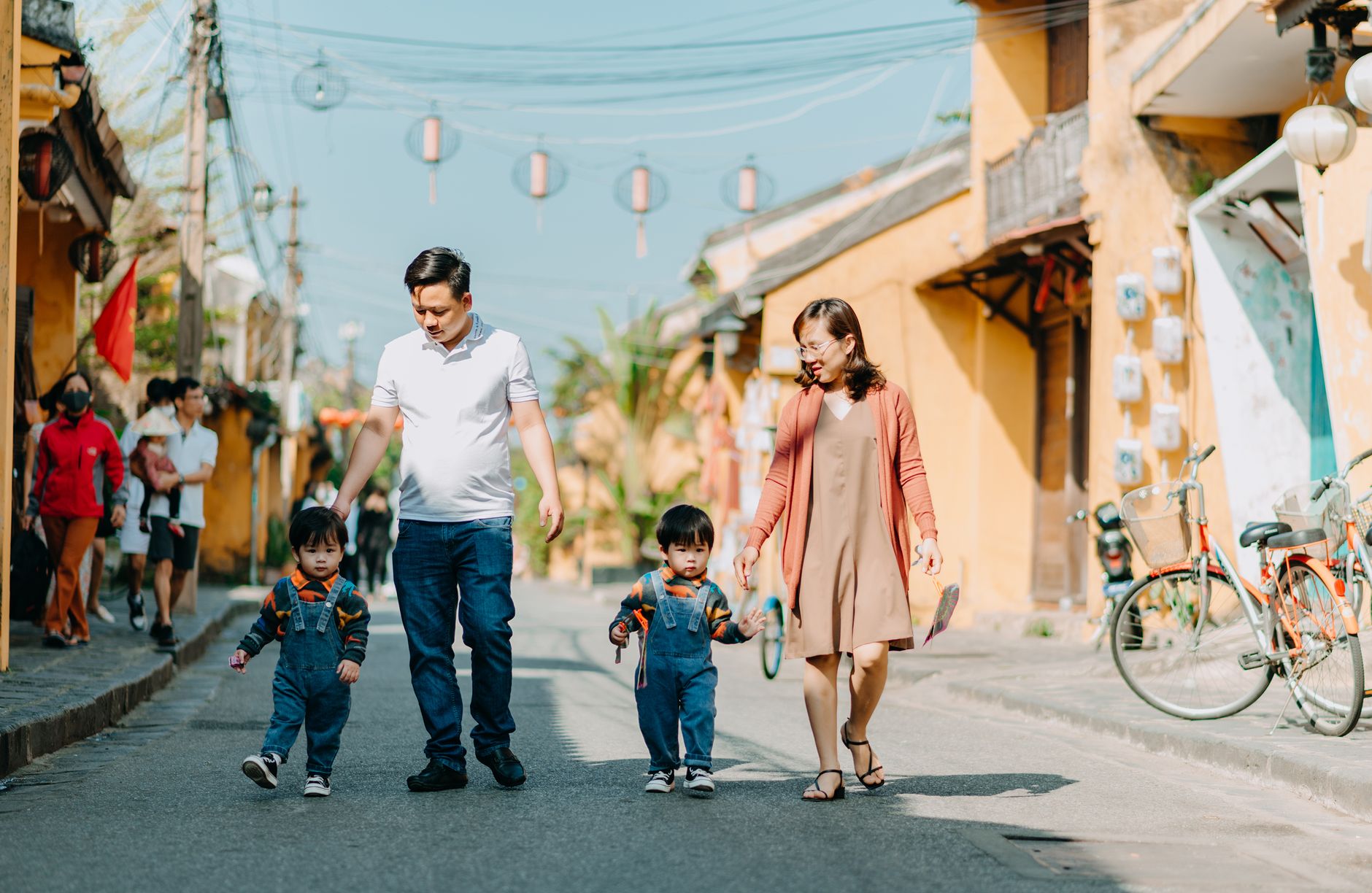
When we travel slowly, we create “pockets of time.” These are the spaces where real conversations happen. You aren’t distracted by the next train departure or the entry fee for the next site. You are sitting on a park bench, or you are waiting for a slow-cooked meal, or you are simply walking. This is when kids open up.
In our daily lives, we are often too busy to engage in deep, meandering conversations with our children. We are focused on “getting things done.” Travel, when slowed down, becomes a neutral ground where the hierarchy of “parent as manager” and “child as subject” dissolves. You are both just explorers in a new place.
Furthermore, slow travel teaches children about the world in a way that “touring” cannot. They learn that people live differently, that bread tastes different in every region, and that there is more to a city than its famous monuments. They learn to appreciate the mundane, which is a foundational skill for a happy life.
Addressing Potential Cautions
Slow travel is not a panacea for all family issues. It requires a certain amount of privilege, specifically the privilege of time. If you only have five days of vacation per year, slow travel might feel like you aren’t getting your “money’s worth.”
However, I would argue that the “value” of a vacation is not measured in the number of sites visited, but in the level of restoration achieved. If you return home more exhausted than when you left, the trip failed, regardless of how many photos you took. Even with limited time, you can still apply the principles of slow travel. Choose a smaller geographic area. Don’t try to see the whole country; see one region. The “slow” mindset is more about the intensity of the experience than the duration.
Also, be aware that “slow” can sometimes lead to boredom. For some children, this is a problem. But in our hyper-stimulated world, boredom is actually a gift. It is the precursor to creativity. When your child says, “I’m bored,” don’t immediately pull out a tablet or a list of activities. Let them sit with that boredom. See what they come up with. You might be surprised by the games they invent or the questions they ask.
Summary and Encouragement
The rise of slow travel is a reaction to a world that has become too fast, too loud, and too demanding. For families in their 30s and 40s, it offers a way to reclaim the vacation as a period of genuine rest and connection. By letting go of the checklist, we invite spontaneity, reduce our collective stress, and create the space for the unexpected, beautiful moments that define our family history.
You don’t need a massive budget or months of free time to start. You just need the courage to say “no” to the itinerary and “yes” to the present moment. Start small. Next time you head out, leave a half-day completely empty. See where the day takes you. You might find that the best part of your trip was the part you didn’t plan at all.
Frequently Asked Questions
Q: Is slow travel more expensive than traditional travel?
A: Often, it is actually cheaper. By staying in one location, you save on transportation costs between cities. By utilizing self-catering accommodations like apartments with kitchens, you save on dining out. The biggest “cost” is your time, which is an investment in your family’s well-being.
Q: How do I handle a child who gets bored when we aren’t doing ‘activities’?
A: View boredom as an opportunity, not a failure. Bring a “travel kit” with simple supplies—sketchbooks, card games, or a deck of cards—that can be used in a cafe or park. Encourage them to observe their surroundings and ask them questions about what they see. The goal is to move them from ‘passive consumer’ of entertainment to ‘active explorer’ of their environment.
Q: Does slow travel mean I have to sacrifice visiting ‘must-see’ landmarks?
A: Not at all. You can still visit major landmarks, but do so with intention. Go early in the morning to beat the crowds, or pick one day for the big site and keep the rest of the day completely free. The key is to avoid “stacking” multiple high-stress activities in a single day.
For more research on the intersection of travel and mental health, visit the World Health Organization’s resources on mental well-being or local tourism boards that promote “sustainable” and “slow” tourism initiatives in your target destination.