The most effective way to teach your children the value of money isn’t through a lecture at the kitchen table, but by turning your weekly grocery shopping trip into a hands-on financial laboratory.
Three Key Takeaways for Busy Parents
- Unit Pricing Mastery: Teach children to look past the sticker price to the “price per ounce” or “price per 100g” to understand true value.
- The Power of the List: Using a pre-planned shopping list is the single best way to demonstrate the difference between “needs” and “wants.”
- Budget Constraints: Giving your child a small, fixed budget for a specific category (like snacks) forces them to make real-world trade-offs.
If you are like most parents in their 30s and 40s, grocery shopping is often a chore you try to get over with as quickly as possible. It is the tactical mission of navigating aisles, avoiding impulse buys, and trying to keep the kids from throwing a tantrum over sugary cereal. But what if we shifted our perspective? What if that hour spent in the supermarket was actually a high-yield educational investment?
Why the Supermarket is the Best Classroom for Money
Financial literacy is often treated as an abstract concept—something involving bank accounts, interest rates, and complicated apps. For a child, these things are invisible. They don’t see the money leaving your account when you tap your phone or swipe a card. The grocery store, however, provides a visceral, physical experience of exchange.
When we bring children into the shopping process, we move money from the realm of the abstract to the concrete. They see the physical goods, they see the price tags, and they see the total at the register. By participating, they learn that resources are finite. They see that if you put a box of expensive cookies in the cart, you might have to leave behind the fruit you intended to buy. This is the fundamental economic principle of opportunity cost—the idea that choosing one thing means giving up another.
In our current economic climate, where inflation has made every trip to the store feel like a hit to the wallet, it is more important than ever to involve our children in the “why” behind our spending decisions. It demystifies the household budget and prepares them for the day they will be managing their own.
Step 1: The Pre-Game Strategy (Planning at Home)
Financial literacy starts before you even leave the house. The grocery store is designed to make you spend more—this is the science of “choice architecture.” From the placement of items at eye level to the end-of-aisle displays, everything is engineered to trigger an impulse buy. To counter this, your child needs to see the power of preparation.
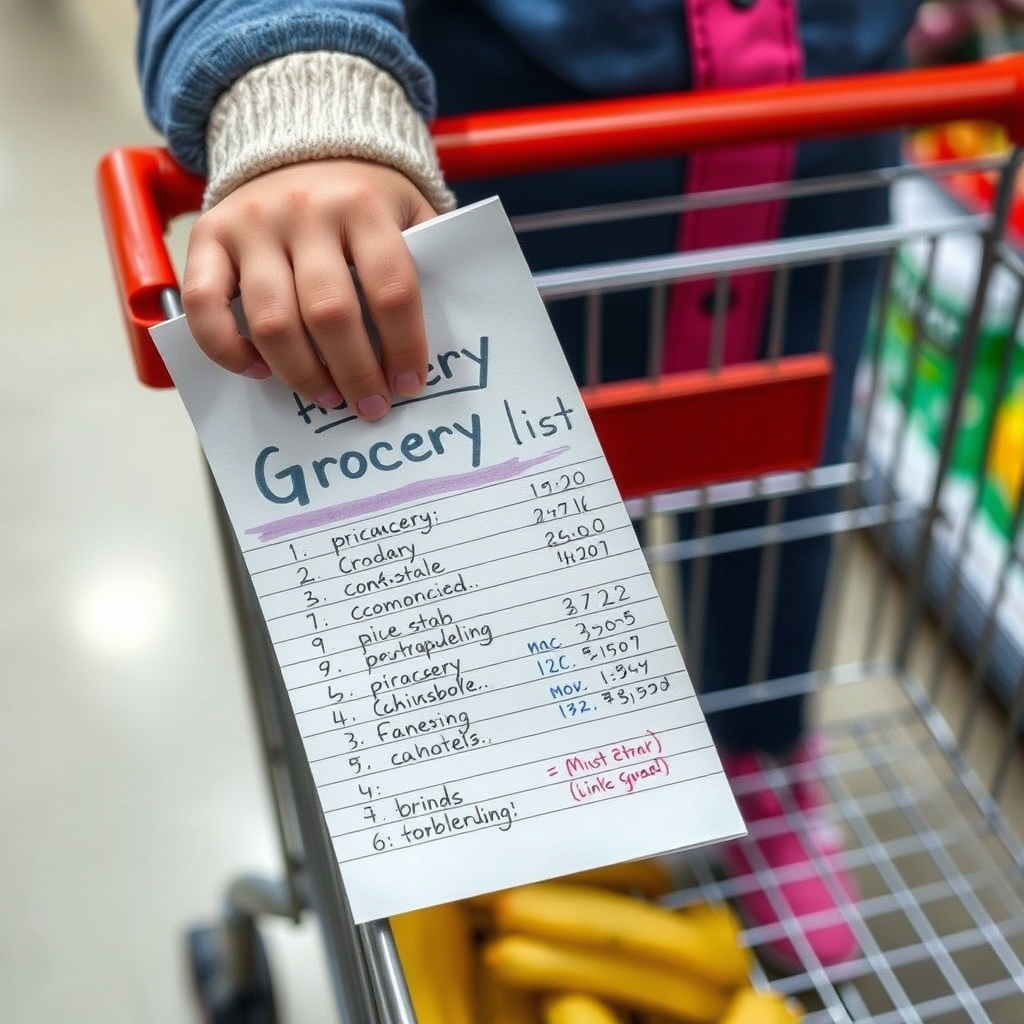
Start by sitting down with your child to create a shopping list. Don’t just make it a list of items; make it a list of requirements. Explain that we are going to the store with a specific budget and a specific purpose. If an item isn’t on the list, we don’t buy it. This simple rule is the foundation of disciplined spending.
For younger children, this can be a scavenger hunt. Let them hold the list and check off items as you find them. For older children, introduce the concept of a budget. Give them a “snack budget” of, say, $5.00. Tell them they can choose whatever snacks they want for the week, as long as the total stays under that limit. This allows them to weigh the cost of a premium snack against a cheaper alternative. If they want the expensive brand, they have to calculate what else they can afford—or if they can afford anything else at all.
Understanding Unit Pricing: The Secret to Smart Shopping
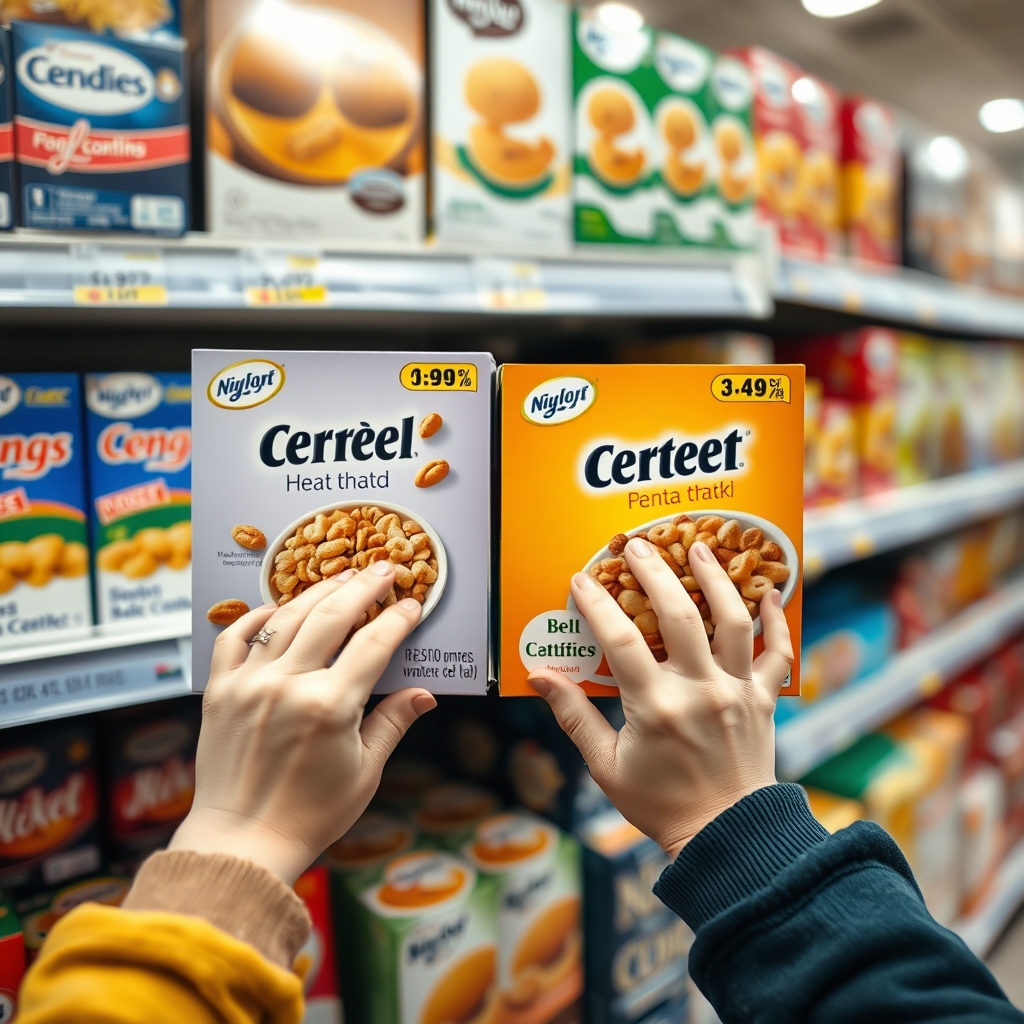
One of the most important skills a child can learn is how to read a shelf tag. Most parents glance at the big, bold price, but the real value is hidden in the fine print: the unit price. This is the cost per gram, kilogram, ounce, or pound. It is the great equalizer that allows you to compare different sizes and brands.
When you are in the aisle, stop and show your child the unit price. Ask them: “Which box of crackers is actually cheaper?” You might find that the larger, “family-sized” box is actually more expensive per ounce than the smaller one, or vice versa. This teaches them to look for value rather than just the lowest sticker price.
This is a great moment to explain the concept of “bulk buying.” Explain that buying in bulk can save money in the long run, but only if you use all of the product before it goes bad. It is a lesson in both finance and household management. If you buy a gallon of milk that you can’t finish, you aren’t saving money; you are throwing it away.
The “Want vs. Need” Negotiation
We have all been there: the child begging for a toy or a specific treat in the checkout aisle. This is the perfect moment for a calm, objective financial discussion. Instead of just saying “no,” treat it as a budgeting problem.
“We have $100 allocated for our groceries this week. If we buy this toy, we have to take money away from our dinner budget. What should we give up for dinner tonight to make room for this toy?”
This phrasing shifts the power dynamic. It isn’t you being the “mean parent” who says no; it is the budget saying no. It forces the child to prioritize. Often, when they realize that buying the toy means no pizza or no dessert for the week, they will decide that the toy isn’t actually worth it. This is a critical realization: everything has a cost, and we have to choose how we spend our limited resources.
The checkout process is the culmination of your work. If you are using self-checkout, involve your child in the process. Let them scan the items and watch the total go up on the screen. This provides a real-time feedback loop. They can see how each item they chose contributes to the final total.
If you are paying with cash, let them hand the money to the cashier. If you are using a card, explain that the card is not a magic wand that produces infinite money; it is a tool that draws from a bank account that has a limit. This is a crucial distinction to make for children raised in a digital-first world.
For parents of teenagers, you can take this a step further. If they have their own debit card or an allowance, let them pay for their own items. When it is their own money on the line, their attitude toward spending changes instantly. The “impulse buy” becomes a “calculated investment.”
Common Pitfalls and How to Avoid Them
While this approach is powerful, it is not without its challenges. Here are a few things to keep in mind to ensure the process remains educational and not stressful.
| Challenge | Proactive Solution |
|---|---|
| The “I want it now” tantrum | Acknowledge the desire but stick to the pre-agreed list/budget. Don’t negotiate at the shelf. |
| Overwhelmed by choices | Limit their options to two or three items to prevent decision fatigue. |
| Time constraints | Don’t try to teach every lesson in one trip. Pick one focus—like unit pricing—for the week. |
| Exceeding the budget | Use it as a learning moment: “We spent too much here, what can we put back to get back under our limit?” |
Remember, the goal isn’t to turn your child into a cold-hearted accountant. The goal is to give them the tools to make informed decisions. It is about fostering a healthy relationship with money where they feel in control of their choices rather than being controlled by them.

Why This Matters for the Long Term
Financial literacy is one of the most important life skills we can pass on to our children. According to the OECD’s PISA financial literacy assessment, students who discuss money with their parents are significantly more likely to demonstrate better financial behavior in adulthood. The grocery store is a low-stakes environment where they can practice these skills repeatedly.
When they are young, these lessons are about choosing between a bag of apples and a box of cookies. As they get older, these same skills will help them navigate student loans, car payments, and eventually, a mortgage. The core principles—budgeting, understanding value, and managing opportunity costs—remain the same regardless of the complexity of the transaction.
Furthermore, this practice builds a sense of family teamwork. When you shop together with a common goal, you aren’t just buying food; you are building a shared understanding of what it takes to run a household. It turns a mundane task into a shared project.
A Few Cautions for Parents
It is easy to get carried away. Don’t expect your five-year-old to understand the nuances of compound interest or the stock market. Keep the lessons age-appropriate. For very young children, focus on the basics: money is limited, and we need to choose what we buy. For older kids, you can introduce more complex concepts like sales tax or the difference between generic and name-brand products.
Also, be mindful of the “money as a reward” trap. Try not to use money as a bribe for good behavior in the store. If you reward them with a treat for not crying, you are teaching them that the grocery store is a place to negotiate for things, rather than a place to practice responsible spending. Keep the financial lessons separate from behavioral discipline.
Finally, be patient with yourself. Some trips will be chaotic. You will be tired, the kids will be hungry, and you will just want to get out of the store. That is okay. Not every trip needs to be a lesson. Start small, pick one or two concepts to focus on, and build from there. The consistency over time is what matters, not the perfection of a single shopping trip.
Frequently Asked Questions
How do I handle a child who wants expensive name-brand items?
Use the “price difference” rule. If they want the expensive brand, tell them the price difference comes out of their own allowance or their “fun budget.” Often, when they see the cost in terms of their own money, they are much more likely to choose the generic alternative.
What age is appropriate to start teaching these concepts?
You can start as early as age four or five. At this stage, it is simply about counting coins or identifying items on a list. By age eight or nine, they can start to understand basic unit pricing and the concept of a fixed budget.
Is it better to pay with cash or card when teaching kids?
Cash is generally better for younger children because it is physical and tangible. They can see the money disappearing as they hand it over. For older children, you can use digital tools or a debit card to show them how to track their spending in an app, which is a closer reflection of how they will manage money as adults.
Teaching financial literacy is a journey, not a destination. By making the grocery store a regular part of your child’s financial education, you are setting them up for a lifetime of confident, informed decision-making. Start with small steps, remain consistent, and enjoy the process of watching them grow into financially capable individuals.
For further reading on financial education for families, you may want to explore resources from the Consumer Financial Protection Bureau (CFPB), which offers excellent guides on teaching money management to children of all ages.