The secret to surviving a week-long family trip without checking a single bag isn’t magic—it’s math, physics, and a healthy dose of ruthless editing. If you can master the art of the carry-on, you effectively eliminate the risk of lost luggage, bypass the long waits at the baggage carousel, and gain the mobility that is essential when you have children in tow.
- The 5-4-3-2-1 Rule: Use this proven framework to limit your clothing while ensuring you have enough variety for a full week.
- Compression is Key: Invest in high-quality compression packing cubes to reduce volume by up to 30%.
- The “Wear Your Heaviest” Strategy: Save precious suitcase space by wearing your bulkiest items—like coats and boots—on the plane.
We have all been there. You are standing in the terminal, watching the baggage carousel spin, hoping your neon-tagged suitcase will appear before your toddler has a complete meltdown. Or worse, you are standing at the lost luggage counter, filling out forms while your vacation clock ticks away. Traveling with family is complex enough without the added burden of heavy, checked luggage. Moving through an airport with only carry-ons offers a level of freedom that makes the entire journey significantly more manageable.
The Physics of Packing: Why Less is Actually More
The primary hurdle in carry-on travel is the psychological barrier: the “what if” factor. We pack for every possible scenario—a sudden blizzard in July, a formal gala dinner we weren’t invited to, or a sudden change of heart regarding our footwear. However, for a one-week trip, you rarely need more than what fits in a standard 22-inch carry-on. The goal is to shift your mindset from “preparing for emergencies” to “building a functional system.”
When you limit yourself to a carry-on, you are forced to prioritize versatility. Every item you pack must earn its place. If an item doesn’t serve at least two purposes, it shouldn’t make the cut. This isn’t just about weight; it’s about mental load. When you have fewer things to track, keep clean, and organize, you have more mental bandwidth to actually enjoy your family time.
The 5-4-3-2-1 Packing Framework
To avoid overpacking, follow the 5-4-3-2-1 rule. It provides a structured limit that covers all the bases for a seven-day trip. Of course, you can adjust this based on your destination’s climate, but the core logic remains the same.
| Category | Quantity | Notes |
|---|---|---|
| Tops | 5 | Mix of short and long sleeves depending on weather. |
| Bottoms | 4 | Include one pair of “nice” pants and three casual/active pairs. |
| Footwear | 3 | One pair worn on feet, two packed (versatile sneakers and sandals). |
| Dresses/Sets | 2 | Easy to grab and go for dinners or outings. |
| Accessories | 1 | One hat, sunglasses, or a light scarf. |
This framework is especially effective for children. Because kids’ clothes are smaller, you can often fit more, but the temptation is to pack their entire closet. Instead, focus on a “capsule wardrobe” approach. Stick to a neutral color palette so that every top matches every bottom. This allows for mix-and-match combinations that make it look like you brought more clothes than you actually did.
Mastering the Art of Compression
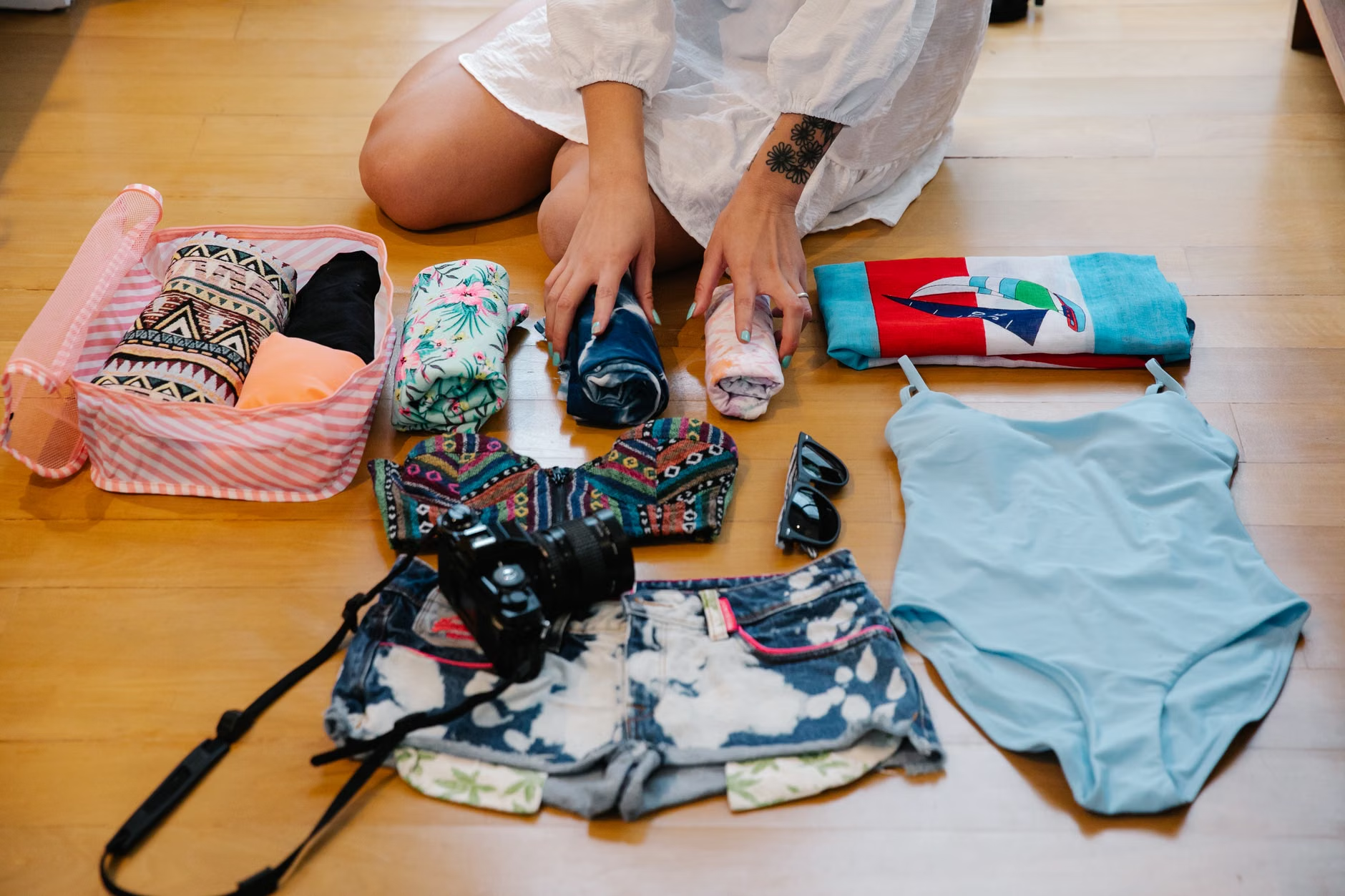
If you aren’t using packing cubes, you are missing out on the single most effective tool in the modern traveler’s kit. Compression cubes are not just for organization; they are for volume reduction. By squeezing the air out of your clothes, you can fit significantly more into the same footprint.
When packing for a family, assign each family member a specific color of packing cube. This makes it incredibly easy to find things in a shared suitcase or to quickly identify whose clothes are whose during a frantic morning in a hotel room. Roll your clothes instead of folding them; this prevents deep creases and allows you to see everything you have at a glance.
Tactical Layering for Changing Climates
One of the biggest concerns for parents is the “what if the weather turns” scenario. The solution is layering. Instead of packing a heavy parka, pack a thin, high-quality down vest or a windbreaker that can be worn over a sweater. By using layers, you can manage temperature fluctuations without needing a different outfit for every degree of temperature change.
Always prioritize fabrics that are moisture-wicking and wrinkle-resistant. Merino wool, for example, is a game-changer. It is naturally odor-resistant, temperature-regulating, and can be worn multiple times before needing a wash. Investing in a few high-quality pieces will pay for itself in saved luggage fees and reduced stress over the long term.
The Toiletry and Tech Balancing Act
The “liquids rule” (the TSA 3-1-1 rule) is often the biggest pain point for families. For a week-long trip, you do not need full-sized bottles of shampoo or lotion. Purchase high-quality, leak-proof silicone travel containers and decant your products. Better yet, check if your accommodation provides quality toiletries. Many modern hotels and vacation rentals offer decent shampoo and body wash, meaning you can skip those items entirely.
Regarding technology: limit yourself to one primary device per person if possible. For kids, a tablet pre-loaded with movies and games is a lifesaver, but don’t forget the chargers. Use a single multi-port USB-C wall charger that can handle your phone, tablet, and watch simultaneously. This eliminates the “rat’s nest” of cables that usually ends up at the bottom of your bag.
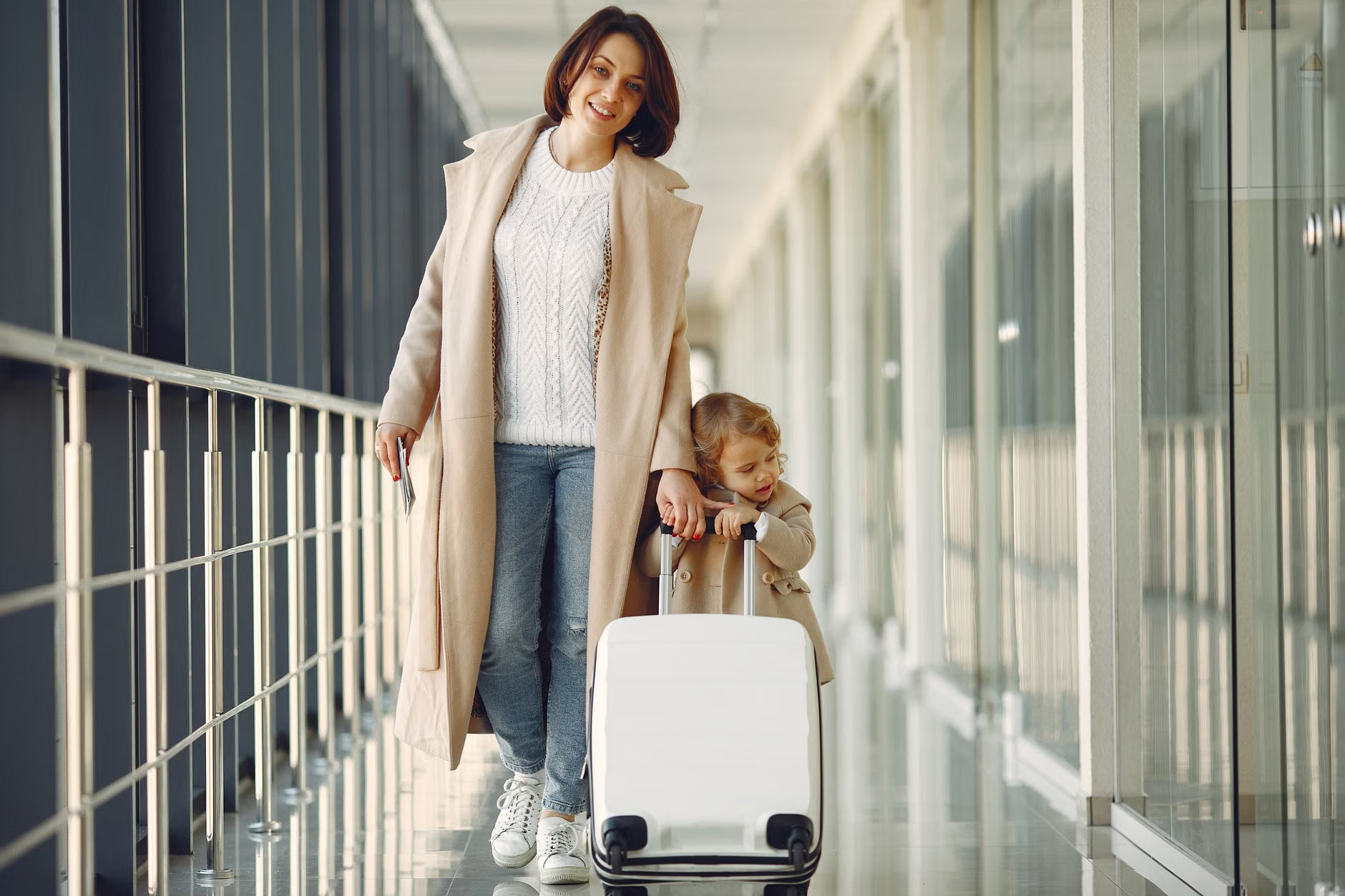
When you only have carry-ons, your mobility increases exponentially. You can move through security lines faster, you don’t have to wait for your bags at the arrival terminal, and you can easily navigate public transit or rental car shuttles. This is crucial when you are responsible for children. You have your hands free to hold a child’s hand, manage snacks, or double-check boarding passes.
However, carry-on travel requires discipline. You must be prepared to handle your own luggage at all times. This means choosing a high-quality, four-wheeled spinner suitcase that is easy for even a child to maneuver if necessary. Test your bags at home—can you comfortably lift them into an overhead bin? If not, they are too heavy.
Common Pitfalls and How to Avoid Them
Even the most seasoned travelers fall into traps. The most common one is the “last-minute toss-in.” You’re about to zip the bag and you think, “I should probably pack an extra pair of shoes just in case.” Don’t do it. That “just in case” item is almost always the one that remains unworn at the bottom of your bag, taking up space and weight.
Another pitfall is ignoring the weight limit of the airline. Even if your bag fits the dimensions, some low-cost carriers have strict weight limits for carry-ons. Always check your airline’s specific requirements before you head to the airport. If you are worried about weight, use a portable digital luggage scale. It’s a small, inexpensive tool that saves you from the embarrassment of having to move items from your carry-on to your personal item at the boarding gate.
The “Laundry Strategy” for Longer Stays
If you are traveling for more than a week, don’t feel the need to pack for the duration. Instead, build a “laundry day” into your itinerary. Many vacation rentals come with washers and dryers, and even hotels often have laundry services or local laundromats nearby. Washing a load of clothes halfway through your trip is a small investment of time that allows you to pack half the amount of clothing. It’s a simple trade-off: 45 minutes of laundry vs. dragging an extra 20 pounds of luggage for seven days.
Refining Your Family Travel System
Consistency is your best friend when traveling with family. Create a “travel checklist” on your phone. Every time you return from a trip, update it. Note what you didn’t use, what you wished you had, and what you ended up buying on the road. Over time, this checklist becomes a highly customized map for your family’s specific needs, reducing the “did I pack the charging cable?” anxiety that plagues most parents.
Remember that the goal is not to have a “perfect” trip, but a smooth one. If you forget a pair of socks, you can buy them. If you run out of toothpaste, there’s likely a shop nearby. The stress of travel often comes from the pressure to be perfectly prepared for every contingency. By packing light, you are essentially giving yourself the flexibility to roll with the punches. If a flight is delayed or you have to take a long walk to your hotel, your luggage won’t be the thing holding you back.
Summary and Encouragement
Successfully transitioning to carry-on travel with a family is a process of trial and error. Start small. Try it on a weekend trip first. As you become more confident, extend your carry-on-only strategy to longer vacations. The freedom of not checking bags is transformative—it changes the way you view travel and allows you to focus on what truly matters: the experiences you are sharing with your family.
Be kind to yourself during the transition. You might overpack once or twice, or realize you forgot something essential. That is part of the learning curve. With each trip, you will refine your system, improve your packing efficiency, and ultimately, find more time to focus on the moments that make family travel worth the effort. Keep it simple, stay organized, and enjoy the journey.
Frequently Asked Questions
- How do I handle liquids for a family of four in a carry-on?
The TSA 3-1-1 rule applies to each individual passenger. You can distribute your liquids across multiple quart-sized bags. However, it is often easier to use solid toiletries (shampoo bars, stick sunscreen) to avoid the liquid limit entirely. - What if we are traveling to a destination with very different climates?
Focus on the layering system. A base layer, a mid-layer (like a fleece or sweater), and an outer shell (windbreaker or rain jacket) can handle most conditions. Wear the heaviest items on the plane to save space. - Is it worth buying expensive compression cubes?
While you don’t need the most expensive brand, avoid the cheapest ones. Quality compression cubes have durable zippers, which are the first thing to fail under the pressure of a tightly packed bag. Investing in a mid-range set will save you from having to replace them after two trips.
For more official travel guidelines, visit the TSA official website regarding carry-on items, and check your specific airline’s baggage policy before heading to the airport.