The core of the “Quiet Travel” movement isn’t about visiting boring places; it is about intentionally choosing environments that strip away sensory overload so your nervous system can finally hit the reset button.
- Prioritize Sensory Minimalism: Choose destinations that offer low-frequency environments, avoiding high-density tourist hubs or neon-lit city centers.
- The “No-Itinerary” Rule: Plan for only one activity per day to reduce decision fatigue and allow for spontaneous rest.
- Digital Boundaries: Treat your vacation as a period of sensory fasting, which includes minimizing notifications, loud music, and constant visual stimulation.
If you are in your 30s or 40s, you probably know the feeling of the “vacation hangover.” You plan a trip, cram in six museums, three famous restaurants, and a dozen photo-ops, only to return home feeling more exhausted than when you left. Between the constant pinging of work emails, the mental load of managing a household, and the general noise of modern life, our brains are perpetually stuck in a state of high-alert. This is exactly where the Quiet Travel movement comes in—a growing trend that prioritizes silence, stillness, and sensory regulation over the traditional “bucket list” approach.
Why Your Brain Needs a Sensory Detox
Our brains are not designed to process the sheer volume of information we encounter daily. From the blue light of our smartphones to the ambient hum of traffic and the constant social cues required in our professional and personal lives, we are living in an era of chronic over-stimulation. When we travel, we often subconsciously replicate this environment by choosing busy cities or high-energy resorts, thinking that “fun” equals “activity.”
Quiet Travel is a conscious pivot toward sensory rest. It is not necessarily about meditation or silence in the literal sense, though those are options. It is about removing the stressors that force your brain to work overtime. For parents, this is particularly vital. When you spend your life regulating the emotions and needs of others, a trip that requires constant decision-making—where to eat, what to see, which train to catch—is just more of the same labor. Quiet travel aims to reduce this “cognitive load.”
The Science of Low-Stimulation Environments
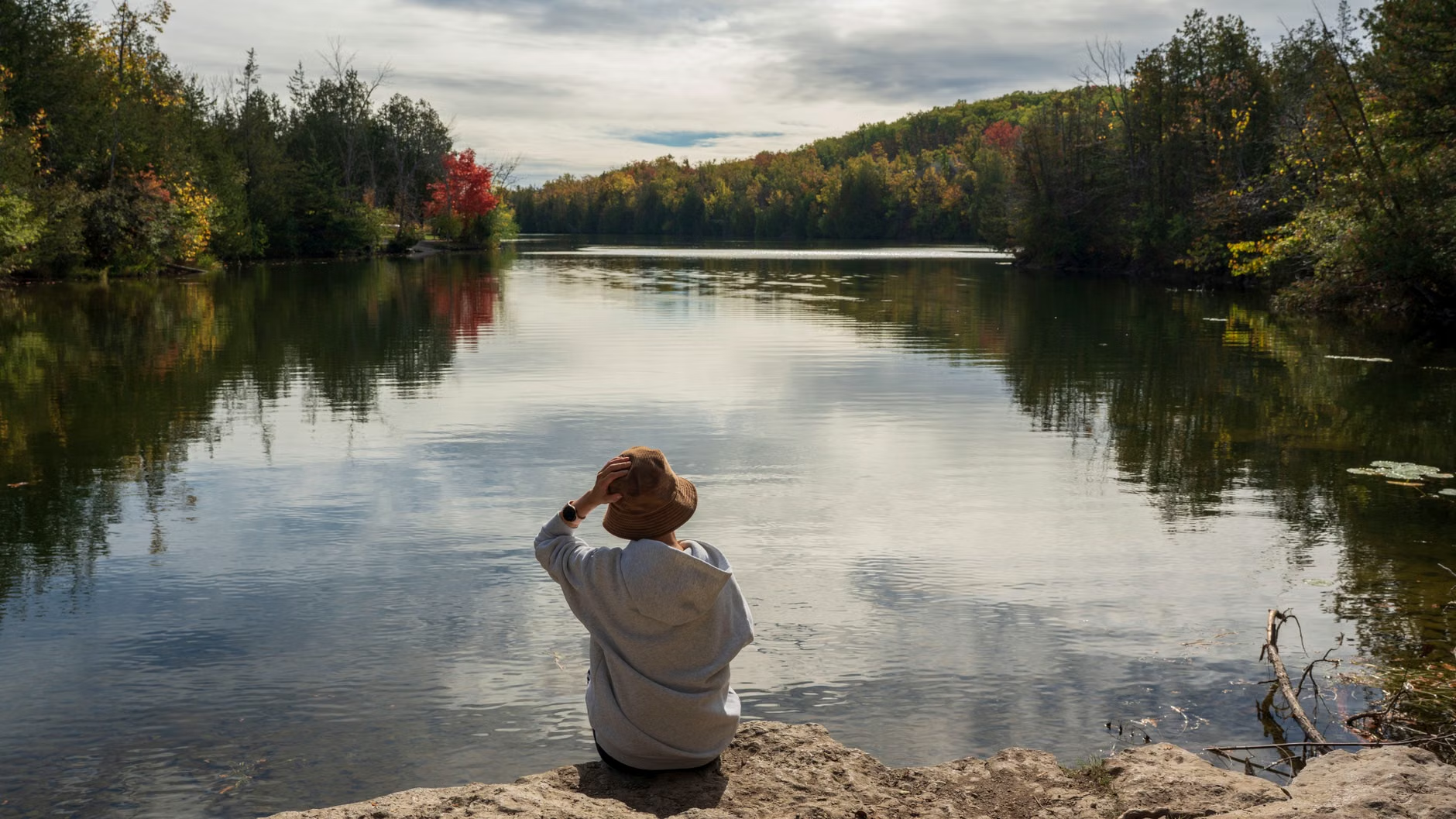
Research into environmental psychology suggests that natural settings, particularly those with low complexity, help restore our “directed attention.” This is the focus we use for tasks like answering emails or driving. When this resource is depleted, we become irritable and prone to burnout. By choosing destinations that offer “soft fascination”—environments that hold our attention without requiring effort, like a view of the ocean, a quiet forest, or a minimalist architectural space—we allow our cognitive resources to replenish.
How to Identify a ‘Quiet’ Destination
Not every destination is created equal when it comes to sensory rest. You don’t necessarily need to be in the middle of a desert to find quiet, but you do need to be selective about the “vibe” of your location. Here is how to evaluate a potential spot for your next trip.
| Feature | High-Stimulation (Avoid) | Quiet Travel (Seek) |
|---|---|---|
| Crowd Density | Major tourist squares, busy markets | Remote villages, low-season coastal towns |
| Visual Noise | Neon signs, cluttered interiors | Minimalist design, open landscapes |
| Activity Pace | Back-to-back tours and events | One primary “event” per day |
| Soundscape | Traffic, loud music, sirens | Nature sounds, white noise, silence |
When you are researching, look for “hidden gems” or “off-season” locations. If you love a city, look for the quiet neighborhoods on the periphery rather than the center. For example, instead of staying in the heart of a bustling capital, consider a small town an hour away with train access. This gives you the option of visiting the city if you want, but ensures your “home base” remains a sanctuary.
Planning Your Quiet Itinerary: The Art of Doing Less
The biggest mistake people make when trying to “rest” is over-planning the recovery. If you have a spreadsheet filled with activities, you are not resting; you are just working a different kind of job. A truly quiet itinerary should be flexible and sparse.
The “One-Thing” Rule
Adopt the “One-Thing” rule: identify exactly one meaningful activity for the day. It could be a hike, a visit to a local museum, or simply sitting in a quiet cafe with a book. Everything else is optional. If you feel like doing more, great. If you feel like napping for three hours, that is also a valid part of the plan. This removes the pressure of “missing out” on things, which is a major source of travel anxiety.
Designing Your Sensory Environment
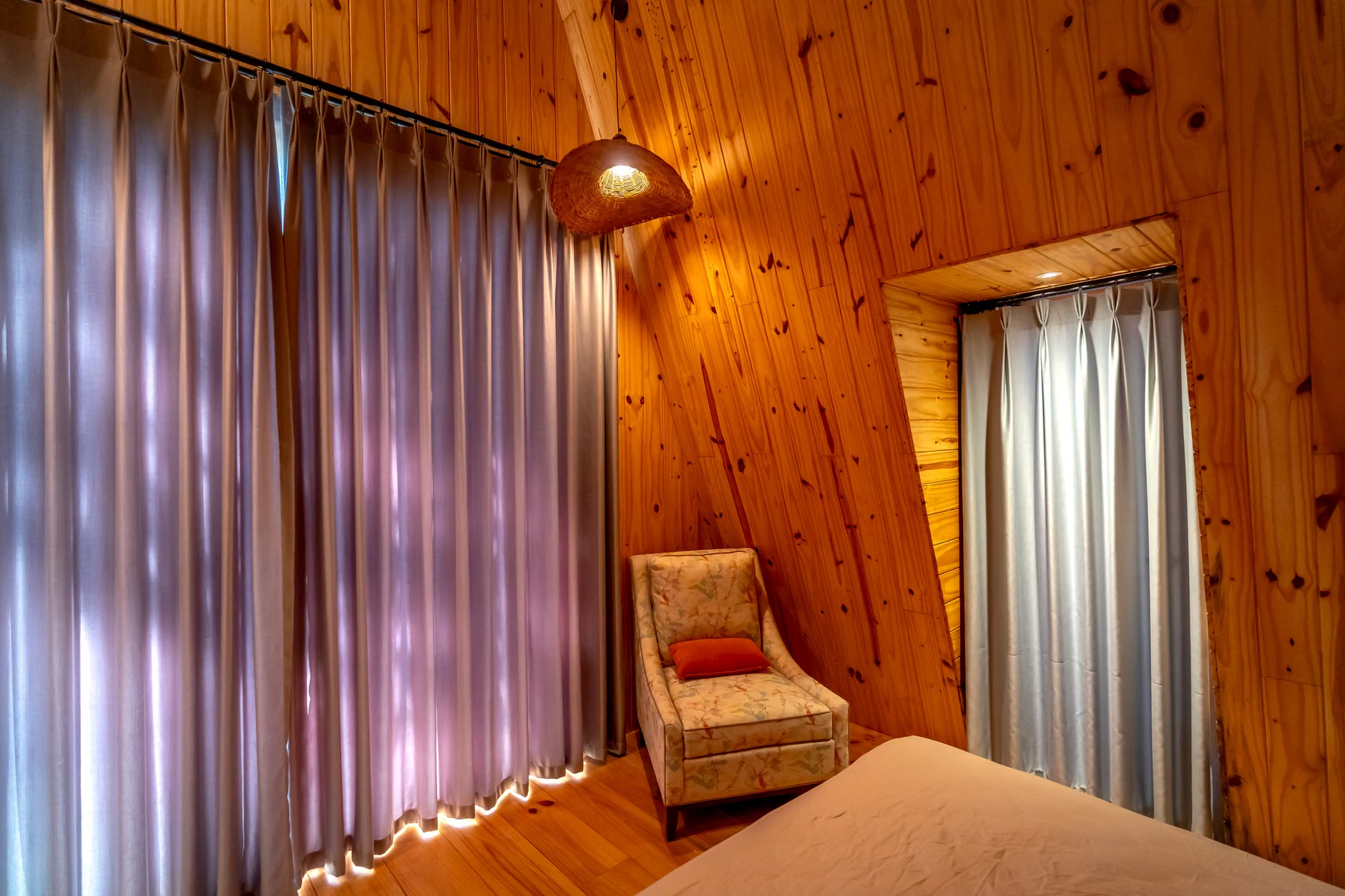
Your choice of accommodation is perhaps the most important decision in Quiet Travel. For this type of trip, skip the large hotels with noisy hallways and high turnover. Look for:
- Small, independent guesthouses or cabins: These usually have fewer people and less ambient noise.
- Minimalist design: Clean lines and neutral colors reduce visual clutter, which helps calm the mind.
- Sound isolation: Check reviews specifically for noise levels. If you are a light sleeper, ask for a room away from the street or the lobby.
Common Pitfalls and How to Avoid Them
Even with the best intentions, it is easy to fall back into the trap of busyness. Here are a few common mistakes and how to sidestep them.
Mistake 1: The “Must-See” Trap. You feel guilty if you don’t visit the famous landmark. The Fix: Remind yourself that the landmark will be there next year. If you aren’t in the mood, stay in the hotel. Your goal is restoration, not accumulation of experiences.
Mistake 2: The Digital Tether. You bring your laptop or keep your work notifications on “just in case.” The Fix: If you cannot completely disconnect, set a strict 30-minute window each morning for check-ins, then silence everything else. Use an app that blocks social media during your trip.
Mistake 3: Over-Eating and Over-Drinking. We often use food and alcohol to compensate for boredom or to “celebrate” being on vacation, which can actually increase physical fatigue. The Fix: Focus on simple, local ingredients. Hydration is more important than you think when you are trying to regulate your nervous system.
The Role of Sensory Fasting
Sensory fasting is the practice of intentionally reducing the input you receive. This sounds extreme, but it is incredibly effective for people in their 30s and 40s who are constantly bombarded by demands. During your trip, try to engage in “low-stimulation” activities. Instead of listening to a podcast or an audiobook, try walking in silence. Instead of taking photos of everything you see, try taking only one photo per day or none at all. By focusing on the present moment, you allow your brain to exit the “processing” mode and enter the “experiencing” mode.
This is not about being anti-social or boring. It is about radical self-care. When you return to your family and your job, you will find that you have a much larger capacity for patience and focus. You aren’t just “taking a break”; you are recalibrating your baseline.

Practical Steps to Launch Your Quiet Trip
If you are ready to book, follow this simple framework to ensure you stay on track:
- Audit your current stress: Is your fatigue physical (you need sleep) or mental (you need to stop making decisions)? Choose a destination that addresses the specific type of fatigue.
- Choose a “Slow” Location: Look for areas known for their natural beauty or slower pace of life rather than nightlife or shopping hubs.
- Book in Advance: Avoid the stress of searching for dinner reservations or activities once you arrive. Have a rough plan, but keep it light.
- Pack for Comfort: Prioritize items that support sensory rest, such as high-quality noise-canceling headphones, a comfortable eye mask, and physical books instead of screens.
Reframing the Value of a Trip
We are conditioned to value travel by the amount of money spent or the number of countries visited. The Quiet Travel movement challenges this by suggesting that the value of a trip should be measured by how you feel when you return. If you spent a week in a quiet cabin in the mountains and returned feeling truly rested, that is a successful trip—even if you didn’t have a single “Instagrammable” moment.
For parents in particular, this is a revolutionary way to think about time off. We often feel guilty for taking time for ourselves, and we try to “make it count” by doing too much. But your family needs a parent who is rested and present, not a parent who is exhausted from a high-octane vacation. By choosing quiet, you are modeling a sustainable way of living that values mental health over constant achievement.
Frequently Asked Questions
1. Is Quiet Travel just another word for “staying at home”?
Not at all. The difference lies in the environment. Being at home often comes with the “chores” and “responsibilities” associated with your daily life. A Quiet Travel destination provides a physical break from those triggers while offering a change of scenery that can help you gain perspective, even if that scenery is just a different view from a window.
2. What if I travel with my partner or family who wants to be active?
This is a common challenge. The key is to negotiate “together time” and “alone time.” You can agree to do one active thing together in the morning, and then spend the afternoon pursuing your own interests—whether that is reading, walking, or just sitting in silence. You don’t have to spend every waking second of a trip glued to your travel companions.
3. How do I deal with the anxiety of not having a full itinerary?
That anxiety is a symptom of the very over-stimulation you are trying to escape. Start small. Plan just two things for a three-day trip. If you find yourself feeling restless, remind yourself that “doing nothing” is a valid activity. It takes practice to become comfortable with stillness, but the benefits for your brain are well worth the initial discomfort.
Ultimately, Quiet Travel is about reclaiming your autonomy. In a world that demands your constant attention and output, choosing to step away—and to do so in a way that truly honors your need for rest—is a powerful act. It’s not about finding the perfect, most remote corner of the earth; it’s about finding a corner where you can finally hear yourself think again. Start by looking for that one quiet place, pack light, and give yourself permission to do absolutely nothing. Your brain will thank you for it.
For more information on the benefits of low-stimulation environments, you can look into the research on “Attention Restoration Theory” (ART) published by environmental psychologists, which provides the foundation for why natural settings are so effective for mental recovery.