Repair Cafes are not just about fixing a broken toaster; they are a practical, budget-friendly solution to the mounting problem of household electronic waste, offering a space where you can learn to extend the lifespan of your belongings while meeting neighbors who share your values.
Key Takeaways:
- Economic Sense: Repairing common household items like lamps, toasters, and vacuums costs a fraction of buying new replacements.
- Skill Building: These community hubs provide free expert guidance, allowing you to learn basic troubleshooting and repair skills you can use at home.
- Environmental Impact: By keeping electronics out of landfills, you directly contribute to reducing the global e-waste crisis, one device at a time.
The Hidden Cost of the “Replace, Don’t Repair” Mentality
If you are in your 30s or 40s, you probably remember a time when if something broke, you fixed it. Today, the default response to a faulty blender or a flickering lamp is often to check the price of a new one on Amazon. It is convenient, fast, and often cheaper in the short term. But this “throwaway culture” has a massive price tag attached to it—both for your wallet and for the planet.
As parents, we are constantly juggling schedules, school runs, and work deadlines. The idea of spending a Saturday morning trying to figure out why the coffee maker isn’t heating up sounds like a luxury we can’t afford. However, the rise of the global “Repair Cafe” movement is changing the narrative. These are not formal repair shops; they are community-driven events where volunteers—often retired engineers, hobbyists, or just handy neighbors—help you diagnose and fix your broken items for free.
When you take an item to a Repair Cafe, you aren’t just getting it fixed. You are participating in a circular economy. You are learning how things work, and more importantly, you are showing your children that everything has value and that “broken” doesn’t always mean “trash.”
What Exactly Happens at a Repair Cafe?
A Repair Cafe is essentially a pop-up event, usually held in community centers, libraries, or local church halls. When you walk in, you are greeted by a “receptionist” who logs your item. You are then matched with a “repairer”—a volunteer with the specific skill set needed for your device. Whether it’s a loose wire in a hair dryer, a stuck button on a child’s toy, or a mechanical issue with a sewing machine, there is usually someone who has seen it before.
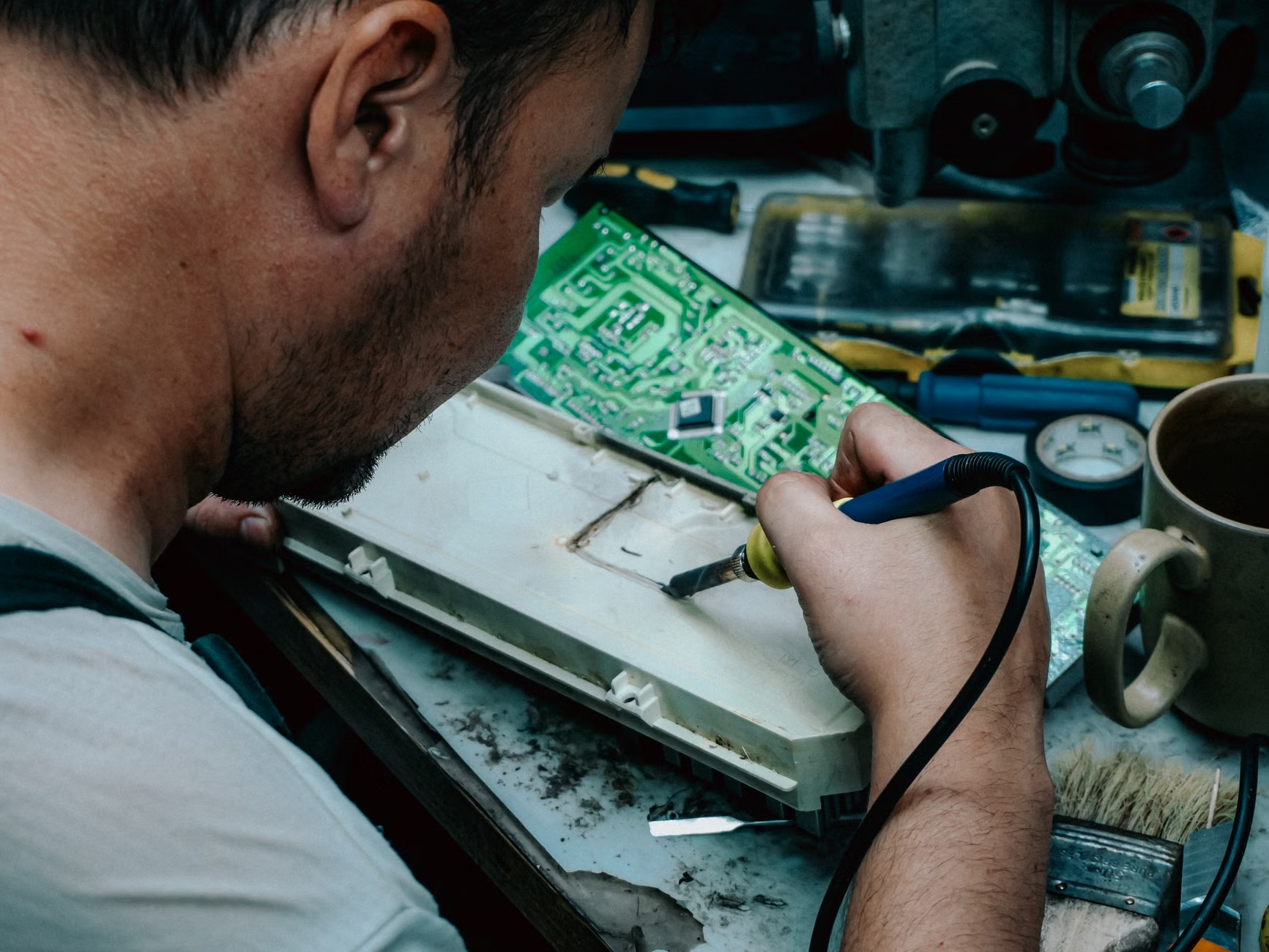
Crucially, the philosophy of these cafes is collaborative repair. You don’t just drop off your item and pick it up later. You sit with the volunteer. They talk you through what they are doing. They explain why the capacitor failed or why the switch was jammed. This is the “secret sauce” of the movement: it demystifies technology. You leave not just with a working appliance, but with the knowledge of how to prevent the issue from happening again.
The Tools of the Trade
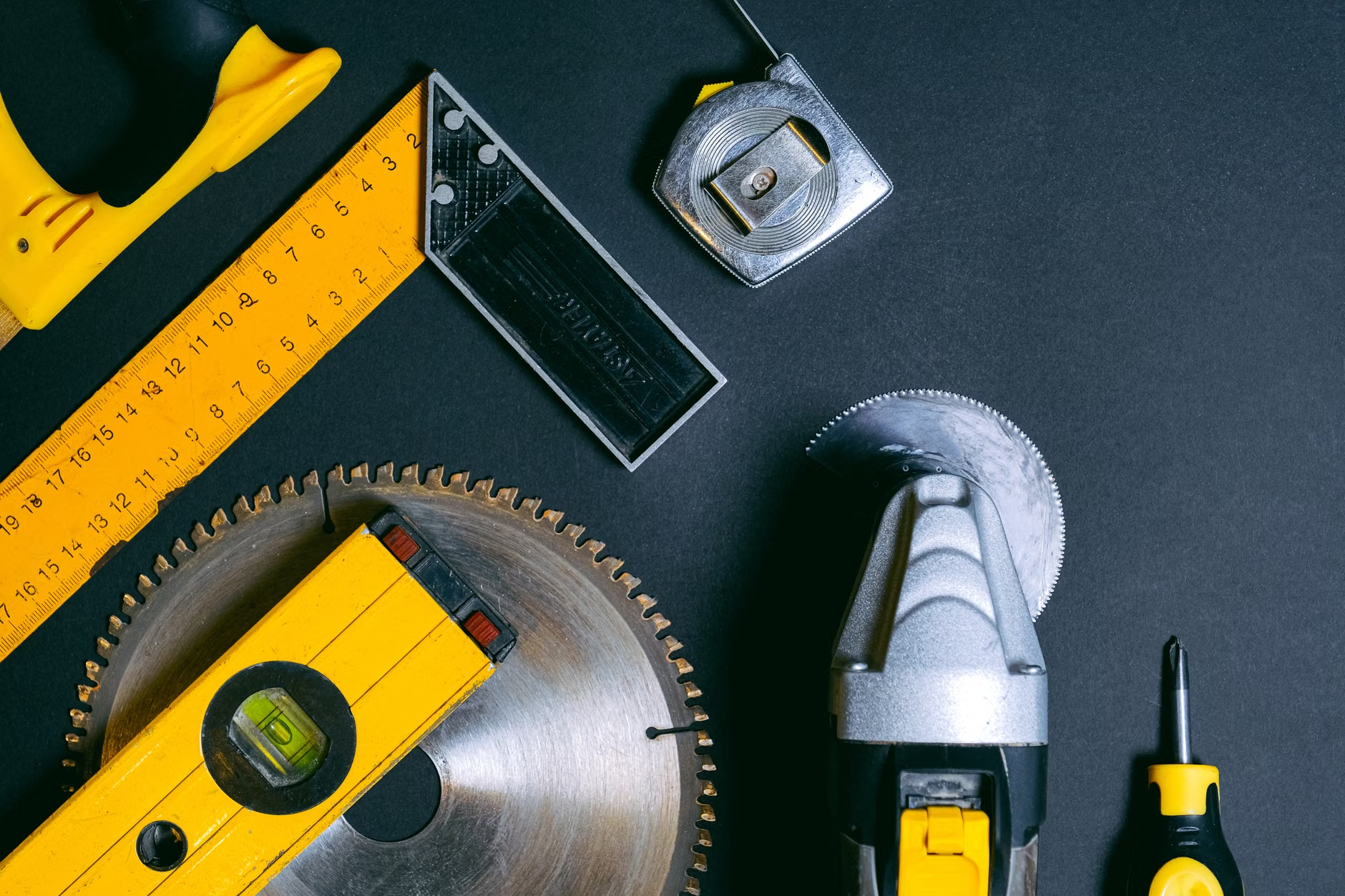
Most Repair Cafes come equipped with a communal set of tools. You don’t need to bring a massive toolbox; you just need to bring the item and, if possible, the power cord or necessary accessories. Here is what you can typically expect to see on a standard workbench:
| Tool Category | Common Use |
|---|---|
| Precision Screwdrivers | Opening small battery compartments and device casings. |
| Multimeter | Testing electrical continuity to see if a circuit is broken. |
| Soldering Iron | Reconnecting loose wires or replacing small electronic components. |
| Pliers & Wire Cutters | Manipulating internal components and stripping insulation. |
Why This Matters for Busy Families
Why should you, as a busy parent, prioritize a three-hour trip to a community hall instead of just ordering a replacement on your phone? The benefits go beyond the immediate financial savings.
1. Teaching Sustainability by Example
We often talk to our kids about climate change and the importance of recycling, but those are abstract concepts. Repairing an item is a tangible, real-world lesson. When your child sees you sitting with a volunteer, opening up a broken toy, and fixing it, you are teaching them resilience and critical thinking. You are showing them that they have agency over their environment.
2. Breaking the Cycle of Planned Obsolescence
Many modern electronics are designed to be difficult to open. They use proprietary screws or glues that make repair impossible. By supporting Repair Cafes, you are part of a larger movement that advocates for “Right to Repair” legislation. When we show companies that we prefer products that can be fixed, we change market demand.

3. Community Connection
In our digital-first lives, we often lack physical “third places”—spaces that aren’t home or work where we can connect with others. Repair Cafes are inherently social. You might be waiting for your turn and strike up a conversation with a neighbor about local schools or upcoming events. It is a low-pressure way to build community ties.
Common Challenges and What to Know Before You Go
Repair Cafes are wonderful, but they are not magic. Understanding their limitations will help you have a better experience and avoid frustration.
- Not everything can be fixed: Sometimes the part is simply unavailable, or the device is too complex or dangerous to repair safely. Be prepared for the possibility that your item might still end up in the recycling bin.
- Wait times: These events are popular. You might spend some time waiting for your turn. Bring a book, a snack for the kids, or a project to work on while you wait.
- Liability: Most Repair Cafes operate on a “repair at your own risk” basis. They are not a professional service, and they cannot offer warranties on their work.
- Safety first: If an item is a major fire hazard or looks like it could explode, they will likely turn it away. Use common sense.
How to Prepare for Your Visit
To make the most of your visit, do a little homework. If your device has a model number, look it up online. Sometimes a quick search reveals that a specific error code is a common issue with a simple fix. Bring the power supply or any manuals you might still have. If you have a sense of when it stopped working (e.g., “it made a popping sound” or “it just stopped after a power surge”), share that with the volunteer. It saves everyone time.
The Future of Repair and Your Role in It
The Repair Cafe movement is growing rapidly, with thousands of locations globally. It is part of a broader shift toward a “circular economy,” where we value the durability of goods over the convenience of constant consumption. As we navigate the complexities of modern life, these small, localized actions—fixing a lamp, darning a sock, or soldering a broken wire—reconnect us with the physical reality of the things we own.
You don’t need to be an engineer to participate. You just need to be curious. The next time something breaks in your house, before you hit the “buy now” button, take a moment to look up your local Repair Cafe. You might just save a few dollars, learn a new skill, and help the environment in the process. And who knows? You might even find yourself volunteering at the workbench a few months from now.
Frequently Asked Questions
Is it really free to get things fixed at a Repair Cafe?
Yes, the service itself is free. However, most Repair Cafes are non-profits or community groups, so they often appreciate small donations to help cover the cost of rent, insurance, and shared tools. If a specific replacement part is needed, you may be asked to purchase it yourself, though the repairers will guide you on exactly what to get.
What if I don’t know anything about electronics?
That is exactly the point! You are not expected to be an expert. The volunteers are there specifically to teach you. They will guide you through the process step-by-step. It is a learning environment, not a test. Just bring your curiosity and a willingness to get your hands a little dirty.
How do I find a Repair Cafe near me?
The best way to find a local event is to use online directories. The Repair Cafe International Foundation maintains a global map of registered locations. You can also search on platforms like Meetup, Facebook Groups, or your local council or library website for “repair events” or “maker spaces” in your area.
Disclaimer: This article is for informational purposes only. Always prioritize safety when dealing with electrical devices. If you are unsure about the safety of an item, consult a professional.
Resources for further reading: