The most effective way to reclaim your professional focus while maintaining your parental responsibilities is by leveraging the growing network of co-working spaces that offer integrated, on-site childcare. This hybrid model is moving from a niche luxury to a standard expectation for the modern workforce, providing a structural solution to the “double-shift” problem that many professionals in their 30s and 40s currently face.
Key Takeaways
- Proximity is Productivity: Having childcare steps away from your desk eliminates the mental load of long commutes and separation anxiety.
- Community Matters: These spaces offer a built-in network of like-minded parents, turning isolation into a collaborative professional experience.
- Financial Nuance: While these memberships are often pricier than standard hot-desking, they frequently provide a net savings when compared to the cost of separate office rent and independent daycare.
If you are a parent who has spent the last few years toggling between Zoom calls and toddler tantrums, you know that the traditional home-office setup often feels like an exercise in compromise. You aren’t fully “at work” because you’re listening for a cry, and you aren’t fully “at home” because your brain is stuck on a project deadline. This isn’t a failure of your time management; it is a failure of the current infrastructure that keeps our professional and parental lives in silos.
The Evolution of the Workspace: Why Now?
The rise of co-working spaces with childcare—sometimes called “coworking-nurseries” or “family-friendly hubs”—is a direct response to the shift toward remote and hybrid work models. For those of us in our 30s and 40s, the “work-from-home” dream initially looked like wearing sweatpants while answering emails. However, the reality quickly morphed into a chaotic balancing act that left many parents feeling burnt out and under-productive.
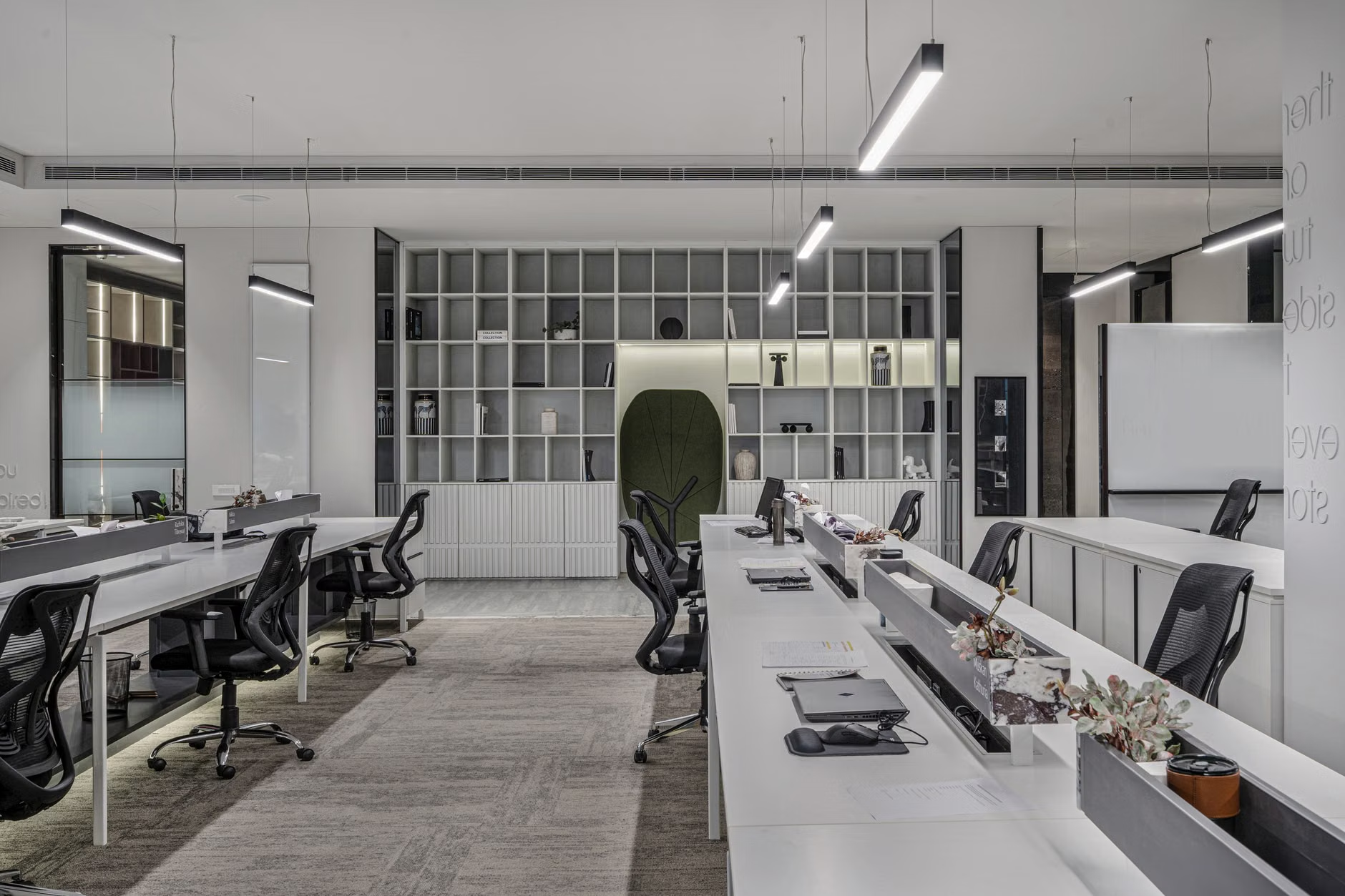
These spaces are designed to bridge that gap. Unlike a standard co-working office that might have a “bring your kid to work” day once a year, these facilities are built with a dual-purpose layout. They offer high-speed internet, sound-proof booths, and meeting rooms on one side, and licensed, regulated childcare on the other. The magic happens in the middle: the ability to step away for a quick lunch with your child or a five-minute hug, without derailing your entire workday.
It is important to understand that these are not just glorified babysitting corners. Most reputable spaces employ certified early childhood educators. This means your child isn’t just being “watched”; they are engaged in developmental play, socialization, and structured learning, which is often a superior experience to being parked in front of a screen at home while you struggle to finish a spreadsheet.
Evaluating the Logistics: Is This Model Right for You?
Before you sign a contract, it is helpful to look at this through a lens of cold, hard logistics. Not every space is created equal, and your specific professional needs will dictate whether this investment is worth the premium. First, consider your work style. If your work involves back-to-back client calls, you need a space that offers robust soundproofing. If you are a creative who needs a quiet, collaborative environment, a noisy childcare wing might actually be more distracting than your home office.
The “Proximity Tax” vs. The “Commute Tax”
When you calculate the cost, don’t just look at the monthly membership fee. Compare it to your current overhead. If you are currently paying for a traditional daycare plus a separate co-working desk, you are likely already paying a premium for two separate services. A combined facility often streamlines these costs. Furthermore, calculate the value of your time. If a commute to a specialized childcare center takes you 45 minutes, that is 90 minutes of your day lost to traffic. In a co-working-childcare hybrid, that time is converted into productive output or actual rest.
| Feature | Standard Co-Working | Co-Working + Childcare |
|---|---|---|
| Focus Environment | High | Medium-High (dependent on soundproofing) |
| Child Engagement | None | High (Professional Educators) |
| Flexibility | High | Moderate (Scheduled blocks) |
| Cost | $ | $$$ |
One of the most profound benefits of these spaces is the psychological shift. When you enter a professional space, even if your child is just a few doors down, your brain enters a different gear. This “spatial separation” is a powerful tool for cognitive load management. Many parents find that when they are at their desk, they are 100% focused on their task because they have the peace of mind of knowing their child is safe and nearby.
However, there are cautions. The biggest mistake parents make is failing to set boundaries. Just because you are in the same building as your child does not mean you should be checking in every hour. The benefit of these spaces is that they allow you to work without interruption. If you find yourself constantly running to the childcare area, you are defeating the purpose of the arrangement. Use the facility as a way to reclaim your time, not as a way to hover.

How to Select the Right Provider
Since this is a growing trend, you will find a wide spectrum of quality. When touring a facility, do not be afraid to act like a detective. Ask about their staff-to-child ratios. Ask about their licensing—are they fully compliant with local health and safety regulations for childcare? A pretty aesthetic and fast Wi-Fi are great, but the safety and well-being of your child are non-negotiable.
Also, look at the “vibe” of the other members. Are they parents who are also looking for a community? The social aspect of these spaces is an underrated benefit. Being surrounded by other professionals who are also navigating the complexities of modern parenting can provide a level of peer support that you won’t find in a traditional office or a solitary home office. You can swap tips on schools, share career advice, and vent about the challenges of balancing a career with raising a family.
Checklist for Evaluating a Potential Space:
- Safety Protocols: Do they have secure check-in/check-out systems? Are there background checks for all staff?
- Sound Insulation: Is the work zone physically separated from the play zone by solid walls or high-quality soundproofing?
- Flexibility: Does the membership allow for drop-in hours, or do you need to commit to a strict schedule?
- Trial Period: Do they offer a day pass so you can see how your child adjusts to the environment?
- Professional Amenities: Are there private booths for confidential calls, or is it strictly open-plan?
The Long-Term Implications for Your Career
The rise of these spaces signals a broader cultural shift. We are moving away from the outdated idea that parenting and work must be entirely separate spheres. For those in their 30s and 40s—the prime of our careers—these spaces offer a way to stay competitive without sacrificing our presence as parents. By choosing a workspace that aligns with your lifestyle, you are not just buying a desk; you are investing in a sustainable way to build your professional future.
However, this is not a panacea for systemic issues like parental leave policies or childcare costs. It is a pragmatic solution for individuals, not a policy fix for society. Be realistic about what this can and cannot do for you. It can give you back your focus, but it cannot fix a toxic workplace culture or an unsustainable workload. Use these spaces as a tool to support your goals, but maintain a clear-eyed view of your broader professional trajectory.

Common Pitfalls and How to Avoid Them
The most common mistake I see among parents transitioning to these spaces is “over-scheduling.” Because you have childcare, you might be tempted to cram your calendar with back-to-back meetings. Avoid this. Your brain still needs a break, and your child still needs you to be present when you leave the office. Keep your work hours realistic. Remember, the goal of working in a specialized space is to improve the quality of your work, not to increase your total hours to the point of exhaustion.
Another pitfall is social isolation. Even if you are in a shared space, it is easy to put on headphones and ignore everyone. Make an effort to connect with other parents. The informal network you build at these locations can be just as valuable as the work you produce. Whether it’s sharing a lead on a new project or finding a backup babysitter for an evening, the community is a major part of the value proposition.
Finally, be prepared for the transition period. It may take a few weeks for both you and your child to adjust to the new routine. Don’t judge the success of the arrangement based on the first three days. Give it a month. By then, you will have a better sense of whether the space truly fits your workflow and your family’s needs.
Building a Sustainable Future
As we look forward, we can expect these spaces to become more common. With more companies embracing permanent remote or hybrid work, the demand for professional workspaces that accommodate the realities of modern families will only grow. This is an exciting development, one that offers a more humane approach to the professional grind. By choosing to work in environments that acknowledge your humanity—and your family—you are helping to normalize a better way to work.
Stay grounded. Don’t get swept up in the idea that you have to be the perfect parent or the perfect employee. You are doing both, and that is inherently difficult. If you find a space that helps you bridge that gap, take it. It is a practical, effective, and increasingly accessible way to make your daily life just a little bit more manageable.
For those interested in exploring the research behind this, organizations like the Global Coworking Unconference Conference (GCUC) often publish data on workspace trends. Additionally, check local government guidelines regarding childcare licensing to ensure any facility you consider is operating above board. Stay curious, stay organized, and keep finding ways to make your life work for you.
Frequently Asked Questions
1. Is it distracting to have my child in the same building while I work?
Most parents find that the initial adjustment is the hardest. Once you and your child get into a rhythm, the separation actually helps you focus. Because you know your child is safe and near, you can stop the “worry-loop” that often happens when you are working from home, which actually improves your ability to concentrate.
2. Are these spaces significantly more expensive than standard offices?
Yes, they are generally pricier because you are paying for both a desk and professional childcare. However, when you calculate the total cost of a standard co-working membership plus a separate daycare or nanny, the combined model is often more cost-effective. It also saves you the “hidden cost” of your time spent commuting between the two locations.
3. What if my child gets upset while I’m working?
Professional childcare facilities in co-working spaces are designed with this in mind. They have established protocols for when a child needs their parent, usually involving a quick text or a soft alert. The staff are experienced in helping children acclimate, and you will be surprised how quickly most children adapt to the routine of being in a high-quality, engaging care environment.
Note: Always verify the licensing and safety certifications of any childcare facility before enrolling your child. Local regulations vary significantly by region and country.