The most important thing to know about energy prices in 2026 is that volatility has become the new baseline, meaning your best defense is shifting from reactive bill-paying to proactive home energy management.
- Volatility is Structural: Energy prices are no longer tied to a single source, but to a complex web of global supply chains and climate-linked demand spikes.
- Efficiency is a Hedge: Investing in home insulation and smart usage patterns provides a higher return on investment than waiting for government subsidies.
- Diversification Matters: Whether it’s solar, heat pumps, or simply off-peak usage, moving away from a single-point energy dependency is your best financial safety net.
If you are in your 30s or 40s, you probably remember a time when utility bills were just another line item you paid without much thought. You set the thermostat, you turned on the lights, and the bill arrived—predictable and manageable. But 2026 feels different. You’ve likely noticed that energy costs don’t just rise; they swing wildly depending on the season, weather events, and geopolitical tensions.
When you are balancing school runs, work deadlines, and the sheer mental load of running a household, the last thing you want to do is become an amateur energy market analyst. Yet, here we are. The global energy landscape is undergoing a massive transition, and that transition is hitting our wallets. Let’s break down what is actually happening in 2026 and, more importantly, what you can actually do about it without losing your mind.
Why Energy Prices Aren’t Just “Going Up”
It is easy to assume that energy companies are just raising prices because they can. While corporate profits are certainly a factor in some sectors, the reality in 2026 is far more nuanced. We are in the middle of what experts call the “Energy Trilemma”: the struggle to balance energy security, affordability, and sustainability.
Think of it like a three-legged stool. If you pull too hard on the “sustainability” leg—shutting down traditional power plants to move toward renewables—without having the battery storage or grid infrastructure ready, the “affordability” leg starts to wobble. When demand spikes—like during an unusually harsh winter or a heatwave—the system struggles to compensate, and that’s when we see those sharp, sudden price hikes.
In 2026, we are also dealing with the “interconnectivity” of the grid. Because we are importing and exporting energy across borders more than ever to balance these fluctuations, a supply issue in one region can ripple across the globe. For a parent trying to keep the house at a reasonable temperature for the kids, this global ripple feels like an unfair tax on your daily life.
The “New Normal” of Household Energy Consumption
So, how do we live in this environment? The first step is accepting that we cannot control the wholesale price of electricity. You can’t call your utility provider and negotiate the global price of natural gas. However, you can control your “exposure” to those prices.
One of the most effective strategies in 2026 is moving toward demand-side management. This is just a fancy way of saying: “Use power when it is cheapest.” Many modern utility providers now offer time-of-use (TOU) billing. If you aren’t on one yet, call your provider. In many regions, electricity is significantly cheaper at 2:00 AM than it is at 7:00 PM. By shifting your dishwasher, laundry, or EV charging to off-peak hours, you are essentially giving yourself a discount on every kilowatt-hour you consume.
The Hidden Costs of “Always-On” Habits
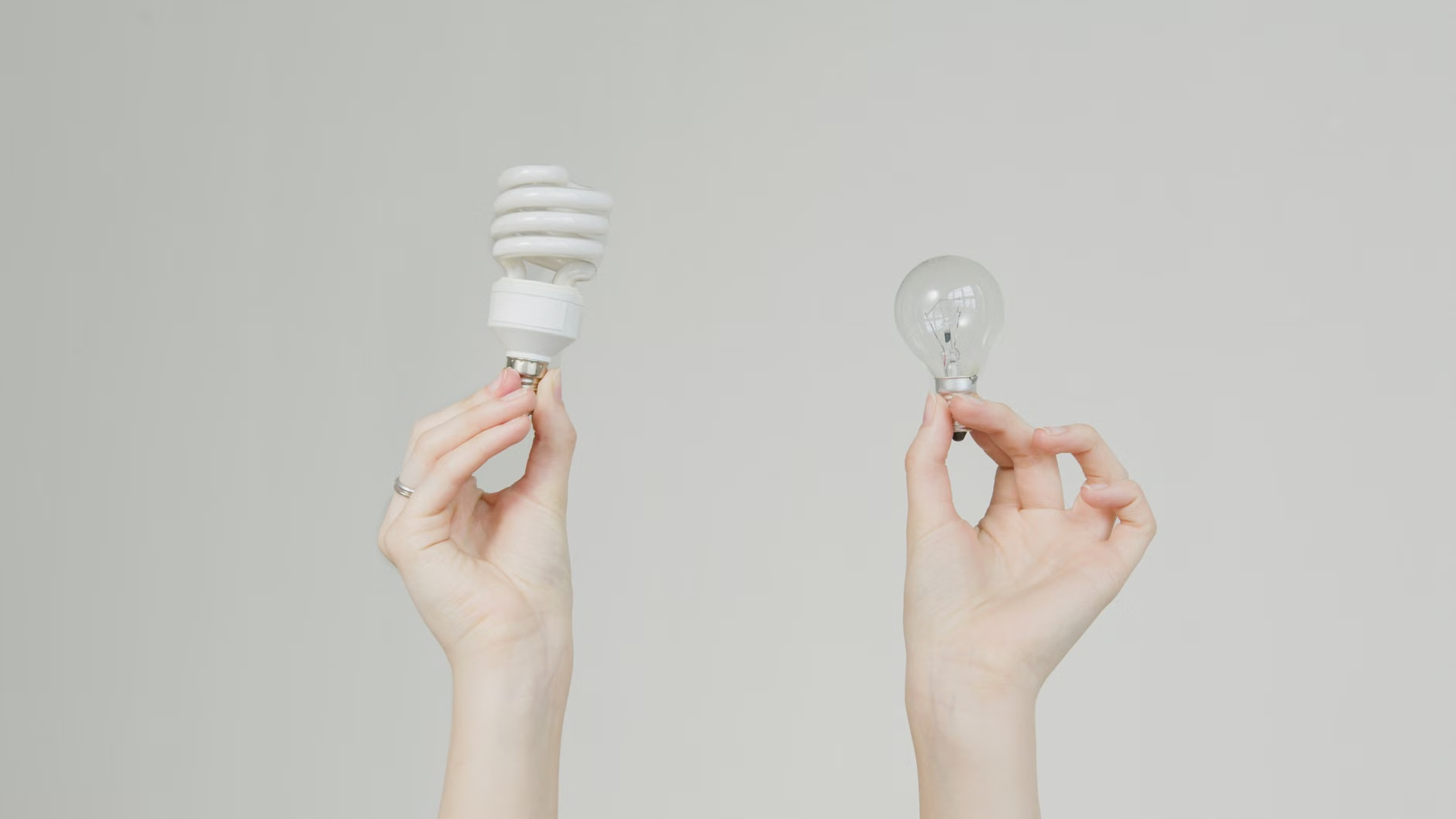
We often talk about the “vampire power” of electronics—those little red standby lights on your TV, gaming console, and coffee maker. While it sounds like a cliché from a 90s conservation brochure, the cumulative cost of standby power in 2026 is more significant than ever because the price per unit of energy has climbed so high. A smart power strip is a low-effort, high-reward investment for a busy parent. Plug your entertainment center into one, and with a single click, you cut power to everything when the kids are in bed.
Another area to scrutinize is heating and cooling. In 2026, the technology for smart thermostats has matured significantly. These devices don’t just keep the house warm; they learn your family’s schedule. If the house is empty between 9:00 AM and 3:00 PM, a smart thermostat will automatically dial back the climate control. Over the course of a year, this isn’t just a few dollars; it’s a meaningful percentage of your annual utility spend.
Infrastructure vs. Habits: Where Should You Spend?
When you have a limited budget, you have to choose where to invest. Should you buy a fancy smart home system, or just wear an extra sweater? The answer depends on your long-term housing plans.
| Strategy | Cost | Effort | Impact |
|---|---|---|---|
| Behavioral Changes (Laundry times, lights) | $0 | Medium | Low to Moderate |
| Small Upgrades (LEDs, smart power strips) | Low | Low | Moderate |
| Major Retrofits (Insulation, Heat pumps) | High | High | High |
If you own your home, the most “invisible” but effective investment you can make in 2026 is insulation. It is not as exciting as a high-tech app that tracks your energy usage, but a well-insulated home is essentially a thermos. It keeps the heat in during the winter and the cool air in during the summer. Once the air is “conditioned,” you shouldn’t have to pay to keep conditioning it because it’s leaking out through the attic or gaps in the windows.

Common Mistakes to Avoid in 2026
As we navigate this, there are a few traps that many families fall into. The first is the “Greenwashing Trap.” Be very careful about buying expensive “energy-saving” gadgets that promise to cut your bill in half with a simple plug-in device. If it sounds too good to be true, it is. Stick to proven technologies: heat pumps, high-efficiency appliances, and proper insulation.
The second trap is the “Over-Optimization Exhaustion.” Don’t drive yourself crazy trying to save every single cent. If the stress of monitoring your energy consumption is taking away from your time with your children, it’s not worth it. Aim for 80% efficiency through smart habits and structural upgrades, and accept that the remaining 20% is just the cost of living in a modern, comfortable home.
Lastly, be wary of predatory “fixed-rate” contracts. In a volatile market, some providers will offer you a “locked-in” rate that sounds safe. Often, these rates are set at the peak of market expectations. Before signing, compare the fixed rate against the historical average and your current variable rate. Sometimes, the “safety” of a fixed rate is actually a premium you are paying for peace of mind you might not need.
The Role of Technology in Your Daily Life
In 2026, technology is finally moving from “gadget” to “utility.” If you haven’t looked at the energy-tracking features on your smartphone or your utility provider’s portal, do it this weekend. Most providers now give you a breakdown of your usage by the hour. Looking at this data once a month for ten minutes can reveal surprises. Did you know your pool pump runs for six hours longer than necessary? Or that your water heater is set to “scalding” when it only needs to be “warm”?
Small adjustments based on actual data are far more effective than general advice. You are essentially auditing your home’s “energy lifestyle.” For families with kids, this is also a great opportunity to teach them about conservation. When kids understand that turning off the lights isn’t just “because Mom/Dad said so,” but because it helps the family save for a summer trip or a new toy, they are much more likely to participate.
Looking Ahead: What’s Next for Energy?
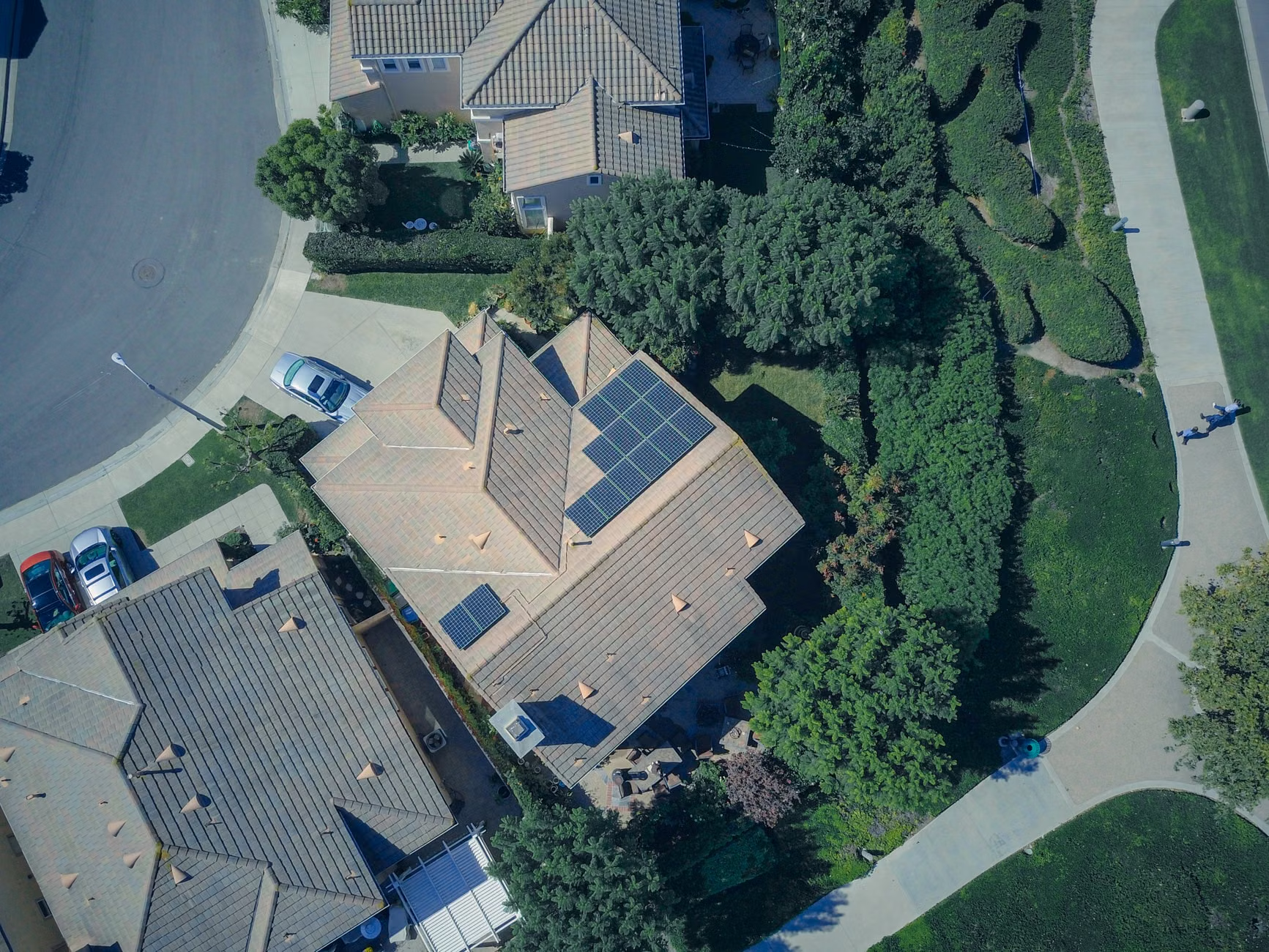
The energy landscape will continue to shift. We are seeing a massive push toward decentralized energy—homes that produce their own power via solar panels and store it in home batteries. While the upfront cost of these systems is still significant, the total cost of ownership is dropping every year. If you are planning a renovation or a move in the next few years, this is a factor you should keep in the back of your mind.
However, for the majority of us living in apartments or older homes, the future is about smarter grid integration. Expect to see more “smart appliances” that communicate with the grid to run when power is cleanest and cheapest. This won’t require you to do anything; the technology will handle it in the background. Your job as a consumer is to opt into these programs when they become available.
Final Thoughts for the Modern Parent
Managing energy prices in 2026 is less about being a martyr for the environment or a genius economist, and more about being a smart manager of your household resources. We are living through a period of transition, and that transition is inherently messy.
Don’t let the headlines about global energy fluctuations panic you. Focus on what you can control: the efficiency of your home, the timing of your heavy energy usage, and the habits you model for your children. By taking these small, consistent steps, you aren’t just saving money—you are building a more resilient household that can handle whatever the energy market throws at it next.
If you find yourself overwhelmed, take a step back. A comfortable, happy home for your family is worth more than a few percentage points on an energy bill. Keep it simple, stay informed, and remember that you are doing just fine.
Frequently Asked Questions
Q: Should I switch to a “Time-of-Use” electricity plan?
A: In most cases, yes, if you can shift your heavy chores—like laundry, dishwashing, and EV charging—to off-peak hours. If your family is mostly home during the day and uses a lot of power during peak times, a flat-rate plan might be safer. Check your last three months of usage data against your provider’s TOU rates to see which would have been cheaper.
Q: Are “smart” energy gadgets actually worth the investment?
A: Focus on “high-impact” smart devices. A smart thermostat is almost always worth the investment because it automates a major expense. Smart plugs for standby electronics are also good. Avoid expensive, unproven “energy-saving” boxes that plug into a single outlet; they rarely produce the savings they claim.
Q: How can I tell if my home insulation needs an upgrade?
A: A simple “hand test” can work: on a cold day, feel the walls and areas around windows. If they feel significantly colder than the rest of the room, you are losing heat. You can also hire a professional for a “home energy audit,” which is often subsidized by local governments or utility companies, to get a thermal imaging report of exactly where your home is leaking energy.
For further information on global energy trends, you can visit the International Energy Agency (IEA), which provides comprehensive reports on global energy markets and policy shifts. Additionally, checking your local government’s energy portal can provide specific advice on regional rebates and efficiency programs available in your area.