- Data Sovereignty is the New Normal: By 2026, global laws have shifted from “optional consent” to “privacy by design,” meaning apps must protect your family’s data automatically.
- The “Age-Appropriate” Standard: Platforms are now legally required to restrict data profiling for users under 18, making it harder for companies to target ads to your children.
- Smart Home Accountability: Manufacturers are now held liable for security vulnerabilities in IoT devices, allowing you to demand better data handling from your smart appliances.
If you feel like your family’s digital footprint is growing faster than you can manage, you aren’t alone. It’s 2026, and the “wild west” era of data collection is finally hitting a regulatory wall. For those of us in our 30s and 40s, balancing professional lives with the digital upbringing of our children, the legal landscape has become significantly more protective—though arguably more complex to navigate.
You’ve likely noticed that the “Accept All Cookies” pop-ups are less frequent, and your kids’ apps seem to have more restrictive settings than they did a few years ago. This isn’t just a change in corporate benevolence; it is the direct result of a massive wave of global privacy legislation that has matured in the last 24 months. Let’s break down what this actually means for your daily life, your smart home, and your peace of mind.
The Evolution of Privacy: Why 2026 is a Turning Point
For years, the internet operated on a model of “harvest first, ask later.” Companies collected every scrap of data—your location, your purchase history, your child’s gaming habits—and stored it indefinitely. The shift we are seeing in 2026 is the transition to Data Minimalism. This is a legal framework that forces companies to prove they need your data to provide a service, rather than just wanting it for profit.
Why does this matter to you? Because in 2026, the burden of protection has shifted from the user to the provider. In the past, you had to manually toggle dozens of settings to opt-out of data tracking. Today, under the updated versions of the GDPR (Europe), the CCPA/CPRA (California), and the emerging frameworks in the APAC region, platforms are legally required to set the “most private” option as the default for minors.
Consider the “Accountability Principle.” If a breach occurs or if an app is caught harvesting data from your teenager’s device without explicit, granular consent, the fines are now significant enough to impact stock prices. This has forced tech giants to bake privacy into their software architecture from the ground up, rather than treating it as an afterthought.

Understanding the “Age-Appropriate” Design Mandates
One of the most significant changes for parents in 2026 is the enforcement of the “Age-Appropriate Design Code.” If you have children, you know that social media algorithms are designed to be addictive. For years, this was the standard business model. Now, global regulators are treating the digital environment similarly to physical products—like car seats or toys—that must meet safety standards.
What does this mean for your child’s device?
- Nudging and Dark Patterns: Apps are now prohibited from using “dark patterns”—tricky design choices that force kids to stay on the app longer or share more data.
- Location Privacy: Geolocation tracking for minors is now “off” by default. If an app wants to track where your child is, it must provide a clear, easy-to-understand notification to both the child and the parent.
- Data Profiling: Companies can no longer build a “behavioral profile” of your child to serve them targeted ads. If they aren’t allowed to profile, they aren’t allowed to monetize the child’s attention in the same way.
This doesn’t mean the internet is suddenly perfectly safe. It means the “legal guardrails” are finally in place. However, as a parent, you still need to be the final gatekeeper. The law provides the tools, but you still need to manage the keys.
Your Smart Home and the “Liability of Things”
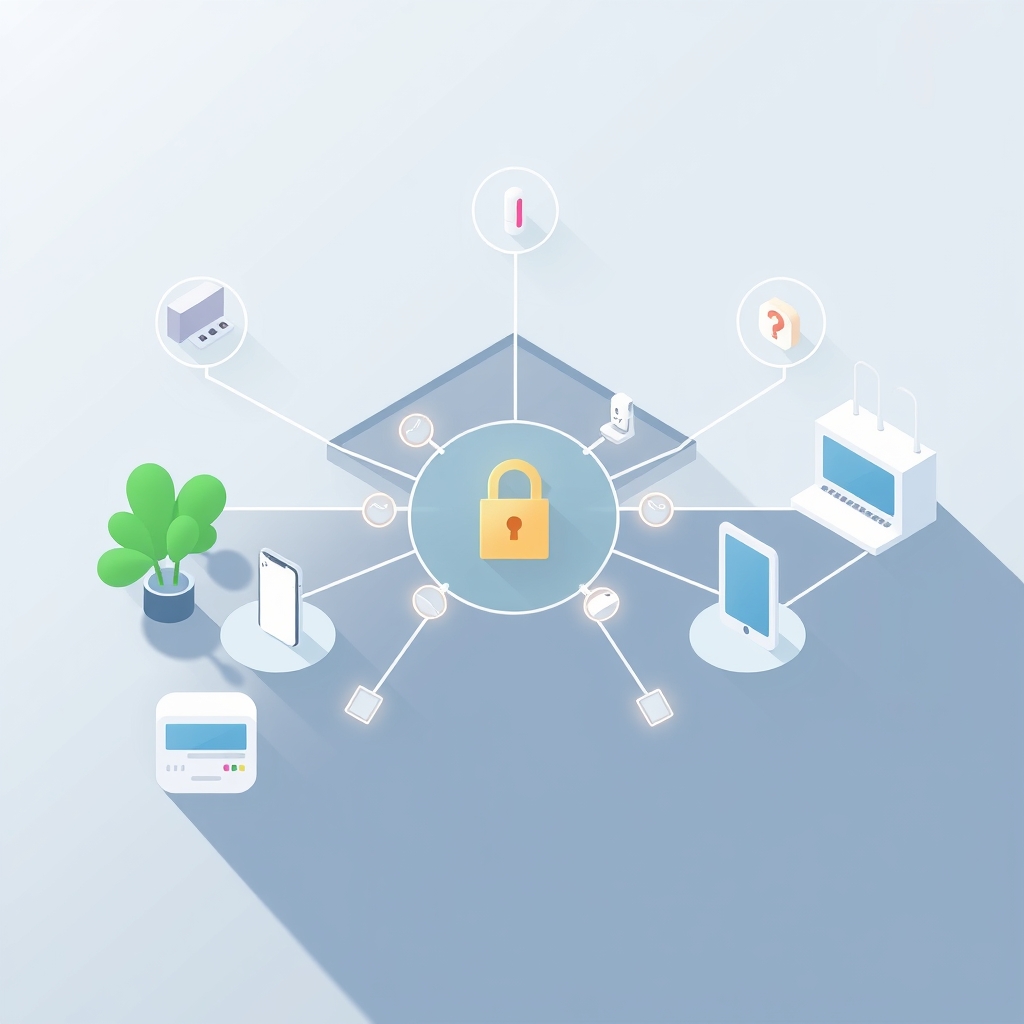
Remember when we bought smart lightbulbs, cameras, and thermostats without thinking twice about where that data went? In 2026, the “Internet of Things” (IoT) is subject to strict liability laws. Manufacturers are now held accountable for security flaws. If a smart camera in your nursery has a known vulnerability that the manufacturer failed to patch, you now have legal recourse.
This is a major win for families. We no longer have to be cybersecurity experts to keep our homes safe. When you buy a smart device today, look for the “Security Compliance” label. Under the 2026 standards, this label confirms the device meets specific encryption requirements and has a guaranteed lifecycle for security updates.
| Device Category | What to Look For (2026 Standards) | Your Privacy Action |
|---|---|---|
| Smart Cameras | End-to-end encryption by default | Change default passwords immediately |
| Voice Assistants | Local processing (data stays on device) | Review voice history deletion settings |
| Wearables | Anonymized health data protocols | Check who has access to “shared” health insights |
The Reality of “Right to Deletion”
We’ve all heard of the “Right to be Forgotten,” but in 2026, it has become much more practical. Most major platforms are now required to provide a “One-Click Data Purge” feature. This allows you to request that a company not only stop collecting your data but also delete all historical data they have on you and your family members.
If you are closing a bank account, an old social media profile, or a shopping account for a child, you can now exercise this right with confidence. The law requires companies to confirm deletion within a specific window—usually 30 days. If they fail to do so, they face heavy audits.
A common mistake: Many parents delete the app from their phone but forget to request the deletion of the data from the company’s servers. Deleting the app is just the first step. You must go into the “Privacy” or “Data Management” section of your account settings to trigger the formal deletion process. This is the only way to ensure the data is actually scrubbed from the cloud.
Even with these robust 2026 regulations, there are limits. Laws focus on data collection, but they don’t necessarily address content quality. For example, while a company might be restricted from tracking your child to serve them ads, they are not necessarily restricted from showing them content that might be developmentally inappropriate or polarizing.
This is where the “Parental Digital Literacy” comes into play. Think of privacy laws as the seatbelt in your car. It will protect you in an accident, but it doesn’t teach your child how to drive. You still need to have those uncomfortable, necessary conversations about what they are seeing online and why they shouldn’t share personal information, even if the platforms are legally required to make it harder for them to do so.
Furthermore, be wary of “Privacy-Washing.” Just because an app claims to be “GDPR Compliant” or “Privacy-First” doesn’t mean it’s a good product. Many companies use these terms as marketing fluff. Always look for third-party certifications or independent privacy reviews rather than just taking the app’s own marketing copy at face value.

Practical Steps for Families in 2026
So, where do you start? You don’t need to spend your weekends auditing your network. You need a Quarterly Digital Hygiene Check. It takes about an hour and provides massive peace of mind.
- The “Audit” Hour: Once every three months, go through your family’s devices. Check the list of installed apps. If an app hasn’t been used in 30 days, delete it and request a data purge.
- Review Permissions: Go into your phone’s privacy settings. Look at which apps have access to your camera, microphone, and location. If a calculator app wants access to your location, that’s a red flag—even in 2026.
- Update Your Firmware: Smart home devices are only as secure as their last update. Check your router and smart home hub to ensure they are set to “Auto-Update.”
- Talk to the Kids: Use the “Ask, Don’t Tell” method. Instead of saying “Don’t share that,” ask, “Why do you think this app wants to know where you are playing?” It helps them develop their own internal compass for digital safety.
The Ongoing Responsibility
As we move further into the decade, privacy will remain a moving target. New technologies like advanced AI-driven personalization will continue to challenge existing laws. However, the foundation laid by 2026 regulations is strong. We have moved from a system where we were the product, to a system where we are beginning to be treated like consumers who have rights.
Keep your software updated, stay curious about the settings, and remember that you are the primary administrator of your family’s digital life. It’s a lot to keep track of, but you’re doing a great job just by paying attention to these details. The digital world is vast, but with these tools and a bit of common sense, you can navigate it safely.
Frequently Asked Questions
Q: Does the “Right to Deletion” apply to social media photos I’ve posted of my kids?
A: Generally, yes. Most platforms now have tools that allow you to request the removal of images of minors. However, if the photo has been shared or reshared by third parties, the platform may only be able to remove it from their own servers, not from the entire internet. It’s always best to be cautious about what you share initially.
Q: Are smart speakers and voice assistants safer in 2026 than they were before?
A: Yes. Many manufacturers have moved to “edge computing,” where voice commands are processed on the device itself rather than being sent to the cloud. When buying a new device, check if it emphasizes “local processing” or “on-device AI.” This is a significant privacy upgrade compared to older models.
Q: Can I really sue a company if my data is leaked?
A: In many jurisdictions, the 2026 laws have made it easier to join class-action lawsuits or seek damages for “non-material harm” (like the loss of control over your data). If you are affected by a major breach, check the official company notice—they are legally required to provide instructions on how to participate in any remediation or settlement programs.
For further reading on how specific regulations apply in your region, check the official resources: