The secret to a successful family weekend isn’t found in a frantic, six-hour drive to a crowded resort; it is found in the intentional, low-stress exploration of your own backyard.
- Minimize Transition Friction: By eliminating long-distance travel, you regain hours of precious time and drastically reduce the “travel meltdown” factor for children.
- Curate, Don’t Over-Schedule: A successful staycation relies on picking one “anchor” activity per day rather than trying to cram in everything your city offers.
- The “Tourist Mindset”: Changing your perspective—viewing your city through the eyes of a visitor—is what differentiates a staycation from just a regular weekend at home.
If you are in your 30s or 40s, you likely know the specific brand of exhaustion that comes with planning a “family vacation.” Between packing for everyone, navigating airport security, or managing a toddler in the backseat during a highway traffic jam, the actual “rest” part of the vacation often doesn’t start until two days into the trip. By then, it’s usually time to head home.
This is where the urban staycation enters the picture. It’s not just “staying home”; it’s a deliberate strategy to reclaim your weekend. When you strip away the logistics of long-distance travel, you are left with the core reason we travel in the first place: to step out of our daily routine and connect with our families in a new environment.
Why the “Anchor Activity” Strategy Saves Your Sanity
Most parents fail at staycations because they treat them like a normal weekend, but with higher expectations. They try to do chores, catch up on emails, and visit three museums in one day. This is a recipe for burnout.
The “Anchor Activity” strategy is simple: you choose one, and only one, significant activity for each day. Everything else is secondary. This could be a visit to a local museum, an afternoon at a nature center, or a sunset dinner at a restaurant you’ve been meaning to try for years. By anchoring your day, you provide a sense of purpose without the pressure of a rigid, minute-by-minute itinerary.
Consider the difference between a “to-do list” and an “itinerary.” A to-do list is full of obligations—grocery shopping, laundry, cleaning. An itinerary is full of experiences. When you stay in your city, the temptation to fold laundry is high. You must treat this time as if you were in a hotel in a foreign country. If you wouldn’t do the laundry while visiting Paris, don’t do it while “visiting” your own city.

Designing Your Itinerary: The 3-Tier Approach
To keep the planning balanced, use this 3-tier structure for each day of your staycation:
| Tier | Focus | Example |
|---|---|---|
| The Anchor | The main event (3-4 hours) | A local science center or guided boat tour. |
| The Buffer | Low-energy downtime (2 hours) | Reading in a local café or a city park. |
| The Treat | Shared indulgence (1 hour) | A specific dessert shop or sunset viewpoint. |
By limiting yourself to these three components, you ensure that the day feels full, yet manageable. The “Buffer” is the most important part; it accounts for the inevitable moments when kids get tired or hungry, providing a flexible space in the schedule that doesn’t ruin the rest of your plans.
Logistics: Treating Your Home Like a Hotel
The biggest mental hurdle of a staycation is the physical environment. If your home is cluttered, your brain will subconsciously think about work, repairs, and chores. To make a staycation feel like a getaway, you need to “reset” your space before the weekend begins.
This doesn’t mean you need a deep clean. It means creating a “vacation zone.” For some, this means clearing off the dining table so it becomes a dedicated space for board games. For others, it means changing the bedding and lighting a candle in the living room to shift the atmosphere. The goal is to signal to your brain that the “work” phase of the week has ended.
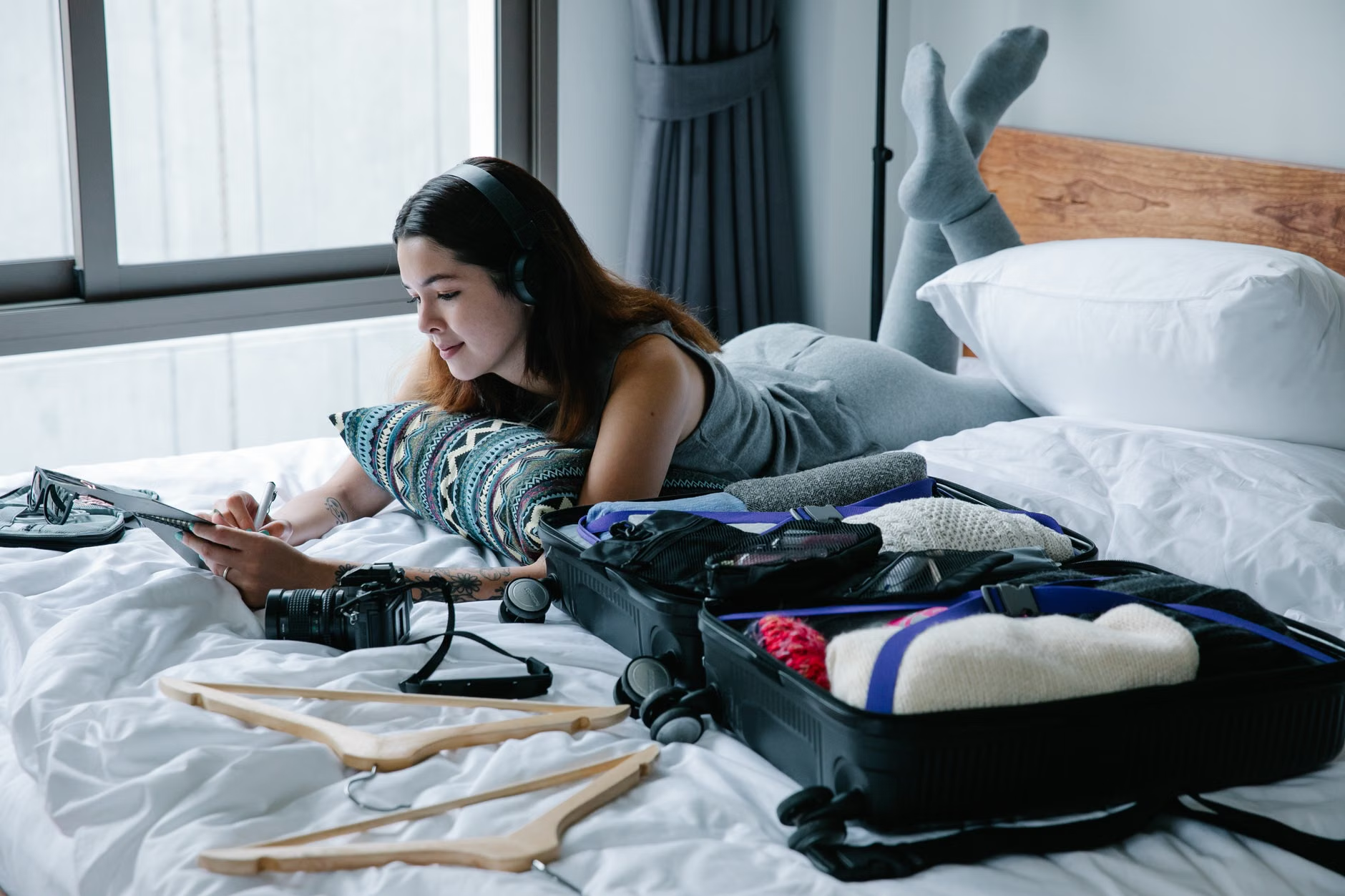
Another crucial logistics tip: pack a “staycation bag.” Even if you are sleeping in your own bed, having a bag packed with essentials—sunscreen, snacks, portable chargers, tablets for the kids, and water bottles—makes the act of leaving the house feel like an intentional departure. It mimics the ritual of packing for a trip, which helps everyone in the family shift into a “we are going on an adventure” mindset.
Many people struggle with the feeling that their city is “boring.” This is usually because we navigate our cities through a lens of utility. We know the fastest route to the grocery store, the closest dry cleaner, and the most efficient way to the office. We never look up.
To break this, you need to use tools that tourists use. Check your city’s official tourism board website—not for the obvious attractions, but for the “hidden gems” or “walking tours” sections. Often, these sites list events, pop-up markets, or historical landmarks that residents completely ignore.
Another trick: change your mode of transport. If you usually drive everywhere, take the bus or the light rail for your staycation. If you usually take the train, rent a bike for the day. Changing how you move through the city changes how you see it. You notice the architecture, the street art, and the neighborhood cafes that you usually zoom past at 40 miles per hour.
Managing Expectations with Kids
We’ve all been there: you spend weeks planning a perfect day, and your child decides the highlight of the trip is the cardboard box the new toy came in. With kids, the “staycation” must be collaborative.
Involve them in the planning. Give them two options for the “Anchor” activity and let them choose. When children have agency, they are significantly more invested in the outcome. If they choose the destination, they are less likely to complain about being there.
Also, prioritize sensory experiences over educational ones. While a museum is great, a splash pad, an ice cream crawl (visiting three different shops to compare flavors), or a scavenger hunt in a local botanical garden provides more “core memory” potential for younger children. The goal is to create a sense of wonder, not a sense of accomplishment.

The Psychological Benefits of Short-Distance Travel
Why bother with a staycation at all? Why not just stay home and relax? The answer lies in the concept of “context switching.” Our brains are heavily influenced by our environment. If you stay in the same environment where you work, pay bills, and manage household crises, your brain struggles to fully disengage from those stressors.
By curating an experience that takes you out of the house—even if it’s only for a few hours—you create a physical and mental boundary. This is known as a “micro-vacation.” Research in environmental psychology suggests that even short breaks in novel environments can significantly reduce cortisol levels and improve cognitive function.
Furthermore, staycations are incredibly budget-friendly. By saving on airfare, hotels, and long-distance fuel, you can afford to splurge on better food or a unique activity that you might otherwise consider “too expensive” for a regular weekend. This creates a perception of luxury without the actual financial strain.
Common Mistakes to Avoid
Even with the best intentions, staycations can go sideways. Here are the most common pitfalls to watch out for:
- The “Catch-Up” Temptation: Avoid the urge to use the “free time” to get ahead on work. Your laptop should be put away in a drawer for the duration of the staycation.
- Over-Booking: The most common mistake is trying to do too much. Remember, the goal is rest, not a checklist. If you feel tired, cancel the afternoon activity. Flexibility is the ultimate luxury.
- Ignoring the Weather: Always have a “Plan B” for inclement weather. If your anchor activity is a park visit, know which local indoor play center or museum you can pivot to if it rains.
- Social Media Pressure: Do not feel the need to document every second for social media. The staycation is for you and your family, not for your followers. Take photos, but spend the majority of the time looking at each other, not your screens.
The Importance of the “Digital Detox”
In our 30s and 40s, we are often tethered to our devices. Notifications from work, school apps, and group chats are constant intrusions. A staycation is the perfect excuse to implement a “digital detox.”
Try setting your phone to “Do Not Disturb” mode for the duration of the day. If you are worried about emergencies, set your phone to allow calls only from specific contacts (like your babysitter or family members). The feeling of being “unreachable” is a rare luxury in modern life, and it is essential for true relaxation.
If you have older children, encourage them to do the same. Make it a family challenge: who can go the longest without checking their phone? Use that time to play a card game, talk about the week, or simply observe the city around you. The depth of conversation you can have without the constant pull of the digital world is often the most surprising and rewarding part of the experience.
Financial Planning for the Staycation
One of the best aspects of an urban staycation is the ability to reallocate your travel budget. Since you aren’t spending hundreds or thousands on flights and hotels, you can afford to treat your family to things you might usually skip.
Consider using the money saved to:
- Upgrade your dining: Go to that restaurant with the tasting menu or the one with the great view.
- Book a private experience: Hire a private guide for a walking tour or book a private session at a local pottery studio.
- Get a hotel for one night: Even if you live in the same city, booking a night in a high-end hotel in a different neighborhood can make the weekend feel like a true vacation. It removes the “home” distractions entirely.
When Things Go Wrong: The Resilience Factor
What if the kids throw a tantrum? What if the restaurant is closed? What if everyone is just grumpy? This is part of the experience. The difference between a stressful day and a memorable one is how you handle the unexpected.
If things go wrong, pivot. If the museum is packed, go to the park across the street and get ice cream instead. If the kids are tired, go home early and order a movie. The goal of the staycation isn’t “perfection”—it’s “connection.” If you are laughing at the absurdity of a failed plan, you are succeeding.
Remember that the memories your children will cherish aren’t the ones where everything went according to plan. They will remember the time you got lost and found a cool mural, or the time it started raining and you ran for cover in a cozy bakery. Embrace the imperfection.
Final Thoughts on Sustaining the Habit
A staycation shouldn’t be a once-a-year event. Because it is low-cost and low-logistics, it is a sustainable habit. Try to aim for one “mini-staycation” every quarter. By doing this, you create a rhythm of rest and exploration that keeps your family connected and helps you manage the pressures of modern parenting.
It’s easy to get caught up in the “someday” trap—thinking you’ll travel when the kids are older, or when you have more money, or when work slows down. The reality is that the time is now. You don’t need a passport or a long flight to find adventure. You just need a little bit of curiosity and the permission to step away from the daily grind.
Staycations are a reminder that our lives are happening right here, right now. By choosing to explore where we live, we find beauty in the familiar and discover that the best part of traveling isn’t the destination—it’s the company we keep.
For more inspiration on local exploration, check out resources like Lonely Planet’s guide to local travel or your city’s official tourism board website for hidden gems and local walking tours.
Frequently Asked Questions
1. How do I stop myself from doing chores during a staycation?
The best way is to physically remove yourself from the house. Even if you don’t book a hotel, plan your day so you are out of the house from breakfast until dinner. If you aren’t there, you can’t be tempted to do the dishes. If you must be home, treat it like a hotel—make the bed, dim the lights, and leave the chores for Monday.
2. Is a staycation really as relaxing as a “real” vacation?
It depends on your definition of relaxing. If you want to lie on a beach for a week, a staycation won’t replace that. But if you want to break the cycle of stress, reconnect with your family, and experience something new without the exhaustion of travel, it is often more relaxing because you avoid the “travel stress” that ruins the first and last days of a traditional trip.
3. How do I handle it if my kids don’t want to do the activities I planned?
This is why involving them in the planning process is critical. If they have a say in the choice, they are more likely to be committed. However, if they still resist, be prepared to scrap the plan. The goal is a happy family, not a completed itinerary. Sometimes the best “staycation” activity is just letting them lead the way through a park or choosing the movie for the night.