The hyper-local food movement is fundamentally changing how families in their 30s and 40s approach their weekly grocery routine, shifting the focus from the convenience of massive supermarket chains to the tangible benefits of direct-from-farm sourcing.
- Better Nutrient Density: Hyper-local produce is typically harvested at peak ripeness, meaning it hasn’t spent weeks in transit or cold storage.
- Economic Realism: While some items may seem pricier, buying seasonal and in bulk at farmers markets often reduces long-term food waste and impulse spending.
- Community Connection: Engaging directly with growers provides a level of transparency and trust that is increasingly difficult to find in standardized global supply chains.
If you are anything like me, your Sunday evening is usually a frantic scramble to figure out what to cook for the week while simultaneously trying to get the kids’ school bags packed. For years, the default solution was a quick run to the nearest big-box grocery store. But lately, those aisles feel a bit sterile, don’t they? You pick up a bag of apples that traveled three thousand miles to get to your cart, and you wonder: Does this actually taste like anything?
This isn’t just a nostalgic yearning for the “good old days.” There is a genuine, data-backed shift occurring. More of us are heading to farmers markets not just for a trendy weekend outing, but as a strategic decision to regain control over what we put on our dinner tables. Let’s break down why this is happening and how you can actually make it work for your busy household.
What Exactly Is ‘Hyper-Local’ and Why Now?
When we talk about the “hyper-local” movement, we aren’t just talking about buying “local.” Local can be a broad term. Hyper-local usually implies food grown or produced within a very short radius of your home—often within the same county or region. It is the antithesis of the globalized industrial food system.
The reason it is trending again among our demographic—people in their 30s and 40s—is likely tied to a few converging factors. First, we are the generation that grew up with the rise of the internet and global connectivity. We’ve seen the benefits, but we’ve also felt the disconnect. We are now at a life stage where we are responsible for the health of our children and the management of a household budget. We want efficiency, but we also want quality.
The pandemic also acted as a catalyst. When global supply chains stuttered and supermarket shelves went bare, the local farmer down the road was often still harvesting. That realization—that our food security is more fragile than we thought—stuck with us. It pushed us to look for alternatives that are closer to home.
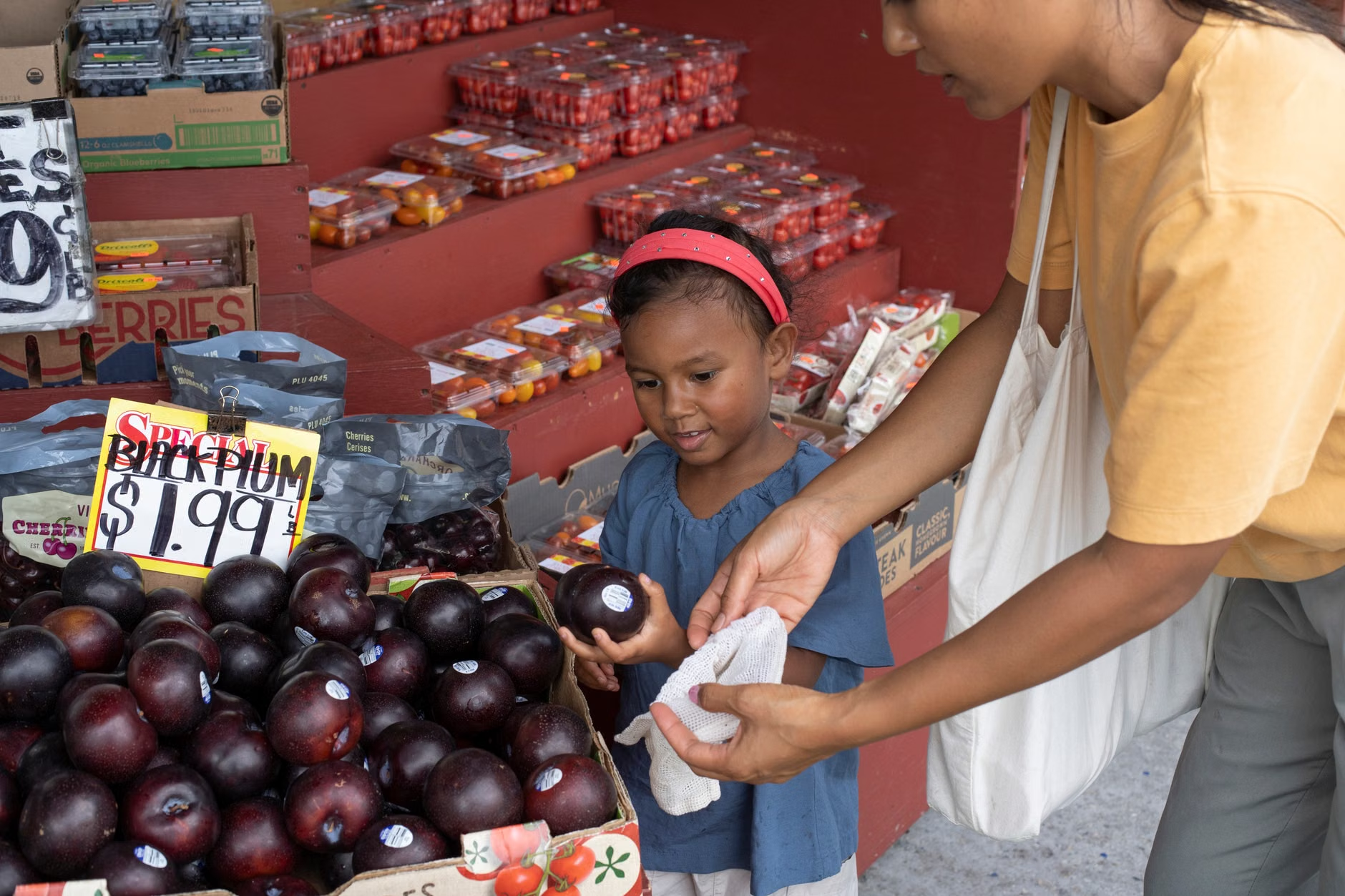
The Nutritional and Economic Reality Check
There is a persistent myth that farmers markets are an elitist playground where you pay three times as much for a head of lettuce. While it is true that you won’t find “loss leader” pricing (supermarket tactics where they sell goods at a loss to get you in the door), the economic reality is more nuanced.
When you buy an apple from a supermarket, a significant portion of your dollar goes to shipping, packaging, marketing, and the middleman. When you buy from a farmer, more of that money goes to the person who actually did the work. Furthermore, because hyper-local food is harvested at peak maturity, it is often more nutrient-dense. Vegetables that sit in a shipping container for a week lose vitamins every single day. If you are buying for a family, getting the most nutrition per calorie is a smart investment.
Let’s look at a comparison of typical shopping habits:
| Factor | Supermarket | Farmers Market |
|---|---|---|
| Shelf Life | Extended via preservatives/gassing | Naturally shorter; eat fresh |
| Transparency | Label-dependent, often vague | High; ask the grower directly |
| Cost Structure | Middlemen add 60-70% markup | Direct pricing; seasonal swings |
How to Shop Like a Pro Without Burning Out
If you decide to make the shift, don’t try to do it all at once. The biggest mistake people make is trying to replace their entire grocery run with a farmers market visit in one go. That’s a recipe for frustration. Instead, treat the market as your “primary source” for fresh produce and staples, and keep the supermarket for the dry goods, household products, and specific pantry items.
1. Get to know the seasons: You will save money if you stop trying to buy strawberries in December. Learn what grows in your region and when. When produce is in peak season, the supply is high, and the prices drop significantly.
2. Bring your own gear: It sounds basic, but having good, sturdy bags—and maybe a rolling cart if you have kids in tow—makes the experience much more pleasant. You don’t want to be juggling five paper bags while trying to hold a toddler’s hand.
3. Talk to the vendors: This is the secret weapon of the hyper-local movement. Ask them, “What is the best way to cook this?” or “Do you have any ‘seconds’?” Many farmers sell slightly bruised or misshapen produce at a discount. It’s perfect for soups, stews, or sauces and tastes exactly the same as the “perfect” looking ones.
Managing the ‘Busy Parent’ Logistics
I get it: your weekends are already packed with soccer practice, music lessons, and catching up on laundry. The idea of adding another errand can feel overwhelming. However, many successful shoppers treat the market as a family activity rather than a chore.
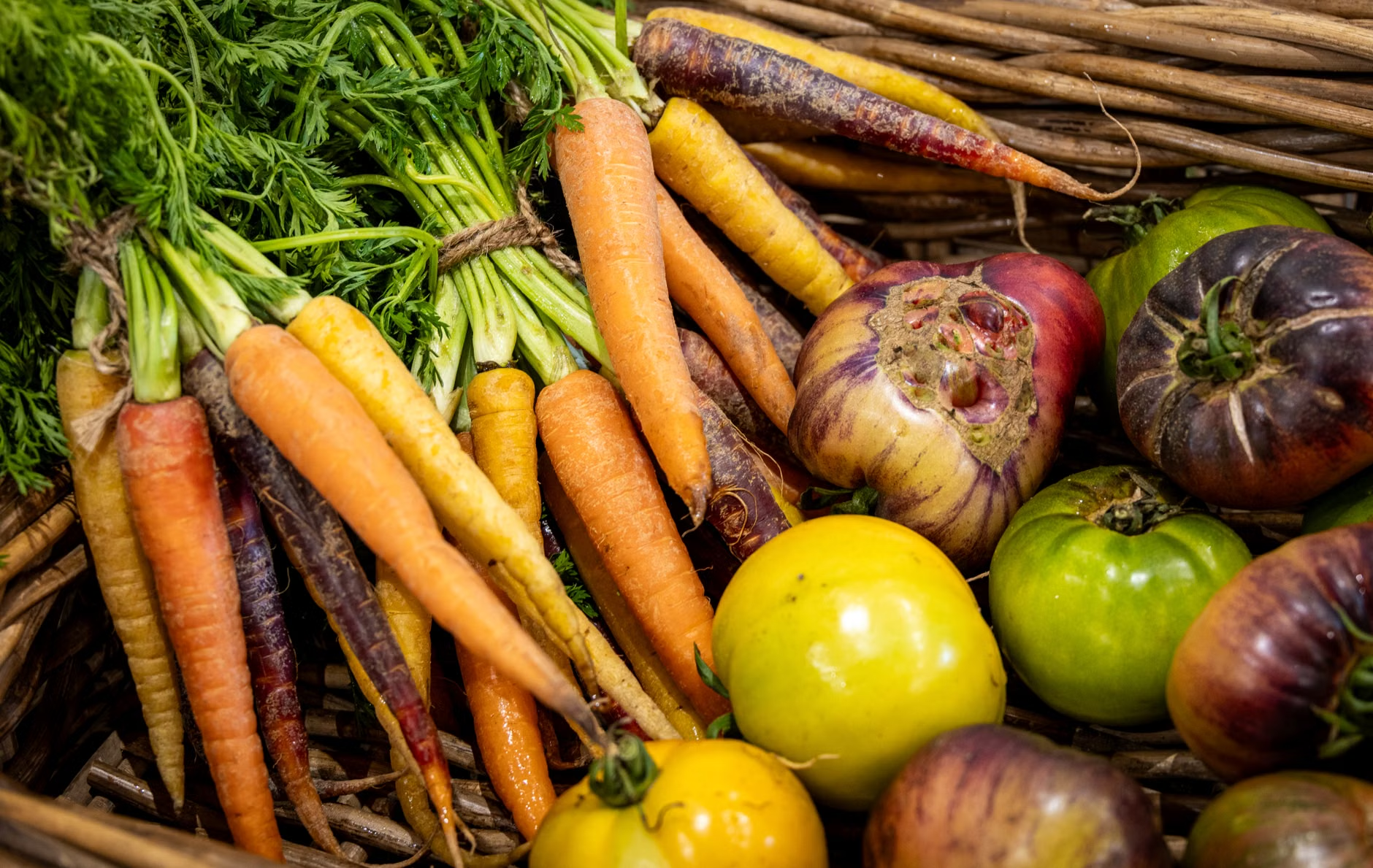
Make it an experience for the kids. Let them pick out one “new” vegetable each week. When a child picks out a purple carrot or a strange-looking heirloom tomato themselves, they are infinitely more likely to actually eat it. It’s a subtle way to improve their palate without the usual dinner-table battles.
Also, consider the “batch prep” angle. Because the food is fresh, it doesn’t last as long as the wax-coated, irradiated stuff in the supermarket. You need a plan. When you get home, spend 20 minutes washing and chopping. If it’s ready to go in the fridge, you will use it. If it’s left in a bag in the crisper drawer, it will inevitably turn into a sad science experiment.
Addressing Common Misconceptions
One of the most common things I hear is: “But I don’t have time to cook from scratch every night.” That is a valid concern. However, the hyper-local lifestyle doesn’t require you to be a gourmet chef. In fact, it often rewards simplicity. When you have high-quality ingredients, you don’t need to do much to them. A simple roast with olive oil and sea salt is often better than a complex dish made with bland, long-distance ingredients.
Another misconception is that farmers markets are only for “foodies.” While you will certainly find artisanal cheeses and small-batch jams, they are also the best places to buy basic, high-quality eggs, potatoes, onions, and seasonal greens. These are the building blocks of any family meal. You don’t need to buy the $15 jar of truffle honey to be a part of the movement.
Finally, there is the issue of convenience. Yes, a supermarket is open 14 hours a day, seven days a week. A farmers market might only be open for four hours on a Saturday morning. This requires a shift in mindset: it requires planning. But isn’t that what we’re trying to do anyway? Moving away from reactive, last-minute grocery shopping toward a more intentional, planned way of living?
Integrating Sustainability Into Your Daily Life
Sustainability often feels like a massive, abstract concept. We worry about the climate, the plastic in our oceans, and the carbon footprint of our food. But the beauty of the hyper-local movement is that it makes sustainability tangible. You can see the farm. You can meet the person who grew the broccoli. You can see that there is zero plastic wrap involved.
For parents in their 30s and 40s, this is a powerful lesson to pass on to our children. It teaches them that food doesn’t just materialize on a shelf. It comes from the soil, it requires water, it takes time, and it involves people. It fosters a sense of gratitude and connection that is often lost in our modern, automated world.
If you are looking to start, don’t overthink it. Find the market closest to you, look up their hours, and just go. Even if you only spend $20 on a few items, you are participating in a shift that is healthier for your family, better for your community, and more sustainable for the planet.
Remember that this is a journey, not a test. There will be weeks where you don’t make it to the market, and you end up grabbing a bag of frozen veggies from the supermarket. That is perfectly fine. The goal isn’t perfection; the goal is to make slightly better, more intentional choices when you can. Over time, those choices compound into a lifestyle that feels more grounded and fulfilling.
Frequently Asked Questions
Is it really cheaper to shop at a farmers market?
It depends on how you shop. If you only buy seasonal produce and avoid the high-end artisanal goods, it can be very competitive with high-end supermarkets. If you focus on buying in bulk during peak season and preserving food (like freezing berries or making tomato sauce), the long-term savings are significant. However, if you are comparing it to discount, budget-tier supermarkets, it may be more expensive.
What if I don’t know how to cook the produce I find?
This is where the farmers are your best resource. They are almost always happy to share tips on how to prepare their crops. If you see something unfamiliar, ask them directly: “How do you usually eat this?” They will often give you the simplest, most delicious preparation methods that you won’t find in a fancy cookbook.
How do I handle the shorter shelf life of local produce?
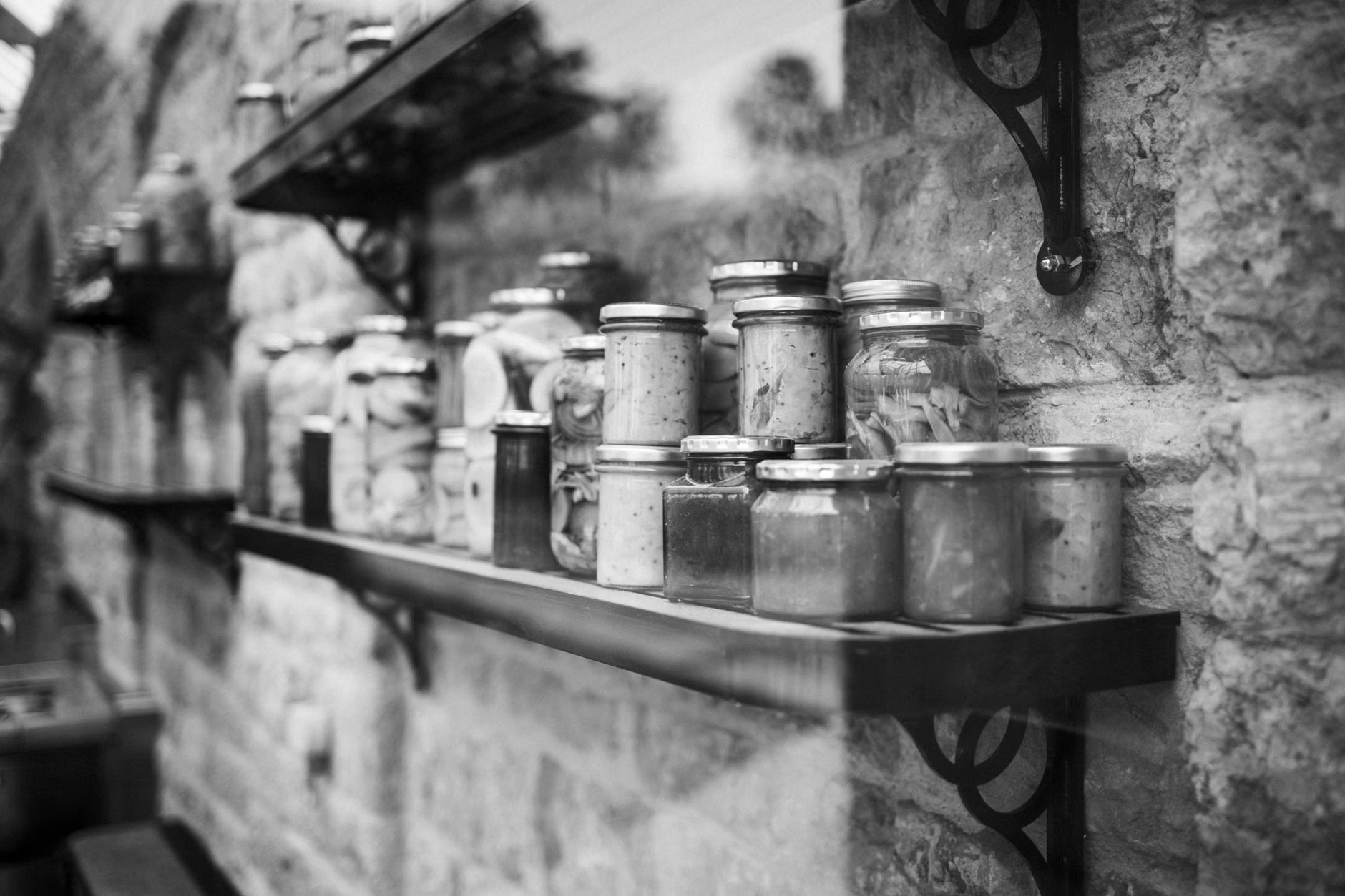
The key is processing your haul as soon as you get home. Wash, dry, and store your greens in containers with paper towels to absorb moisture. If you bought too much, don’t let it rot—blanch and freeze it, or roast it and turn it into a soup base. The “shelf life” issue is actually an opportunity to become more efficient in the kitchen and waste less food overall.
For more information on finding local markets and understanding seasonal produce, you can visit the USDA’s Local & Regional Food Sector resources or explore regional agricultural extension services in your local area. These organizations provide excellent data on the benefits of local food systems and how to connect with your nearest producers.