- The Core Concept: Quiet play focuses on reducing sensory overload—noise, visual clutter, and constant stimulation—to allow children to develop deeper concentration and emotional regulation.
- Parental Benefit: By limiting the “noise” in the home, parents can reduce their own cognitive load and decrease the frequency of household meltdowns.
- Actionable Strategy: Implementation doesn’t require a total home renovation; it starts with “toy rotation,” creating dedicated low-sensory zones, and fostering periods of uninterrupted time.
The most effective way to help your child develop sustained focus and emotional resilience isn’t by adding more structured activities to their calendar, but by intentionally removing the excess stimulation from their environment. We often assume that kids need a constant stream of flashing lights, loud noises, and diverse activities to stay “engaged,” but the reality is frequently the opposite: modern childhood is often characterized by a state of chronic overstimulation that leaves both children and parents feeling frazzled, reactive, and perpetually exhausted.
If you have ever felt like your living room looks like a toy store exploded, or if you’ve noticed that your child struggles to play with a single item for more than three minutes, you are likely witnessing the effects of sensory overload. The “Quiet-Play” movement is not about banning toys or living in a sterile, joyless space. It is a design and behavioral philosophy centered on intentionality. It is about creating an environment where a child’s nervous system can downshift, allowing them to engage in “deep play”—the kind of play that builds cognitive stamina and self-regulation.
Understanding the Mechanics of Overstimulation
To understand why quiet play works, we first need to look at the brain. Children, especially those under the age of ten, are still developing their executive functions—the mental processes that enable us to plan, focus attention, and manage emotions. When a room is filled with primary-colored plastic, battery-operated toys that make constant noise, and a surplus of choices, the brain’s “filtering” mechanism becomes overwhelmed.
Think of it like a computer running fifty browser tabs at once. The processor slows down, the fan kicks into overdrive, and eventually, the system crashes. For a child, that “crash” often manifests as a tantrum, aimless running, or an inability to choose what to play with. This is not necessarily a behavioral issue; it is a biological one. By reducing the number of inputs, we essentially close those unnecessary browser tabs, freeing up the child’s mental bandwidth for meaningful engagement.
The “Choice Paradox” in Toy Selection
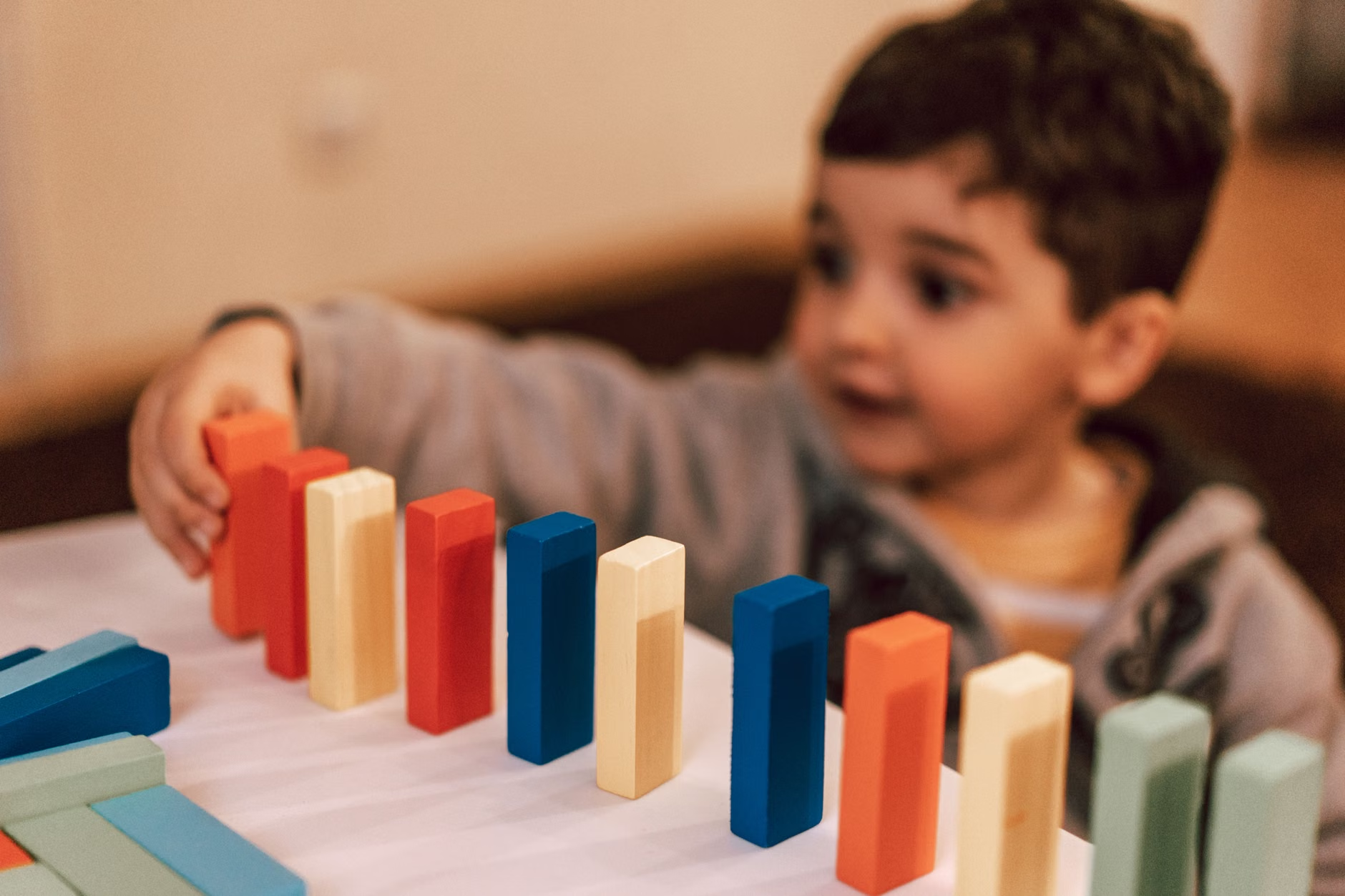
Psychologically, there is a well-documented phenomenon known as the “paradox of choice.” When presented with too many options, individuals often feel paralyzed and less satisfied with their final decision. When a child has a toy box containing forty different items, they are less likely to play deeply with any of them. Instead, they become “toy tourists”—grabbing one, discarding it, and moving to the next.
Quiet play encourages a curation-first approach. By limiting the number of toys available at any given time, you aren’t depriving the child; you are actually giving them the gift of depth. A limited set of high-quality, open-ended toys—like wooden blocks, silk scarves, or simple figurines—forces the brain to use imagination to bridge the gaps. This is where the magic happens. When the toy doesn’t do the work for the child (e.g., by making sounds or moving on its own), the child’s brain has to do the heavy lifting.
Practical Steps to Implementing a Low-Stimulation Environment
Transitioning to a quiet-play model doesn’t happen overnight, and it certainly doesn’t require throwing everything away. It is an iterative process that focuses on the quality of the environment rather than the quantity of the objects within it.
| Strategy | Actionable Step |
|---|---|
| Toy Rotation | Keep 70% of toys in storage. Rotate them every two weeks so they feel “new” again. |
| Visual Decluttering | Use opaque bins or closed cupboards to hide bright, multi-colored items when not in use. |
| Auditory Reset | Designate “quiet hours” where electronic toys are off and background TV/music is muted. |
| Zone Creation | Create a dedicated “low-stimulation” corner with soft textures and minimal visual noise. |
The Power of Toy Rotation
Toy rotation is perhaps the single most effective tool in the quiet-play toolkit. Most families have far more toys than they have space for, and when these toys are all out at once, they become background noise. To start, gather all the toys in your living area. Divide them into three or four distinct categories (e.g., building, imaginative play, puzzles, art). Select a small portion from each category to keep out, and store the rest in an attic, closet, or basement.
When you rotate these toys every few weeks, you will notice something interesting: your child will approach the “old” toys with renewed interest. They will play with them differently than they did when the house was crowded with everything else. This sustains interest over a longer period and makes cleaning up a much faster, less overwhelming task for both you and your child.
Designing for the Senses: Beyond Just Toys
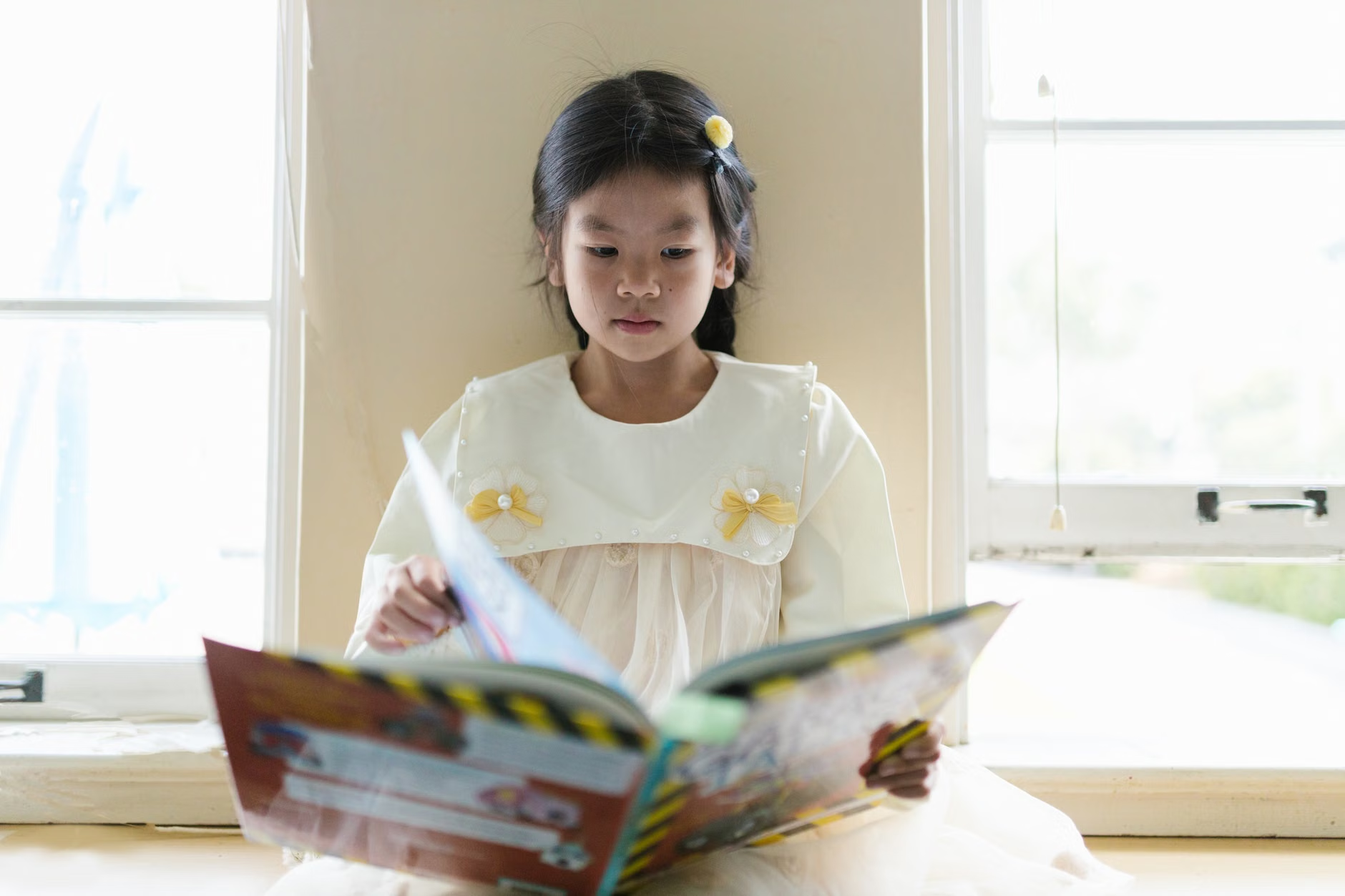
Overstimulation isn’t just about toys. It’s about the general “vibe” of your home. If your walls are covered in bright posters, the TV is constantly playing in the background, and your surfaces are covered in miscellaneous items, your child’s nervous system is receiving constant input. Even if they aren’t “playing” with those things, their brain is still processing them.
The Role of Visual Noise
Visual clutter is a major, often overlooked, stressor. In adult interior design, we value “negative space”—the empty areas of a room that allow the eye to rest. Children need this even more. If you want to encourage quiet play, try to neutralize your play space. Use neutral-colored rugs, baskets, and wall art. This doesn’t mean your home has to look like a museum, but by creating a visually calm foundation, you allow the toys themselves to become the point of focus, rather than the room being a source of distraction.
Managing Auditory Overload
We are a noisy culture. From smart speakers to background television to the constant hum of electronic devices, silence is becoming a luxury item. However, for a child’s developing brain, silence is essential for processing information. If you have a child who is prone to outbursts, try a “sound audit.” Spend one Saturday without the television on, without background music, and without electronic toys. You might be surprised at how much the ambient stress level in the home drops.
The Parent’s Role: Modeling the Calm
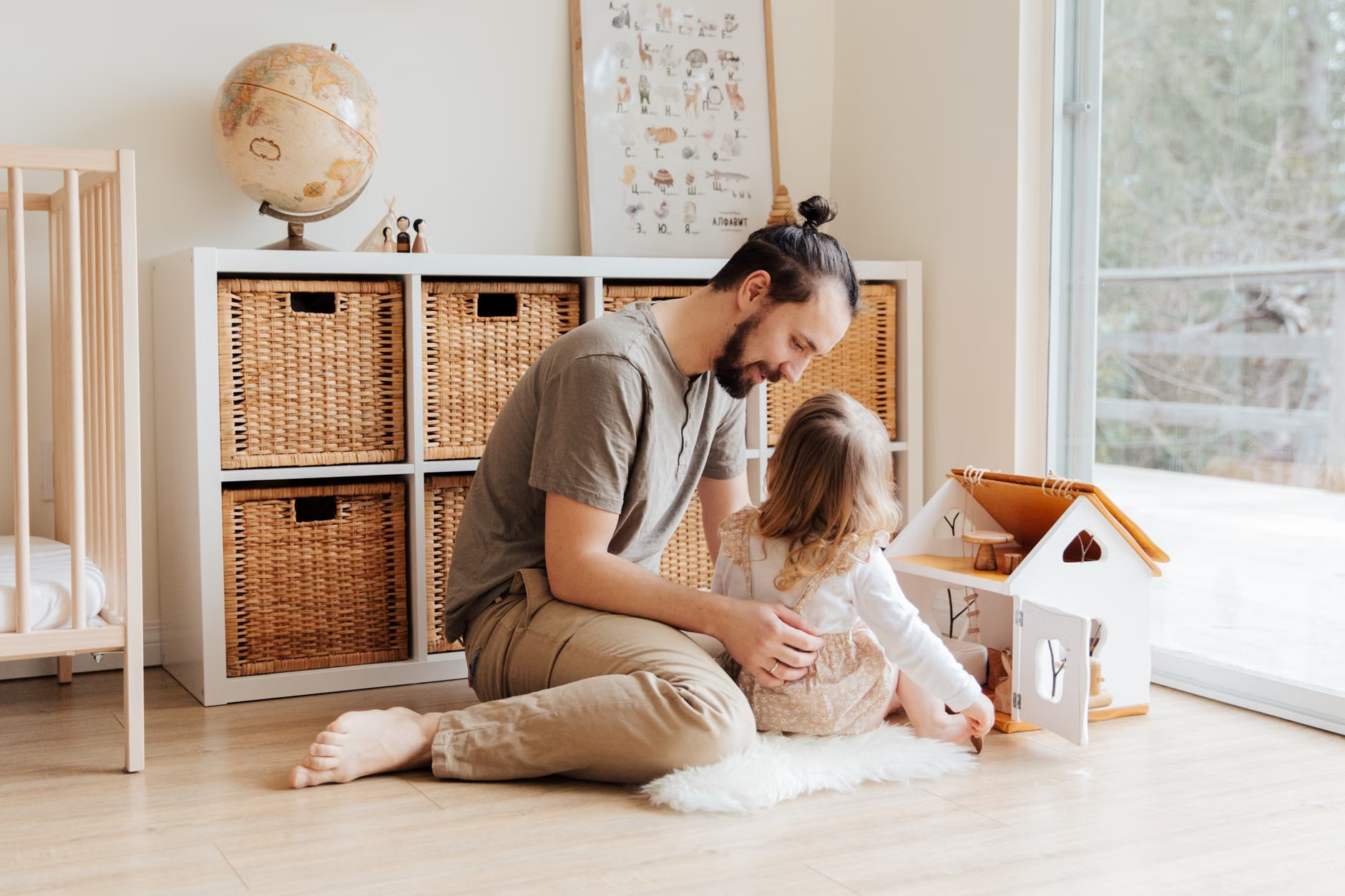
It is impossible to teach quiet, mindful play if the parents are constantly distracted by their own devices. The “Quiet-Play” movement is as much for the adults as it is for the children. When you sit down with your child, try to be present. If you are checking your phone every two minutes, you are sending a signal that “focus” is not a priority. This is not about being a perfect parent who plays for hours on end; it is about modeling the *capacity* to be still.
If you find yourself needing to get work done, invite your child to engage in “parallel play.” You work on your laptop or read a book; they engage in their quiet, independent play nearby. By keeping the environment low-stimulation, you are effectively creating a boundary that protects both your concentration and theirs. This is a skill that will serve them well into their school years, where the ability to sit with a book or a project without needing external entertainment will be a massive advantage.
Addressing Common Misconceptions
One of the biggest pushbacks against this movement is the idea that “less is boring.” Parents worry that if they take away the loud, lights-and-sounds toys, their child will be unhappy. But boredom is not the enemy of development—it is the catalyst for it. When a child is bored, they are forced to invent, to dream, and to solve problems. If we constantly interrupt that boredom with digital stimulation, we deny them the opportunity to develop their own internal creative resources.
Another misconception is that this lifestyle is only for wealthy families with large, minimalist homes. This is simply not true. In fact, quiet play is often more accessible to those with smaller spaces. When you have less space, you are forced to be more selective about what you keep. The principles of the movement—curation, rotation, and environmental awareness—are free to implement regardless of your budget or square footage.
Overcoming Implementation Hurdles
You may encounter some resistance when you first start clearing out the toy box. If your child is used to high-stimulation toys, they might complain that they are “bored” or that they have “nothing to do.” This is a normal part of the withdrawal process from overstimulation. Don’t feel the need to rush in and fix the boredom immediately. Let them sit with it for a moment. Often, within ten or fifteen minutes, they will find their way to a book, a pile of blocks, or a drawing pad. That transition—from being entertained to entertaining oneself—is the goal.
If you have multiple children, you may find that sibling conflict decreases as stimulation decreases. When children are overstimulated, they are more likely to be reactive and irritable, which leads to squabbles over toys. By providing a calmer environment with fewer, more purposeful items, you reduce the triggers for these conflicts. It gives everyone in the house a bit more breathing room.
Creating a Sustainable Routine
To make this stick, you need to integrate it into your daily rhythm. Perhaps the hour before bedtime becomes a “quiet hour” where the lights are dimmed, screens are off, and the play is restricted to puzzles or coloring. Or maybe Saturday mornings are dedicated to “low-tech” play. The specific framework matters less than the consistency. If you make it a ritual, it stops being a chore and starts being a natural part of your family’s life.
Remember that you don’t have to be perfect. There will be days when the house is a mess, the kids are watching cartoons, and everyone is loud. That is life. The goal is not a pristine, silent home 24/7; the goal is to create a baseline of calm that acts as an anchor for your family. By reducing the ambient noise and visual clutter, you are providing a foundation that allows your children to thrive, and perhaps, allows you to reclaim a little bit of your own peace of mind in the process.
As you begin this journey, focus on the small wins. Clear off one shelf. Put away one basket of toys. Turn off the background noise for just one hour today. You will likely notice a shift in the energy of your household almost immediately. It is a subtle change, but its cumulative effect on the well-being of your family is significant.
For those interested in the science behind sensory processing and child development, consider exploring resources from organizations like Zero to Three, which offers extensive, research-backed insights into how early environments shape the developing brain. While the quiet-play movement is a lifestyle choice, it is deeply rooted in the understanding that our environment is the “third teacher” in our children’s lives. By choosing to curate that environment carefully, we are giving them the best possible space to grow, learn, and simply exist without the pressure of constant, unnecessary stimulation.
Frequently Asked Questions
1. Does this mean I have to get rid of all the loud, battery-operated toys?
Not necessarily. You don’t have to be a purist. The goal is balance. You might choose to store them away and only bring them out for short, supervised bursts, or limit them to a specific “high-energy” zone in the house, keeping the rest of your living space for calmer, open-ended play.
2. My child gets upset when I take away their toys. How do I handle the transition?
Expect some pushback. Instead of doing it all at once, try a “soft” rotation. Take half of the toys out of circulation and put them in a bin in the closet. If they don’t ask for them after a week, you know you can safely store them away. Framing it as “giving the toys a vacation” can also help make the transition feel less like a loss.
3. How does this help with my own stress as a parent?
Clutter is a known stressor. When your home is visually chaotic, your brain is constantly processing that information, which adds to your mental load. By simplifying the environment, you remove a constant source of visual “noise,” which can help you feel more grounded, focused, and capable of managing the day-to-day demands of parenting.
Note: Always prioritize safety when choosing toys and organizing your home. Ensure that any storage solutions are secure and that small parts are kept away from younger children according to developmental guidelines.