The most effective way to combat the modern “nature-deficit” in your family is not through expensive retreats or complex extracurriculars, but through the simple, intentional act of Shinrin-yoku, or forest bathing—a practice that resets the nervous system by immersing your senses in the natural world.
- Forest bathing is not a hike; it is a sensory immersion practice that requires zero physical exertion.
- Scientific studies suggest that phytoncides (naturally occurring compounds in trees) significantly lower human cortisol levels.
- You can practice “micro-dosing” nature by spending just 20 minutes in a local park without phones or distractions.
If you are in your 30s or 40s, you likely feel the squeeze. Between the relentless pinging of work emails, the logistical gymnastics of school runs, and the constant hum of digital devices, the silence of nature has become a luxury. We often hear about “nature-deficit disorder,” a term coined by Richard Louv, which describes the psychological and physical costs of our detachment from the outdoors. It isn’t a formal medical diagnosis, but the symptoms—irritability, difficulty focusing, and chronic fatigue—are very real for many parents today.
You might be wondering: “I can barely find time to do the dishes, how am I supposed to take my family into the woods?” The good news is that forest bathing is not about summiting a mountain or trekking for miles. It is about slowing down enough to actually perceive the environment around you.
What Exactly is Forest Bathing?
Originating in Japan during the 1980s, Shinrin-yoku literally translates to “taking in the forest atmosphere.” It was developed as a public health initiative to combat the stress of urban life. Unlike a hike, where the goal is to reach a destination or get your heart rate up, forest bathing is purely about observation and presence.
Think of it as a sensory detox. When we are in our daily lives, our brains are in a state of “directed attention”—focusing on calendars, messages, and problems. This consumes a massive amount of cognitive energy. Forest bathing allows your brain to shift into “soft fascination,” where your attention is held by the rustle of leaves or the texture of moss. This shift allows the parts of your brain responsible for complex problem-solving to rest and recover.
The Science Behind the Trees
Why does walking among trees feel different than walking through a city park or a shopping mall? Research from organizations like the Nippon Medical School in Tokyo has focused on phytoncides. These are essential oils and volatile organic compounds released by trees to protect themselves from germs and insects. When we breathe these in, our bodies respond by increasing the activity of natural killer (NK) cells, which are a vital part of our immune system.
Beyond the biological, there is the psychological impact. Studies published in journals like Environmental Health and Preventive Medicine have shown that just 20 minutes of forest bathing can lead to a significant decrease in salivary cortisol—the primary hormone associated with stress. For a parent, this isn’t just “nice to have”; it is a physiological reset button.
Preparing Your Family for a Sensory Reset
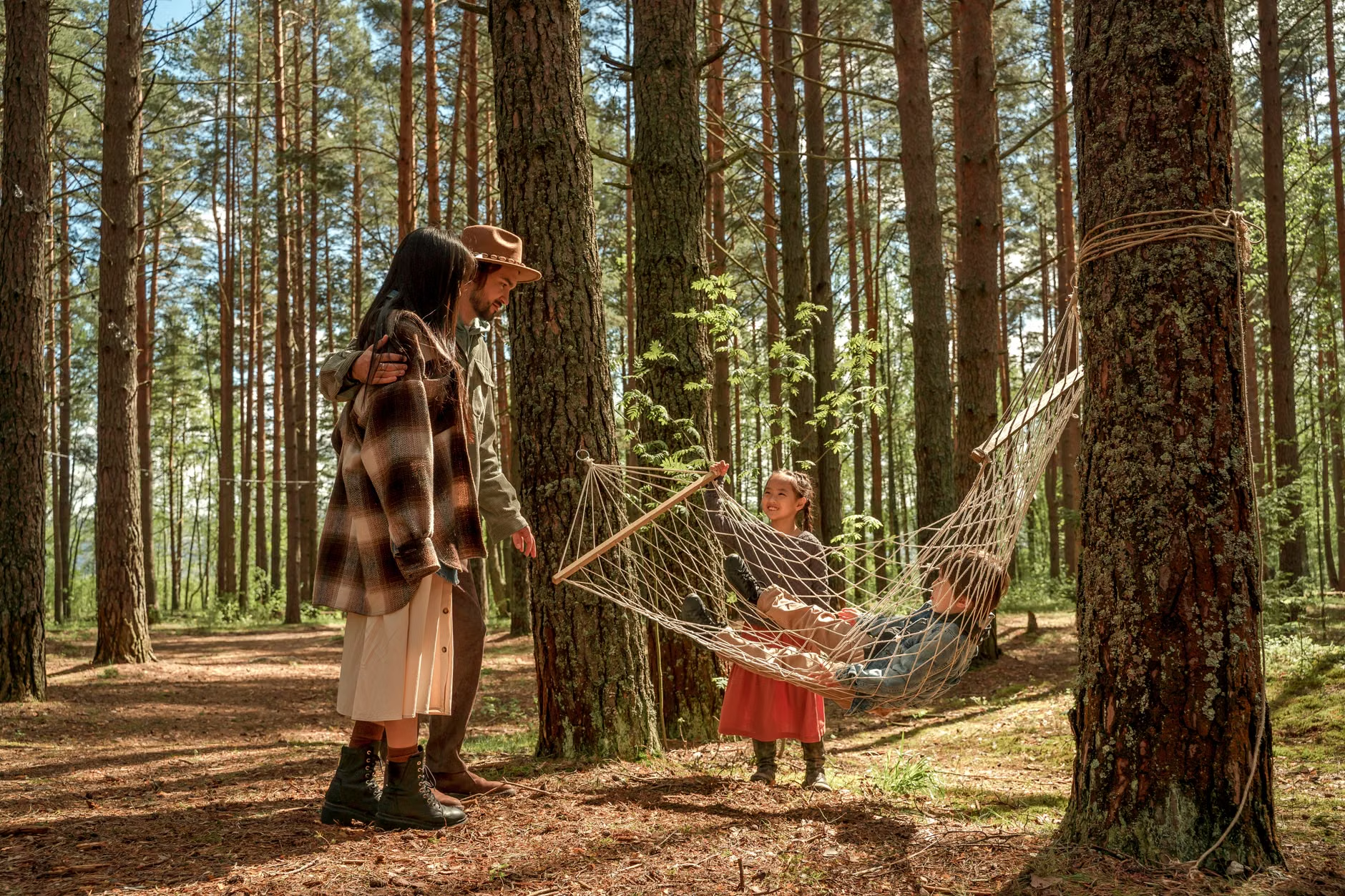
Trying to drag a reluctant child or a tired spouse into the woods can feel like a chore if you frame it as “exercise.” The key is to frame it as an exploration. If you have younger children, they are likely already natural forest bathers. They stop to look at bugs, touch the dirt, and listen to birds. Your job as a parent is to suppress the urge to say, “Come on, let’s keep moving!” and instead join them in their stillness.
Preparation is simple, but it requires a change in mindset. Start by choosing a location that is accessible. It does not need to be a dense, ancient forest. A local botanical garden, a quiet patch of woods in a municipal park, or even a tree-lined trail near your home will suffice.
The “No-Device” Rule
This is the most critical component. If you are checking your phone, you are not forest bathing. The goal is to disconnect from the digital grid so you can reconnect with the organic one. If you need your phone for safety or navigation, keep it in a backpack or, better yet, turn on “Do Not Disturb” mode and keep it deep in your bag. The constant temptation to capture the perfect photo for social media is the enemy of the present moment.
The Essential Toolkit
You don’t need fancy gear. In fact, the less you bring, the better. Here is a simple checklist for your family outing:
| Item | Purpose |
|---|---|
| Comfortable Footwear | You want to feel connected to the ground, not worried about blisters. |
| Layers of Clothing | Forests are often cooler than open spaces; be prepared to stay warm. |
| Water Bottles | Hydration is key, but keep the snacks simple to avoid messy cleanups. |
| A Small Notebook | Optional, for older kids to jot down one thing they heard or smelled. |
Step-by-Step Guide to Your First Family Session
Don’t overcomplicate this. If you are nervous about how your family will react, start with a 30-minute window. Here is a practical approach to structure your time.
Step 1: The Initial Deceleration
When you arrive, spend the first five minutes just walking slowly. Do not talk. Encourage everyone to find their own “pace of the forest.” This helps transition the family from the frantic energy of the car ride to the slower rhythm of the trees.
Step 2: Engaging the Senses (The “5-4-3-2-1” Method)
If the kids get restless, use a sensory prompt. Ask them to identify:
- 5 things they can see: The pattern of light on the leaves, a spider web, the bark texture.
- 4 things they can hear: The wind, a distant bird, their own breathing, dry leaves crunching.
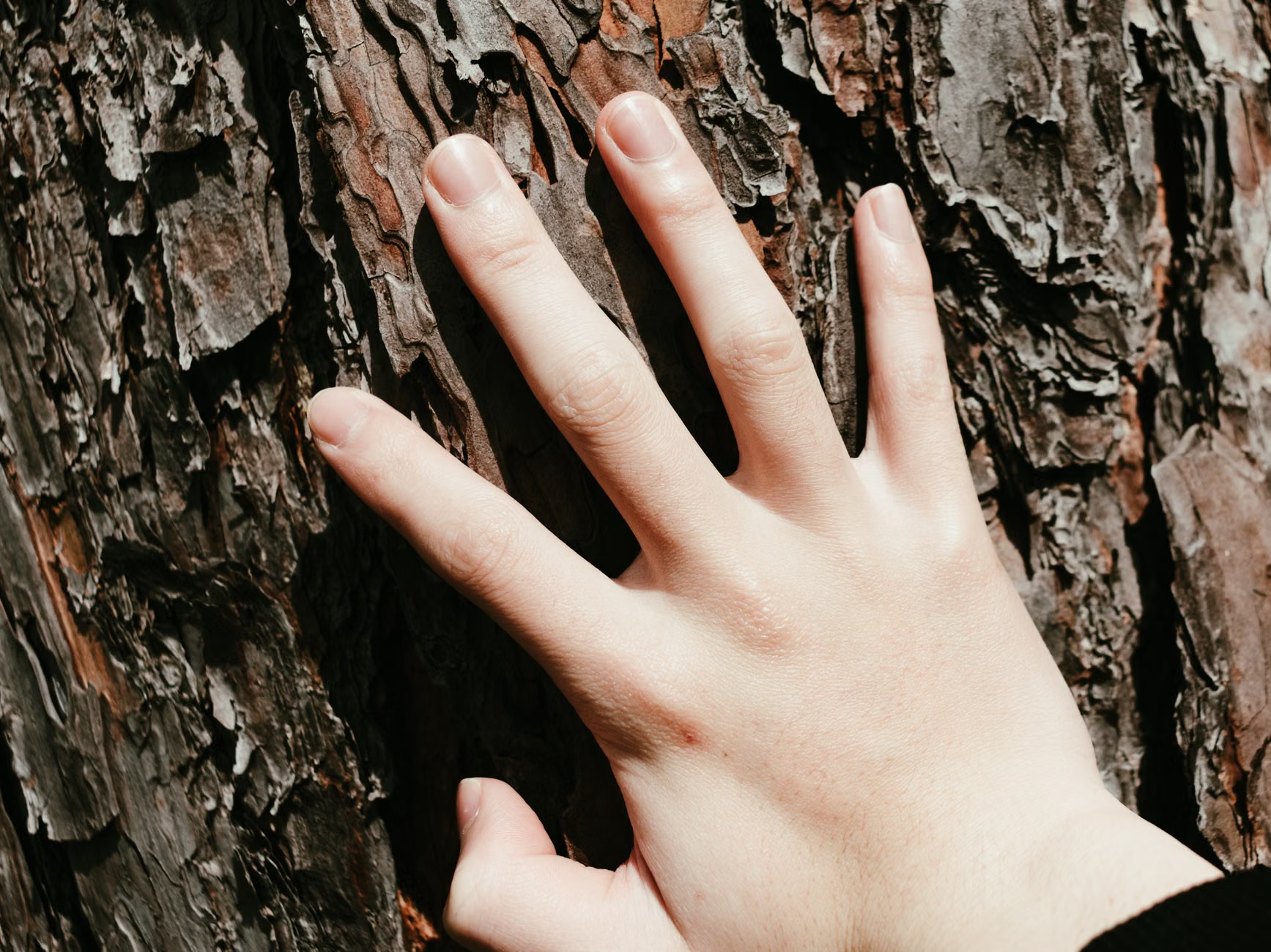
- 3 things they can touch: A smooth stone, a rough tree trunk, cool damp soil.
- 2 things they can smell: Pine needles, damp earth, decaying leaves.
- 1 thing they can taste (or imagine): The crispness of the air.
Step 3: The Stationary Pause
Find a spot to sit. It doesn’t need to be a bench. A log, a flat rock, or a blanket on the ground works perfectly. Spend 10 to 15 minutes here. This is where the magic happens. You will notice that after the initial fidgeting, children often become fascinated by the small movements of insects or the way shadows shift. This is the “soft fascination” mentioned earlier.
Step 4: The Mindful Return
When you are ready to head back, do so slowly. Don’t rush back to the car. Talk about what you noticed. What was the most interesting thing they saw? This helps solidify the experience in their memory and frames the outing as a positive, shared event rather than just “another walk.”
Common Challenges and How to Overcome Them
Let’s be realistic: kids get bored, it might rain, or you might find yourself feeling anxious about the time. These are not failures; they are part of the process.
“I’m Bored”
If your child complains, don’t lecture them on the benefits of nature. Give them a task. “Can you find three different types of leaves?” or “Can you be the ‘scout’ who finds the quietest path?” Giving them agency over the experience changes their perspective from passive observer to active participant.
Weather Issues
There is no such thing as bad weather, only inappropriate clothing. Rain in a forest is a completely different sensory experience—the smell of the earth (petrichor) is intensified, and the sound of rain on the canopy is rhythmic and calming. If you have proper rain gear, embrace the weather. It teaches resilience and shows that nature is not something that only exists on sunny, perfect days.
The “Checklist” Mentality
As parents in our 30s and 40s, we are often obsessed with “optimizing” our time. We treat every activity as a box to be checked. Forest bathing is the antithesis of this. If you find yourself thinking, “We’ve been here 20 minutes, that’s enough, let’s go,” stop. You are still in the “achievement” mindset. Try to let the clock fade into the background.
Integrating Nature into the Weekly Routine
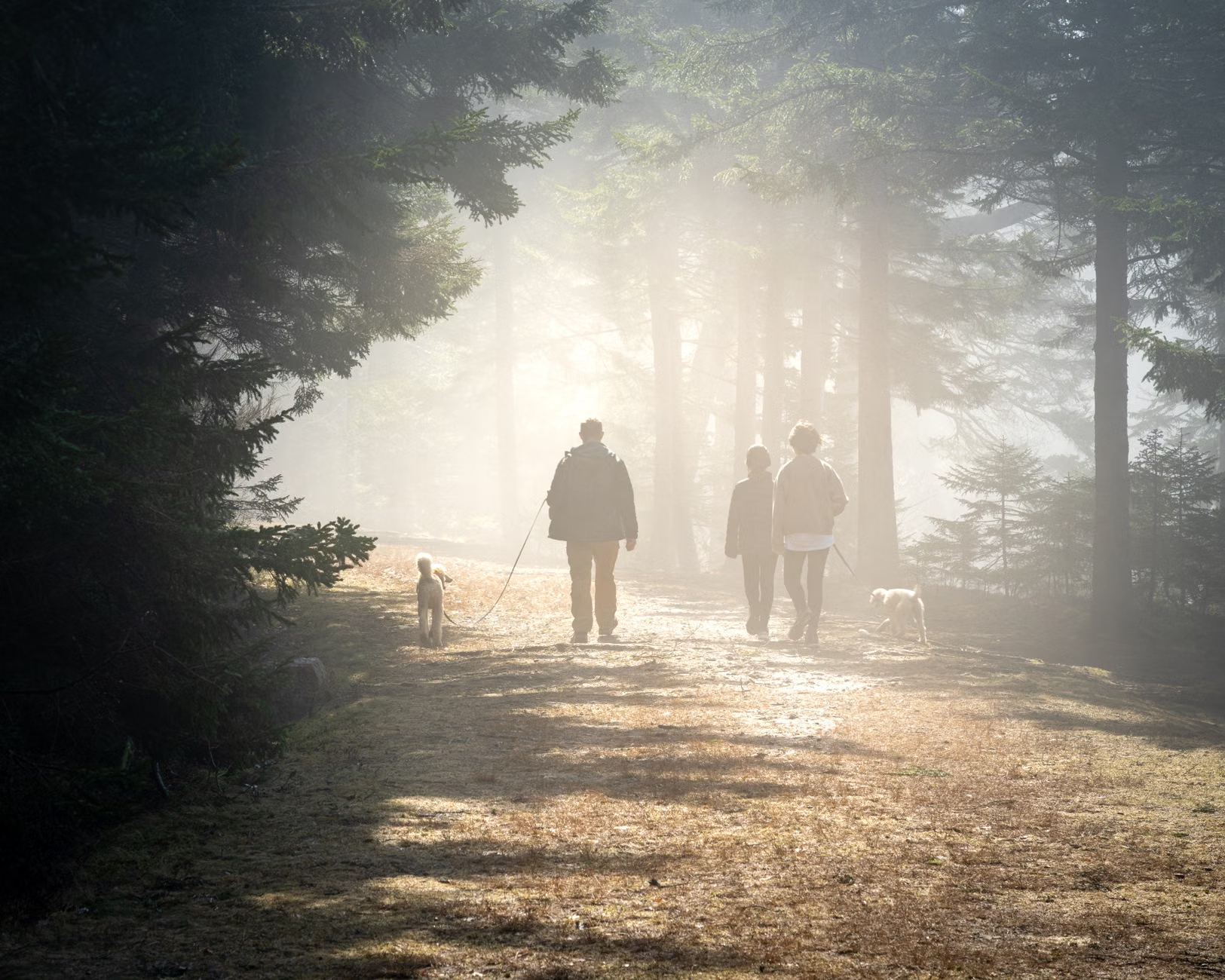
You don’t need to drive three hours to a national park to practice this. The goal is frequency, not intensity. A 20-minute session every Sunday morning is infinitely more beneficial than a four-hour hike once every six months.
Consider “layering” your nature time. If you have a neighborhood park, make it a ritual to walk there after dinner. You don’t have to call it “forest bathing”—the kids might roll their eyes at the term. Just call it “the quiet walk.” The label doesn’t matter; the physiological effect of being away from screens and surrounded by natural stimuli remains the same.
Creating a “Nature Anchor”
If your schedule is truly packed, try to create a “nature anchor” in your home. This could be a window seat where you can see a tree, or even a collection of indoor plants that you tend to with the family. While this isn’t a replacement for the real thing, it creates a psychological bridge that makes the transition to the outdoors easier when the weekend finally arrives.
Addressing Potential Risks and Cautions
While forest bathing is generally safe, it is important to be mindful of your specific environment. Always check local guidelines for ticks, poison ivy, or other regional hazards. If you are hiking in an area with high tick density, wear long pants and conduct a thorough check when you get home. Being prepared means you can relax, and being relaxed is the whole point of the exercise.
Additionally, respect the ecosystem. Leave no trace. Teach your children that we are guests in the forest. Moving a rock to see what’s underneath is fine, but putting it back exactly as you found it is part of the practice. It fosters a sense of stewardship and respect for the environment that lasts far longer than the walk itself.
The Long-Term Impact on Family Dynamics
Beyond the individual health benefits, there is a cumulative effect on family life. When you share a quiet, non-digital experience, you are building a “shared memory” that isn’t tied to a screen or a consumer experience. You are learning to exist in the same space without the pressure of conversation or task-completion.
For parents, this is a way to model healthy stress management. Your children watch how you interact with the world. If they see you constantly checking your phone, they will learn that the world is a place of constant interruption. If they see you stopping to observe a bird or feeling the texture of a leaf, they learn that the world is a place of wonder and, more importantly, a place where they can find peace.
It is not about turning your back on technology or the modern world. We all need our devices, our jobs, and our schedules. It is about understanding that we are biological creatures who have been removed from our natural environment for too long. By reclaiming even small, consistent pockets of time in the forest, you are giving your family a powerful antidote to the pressures of modern life.
The next time you feel the walls closing in—when the laundry is piling up, the emails are stacking, and the kids are bouncing off the walls—consider putting on your shoes and heading to the nearest cluster of trees. You don’t need to fix everything. You just need to breathe, observe, and let the forest do the rest.
Frequently Asked Questions
Does forest bathing have to be done in a forest?
Not necessarily. While a deep forest offers the most potent experience, any area with trees, greenery, and minimal noise pollution will work. The goal is to be in an environment where your senses are engaged by natural, non-manmade stimuli. A quiet city park, a botanical garden, or even a local nature preserve can provide the same benefits if you maintain the “no-device” and “slow-down” rules.
How old do children need to be to participate?
There is no minimum age. Even infants benefit from being in a stroller in a forest setting; the rhythmic movement and the sensory input of the trees can be very soothing. For toddlers and young children, the practice will look more like “nature play,” which is perfectly acceptable. The goal is not to force them to sit still, but to encourage them to interact with the environment in a calm, observant way.
Can forest bathing help with anxiety or burnout?
Yes. Numerous studies have shown that immersion in nature helps reduce the activity of the sympathetic nervous system (our “fight or flight” response) and increases the activity of the parasympathetic nervous system (our “rest and digest” response). By consistently practicing forest bathing, you can train your body to recover from stress more efficiently, which is a key component in managing burnout.
For more information on the benefits of nature, you can explore resources from the The Nature Conservancy or research studies available through the National Institutes of Health (NIH) on the connection between environmental exposure and human health.
Start small, stay consistent, and remember that the forest is always there to welcome you back. You aren’t just taking a walk; you are reclaiming your capacity for peace in a busy world.