By the time 2026 rolls around, the days of hunting through your “junk drawer” for that one specific, proprietary charging cable will be effectively over. As global regulations—most notably the European Union’s common charger directive—reach full implementation, the USB-C port has officially become the universal standard for portable electronics. For parents, this isn’t just a technical shift; it is a long-overdue convenience that will simplify family travel, reduce household clutter, and ultimately save you money on replacement hardware.
- Simplified Travel: You will soon be able to charge your phone, your child’s tablet, and your laptop with a single cable, drastically reducing your packing load.
- Budget Efficiency: The shift away from proprietary cables means you can purchase high-quality third-party chargers without worrying about device compatibility or “official” brand markups.
- Tech Longevity: By 2026, the market will phase out specialized ports, ensuring that the devices you buy today will remain compatible with charging infrastructure for years to come.
We have all been there: it is 9:00 PM, you are finally sitting down to relax, and you realize your child’s tablet is at 2% battery. You scramble to the drawer, pull out a tangled mess of white wires, and discover that none of them fit the port. Or worse, you are halfway through a family vacation, and you realize you brought the wrong charging brick for your noise-canceling headphones. It is a minor frustration, but it is one that repeats itself dozens of times a year. The transition to a universal charging standard is the tech industry’s way of finally saying, “We hear you.”
Understanding the Shift: Why USB-C Won the Race
For years, tech companies competed by locking users into their own ecosystems. If you owned a specific brand of phone, you needed their specific wall brick and their specific cable. If that cable frayed—which they inevitably did—you were forced to pay a premium for a replacement. USB-C, or Universal Serial Bus Type-C, changed the game because it is capable of doing everything: it carries power, data, and even high-definition video signals.
Unlike the older USB-A (the rectangular plug you probably remember) or the proprietary connectors that plagued the early 2010s, USB-C is symmetrical. You cannot plug it in upside down. It is robust, it supports “Power Delivery” (which allows it to charge everything from tiny earbuds to powerful laptops), and most importantly, it is an open standard. By 2026, regulators have essentially forced the industry to stop using proprietary ports for small and medium-sized electronic devices. This is a massive win for the circular economy and for your household sanity.
What This Means for Your Family’s Tech Arsenal
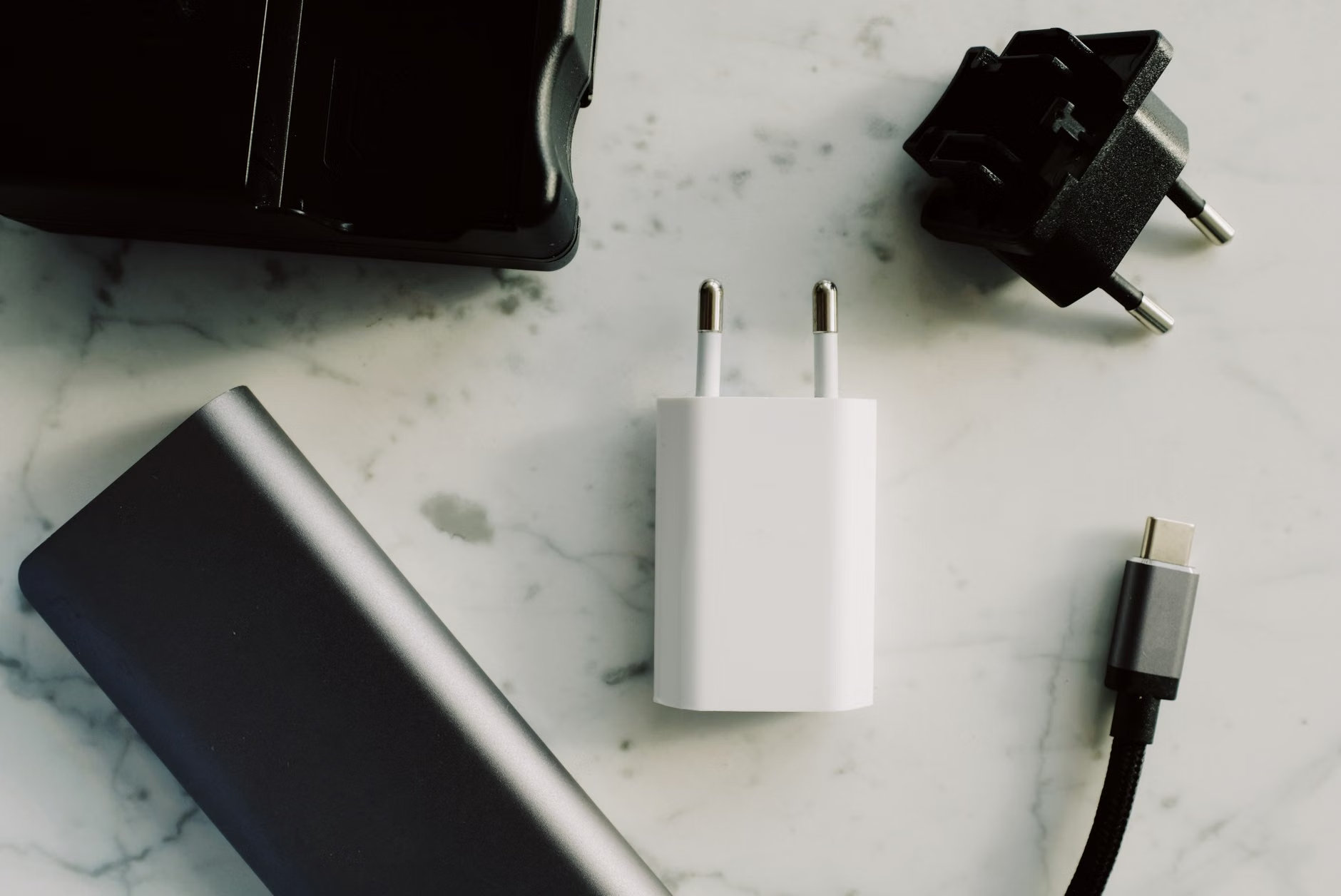
When we talk about the “universal standard,” we are primarily talking about portable devices. This includes smartphones, tablets, e-readers, digital cameras, handheld gaming consoles, and even some portable kitchen appliances or power tools. As we move through 2026, here is what you should expect to see in your home:
- Consolidation of Hardware: You no longer need five different types of chargers in your living room charging station. One or two high-wattage USB-C GaN (Gallium Nitride) chargers can handle almost everything.
- Interchangeability: If your child loses their tablet charger, they can technically use the charger from your laptop or your phone, provided the wattage is sufficient.
- Reduced E-Waste: Because you aren’t forced to buy a new charger every time you switch brands, you’ll accumulate fewer unused cables. This is better for the planet and, frankly, keeps your house much tidier.
The “Hidden” Cost of Transition: Understanding Wattage
While the physical connector is the same, not all USB-C cables and chargers are created equal. This is the one catch parents need to understand. A cable designed to charge a set of wireless earbuds might not have the internal wiring or the “chip” required to safely charge a high-performance laptop. This is where many people get confused.
The standard for USB-C is defined by how much power it can deliver, measured in Watts (W). A simple rule of thumb for your household:
| Device Type | Recommended Wattage | Key Consideration |
|---|---|---|
| Small Gadgets (Earbuds, E-readers) | 5W – 15W | Almost any basic USB-C cable works. |
| Smartphones / Tablets | 20W – 45W | Ensure the charger supports “Power Delivery” (PD). |
| Laptops / High-end Gaming Gear | 60W – 100W+ | Requires a high-quality “E-marked” cable. |
If you use a low-wattage cable for a high-power device, the device will either charge incredibly slowly or not at all. If you are buying a cable for your laptop, look for the “100W” or “240W” label on the packaging. For everything else, a standard, high-quality cable will suffice. Don’t feel pressured to buy the most expensive “brand-name” cable; as long as it meets the safety standards, it will work perfectly across your devices.
Streamlining Family Travel
Travel is perhaps where the universal charging standard will be most appreciated. Remember the days of packing a dedicated pouch just for cables? Or the panic of realizing the hotel’s USB outlet doesn’t match your device? By 2026, you can realistically cut your cable count by 60%.
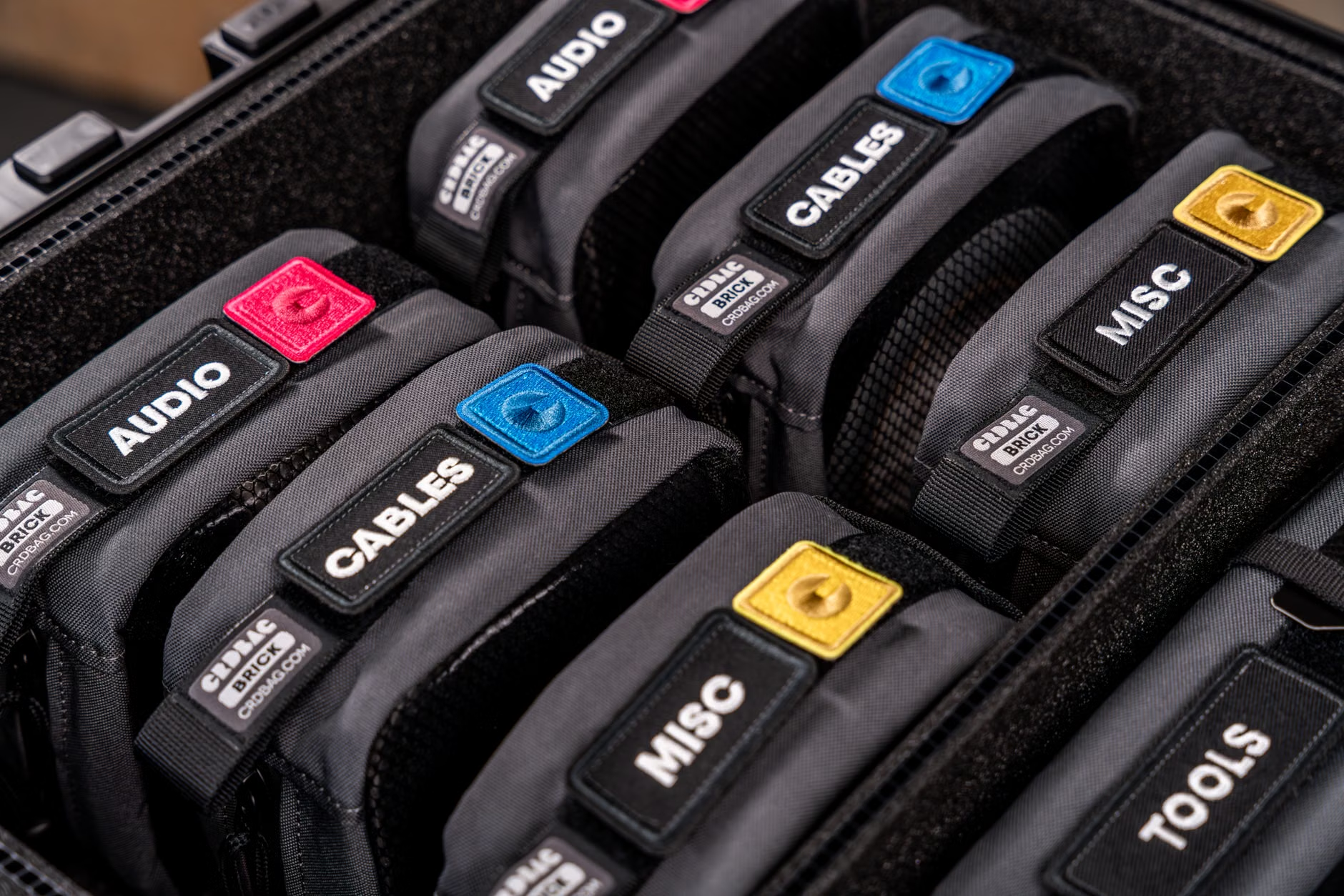
For a family of four, this means one or two multi-port GaN chargers that can sit on the hotel nightstand. These chargers are small, light, and powerful enough to juice up four devices simultaneously. When you are navigating airports or trying to keep the kids entertained on a long flight, knowing that you only need one or two spare cables in your carry-on removes a significant layer of travel anxiety.
A pro-tip for parents: Invest in a few “right-angle” USB-C cables. They are much less likely to break when a child is using a tablet while lying on the couch or sitting in a car seat, as the cable doesn’t bend at a harsh 90-degree angle against the device port. This small change can extend the life of your chargers significantly.
Safety and Quality: Avoiding the “Cheap Cable” Trap
Just because the port is universal doesn’t mean you should buy the cheapest gas-station cable you can find. Cheap, uncertified cables often lack proper shielding, which can lead to overheating or, in rare cases, damage to your device’s charging port. As a parent, you want to ensure the safety of your home.
Look for cables that are “USB-IF Certified.” The USB Implementers Forum (USB-IF) is the group that sets the standards. When a product has their logo, it means it has been tested for safety and compatibility. It costs a few dollars more, but it prevents the “this accessory may not be supported” errors and ensures that your devices charge at the speeds they are supposed to.
Also, check the condition of your cables periodically. If you see fraying near the connector or if the cable feels hot to the touch while charging, replace it immediately. With children in the house, frayed wires are not just a tech failure; they are a safety hazard. Since you won’t be paying the “brand premium” for proprietary cables anymore, you can afford to replace your cables with high-quality, durable braided options that are designed to withstand the wear and tear of family life.
Practical Steps for Your Home Charging Setup
So, how do you actually prepare for the 2026 reality? It is not about throwing out everything you own today. Instead, it is about a gradual transition. Here is a simple, actionable plan for the next few months:
- Inventory your current devices: Identify which items are already USB-C and which are still using older micro-USB or proprietary ports.
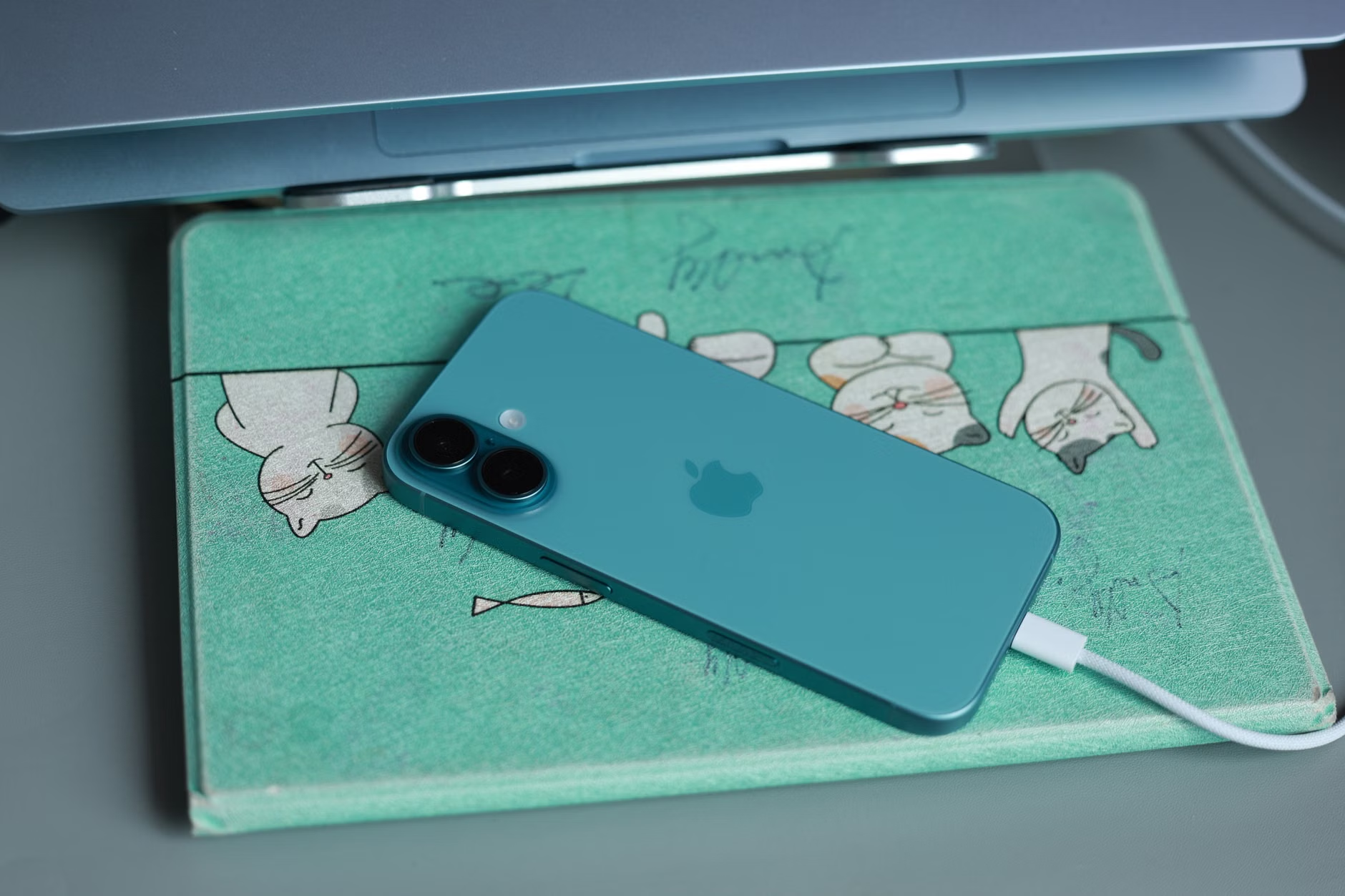
- Consolidate the “Junk Drawer”: Take all those old, non-standard cables out of the drawer. If you have an old device that still uses them, put them in a clearly labeled bag, but keep them away from your main charging area.
- Upgrade your wall bricks: If you are still using the old, slow 5W blocks that came with phones years ago, recycle them. Invest in a 65W or 100W GaN multi-port charger for your main communal area.
- Standardize your cables: Buy a few high-quality, 6-foot braided USB-C cables. Longer cables are lifesavers when kids are using devices on the sofa or in bed.
The Long-Term View: Why This Matters for Your Household
The universal charging standard is part of a larger trend toward sustainability and simplicity. By 2026, we will see fewer gadgets sold with their own proprietary power bricks. This is a deliberate move to reduce waste. While some people initially found it annoying that new phones didn’t include a charger in the box, the reality is that most of us already have a drawer full of them. The shift to USB-C means that the charger you already have will work for the next phone you buy, and the one after that.
For parents, this represents a shift toward a more “plug-and-play” lifestyle. You aren’t just buying a piece of tech; you are buying into an ecosystem that is finally becoming interoperable. When you buy a new device for your child in 2026, you won’t have to worry about whether you have the right cable. It will just work. That is the kind of small, friction-less improvement that makes day-to-day life just a little bit easier.
However, stay cautious of “fast charging” marketing claims. While USB-C supports fast charging, it requires both the cable, the charger, and the device to support the same protocol. If you find your phone isn’t charging as fast as the box claims, check if your cable is rated for the correct power delivery. It is a minor hurdle, but one that is easily solved with a quick check of the cable’s specifications.
Encouragement for the Modern Tech Household
Managing a household in the mid-2020s feels like a constant battle against digital clutter. Between the kids’ school-issued tablets, your work laptop, the gaming console, and the endless array of smart home devices, the cords can feel like they are taking over. The move to a universal standard is a rare moment where technology actually makes your life simpler rather than more complex.
Take the time to set up your home charging stations properly. Use cable management clips, opt for durable braided cables, and don’t be afraid to invest in a few high-quality, multi-port chargers. You are building a system that will serve your family well into the future. It is a small victory, but it is one that will save you time, money, and sanity every single day.
Frequently Asked Questions
Q: Will my older devices (like an old Kindle or older phone) stop working in 2026?
A: Not at all. Your older devices will continue to function exactly as they do now. The universal standard applies to the new hardware being manufactured and sold. You will still be able to use your legacy cables; you just won’t need to buy new ones for your future devices.
Q: Is it safe to use a high-wattage laptop charger to charge my phone?
A: Yes, it is perfectly safe. USB-C devices are smart; they perform a “handshake” when you plug them in. The charger and the device communicate to determine the maximum safe power level. Your phone will only draw the amount of power it needs, so you don’t have to worry about “over-charging” or damaging the battery.
Q: How do I know if a cable is “high quality” without spending a fortune?
A: Look for reputable third-party brands that specialize in charging accessories. Check for the “USB-IF Certified” logo on the product page or packaging. Read the reviews specifically for mentions of durability and consistent charging speeds. You do not need to buy the most expensive cable from the device manufacturer, but avoid the bargain-bin cables that lack any branding or certification.
For more information on the evolving standards for electronic connectivity, you can review the official documentation provided by the USB Implementers Forum, which oversees the development and standardization of these technologies. Staying informed helps you make better purchasing decisions for your family.