The most important thing to know about the European night-train revival is that it isn’t just nostalgia—it is a practical, time-efficient, and surprisingly comfortable way to travel across borders without the stress of airport security lines or hotel check-in deadlines.
- Book Early: Popular sleeper routes often sell out months in advance, especially during school holidays.
- Choose Your Class Wisely: Private compartments (couchettes or sleepers) are non-negotiable for families needing sleep.
- Pack Light, Pack Smart: Night trains have limited storage; prioritize a “night bag” with essentials so you don’t have to dig into your main luggage.
If you are in your 30s or 40s, you likely remember a time when flying was the default for European travel. But lately, the conversation has shifted. Between the environmental concerns and the sheer exhaustion of navigating budget airlines with children—liquid restrictions, middle seats, and the “will they cry on the plane?” anxiety—the idea of waking up in a new city after a night of rolling through the countryside has become incredibly appealing.
The “night-train renaissance” is real. Operators like ÖBB (Nightjet) and various national rail services are investing heavily in new rolling stock. But how do you actually execute this with kids in tow without losing your mind? Let’s break down the logistics.
Why the Sleeper Train is a Parent’s Secret Weapon
When you travel with kids, time is your most precious currency. A standard daytime train ride from, say, Berlin to Vienna takes about eight hours. That is an entire day of “Are we there yet?” and “I need a snack.” A night train turns those eight hours into a period of sleep.
The math is simple: you board in the evening, the kids fall asleep in their bunks, and you wake up in your destination city just in time for breakfast. You save on a night of hotel costs, you avoid the cost of taxis to and from distant airports, and you arrive in the city center rather than an industrial park 40 minutes away.
However, it requires a different mindset. You aren’t just booking a seat; you are booking a mobile hotel room. If you treat it like a flight, you will be disappointed. If you treat it like a camping adventure, you will have the time of your lives.
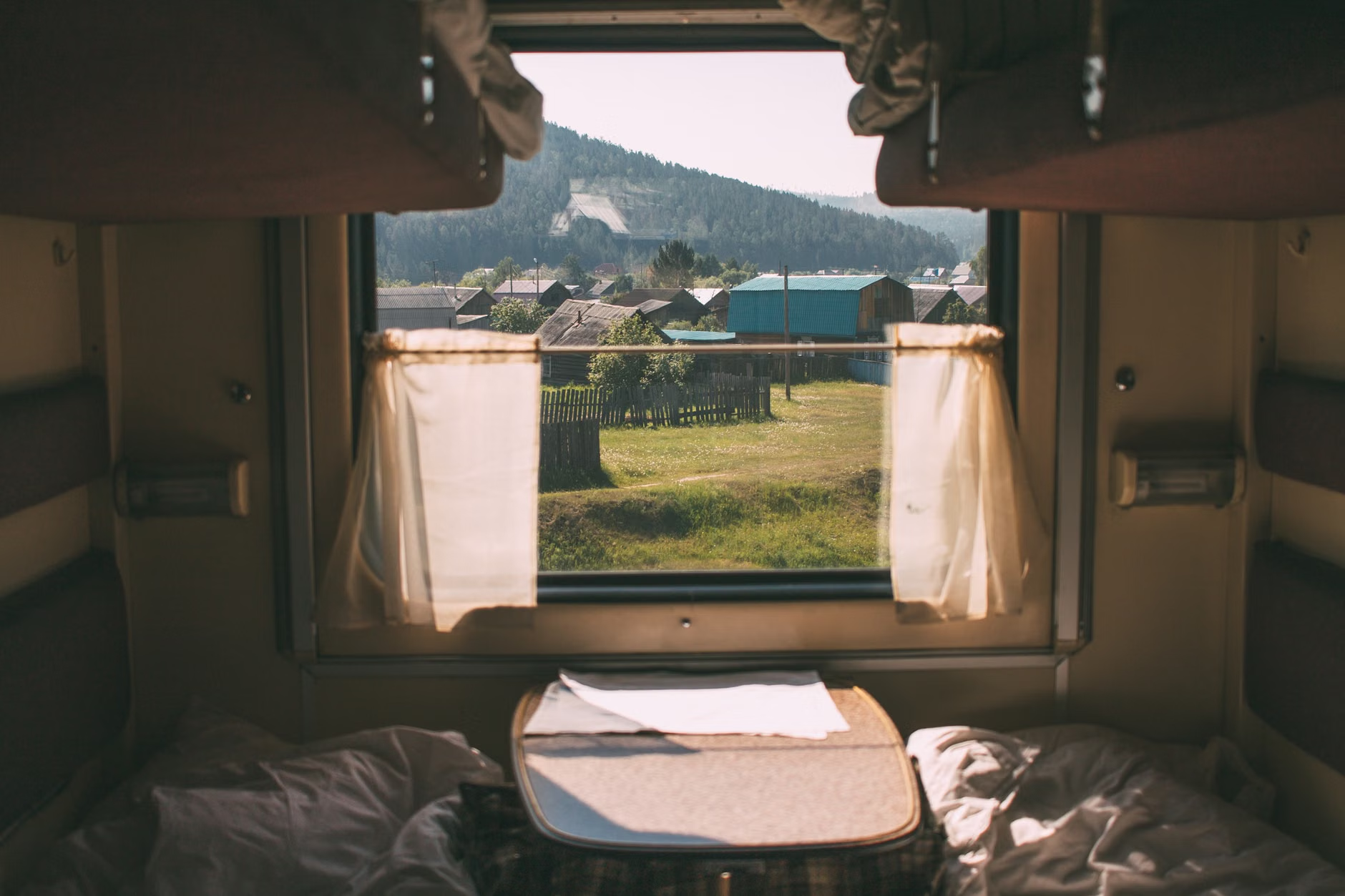
The Hierarchy of Comfort: Choosing the Right Cabin
Not all rail experiences are created equal. When traveling with children, your choice of cabin is the single biggest factor in determining whether the trip is a success or a disaster.
1. The Private Sleeper (The Gold Standard)
If your budget allows, always book a private sleeper cabin. These usually come with actual beds (not just foldable benches), a small sink, and, depending on the operator, a private shower and toilet. The key benefit here is privacy. You can close the door, lock it, and let the kids move around without worrying about bothering other passengers.
2. The Couchette (The Practical Middle Ground)
Couchettes are the standard “sleeper” experience. They are bunks that fold down from the wall. You can book a 4-berth or 6-berth compartment. If you are a family of four, you can book the entire 4-berth compartment for your family, effectively making it private. It is cheaper than the deluxe sleeper but requires a bit more coordination in terms of bathroom access, as these are usually shared down the hallway.
3. The Seated Carriage (The “Only if Necessary” Option)
I would strongly advise against booking standard seats for an overnight journey with children. Trying to sleep upright for eight hours is hard enough for an adult; for a child, it is a recipe for a meltdown. Unless it is the only way to get to your destination, skip the seated carriages.
Logistics: Booking, Luggage, and Boarding
The biggest hurdle for most international travelers is the booking system. Unlike booking a flight, rail networks in Europe are fragmented. While apps like Trainline or Omio are helpful for searching, I always recommend booking directly through the national carrier’s website (e.g., OBB.at for Nightjet) to ensure you have full control over your reservation and can easily manage cancellations or changes.
| Phase | Action Item | Tip |
|---|---|---|
| Booking | Book 3-4 months out. | Prices rise as the train fills up, just like flights. |
| Packing | Use a “Night Bag.” | Don’t open your big suitcases; keep pajamas and toiletries in a small tote. |
| Boarding | Arrive 30 minutes early. | Find your carriage number before the train pulls in to avoid a scramble. |
Luggage is another area where people often go wrong. Train corridors are narrow. If you arrive with four massive suitcases, you will be the person blocking the hallway. Pack one medium suitcase for the whole family if possible, or stick to backpacks. Remember, you have to lift your luggage onto the train yourself; there are no baggage handlers.
Survival Strategies for the Night-Train Journey
Once you are on the train, the transition to “sleep mode” is crucial. European trains can be noisy, and the tracks aren’t always perfectly smooth. Here is how to keep the peace:
- The Snacks Strategy: Bring your own. While many night trains offer breakfast or a small café, the selection might not be kid-friendly. Bring non-messy snacks like crackers, cheese strings, and fruit. Avoid anything with too much sugar right before bedtime.
- Tech Management: Bring a tablet or phone pre-loaded with movies or audiobooks. Most trains have power outlets, but they aren’t always reliable, so bring a portable power bank just in case.
- Comfort Items: The train provides basic bedding, but it can sometimes feel a bit sterile. Bringing a favorite pillowcase or a small comfort toy from home can help kids settle into the alien environment of a train bunk.
- Noise Control: The sound of the tracks is rhythmic and usually helps kids sleep, but if you have a light sleeper, bring a white-noise app or noise-canceling headphones.
One common mistake is expecting to sleep through the entire night. There might be stops, announcements, or ticket inspections. Treat these as part of the adventure. If a child wakes up, remind them where they are and keep the lights low.
Traveling by rail in a foreign country can be intimidating. What happens if the train is delayed? What if you miss your connection? The good news is that European rail networks are generally very well-connected. If you book a “through ticket” (meaning one booking for the entire journey), the rail company is obligated to get you to your destination, even if that means putting you on a later train or providing hotel vouchers in extreme cases.
Always keep your tickets digital and offline. Don’t rely on being able to load a website in the middle of a tunnel. Download the PDFs to your phone or keep printouts in a dedicated travel folder. It sounds old-school, but in the middle of the night, you don’t want to be fumbling with a poor 4G connection.
Why This Matters for Your Family
We often get caught in the “efficiency trap”—trying to get from Point A to Point B as quickly as possible. But family travel isn’t just about the destination; it’s about the stories you collect. A night train is an event in itself. It is the thrill of waking up in a different country, the shared experience of a tiny room, and the slow, steady rhythm of the journey.
By choosing the train, you are also teaching your children about sustainable travel. You are showing them that travel doesn’t have to be a frantic rush through security checkpoints. You are showing them that the journey can be comfortable, social, and even a little bit magical.
However, be realistic about your children’s needs. If they are prone to extreme motion sickness or if they absolutely cannot sleep in a new environment, a night train might be a tough sell. Start with a shorter route—perhaps a 6-hour journey—before committing to a full overnight crossing. Test the waters, see how they handle the bunks, and adjust your expectations accordingly.
At the end of the day, the revival of the night train is a gift to families who want to see more of the world without the burnout. It requires a bit more research and a lot more patience than hopping on a budget flight, but the payoff—waking up refreshed and ready to explore a new city—is worth every bit of the effort.
For more information on routes and schedules, check out the official European rail resources such as Nightjet or the Eurail planning tools, which provide comprehensive maps and connection advice for the entire continent.
Frequently Asked Questions
1. Is it safe to leave our luggage in the cabin while we sleep?
Generally, yes. Most sleeper cabins have locks that can be secured from the inside. When you leave the cabin for the bathroom, it is wise to keep your valuables (passports, phones, wallets) in a small bag that you can take with you. Treat it like a hotel room—don’t leave expensive gear sitting in plain view near the door.
2. Do the trains have bathrooms and showers on board?
Most sleeper trains have shared bathrooms at the end of the carriage. Some higher-tier “deluxe” cabins have private en-suite bathrooms, sometimes including a shower. Always check the specific cabin type during the booking process to see what amenities are included.
3. How do I handle food and meals on a night train?
Most long-distance night trains have a dining car or a snack service, but options can be limited. The best practice for families is to pack a “picnic” for the evening. Bring sandwiches, fruit, and plenty of water. It saves you from having to navigate a crowded dining car with kids late at night.
Traveling by rail is a skill that gets better with practice. Don’t be discouraged if your first trip isn’t perfectly seamless. The beauty of the rail revival is that it offers a human-scale way to move through the world, and that is a lesson worth sharing with your family.