The most effective way to extend the lifespan of your household electronics while keeping your budget intact is to stop viewing them as disposable and start treating them as fixable assets through the global Repair Café network.
Key Takeaways
- Repair Cafés are community-led: They function as free meeting places where skilled volunteers help you fix your own broken items.
- Economic and Environmental Impact: By repairing instead of replacing, you save significant household income and reduce the growing global e-waste crisis.
- Skill Building: These sessions provide hands-on experience, turning intimidating electronic failures into manageable learning opportunities for you and your children.
We have all been there. You are in the middle of a Tuesday evening, dealing with the usual chaos of dinner prep and homework, when suddenly the toaster stops popping or the kid’s favorite battery-operated toy goes silent. Your first instinct is often to check the price of a replacement online. It feels faster, cleaner, and frankly, less of a headache. But that instinct is exactly what contributes to the staggering 60 million metric tons of e-waste generated globally every single year.
In our 30s and 40s, we are often caught in a weird middle ground. We have enough disposable income to buy new things, but we are also becoming increasingly aware that the “buy-and-toss” culture isn’t sustainable for our wallets or our planet. This is where the Repair Café movement comes in. It isn’t just about fixing a blender; it’s about reclaiming our autonomy over the technology we own.
What exactly is a Repair Café?
A Repair Café is not a repair shop. If you walk in expecting to drop off your device like you would at a professional technician’s office, you will be surprised. It is a volunteer-led, community-based initiative. The core philosophy is simple: you bring your broken item, and a volunteer “repairer” sits down with you to guide you through the process of fixing it yourself.
These events happen in community centers, libraries, or local churches. The atmosphere is social and informal. You might find yourself sitting next to a retired electrical engineer who is showing a local college student how to resolder a loose connection on a gaming controller. It is a space where knowledge is transferred, not just services performed.
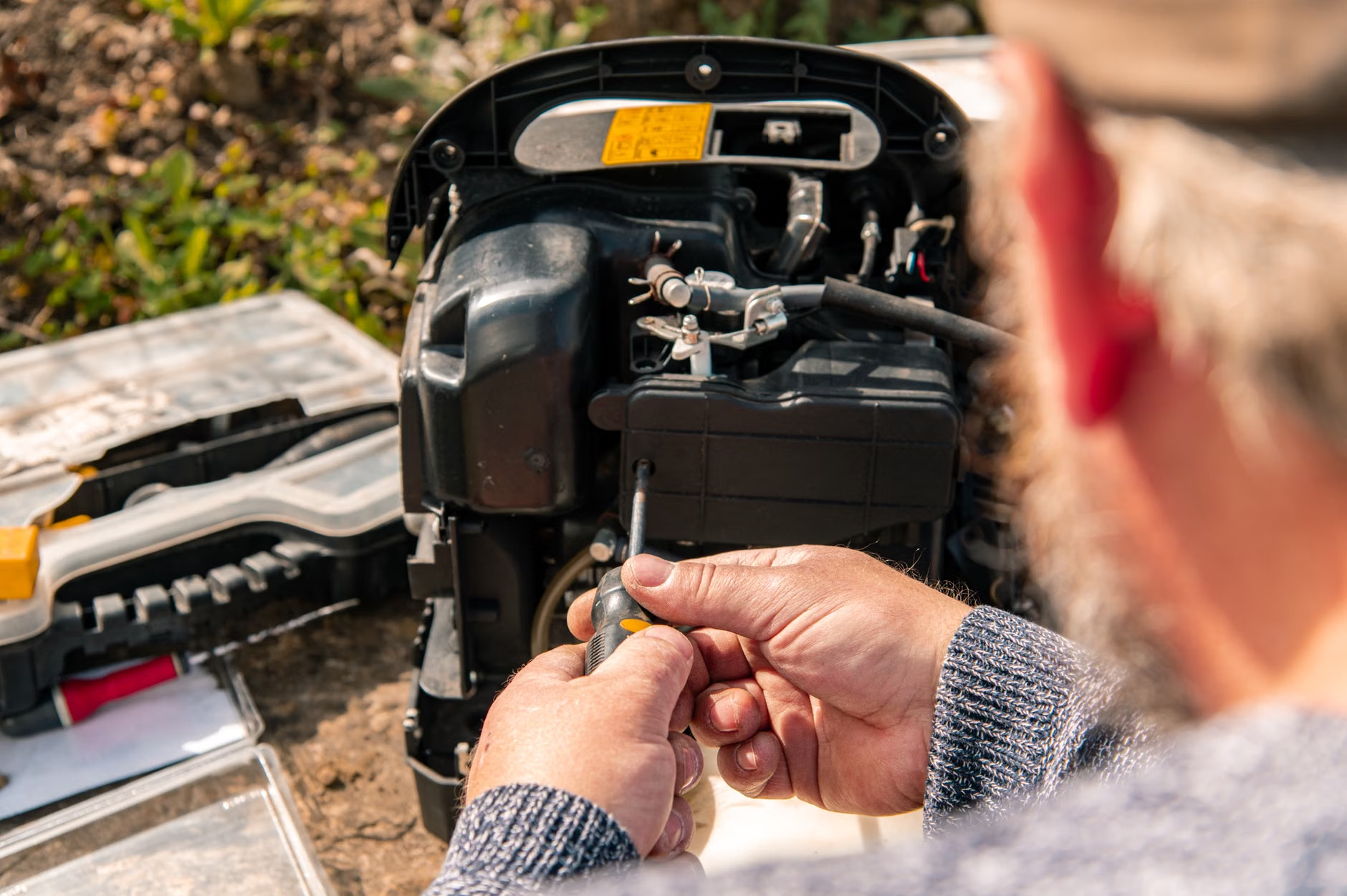
Why does this matter for a parent? Because it changes the narrative you present to your children. Instead of teaching them that “broken equals trash,” you are teaching them that “broken equals an opportunity to learn.” When a child sees their parent successfully reviving a piece of tech, the psychological shift is profound. It fosters a mindset of curiosity and resilience that is arguably more valuable than the fixed object itself.
Finding a Repair Café is surprisingly straightforward if you know where to look. The primary hub for this global movement is the Repair Café Foundation. Their international directory is the gold standard for locating events in your region. However, there are nuances to how you should approach this search.
When you access the directory, you will likely see a map interface. Don’t just look for the closest one; check their specific event calendars. Many Repair Cafés are not permanent shops; they are periodic events held once a month or once a quarter. You need to align your “repair day” with their schedule.
If you live in a major metropolitan area, you might find several organizations. Look for those that explicitly state they handle “electronics” or “small appliances.” Some groups specialize in textiles or furniture, so confirming their focus is essential to avoid wasting a trip. If your town doesn’t have a dedicated Repair Café, search for “Maker Spaces” or “Tool Libraries”—they often host similar repair workshops under different names.
The “Repairer” Relationship: Etiquette and Expectations
Since these volunteers are donating their time, there is an unspoken etiquette you should follow. First, arrive early. These events can get busy, and wait times are common. Second, bring the power cables, manuals, and any specific parts you suspect might be broken. If you have already opened the device, bring the screws in a sealed bag—nothing stops a repair faster than losing a tiny, proprietary screw.
Third, be prepared to learn. Do not hover in the corner while the volunteer does the work. Ask questions. “Why did this capacitor blow?” “What should I look for next time?” The volunteers are usually thrilled to share their expertise with someone who is genuinely interested. If they cannot fix it, do not be discouraged. Sometimes the part is proprietary or the item is beyond repair. They will often advise you on how to recycle it properly, which is a win in itself.
Why Fixing Electronics is a Practical Skill for Modern Parenting
In the digital age, electronics are pervasive. From our smart home hubs to our children’s tablets, we are surrounded by complex systems. Understanding the basics of maintenance is a functional literacy. When you take a device to a Repair Café, you are essentially getting a crash course in hardware diagnostics.
Consider the “Right to Repair” movement. It’s a global push to make it easier for consumers to access the parts and manuals needed to fix their own stuff. By participating in a Repair Café, you are effectively acting as a foot soldier in this movement. You are signaling to manufacturers that you prefer longevity over planned obsolescence.

For parents, this is a bridge to STEM education. Kids are often intimidated by electronics because they are viewed as “black boxes” that only work through magic or complex manufacturing. Watching a volunteer use a multimeter to trace a current or a soldering iron to secure a wire demystifies the process. It turns abstract science into tangible reality.
Safety First: The Rules of the Workshop
Before you dive into your first repair, acknowledge the safety aspect. Electronic devices can hold a charge even when unplugged. Capacitors in older televisions or power supplies can deliver a nasty shock. Always listen to the volunteers when they talk about safety. They have the experience to know which devices are safe to open and which are best left alone.
If you are bringing children along, ensure they stay in the designated “safe zones” of the workshop. Many repair tables have hot soldering irons or small, sharp components that are choking hazards. Treat it like a science lab: focus, caution, and respect for the equipment.
Common Challenges and How to Overcome Them
Not every repair is a success story. Sometimes, you will spend an hour with a volunteer only to discover that the main logic board is fried beyond repair. This can be frustrating, especially if you had high hopes for that vintage turntable or your favorite blender. However, the failure of the repair is not a failure of the process.
The biggest challenge is often “proprietary design.” Many modern companies use glue instead of screws, or custom fasteners that require specialized tools that aren’t available to the public. If you encounter this, don’t blame the volunteer. It is a deliberate design choice by the manufacturer to prevent user repair. You have now learned a valuable lesson about which brands to avoid in your future purchases.
| Category | What to Expect at a Repair Café |
|---|---|
| Cost | Usually free, though donations are highly encouraged to cover rent and tools. |
| Tools | Basic tools are provided, but specialized tools should be checked beforehand. |
| Parts | You are usually responsible for buying replacement parts if the diagnosis confirms a need. |
| Outcome | Success is not guaranteed, but learning is. |
Another challenge is the “I can’t find a repairer” scenario. If your local area lacks a formal Repair Café, don’t give up. Look into online communities like iFixit. They provide excellent teardown guides and forums where you can ask questions. You can combine the knowledge from these online communities with the physical tools you might find at a local makerspace to create your own “personal” repair café.
Building Your Home Repair Toolkit
Once you’ve been to a few events, you might feel empowered to start tackling smaller repairs at home. You don’t need a professional workshop to make a difference. A basic, high-quality toolkit will cover 80% of the household issues you’ll encounter.
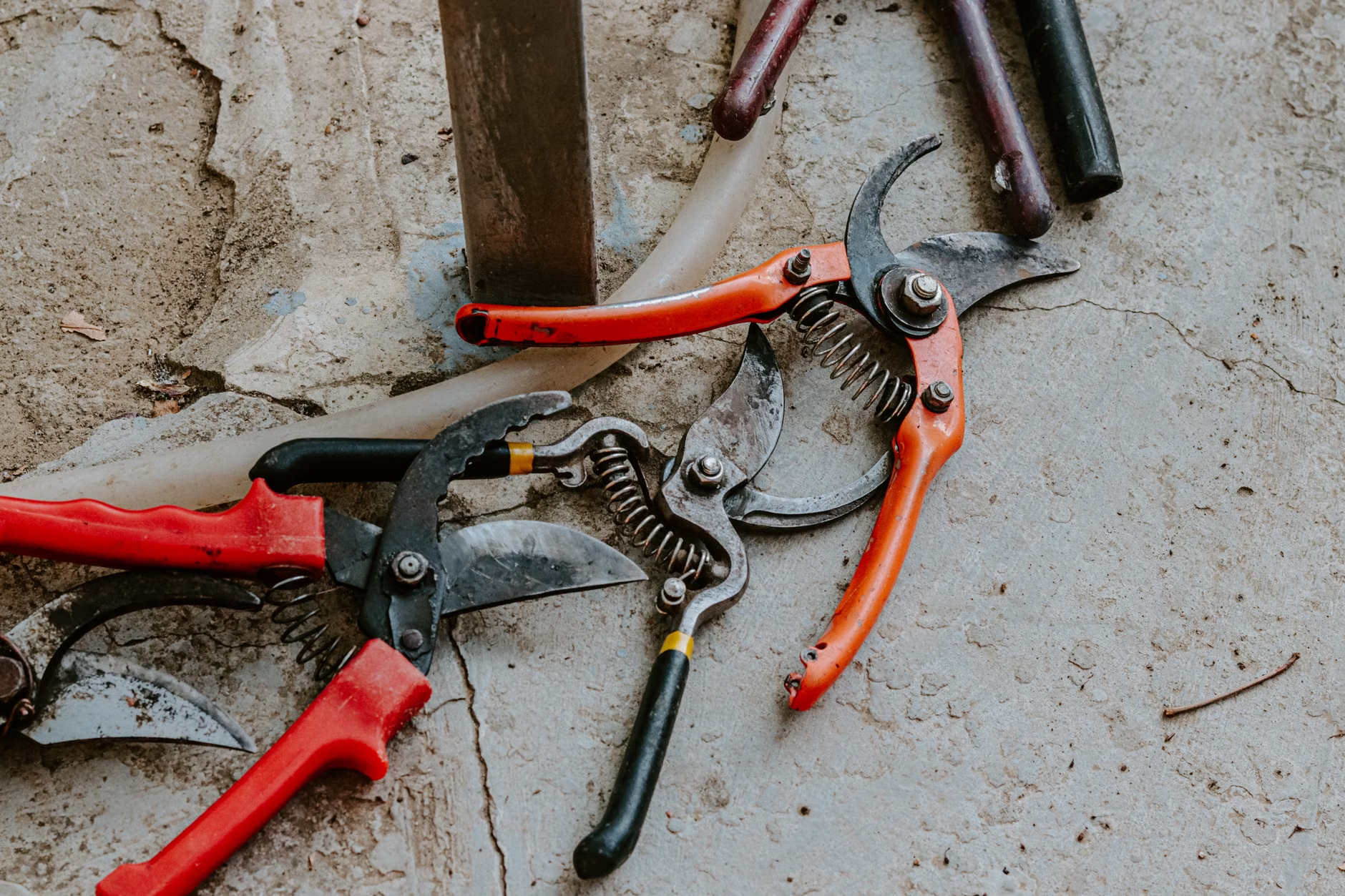
Start with a precision screwdriver set. Most electronics today use tiny Phillips, Torx, or Pentalobe screws. A set that includes a magnetic mat is a lifesaver for keeping track of your hardware. A basic multimeter is your next essential purchase. It allows you to check if a cable is broken or if a battery is truly dead, saving you the hassle of replacing parts that were perfectly fine to begin with.
Finally, consider a basic soldering iron. While it sounds intimidating, basic soldering is a skill that can be learned in an afternoon. It is the difference between throwing away a $200 pair of headphones because of a loose wire and fixing them for the cost of a few cents of solder. It is immensely satisfying to hear that “click” of success when you plug a device back in and see the power light flicker on.
The Long-Term Value of Sustainability
Living in our 30s and 40s often means we are the “sandwich generation.” We are caring for our aging parents while raising our own children. We are acutely aware of the world we are leaving behind. The e-waste crisis is not just a headline; it is a tangible problem involving heavy metals leaking into landfills and precious resources being buried rather than recycled.
By normalizing repair, we shift the culture within our own homes. When your kids see you fixing a broken lamp, they learn that objects have value. They learn that their actions have an impact on the environment. They learn that they are capable of solving problems rather than just consuming products. This is the most enduring legacy of the Repair Café movement—it is about restoring our relationship with the objects that serve us.
It is important to remember that you don’t have to be a tech genius to participate. Most of the volunteers at these events are just like you—people who enjoy tinkering and want to help their neighbors. If you feel nervous, just go as an observer. Watch how they work. Ask if you can help hold a flashlight or sort some screws. You will find that the community is welcoming, patient, and grateful for your presence.
Summary and Encouragement
Repairing your own electronics is a journey from helplessness to empowerment. It starts with a simple search in a directory, leads to a community center on a Saturday morning, and ends with a deeper understanding of how the world around you works. It saves money, reduces waste, and sets a powerful example for the next generation.
Cautions are simple: respect the volunteers, prioritize safety, and accept that not every device can be saved. However, the process itself is always worth the effort. Start small. Find your local Repair Café, bring an item you’ve been meaning to throw away, and see what happens. You might just find that you’re better at fixing things than you ever imagined.
Frequently Asked Questions
- Do I need to pay for repairs at a Repair Café?
Most Repair Cafés operate on a volunteer basis and are free to attend. However, they rely on donations to cover costs like event space rental and shared tool maintenance. It is considered good etiquette to make a small donation if you can. - What kind of electronics can I bring?
Most events accept small household electronics like toasters, lamps, vacuum cleaners, and battery-operated toys. Large appliances like refrigerators or washing machines are usually not accepted due to space and safety constraints. Always check your local group’s specific guidelines before bringing an item. - What if I don’t know anything about electronics?
That is perfectly fine! The entire point of a Repair Café is to learn. The volunteers are there to guide you, not to fix it for you. They will explain the process and help you gain the skills you need to potentially handle the repair yourself next time.
For more information and to find an event near you, visit the official Repair Café International Directory.