Starting in 2026, the way your home communicates with the power grid is undergoing a fundamental shift that will prioritize real-time data exchange, effectively ending the era of passive, “set-it-and-forget-it” electricity billing.
- Real-Time Pricing: Expect your utility bills to reflect the actual cost of electricity at the time of use, not just a flat monthly average.
- Automated Efficiency: Smart appliances and home energy management systems (HEMS) will increasingly automate when your devices run to save you money.
- Grid Participation: Your home will evolve from a simple consumer to a potential “prosumer,” capable of feeding energy back into the grid more efficiently.
If you are in your 30s or 40s, you likely remember a time when the “meter reader” was a person who actually walked around your neighborhood with a clipboard. Then came the first wave of digital meters that transmitted data remotely. But the 2026 shift is different—it is not just about measuring; it is about integration. We are moving toward a bidirectional grid where your home’s energy profile is constantly talking to the utility company’s central nervous system.
For parents juggling school runs, work deadlines, and the endless hum of household appliances, this shift might feel like just another tech headache. However, understanding this change is the best way to keep your utility costs from spiraling as grids become more complex.
Why the Grid Needs a 2026 Upgrade
The global energy grid was originally designed for a one-way street: power plants produced electricity, and homes consumed it. Today, that model is obsolete. With the rise of solar panels, electric vehicles (EVs), and heat pumps, homes are now generating and storing power. The 2026 shift is essentially the grid’s way of catching up to the technology already inside our garages and on our roofs.
The primary driver here is “load balancing.” When everyone gets home at 6:00 PM, plugs in their cars, and turns on the AC, the grid experiences a massive spike in demand. In the past, utilities just built more power plants. Now, they are trying to use software to smooth out these peaks. By incentivizing you—via pricing—to run your dishwasher at 2:00 PM instead of 7:00 PM, the grid stays stable without needing expensive, dirty “peaker” plants.
Think of it like a highway. If everyone tries to merge onto the highway at the exact same second, you get a traffic jam. The new grid system is like a smart traffic light that tells some cars to wait five minutes so that everyone gets to their destination faster and with less frustration. For your home, this means your “smart” meter acts as the traffic controller.
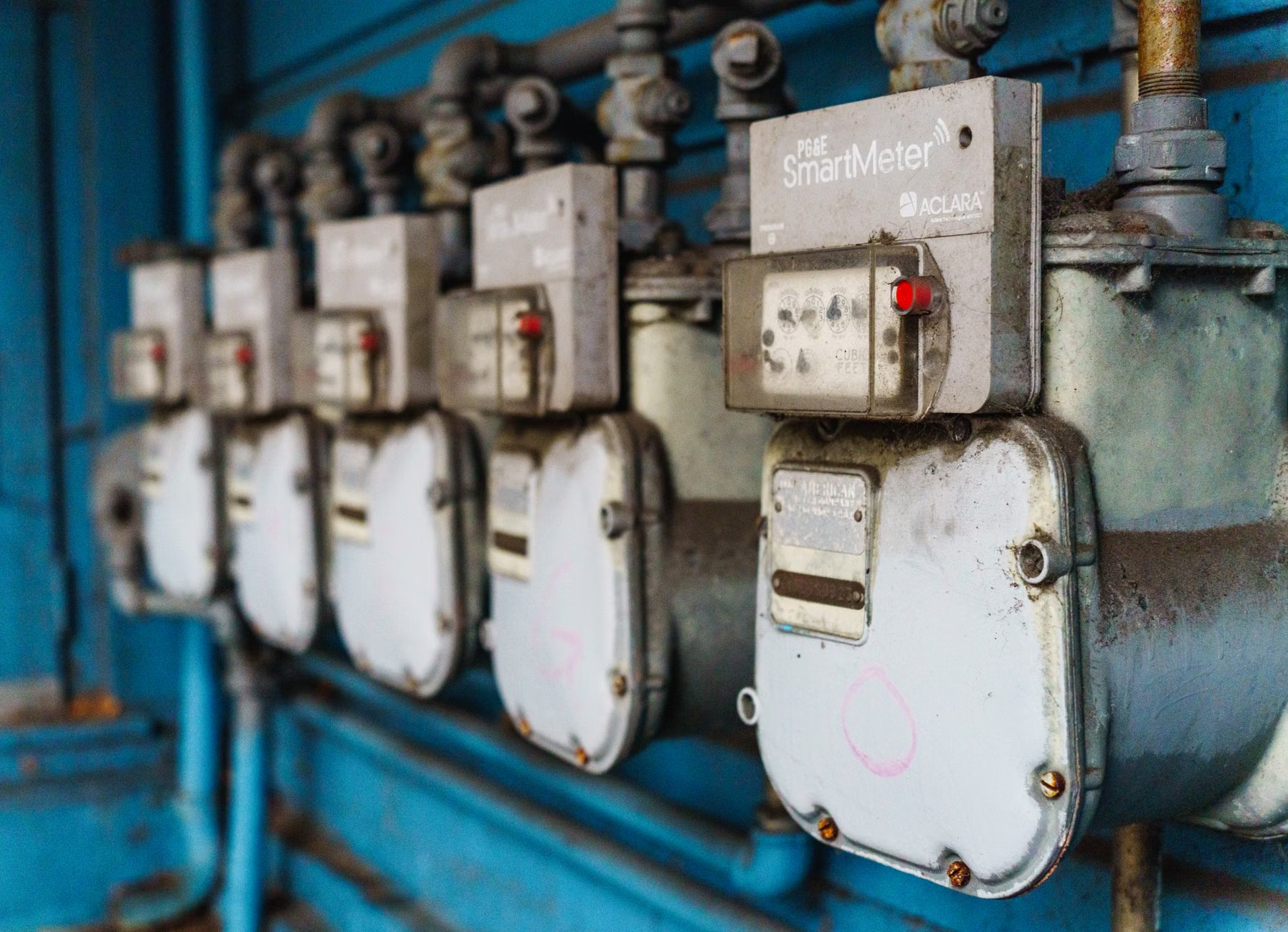
What Changes for Your Monthly Budget?
The most immediate change you will notice is the transition to Time-of-Use (TOU) pricing. Under the old system, you paid a flat rate per kilowatt-hour (kWh). It didn’t matter if you used the dryer at noon or midnight. Under the new grid protocols, electricity will have a “market price” that fluctuates throughout the day.
This is where the math gets interesting. If you aren’t paying attention, your energy bill could rise as you unknowingly use power during “peak” hours when prices are highest. However, if you adapt, you can actually lower your costs by shifting high-energy tasks to “off-peak” hours. This is where the 30-something demographic—often already comfortable with apps and automation—has a massive advantage.
| Activity | Traditional Approach | 2026 Smart Grid Approach |
|---|---|---|
| Laundry/Dishwashing | Run whenever convenient | Delay start until off-peak hours |
| EV Charging | Plug in upon arrival | Automated charge during low-demand |
| HVAC Usage | Manual thermostat adjustment | Grid-responsive smart thermostat |
The key to winning this game isn’t sitting by the meter watching prices; it is automation. You will want to look for appliances that support “delay start” or “smart grid” connectivity. Many modern appliances already have this, but you may not have been using it because your local utility wasn’t offering the right price signals yet. By 2026, those signals will be the standard.
The Evolution of the “Prosumer” Household
If you have solar panels or a home battery system, the 2026 shift is a game-changer. Historically, exporting power back to the grid was a bureaucratic nightmare with “net metering” rates that often felt unfair. The new grid standards are designed to facilitate “peer-to-peer” or more dynamic energy trading.
Imagine your home battery is fully charged from your solar panels by 1:00 PM. Instead of just sitting there, your system can automatically sell that excess power to the grid at the exact moment the local neighborhood needs it most—often when prices are highest. You essentially become a micro-utility. This turns your home infrastructure from a sunk cost into an asset that helps pay for itself over time.
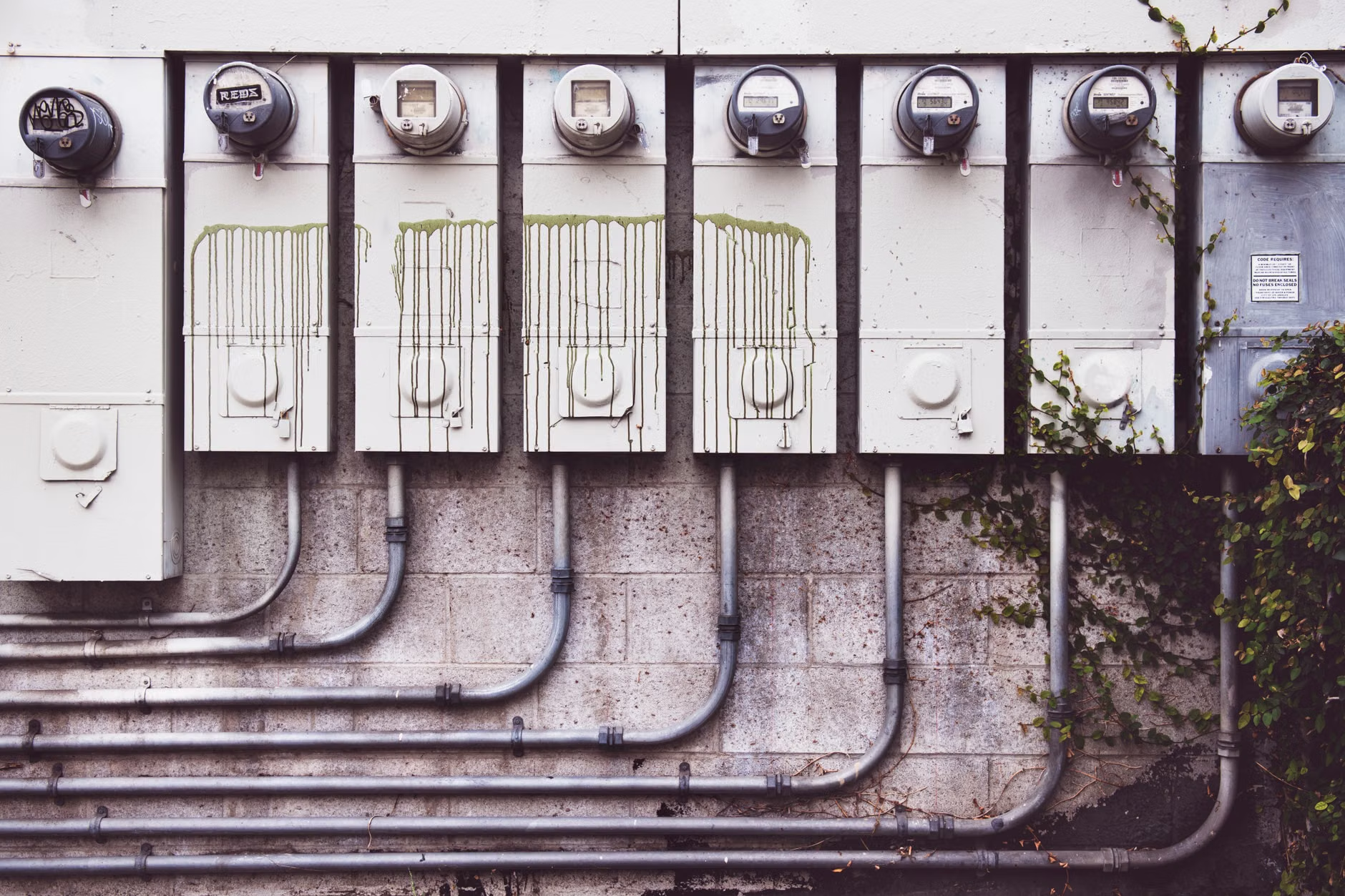
However, there is a caution here: complexity. Managing these systems requires a bit of technical literacy. If you are not a “tech-first” person, look for integrated Home Energy Management Systems (HEMS) that handle the decision-making for you. You don’t need to be an electrical engineer; you just need a system that knows your preferences (e.g., “Always keep my car charged to 80% by 7:00 AM”) and optimizes for cost within those constraints.
Common Pitfalls: What to Avoid During the Transition
As we approach 2026, you will likely see a flood of marketing for “smart” home gadgets. Not all of them are created equal. When upgrading your home, keep these three common mistakes in mind:
- Proprietary Ecosystem Lock-in: Avoid systems that force you to buy only one brand of appliance. Look for “OpenADR” (Automated Demand Response) or “Matter” compatible devices. These are industry standards that ensure your appliances can talk to the grid regardless of who made them.
- Ignoring Data Privacy: Smart meters collect granular data about your life—when you wake up, when you are home, and even when you are using specific appliances. Ensure your utility provider has a clear, transparent privacy policy regarding how this data is used and whether it is shared with third parties.
- Over-Engineering: You do not need every lightbulb in your house to be grid-connected. Start with the “big hitters”—the HVAC, the water heater, and the EV charger. These three items represent the vast majority of your energy consumption. Connecting a toaster is fun, but it won’t move the needle on your monthly budget.
Preparing Your Home for the Future
If you are planning home renovations or appliance replacements in the next 18 months, treat “grid-readiness” as a core requirement. Just as you would check the energy efficiency rating of a new refrigerator, check its smart grid capabilities. Ask the installer: “Is this device compatible with dynamic pricing signals?”

For parents, this transition also offers a great opportunity to teach kids about resource management. Showing your children how the house “decides” to run the dishwasher when the sun is shining, or how we save money by pre-cooling the house before peak hours, makes energy consumption tangible. It moves them from seeing electricity as a magical, invisible force to understanding it as a resource that requires thoughtful usage.
The 2026 shift isn’t about the government or utility companies trying to control your home. It is about creating a more resilient, sustainable infrastructure that can handle the massive increase in electricity demand we are all contributing to. By being proactive, you can ensure that your home remains a comfortable, cost-effective haven even as the world around it gets a lot more digital.
Take a moment this weekend to log into your utility provider’s online portal. Most have already rolled out basic usage graphs. Get familiar with your current baseline. The better you understand your home’s “energy personality” now, the easier it will be to adapt when the grid fully shifts in 2026. You aren’t just paying a bill; you are managing a small power plant. It’s time to start acting like the manager.
Frequently Asked Questions
- Will my privacy be compromised by a smart meter?
Smart meters record energy consumption, not specific activities. While they can identify the “fingerprint” of certain appliances, most utilities are bound by strict data protection regulations. Always review the privacy opt-out options provided by your local utility. - Do I need to replace all my current appliances?
No. You can add “smart” functionality to existing appliances using smart plugs or grid-responsive thermostats. These devices act as a bridge, allowing your older appliances to participate in the new, more efficient grid system. - Will this shift cause my electricity to be shut off during peak times?
Generally, no. The goal of the 2026 grid is to prevent blackouts by incentivizing usage shifts. You remain in control of your home; the system is designed to provide you with financial incentives to change your behavior, not to forcibly shut down your power.
For further reading on national grid standards and upcoming legislative changes regarding energy efficiency, you can visit the International Energy Agency (IEA) or your local government’s energy department portal for region-specific roadmaps.