The most effective way to reduce household clutter and save hundreds of dollars a year is to stop buying tools you will only use once or twice in a decade. By shifting from an ownership model to a community-tool-exchange model, you can access professional-grade equipment while simultaneously reducing the massive environmental footprint associated with manufacturing and discarding underutilized consumer goods.
- Economic Efficiency: You save significant money by borrowing high-cost items like pressure washers or miter saws instead of purchasing them.
- Reduced Waste: Sharing tools prevents the “over-consumption” cycle, where items are produced, shipped, and eventually landfilled after minimal use.
- Community Resilience: Tool libraries foster social cohesion, encouraging neighbors to interact and help each other with home improvement projects.
We have all been there. It is a Saturday morning, the sun is out, and you finally decide to tackle that DIY project you have been putting off for months. You realize you need a specialized tool—perhaps a heavy-duty sander, a tile cutter, or a tall ladder. You head to the local hardware store, spend $150 on a tool you know you will use for exactly three hours, and then drag it home. After the project is finished, that tool spends the next five years gathering dust in the back of your garage, occupying valuable space and eventually becoming obsolete or broken.
This is the “ownership trap.” In our 30s and 40s, we are often juggling careers, childcare, and the endless maintenance of a home. We are sold the idea that we must own every piece of equipment required to maintain our lives. But what if we didn’t? What if your neighborhood functioned like a library, but instead of books, you checked out the equipment needed to build, fix, and maintain your home?
Understanding the Tool-Exchange Philosophy
The concept of a tool library or a community-tool-exchange is grounded in the “sharing economy.” At its core, it challenges the assumption that access to a tool is synonymous with ownership. When you join a community exchange, you pay a small annual fee or contribute your own tools to a central pool. In return, you gain access to a wide inventory of items that would otherwise be prohibitively expensive to own individually.
Think about the last time you needed a carpet cleaner. You likely rented one from a grocery store for a high daily fee, or bought one that now sits in your closet. In a community-tool-exchange, that resource is already there, maintained by the group, and available whenever a member needs it. This model is not just about saving money; it is about reclaiming space. How much of your garage or basement is currently dedicated to “just-in-case” items?
The Environmental Impact of Hyper-Ownership
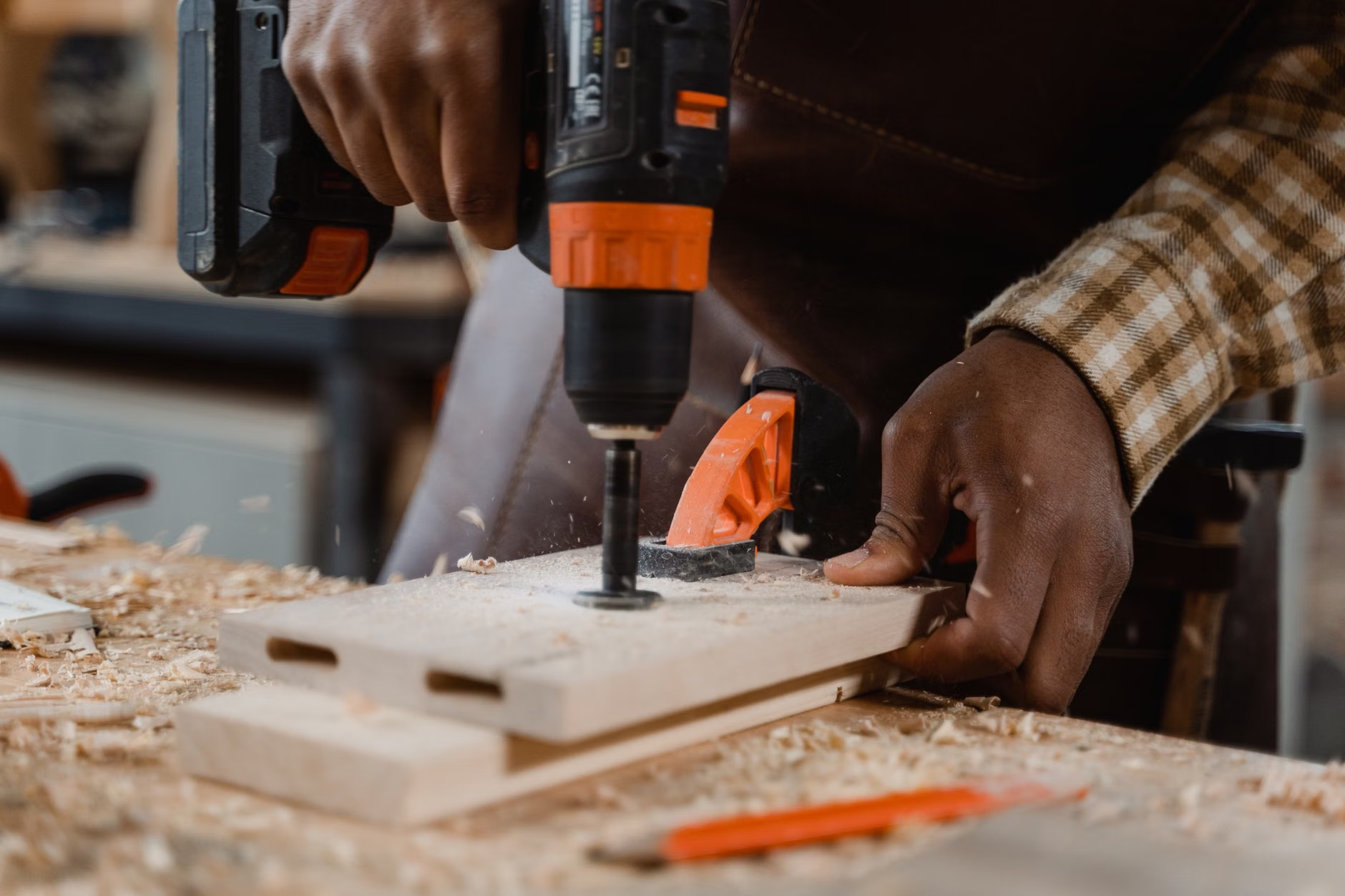
The environmental cost of our current habits is staggering. Every power drill, lawnmower, and leaf blower represents a significant expenditure of carbon, water, and raw materials. When we buy a tool that is used for an average of 15 minutes over its entire lifespan, we are essentially participating in a system of planned obsolescence and waste.
According to various sustainability reports, the manufacturing of home appliances and power tools accounts for a significant portion of household-related emissions. By extending the life of a tool through shared use, we decrease the demand for new production. A single high-quality circular saw shared among 50 households replaces the need for 50 individual, lower-quality saws that would likely end up in a landfill within a decade.
Furthermore, tool libraries often emphasize repair over replacement. Instead of throwing away a drill because a battery is dead, a community library typically has a member or a partner who knows how to fix it. This creates a circular economy right in your backyard, where items are kept in circulation for as long as possible.
How to Start or Join a Tool Exchange
If you are interested in moving away from the ownership model, you don’t necessarily need to wait for a formal organization to exist in your city. Here is a step-by-step breakdown of how to get involved or start your own initiative.
Step 1: Assess Your Local Landscape
Check if there is already a “Tool Library” or “Library of Things” in your city. Many public libraries are expanding their collections to include non-traditional items like baking pans, sewing machines, and power tools. Use search terms like “Tool library near me” or “Community sharing economy [Your City Name].”
Step 2: The Neighborhood Pilot
If no formal library exists, start small. Use a neighborhood app or a group chat to propose a “tool sharing registry.” Create a simple spreadsheet where neighbors can list tools they are willing to lend. Start with high-value, low-frequency items: pressure washers, ladders, tall hedge trimmers, or carpet cleaners.
Step 3: Establishing Ground Rules
To avoid conflicts, you need clear rules. Trust is the currency of the sharing economy, but structure keeps it running smoothly. Here is a recommended framework for any tool-sharing group:
| Rule | Best Practice |
|---|---|
| Maintenance | Borrower must return the tool in the same or better condition. |
| Liability | Use a simple waiver stating the borrower accepts responsibility for safe operation. |
| Duration | Set a maximum loan period (e.g., 48 hours) to ensure availability for others. |
| Communication | Maintain a shared digital calendar or app to track who has what. |

Overcoming the “But What If I Need It?” Anxiety
The biggest hurdle to adopting the tool-exchange model is psychological. We are conditioned to fear the “what if.” What if I need to hang a picture at 2:00 AM? What if I need to prune a branch in an emergency? This is a valid concern, but it is often exaggerated by our own desire for convenience.
In reality, most household projects are planned. You know you are going to paint the bedroom next month. You know you will need to pressure wash the deck before the summer party. Because these tasks are planned, you can schedule your “borrowing” time. For the rare, true emergency, most neighborhoods have at least one person who is happy to help, which brings us to the social aspect of this model.
Sharing tools creates a social safety net. When you borrow a tool, you might chat with your neighbor. You might learn a better way to complete your project. You might even find a mentor for your home improvement skills. This social dividend is something you never get from a big-box hardware store.
Managing the Risks: Liability and Maintenance
One of the most common questions about tool sharing is: “What if it breaks?” This is a legitimate concern. If you borrow a neighbor’s expensive miter saw and it stops working, the situation can become awkward. This is why formalizing the process is crucial, even in informal settings.
For larger, community-run libraries, they often carry insurance to cover equipment damage. For smaller, neighborhood-based exchanges, the best policy is “you break it, you pay to fix it or replace it.” It is a simple, fair rule that keeps everyone accountable. Always inspect tools together during the handover. Take a quick photo of the tool’s condition before it leaves the owner’s possession. This creates a baseline and prevents “he said, she said” scenarios.
Also, consider the quality of the items being shared. Don’t share tools that are already on their last legs. If a tool is a safety hazard, it should be retired, not passed around. The goal is to provide reliable access to good equipment, not to create a dumping ground for broken junk.
The Future of Household Consumption
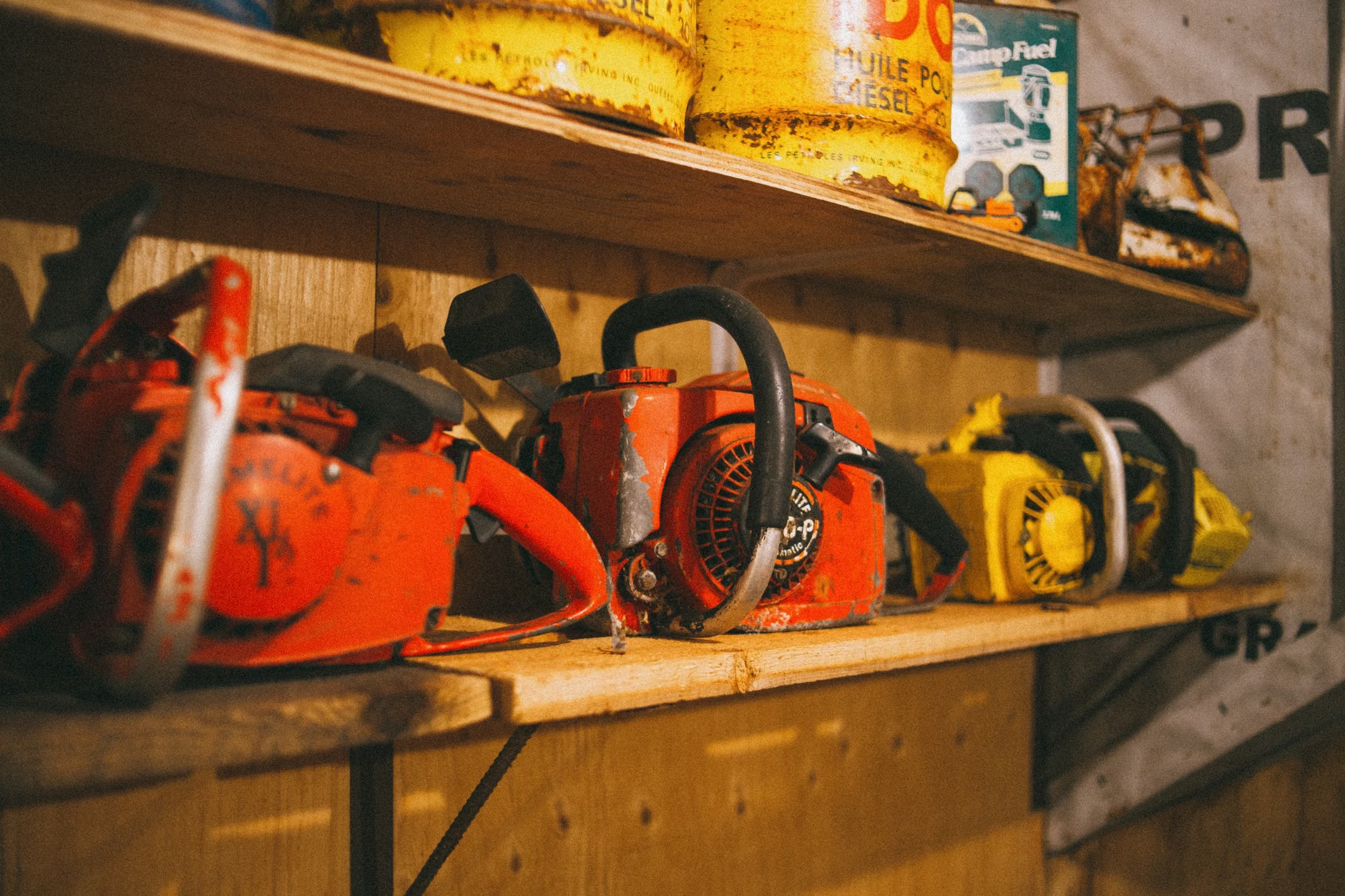
We are currently seeing a global shift in how families approach consumption. The “buy-it-all” mentality of the 1990s and early 2000s is losing its appeal, largely because we have run out of space and patience for stuff that doesn’t add genuine value to our lives. The rise of the “Library of Things” movement is a direct response to this.
As we navigate our 30s and 40s, we are in a unique position to drive this change. We have the community roots, the home-owning responsibilities, and the desire to live more sustainably. By opting into a tool-exchange model, we are not just saving money; we are modeling a different way of living for our children. We are showing them that community, resourcefulness, and environmental stewardship are more valuable than individual accumulation.
Start by looking around your own garage. Identify three items you haven’t touched in over a year. Ask yourself if you really need to own them, or if you could simply borrow them the next time you need them. Then, reach out to a neighbor. It might feel a bit awkward at first, but you will likely find that they are just as tired of their own clutter as you are.
Practical Tips for Sustaining a Tool Exchange
If you have successfully kicked off a local exchange, the challenge shifts from starting to sustaining. Many groups fail because they lack consistency. Here are a few ways to keep the momentum going:
- Centralized Inventory: Even a simple Google Sheet or a free app like “Library of Things” software can track who has what. Without a tracking system, tools have a habit of disappearing into the “black hole” of someone’s basement.
- Regular Check-ins: Host a seasonal “tool swap” or maintenance day. This is a great excuse to get people together, clean the tools, and perform necessary safety checks.
- Transparency: If a tool is lost or broken, be honest. A culture of accountability is what keeps the system functioning. If people feel like they can hide a mistake, the trust will erode quickly.
- Education: If you are sharing complex tools, include a laminated “quick-start guide” or a QR code linking to a YouTube video on how to use it safely. This prevents user error and keeps the equipment in good shape.
By treating your neighborhood’s collective resources with the same care as your own, you transform a simple tool-sharing arrangement into a robust, resilient system that benefits everyone. It is a small change in behavior that leads to a massive reduction in household stress and waste.
It is important to be realistic—not every tool-sharing experience is perfect. You will encounter challenges, but they are usually manageable if you have a plan. Here are three common issues and how to solve them:
- The “Hoarder” Neighbor: Someone might keep a tool for weeks “just in case.” Address this early with a clear policy on loan durations. Use a simple reminder system—a text message 24 hours before the due date is usually enough to prompt a return.
- Safety Concerns: If someone is injured using a borrowed tool, it can be a nightmare. Always emphasize that users must read the manual and use appropriate protective gear (like goggles or gloves). If a tool is inherently dangerous or requires professional training, perhaps leave it out of the library.
- Quality Disputes: If a tool comes back dirty or slightly damaged, address it calmly. Focus on the solution (cleaning or repairing) rather than blame. Most people are genuinely apologetic and want to make it right.
Remember that the goal is to build a community, not a rigid bureaucracy. Keep the atmosphere friendly and collaborative. If someone is consistently problematic, they can simply be asked to stop participating. The social pressure of a local group is usually enough to keep things running smoothly.
As you move forward, keep an eye on local policies. Some cities are starting to offer grants or space for community-sharing initiatives. It is becoming a recognized part of urban planning and sustainability strategies. You might find that your local council is willing to support your effort if you can demonstrate the benefit to the community.
Final Thoughts
Transitioning away from the “I must own everything” mindset is liberating. It frees up your physical space, your mental bandwidth, and your budget. The community-tool-exchange model is a practical, grounded way to participate in a more sustainable future without making radical lifestyle changes. It is simply about being smarter with what we have and kinder to the environment we live in.
Take that first step today. It could be as small as asking a neighbor if you can borrow their drill, or as big as starting a spreadsheet for your street. Either way, you are moving in the right direction. Just remember: it’s not about the tool; it’s about the project, the connection, and the space you gain by letting go of the excess.
Frequently Asked Questions
1. How do I handle liability if someone gets hurt using a shared tool?
Liability is a common concern. In informal neighborhood groups, it is best to have a clear “at your own risk” understanding. For more formal organizations, most carry liability insurance. Always emphasize safety, provide manuals, and ensure tools are in good working order before they are shared.
2. What is the best way to track who has which tool?
For small groups, a shared Google Sheet or a dedicated app like “Library of Things” works well. The key is to have a single “source of truth” that everyone can access and update in real-time. Make sure someone is designated as the “inventory manager” to keep things organized.
3. How do I convince skeptical neighbors to join?
Focus on the benefits: saving money, clearing out their own garage space, and having access to high-quality tools they wouldn’t otherwise buy. Frame it as a way to make home improvement projects easier and more affordable for everyone. Once they see the value, they will likely want to be involved.
For further research on the sharing economy and tool libraries, you can visit the Local Tools directory or check your regional government’s environmental department website for community sustainability grants.