The secret to fostering a growth mindset in children isn’t found in expensive, high-tech gadgets that do the work for them; it is found in choosing toys that require effort, trial, and error.
Key Takeaways
- Focus on Process, Not Product: Prioritize toys that emphasize the how of building or solving, rather than toys with a single, predetermined outcome.
- Embrace “Desirable Difficulties”: Toys that cause minor frustration—like complex puzzles or building sets—are actually the most effective tools for building cognitive resilience.
- Curate, Don’t Overwhelm: A smaller, rotating selection of high-quality, open-ended toys is more effective for developing focus and persistence than a massive, cluttered toy box.
We have all been there. It is a rainy Saturday, the living room is covered in plastic, and your child is bored—despite being surrounded by hundreds of dollars worth of battery-operated toys. The blinking lights have stopped blinking, the pre-recorded songs have become background noise, and the “fun” has evaporated because the toy didn’t require anything from them other than a button press.
As parents in our 30s and 40s, we are constantly bombarded with marketing for the “next big thing” in developmental play. But if we look at the research—and our own observations—we start to see a pattern. The toys that keep our children engaged for hours, the ones that actually help them develop persistence, are almost always the ones that ask them to work for their reward. This is the essence of a “growth-mindset” toy box.
What Exactly Is a Growth-Mindset Toy?
When psychologist Carol Dweck introduced the term “growth mindset,” she was referring to the belief that abilities can be developed through dedication and hard work. In the context of play, a growth-mindset toy is one that does not guarantee success. It allows for failure, encourages experimentation, and rewards the process of trying again.
Most modern toys fall into the “fixed” category. Think of a shape-sorter that only allows the triangle to fit in the triangle hole, or a screen-based game that flashes “You Win!” every thirty seconds. These are fun, but they don’t teach grit. Grit is the ability to maintain interest and effort toward long-term goals. To build that muscle, a child needs to encounter a problem they can’t solve immediately.
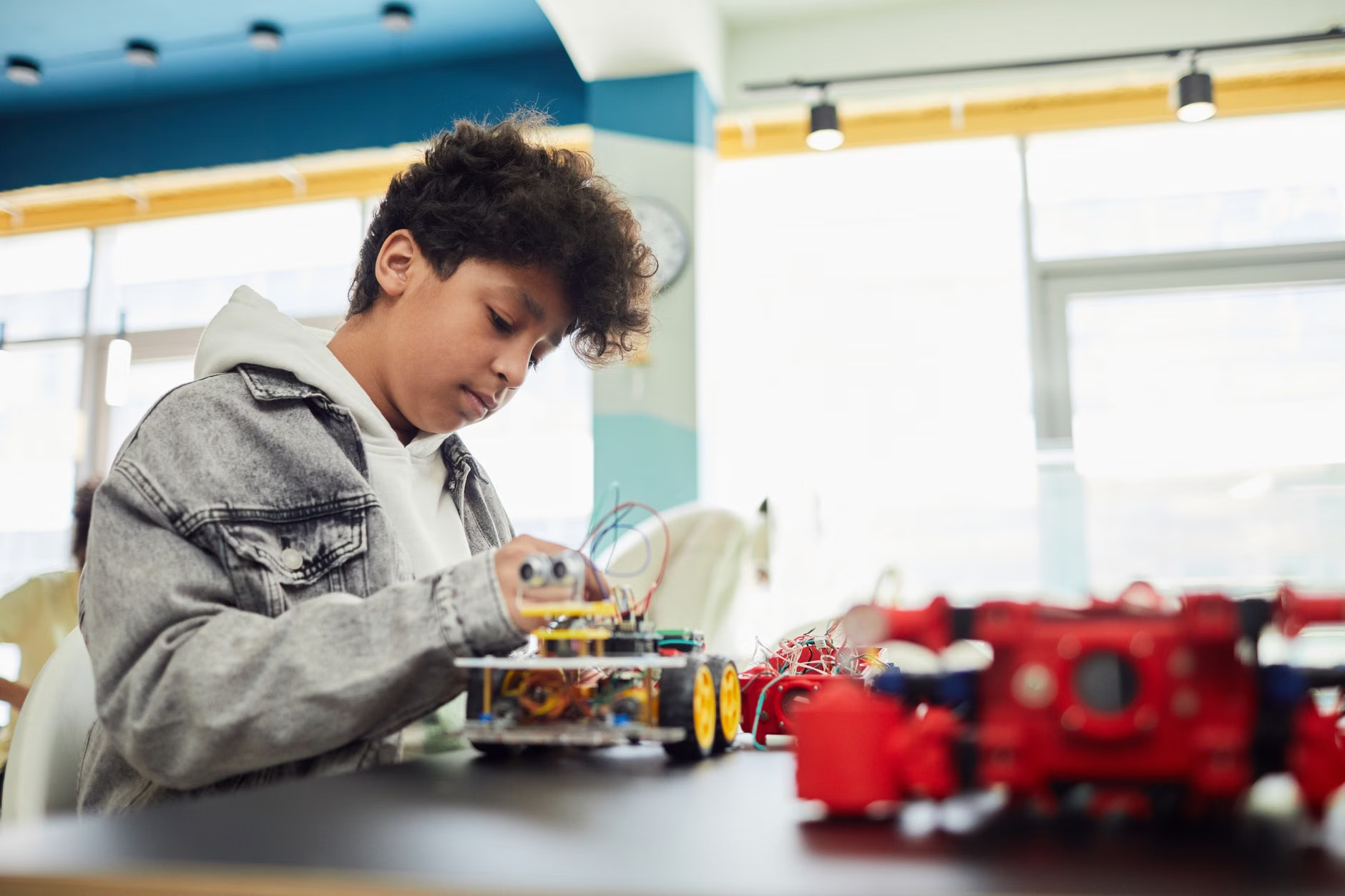
A growth-mindset toy essentially acts as a “productive struggle” partner. It is a tool that introduces a challenge, provides clear feedback when something doesn’t work, and invites the child to troubleshoot. Whether it’s a gravity-defying marble run or a set of complex magnetic tiles, these playthings turn the act of “failing” into a necessary step toward “succeeding.”
The Anatomy of a High-Persistence Playroom
You don’t need to replace everything in your house. Instead, think about the characteristics of the toys you introduce. When you are looking to add to your collection, ask yourself these three questions: Does this toy have a single solution? Does it provide instant gratification? Does it require active engagement?
If the answer to the first two is “yes,” it’s likely a toy that will be abandoned quickly. If the answer to the third is “no,” it’s a passive toy. We want to aim for the opposite. Here is a breakdown of the categories that foster persistence:
| Category | Why It Builds Persistence | Example |
|---|---|---|
| Construction Sets | Requires structural planning and physical trial and error. | Wooden blocks, magnetic tiles, gear sets. |
| Logic & Strategy Games | Forces the child to think ahead and adjust tactics after a loss. | Chess, complex card games, logic puzzles. |
| Open-Ended Art Materials | Focuses on the creation process without a “right” result. | Modeling clay, high-quality sketchbooks, watercolors. |
| Real-World Tools | Mimics adult tasks that require patience and precision. | Child-safe woodworking kits, gardening tools. |
The Power of “Open-Ended” Play
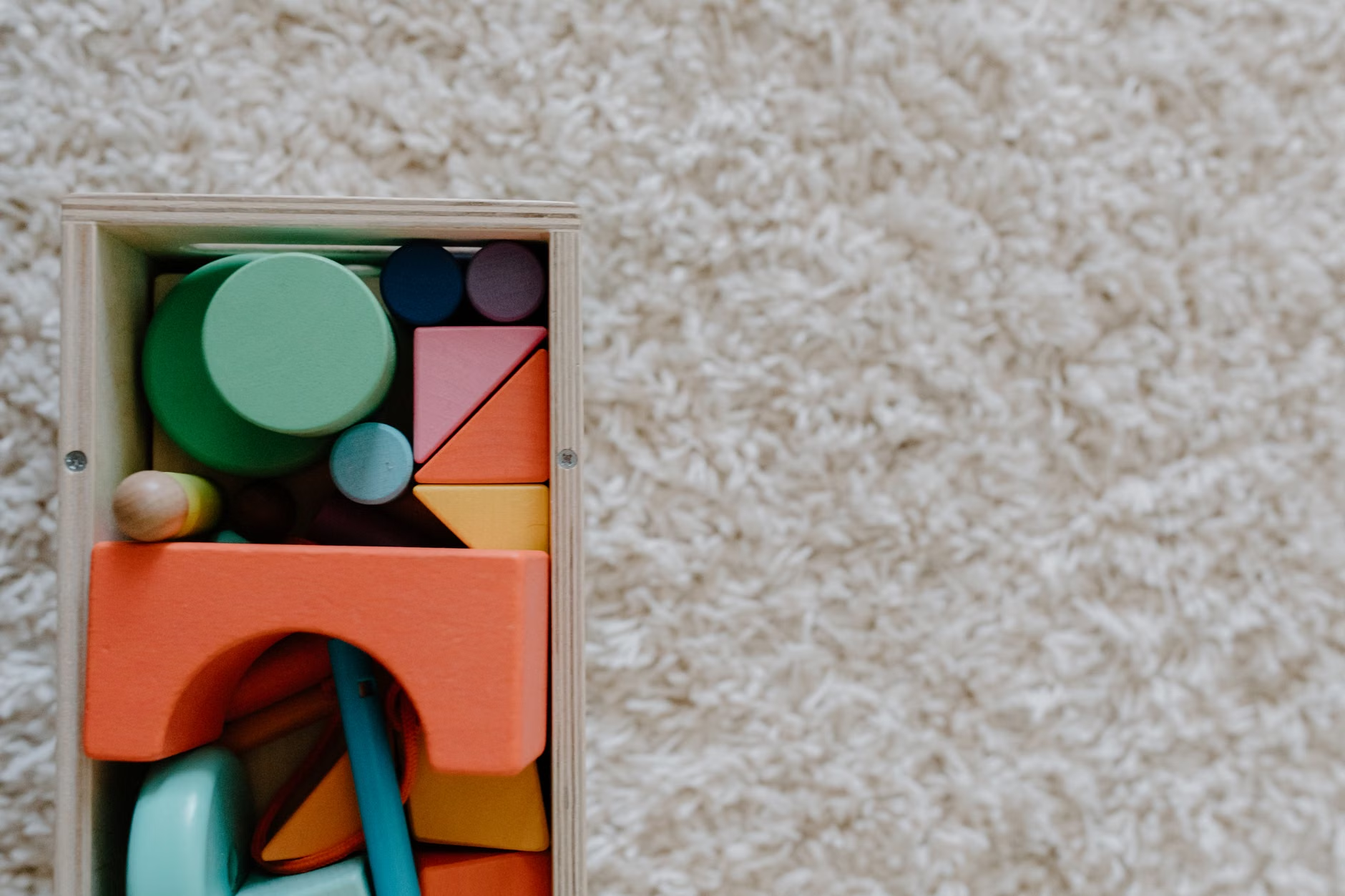
Open-ended toys—those that don’t have a rigid set of instructions—are the gold standard for growth-mindset development. When a child has a set of unit blocks, they aren’t just stacking wood. They are testing physics. They are learning that if they place a block too far to the left, the tower topples.
In that moment of toppling, a choice is made. A child with a fixed mindset might cry and walk away, thinking, “I’m bad at this.” A child encouraged to have a growth mindset sees the topple as data. They think, “Oh, that was too heavy. I need to balance it better.” That shift in internal dialogue is exactly what we are trying to cultivate.
Curating Your Toy Box: Less Is Actually More
One of the biggest hurdles for modern parents is the sheer volume of toys. When a child is presented with a mountain of toys, they often struggle with “decision paralysis.” They move from one toy to the next, barely scratching the surface of what any of them can do. This is the enemy of deep work and persistence.
Implementing a “toy rotation” system is one of the most effective ways to encourage persistence. By keeping only a small selection of toys out at any given time—and storing the rest in a closet or basement—you force the child to go deeper with what is available. When there are only four types of toys in the room, they are much more likely to spend an hour building a complex marble run rather than playing with a toy for five minutes and then casting it aside.
Beyond rotation, consider the “complexity gradient.” You want to provide toys that are slightly above the child’s current skill level. This is often referred to as the “Zone of Proximal Development.” If a task is too easy, the child becomes bored. If it is too hard, they become anxious and give up. A growth-mindset toy box should always have a few items that are just slightly challenging, providing that “sweet spot” where learning happens.
Common Pitfalls: What to Avoid
Even with the best intentions, it is easy to accidentally undermine a growth mindset. Here are a few common traps to watch out for:
- Over-Assisting: When we see our child struggling with a difficult puzzle, the urge to “just fix it for them” is overwhelming. Resist this. If you solve it for them, you rob them of the dopamine hit that comes from solving it themselves. Instead, offer a guiding question: “I wonder if that piece would fit better if you turned it around?”
- Over-Praising Talent: It’s tempting to say, “You’re so smart at puzzles!” But research shows that praising intelligence can actually make kids more afraid of failure. Instead, praise the effort: “I saw how hard you worked on that corner piece, and you didn’t give up even when it was tricky.”
- The “Win-at-All-Costs” Mentality: If you are playing a board game with your child and you let them win every time, you are teaching them that the goal of play is the victory, not the engagement. It is okay to let them lose occasionally, provided you model how to handle frustration gracefully.
The Role of the Adult in the Playroom
You might be thinking, “I don’t have time to sit and supervise every moment of play.” And you shouldn’t! The beauty of a well-curated toy box is that it encourages independent play. However, your role is as the “curator” and the “observer.”
When you do engage, use your time to model the growth mindset. If you are building something together, make mistakes on purpose. Say things like, “Oops, that didn’t work. Let me try a different approach.” By showing your child that you are also a learner who makes mistakes, you normalize the process of trial and error.
Furthermore, observe what captures their interest. If they are consistently drawn to gears, maybe you don’t need more blocks; maybe you need more mechanical toys that allow them to explore how things move. Your observations should dictate the evolution of the toy box over time.
Building Resilience Through Games
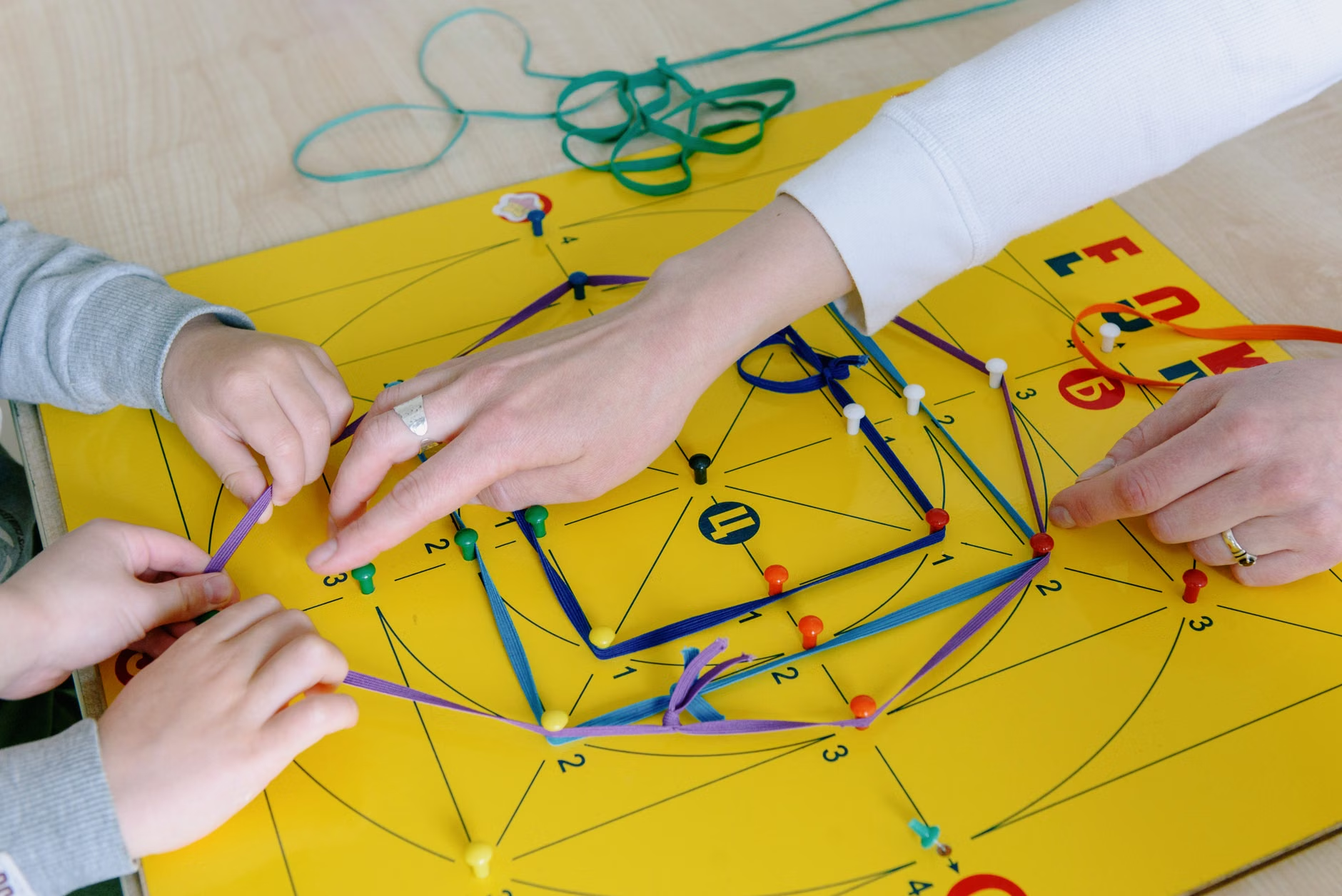
Board games are perhaps the most underrated tool for teaching persistence. In a digital game, the computer handles all the logic. In a board game, the child has to manage the pieces, remember the rules, and—crucially—deal with the outcome of their decisions.
For younger children, cooperative games where everyone works together to beat the board are a fantastic starting point. They teach that the “problem” is external, and the “team” is the solution. As they get older, transition into competitive games. The goal here isn’t to be a harsh opponent, but to show them that losing is just a part of the game, and that with practice, they can improve their strategy for the next round.
Remember that persistence is a muscle. It isn’t something a child is born with; it is something they build by choosing to stick with a task when it gets hard. By curating a box of toys that are inherently challenging, we are creating a training ground for the real world, where the ability to persevere in the face of difficulty is perhaps the most important skill of all.
Practical Steps to Start Your Growth-Mindset Toy Box Today
If you feel overwhelmed by the current state of your toy collection, don’t try to change it all in one afternoon. Follow this step-by-step approach:
- The Audit: Take a weekend to sort through all toys. Remove anything broken, missing pieces, or that has been ignored for more than six months. Put these in a “maybe” bin.
- The Categorization: Sort the remaining toys into two piles: “Fixed/Passive” (battery-operated, single-use, screen-based) and “Open-Ended/Constructive” (blocks, art supplies, puzzles, board games).
- The Rotation Setup: Take the “Open-Ended” items and divide them into three or four groups. Put one group in the toy box and store the others. Rotate them every two to four weeks.
- The “Maybe” Bin Strategy: Keep the “maybe” bin out of sight for a month. If your child doesn’t ask for any of those items, you can safely donate them. You will likely find they don’t miss them at all.
- Future Purchases: Establish a “one-in, one-out” rule. Before buying a new toy, ask if it adds a new type of challenge or skill that isn’t already covered in your current rotation.
Reflecting on the Journey
As you shift your perspective on what constitutes a “good” toy, you might find that your own relationship with your child’s play changes. You may find yourself less stressed about the “educational value” of a toy and more focused on the engagement value. When you see your child hunched over a project, brows furrowed in deep concentration, you’ll know you’ve done your job.
This isn’t about creating a perfect, minimalist aesthetic. It’s about creating an environment where your child feels safe to fail, encouraged to try, and empowered to solve their own problems. It is about providing the tools that allow them to discover that they are capable of doing hard things. And really, isn’t that the most important lesson we can pass on?
Take it slow. The goal is to create a sustainable habit of engagement, not to overhaul your home in a day. Start with one shelf, one box, or even just one game that you play together this weekend. You will be surprised at how quickly the “I can’t” turns into “I’ll try again.”
Frequently Asked Questions
How do I know if a toy is “too hard” for my child?
If a child repeatedly throws the toy in anger or completely ignores it for weeks, it is likely outside their current skill level. Try putting it away for a few months and reintroducing it later, or sit down and play with it alongside them to bridge the gap.
Is there a place for “fun” toys that don’t teach anything?
Absolutely. Play is meant to be fun! The goal isn’t to turn every single moment into a lesson. However, by balancing your toy box with a majority of growth-mindset tools, you ensure that the “fun” in your home is also building essential character traits like resilience and patience.
How do I handle the “I’m bored” complaint when they have fewer toys?
Boredom is the precursor to creativity. When a child says they are bored, try not to immediately suggest an activity or offer a new toy. Instead, say, “I wonder what you can create with these blocks today?” or simply acknowledge it: “It is a quiet day. Let’s see what you come up with.” Often, the most imaginative play happens once the initial discomfort of boredom passes.
For further reading on the science of play and development, you may find these resources helpful: