The most effective way to eliminate toy clutter is not to buy better storage bins, but to drastically reduce the number of toys accessible to your children at any given time through a systematic rotation.
- Less is more: Reducing the number of available toys increases the depth of play and lowers the overwhelm for both children and parents.
- The System: A rotation requires three components: active play bins, hidden storage, and a consistent schedule for swapping items.
- Developmental Benefits: Rotating toys helps children master specific skills by removing distractions and encouraging focus.
If you have ever stepped on a rogue plastic building block in the dark, or spent an hour tidying up a living room that looks exactly the same five minutes later, you know the specific brand of exhaustion that comes with modern parenting. We live in an era where toys are inexpensive, plentiful, and often marketed as essential for development. Yet, the reality is often the opposite: when kids have too many choices, they struggle to make any choice at all. This is often referred to as the “choice paradox,” where an abundance of options leads to decision paralysis and shorter attention spans.
Why Your Living Room Feels Like a Toy Store Warehouse
The accumulation of toys is rarely a conscious choice; it happens by stealth. It starts with a few gifts, then a few more, then the hand-me-downs from well-meaning friends, and suddenly, you are living in a sea of primary-colored plastic. For parents in their 30s and 40s, this environment is not just an aesthetic issue—it is a cognitive load issue. Research into environmental psychology suggests that physical clutter competes for our attention. When your child is surrounded by dozens of stimuli, their ability to engage in “deep work”—or in their case, deep play—is significantly diminished.
The minimalist toy rotation is a strategy used by educators, particularly those in the Montessori and Waldorf traditions, to create an environment that supports, rather than distracts, the child. By limiting the number of toys, you are not depriving your child; you are curating their experience. You are shifting the focus from quantity to quality. When a child has five high-quality toys to choose from rather than fifty, they are more likely to explore the nuances of those items, build more complex structures, and engage in imaginative play for longer stretches.
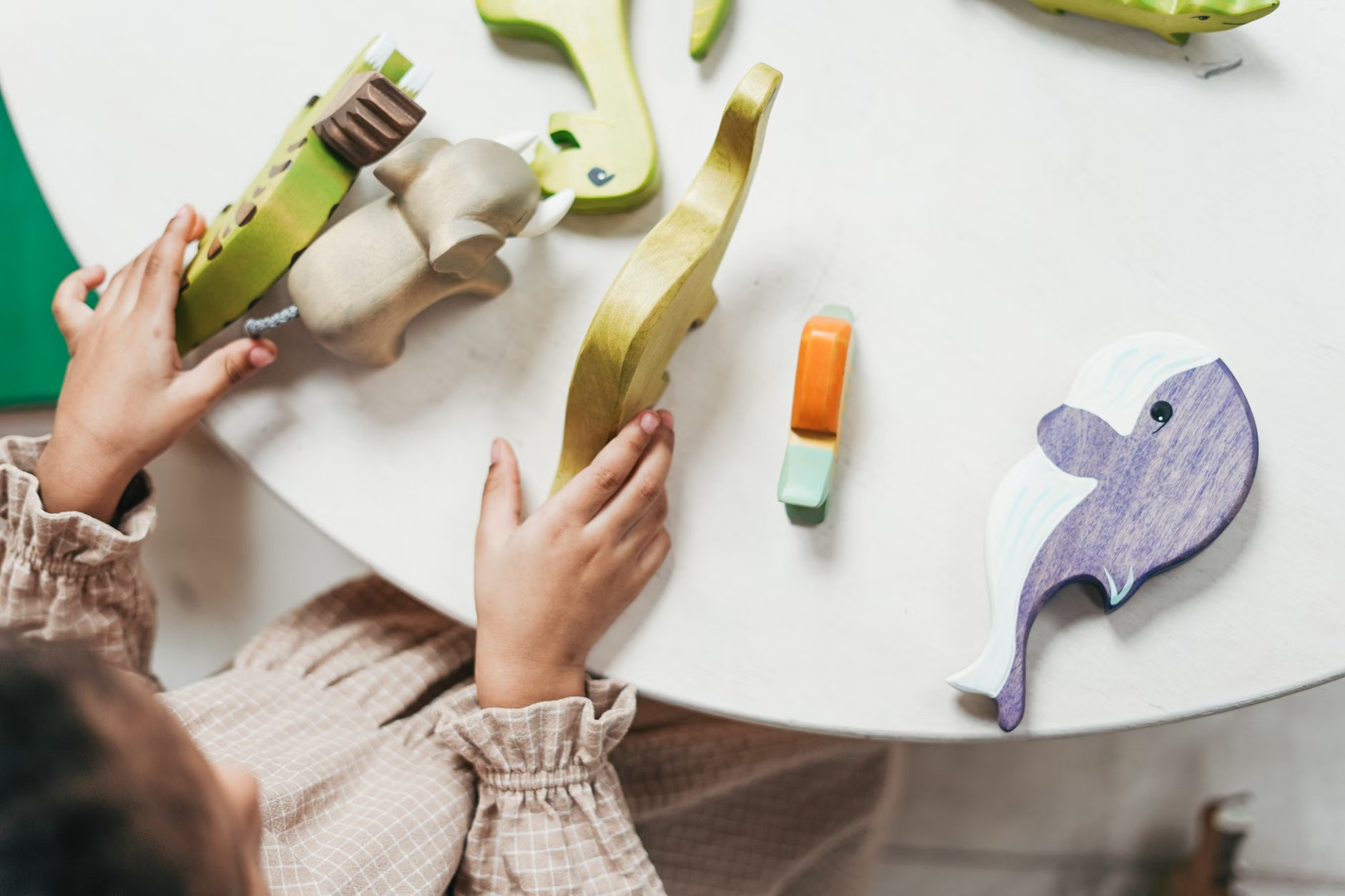
The Mechanics of a Successful Rotation System
To implement this successfully, you need a system that is sustainable. If the rotation is too complicated, you will stop doing it after two weeks. The goal is to move from “reactive cleaning” (stuffing things into bins) to “intentional management.”
Step 1: The Great Purge
Before you can rotate, you must audit. Take every single toy out of every closet, drawer, and bin. Yes, all of them. Spread them out on the floor. Group them into categories: building, pretend play, art, sensory, and puzzles. As you do this, be ruthless. If a toy is broken, missing pieces, or is something your child has clearly outgrown, it needs to go. This is not about being cold; it is about respecting the space you live in.
Step 2: Define Your “Active” Limit
There is no magic number, but a good rule of thumb is to aim for 10 to 15 items per child. This sounds incredibly low to most parents, but remember: we are talking about toys that are out. You will have several bins in storage that you will swap in later. If you have multiple children, you can have a “shared bin” and individual bins for age-appropriate items. The key is to keep the floor surface mostly clear.
Step 3: The Storage Strategy
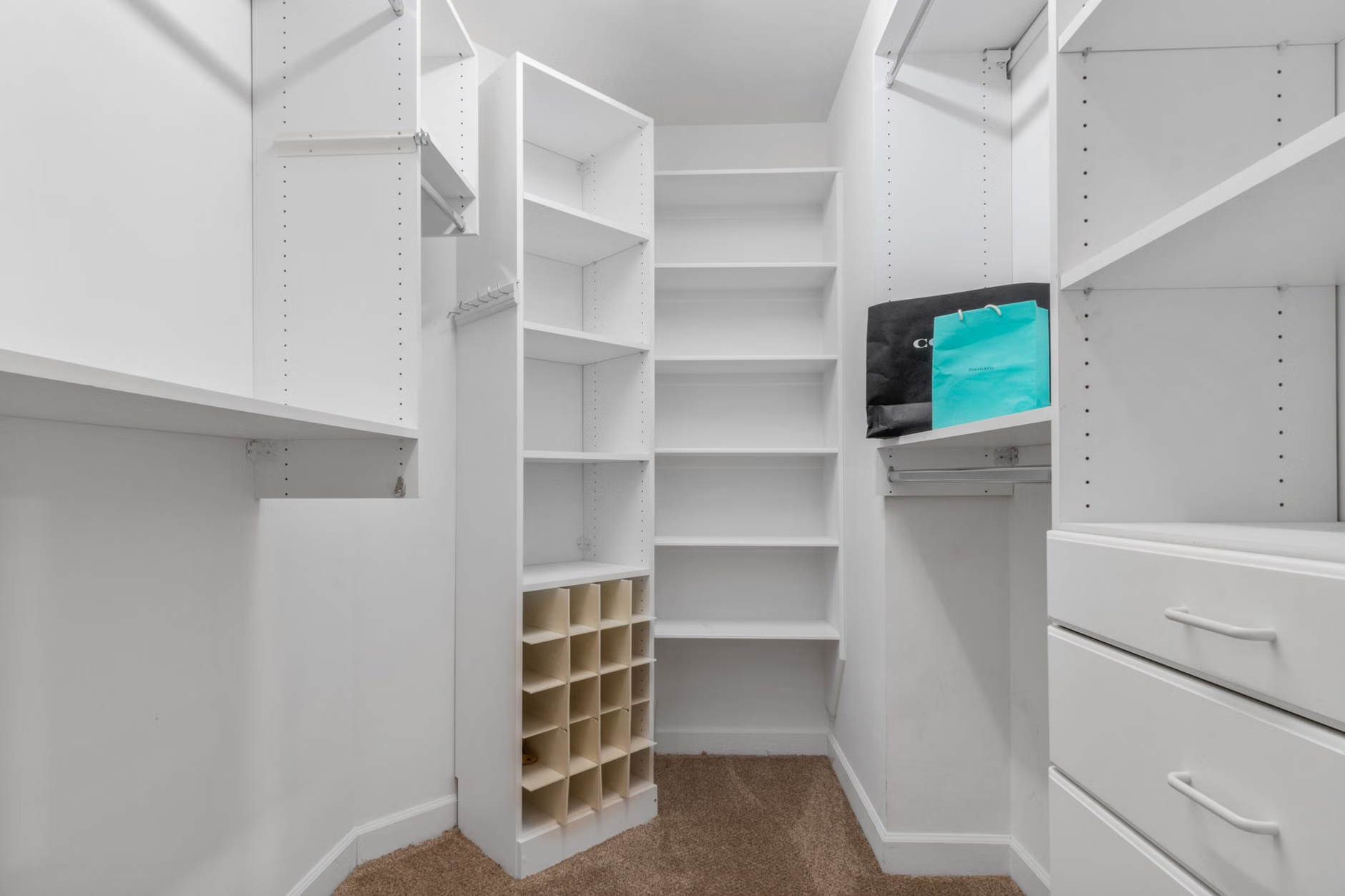
You need a place to hide the “inactive” toys. This could be the top shelf of a closet, an opaque bin under a bed, or a garage shelf. The toys in storage must be out of sight. If the child can see the bins, they will ask for them, which defeats the purpose of the rotation. Use opaque bins to ensure that the “out of sight, out of mind” principle holds true.
| Category | Selection Criteria | Frequency of Rotation |
|---|---|---|
| Building Blocks/LEGO | Keeps focus on spatial reasoning | Every 2-4 weeks |
| Pretend Play/Figurines | Encourages narrative development | Every 2-4 weeks |
| Puzzles/Games | Challenges cognitive progression | Every 1-2 weeks |
| Art Supplies | Requires supervision/mess management | As needed |
Managing the Emotional Aspect of Decluttering
One of the biggest hurdles in starting a toy rotation is the fear that your child will be upset. “But they love that toy!” you might think. It is helpful to realize that children often form attachments to toys out of habit rather than genuine interest. When you rotate a toy out, you are not throwing it away. You are giving it a “vacation.” When that toy returns to the shelf a month later, it is often greeted with the same enthusiasm as a new gift.
If your child is old enough, involve them in the process. Frame it as “putting the toys to sleep” or “giving them a rest.” This teaches them that items have value and that taking care of them—which includes keeping them organized—is part of the process of playing. If you have a toddler, do the rotation during nap time or after they go to bed. The surprise of a “new” toy set in the morning can be a powerful tool for a smooth start to the day.
Common Pitfalls and How to Avoid Them
Even with the best intentions, parents often run into specific roadblocks. The most common is the “creeping clutter” effect, where new toys enter the house faster than the old ones leave. To combat this, consider implementing a “one-in, one-out” policy for new arrivals. If a birthday or holiday brings in new items, have your child pick an equal number of toys to donate or store away.
Another pitfall is the lack of a schedule. If you wait for the house to look like a disaster before you rotate, the system will fail. Set a recurring reminder on your phone. Whether it is every two weeks or once a month, make it a non-negotiable part of your home maintenance. Treat it like doing the laundry or taking out the trash—it is just part of the workflow of running a household.
Also, beware of the “accessory trap.” Many modern toys come with hundreds of tiny, loose pieces. If a toy requires 40 different small parts to work, it is a recipe for a mess. Consider storing these “high-maintenance” toys in a specific way, or keeping them out of the rotation entirely if they consistently result in frustration for you and your child.
The Long-Term Impact on Family Life
Minimalism is not about living in a sterile, white box. It is about creating space for the things that actually matter. When your home is not overrun with plastic, you spend less time cleaning and more time interacting. You might find that your children become more creative. Without the constant influx of new things, they learn to repurpose items. A cardboard box becomes a spaceship; a blanket becomes a fort. This kind of play is the foundation of critical thinking and problem-solving.
By curating the environment, you are modeling a lifestyle of intentionality. You are showing your children that happiness does not come from the volume of possessions, but from the depth of engagement. As they grow older, this lesson will become even more relevant. A child who learns to appreciate what they have is a child who is less susceptible to the constant pressure of consumerism later in life.
Practical Tips for Small Spaces
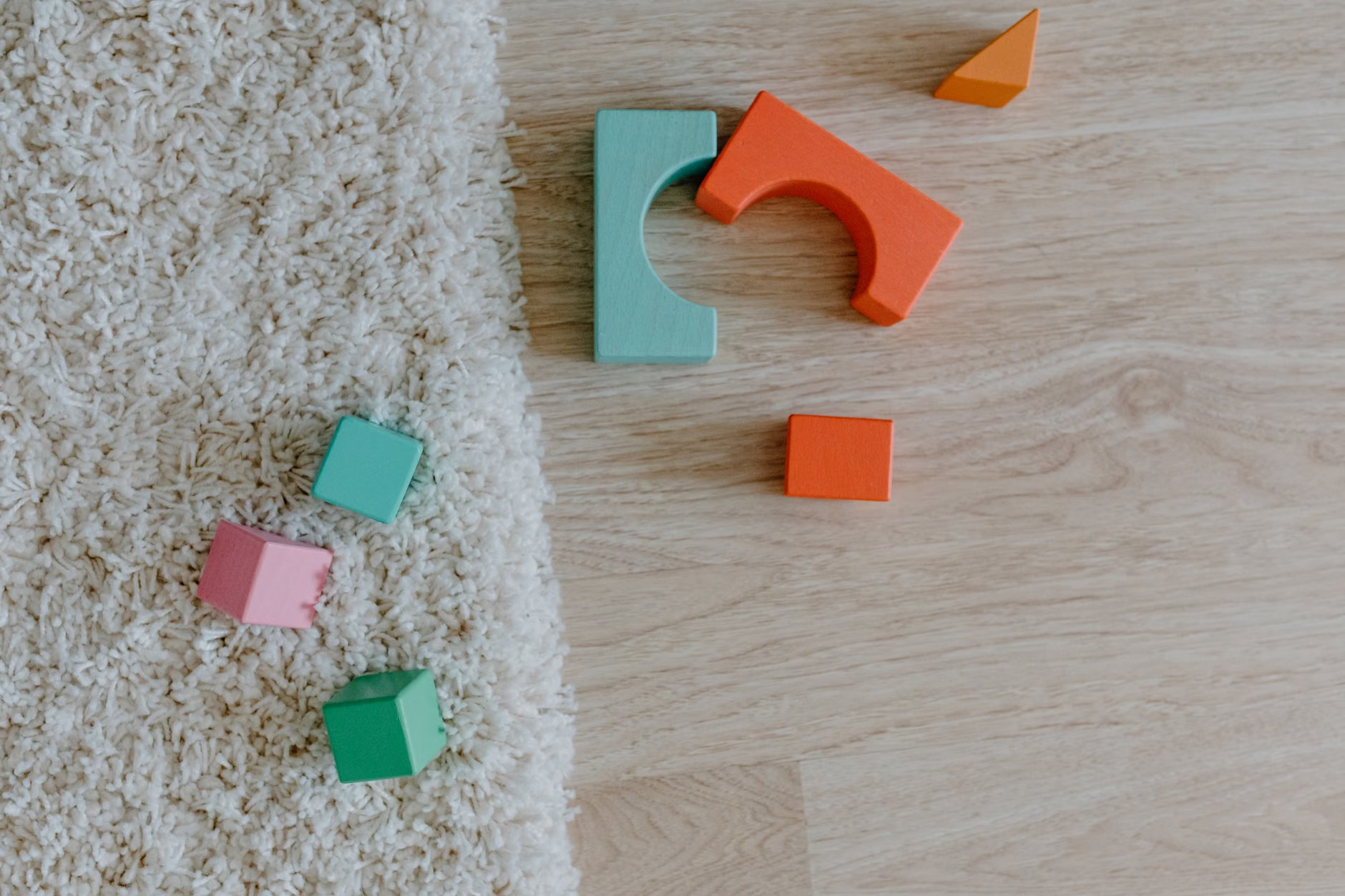
If you live in a small apartment or a home with limited storage, the rotation is even more vital. You do not have the luxury of “extra space” to hide clutter. In small homes, vertical storage is your best friend. Use wall-mounted shelves to display a few select toys, keeping the floor clear for movement. Use under-bed storage for the rotation bins.
Consider the “toy library” concept. If your city has a local toy library, use it. This allows your child to have access to a wide variety of high-quality, educational toys without you having to own or store them. It is the ultimate minimalist hack for parents. If a library isn’t available, swap toys with friends. A “toy swap” group with other parents can keep your rotation fresh without spending a dime.
Addressing the “But What If They Ask For It?” Scenario
The most frequent question parents ask is: “What if they keep asking for the toy that is in the rotation bin?” First, be kind but firm. “That toy is on vacation right now, but it will be back soon.” If they persist, it might be a sign that the toy is a “staple” item that should stay out. Not everything needs to be in the rotation. If a child plays with a specific set of blocks every single day, keep those out. The rotation is meant to be a tool, not a rigid law.
However, be careful not to cave too quickly. Often, a child’s insistence on a specific toy is just boredom. Suggest an alternative activity. “We can’t get the blocks right now, but would you like to build a tower with the books instead?” By redirecting, you encourage flexibility and creativity. You are teaching them that they can find enjoyment in different ways, rather than relying on one specific object for entertainment.
Essential Considerations for Different Ages
The rotation system evolves as your child grows. For infants, the rotation should focus on sensory items and high-contrast objects. They don’t need many toys; they need things they can grasp, touch, and chew. For toddlers, the rotation can include more open-ended materials like stacking cups, wooden trains, and simple puzzles. For school-aged children, the rotation might involve complex building sets, science kits, or books.
As children get older, involve them in the selection process. Let them decide which toys they want to keep out for the next two weeks. This gives them a sense of agency and helps them understand the value of their belongings. They will start to notice that they play better when the room is tidy, and they will eventually start to initiate the rotation themselves.
Remember that the goal is progress, not perfection. There will be days when the house is a mess. There will be weeks when you are too busy to rotate the bins. That is perfectly fine. The system is there to serve you, not the other way around. If you miss a rotation, just pick it up when you can. The benefits of a minimalist environment are cumulative; don’t stress if the process isn’t always linear.
Cautions and Final Encouragement
Be cautious of “minimalism burnout.” Do not try to overhaul your entire house in a single weekend. Start with one room, or even one shelf. The process of curating is mentally taxing. If you try to do too much at once, you will likely revert to your old habits. Take it slow, observe how your children react to the changes, and adjust the system to fit your family’s unique rhythm.
Finally, remember that the most valuable toy your child has is you. No amount of organized, high-quality, Montessori-approved toys can replace the time you spend reading, talking, and playing with them. The toy rotation is simply a way to clear the noise so that you can focus on the things that truly matter. Keep it simple, keep it consistent, and enjoy the extra space—both in your home and in your mind.
Frequently Asked Questions
Q: How do I handle gifts from relatives that don’t fit my minimalist approach?
A: This is a common social challenge. Try to steer relatives toward “experience gifts” like museum memberships, zoo passes, or classes. If they insist on physical gifts, express gratitude, but feel no obligation to keep everything. You can store some away, rotate them in, or donate them if they truly don’t align with your child’s developmental needs.
Q: Is it “cruel” to hide toys from my child?
A: Not at all. In fact, most child development experts agree that children are overwhelmed by excessive choice. By limiting access, you are helping them develop longer attention spans and deeper focus. You aren’t taking the toys away; you are curating their environment to make play more meaningful.
Q: How often should I rotate the toys?
A: A good starting point is every two to four weeks. However, observe your children. If you notice they are becoming bored and aimless, it is time for a rotation. If they are still deeply engaged with the current set, there is no need to rush the swap. Let the children’s engagement levels dictate the schedule.
For further reading on the developmental benefits of simplified environments, visit the National Association for the Education of Young Children (NAEYC) for resources on creating supportive learning environments.