The most effective way to reclaim your weekends as a parent is to trade the highway gridlock for the predictability of the rail, utilizing regional “Weekend-Rail” passes to transform a stressful two-hour drive into a productive, bonding experience.
- Maximize Efficiency: Weekend rail passes often offer unlimited travel for a flat fee, turning spontaneous day trips into cost-effective adventures.
- The “Third Space” Advantage: Trains provide a mobile living room where kids can play, draw, or sleep, unlike the confined, high-tension environment of a car.
- Strategic Planning: Success relies on off-peak scheduling, hub-and-spoke destination mapping, and “train-only” gear that keeps your luggage light and mobile.
We have all been there: it is Friday evening, you are exhausted from a long work week, and the idea of packing the kids into the car for a “relaxing” weekend away feels less like a vacation and more like a tactical military operation. Between the inevitable traffic jams, the “are we there yet” chants, and the hunt for parking once you arrive, the travel itself often negates the rest you were seeking. But what if the journey became the best part of the trip?
Across many regions, national and regional rail operators have introduced “Weekend-Rail” passes—specialized tickets designed to encourage leisure travel. These are not just for commuters; they are the secret weapon for parents in their 30s and 40s who are trying to balance the need for family discovery with the reality of limited time and energy.
Understanding the Weekend-Rail Advantage
At its core, a Weekend-Rail pass is a flat-rate ticket that allows for unlimited travel on specific lines or across entire regional networks during Saturday and Sunday. Unlike standard point-to-point tickets, which can get exorbitantly expensive if you book them last minute or change your plans, these passes provide a financial safety net.
Think of it as a “subscription to spontaneity.” Once you pay the initial fee, every stop you make, every detour you take, and every change of heart is essentially “free.” This shifts the psychological burden of travel. You are no longer watching the clock to avoid peak-hour surcharges or worrying about the cost of a missed connection. You are simply moving through the landscape.
For the busy parent, this is transformative. It allows for “micro-trips.” Perhaps you spend Saturday morning in a nearby town you’ve never explored, grab lunch at a local market, and return by the evening. The cost per hour of entertainment is often significantly lower than a day at an amusement park or a series of indoor play centers.
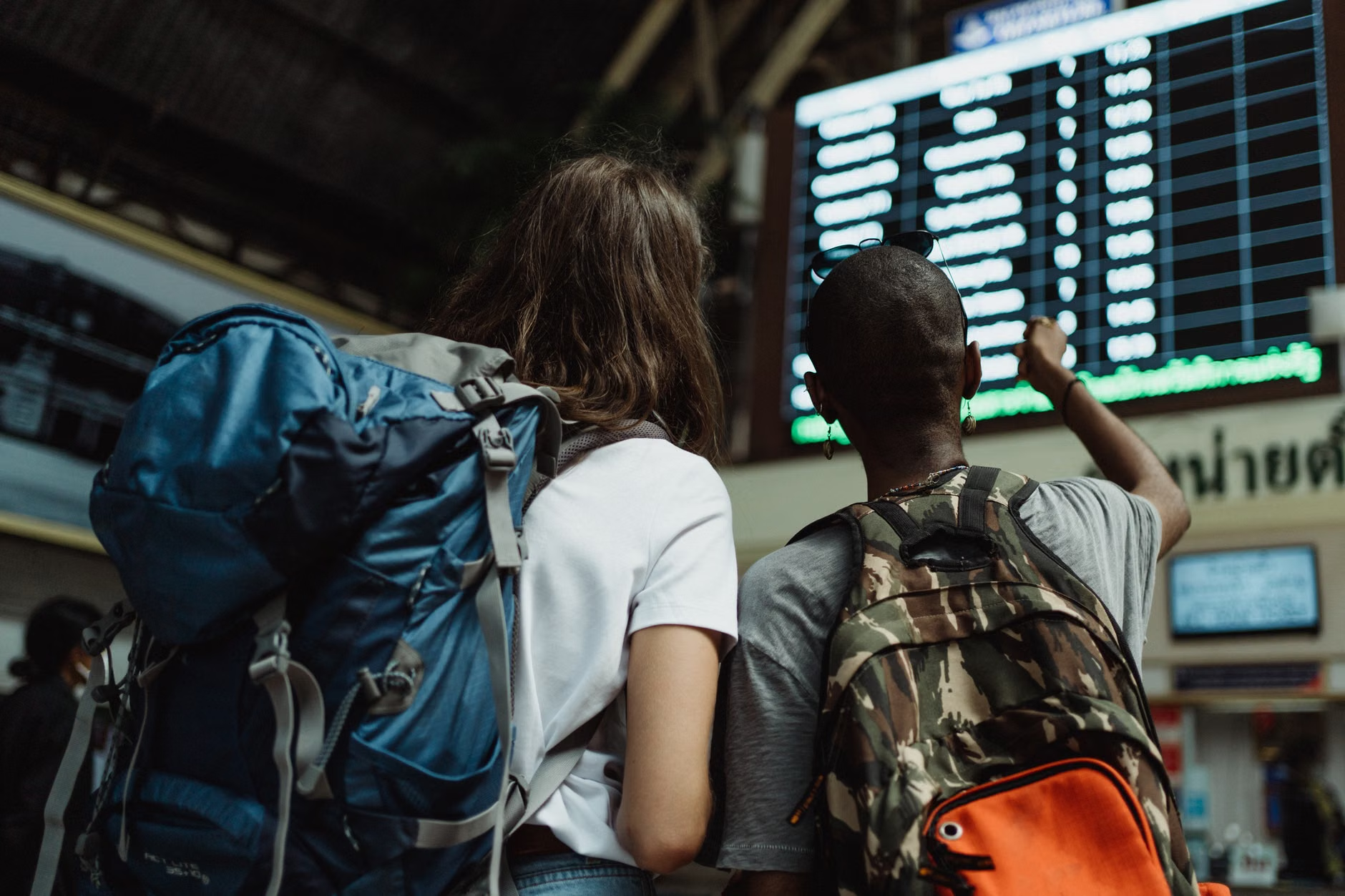
Why the Train Wins Over the Minivan
When you drive, the parent in the driver’s seat is isolated. You are focused on the road, navigating GPS, and managing the stress of other drivers. The other parent is often relegated to the role of “snack distributor” and “referee” in the back seat. This is not a shared experience; it is a labor-intensive chore.
On a train, the dynamics change entirely. The space is larger, the movement is smoother, and you are all facing each other. You can set up a small table, spread out a coloring book, play a board game, or simply look out the window together. This is what urban planners call a “Third Space”—a social environment separate from the home and the office that facilitates connection.
Moreover, the train offers a level of safety and reliability that road travel simply cannot match. With modern rail systems, delays exist, but they are generally less chaotic than a multi-car pileup on a highway. You are also not subject to the “parking tax”—the time and money spent circling city blocks looking for a space, only to pay a premium for the privilege of parking.
Strategic Planning: The Hub-and-Spoke Method
To truly maximize a weekend pass, you need to abandon the idea of a “destination” and start thinking in “hubs.” Most regional rail systems operate on a hub-and-spoke model, where a central major station connects to various smaller, charming towns. Your strategy should be to pick a hub, but remain flexible about the spokes.
If you have a pass that covers a specific region, don’t try to cram three cities into one day. Instead, look for towns that offer a mix of park space (for the kids to burn energy) and cultural interest (for the parents). Research the “walkability” of your potential stops before you leave. A town that requires a bus transfer once you get off the train adds a layer of complexity you might want to avoid with younger children.
Table 1: Comparing Travel Modes for Short-Haul Trips
| Feature | Weekend-Rail Pass | Private Car |
|---|---|---|
| Financial Predictability | High (Flat fee) | Low (Gas, tolls, parking) |
| Family Interaction | High (Shared space) | Low (Isolated by rows) |
| Stress Level | Low (No traffic) | High (Traffic/Parking) |
| Flexibility | High (Unlimited stops) | Moderate (Dependent on road access) |
The “Train-Only” Packing Philosophy
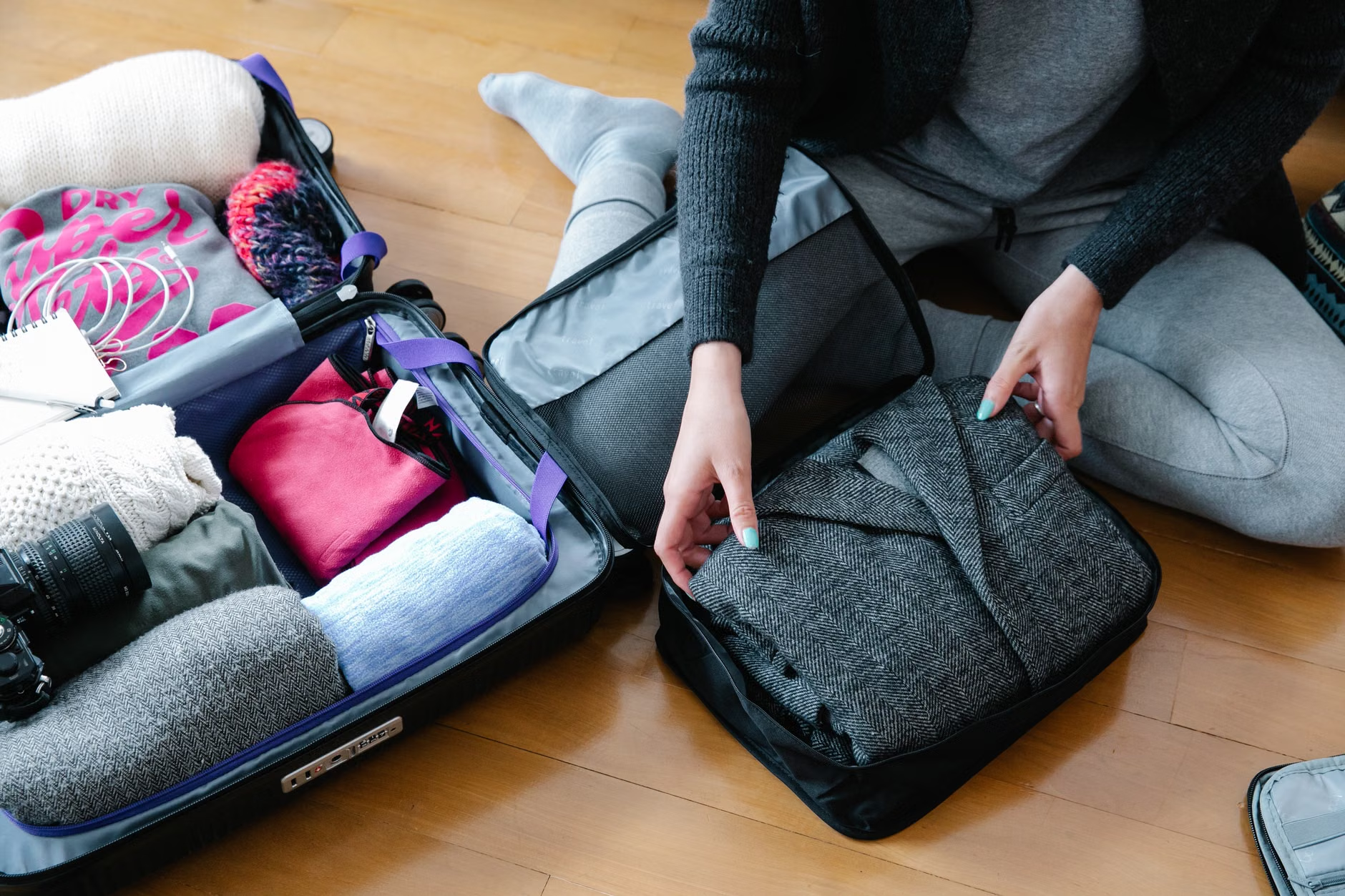
One of the biggest mistakes parents make when switching to rail travel is overpacking. If you are used to the “trunk-is-the-limit” philosophy of car travel, you need a serious adjustment. When you travel by train, you are responsible for everything you carry from the platform to the seat to the destination.
Adopt the “one-bag-per-person” rule. For children, this means a small backpack they can carry themselves. It gives them a sense of responsibility and keeps their hands occupied. For parents, a modular system is key. Use packing cubes to separate clothes, snacks, and “emergency entertainment” (books, tablets, or small toys).
Another tip: invest in a high-quality, lightweight travel stroller if your children are young, but ensure it folds down to a compact size. In many modern trains, there are dedicated areas for strollers and luggage. However, if the train is packed, being able to fold your gear quickly is a social grace that will save you from “stink-eye” from fellow passengers.

No travel method is perfect, and rail travel comes with its own set of challenges. The most common pitfall is the “last-mile” problem—the distance between the train station and your actual point of interest. Before you depart, spend five minutes on a map application looking at the route from the station to your first stop. Is it a walkable path? Is there a local bike-share program? Or do you need to look for a local bus line?
Another issue is food. While many trains have cafes, they are often expensive and limited in options. Pack your own “train picnic.” This is part of the fun. Bring finger foods that aren’t too messy—cheese, crackers, grapes, and sandwiches. Avoid anything that requires a knife and fork or creates too much trash. Bringing your own snacks also saves a significant amount of money, which you can then reallocate to a nice dinner in the town you visit.
Lastly, be mindful of the “end-of-day fatigue.” The ride home can be the most difficult part. If your children are prone to meltdowns when tired, plan your return trip for slightly before the typical “cranky hour.” Alternatively, bring light blankets. There is something inherently soothing about the rhythm of a train that often helps children drift off to sleep, giving parents a rare moment of quiet reflection.
Technology as a Tool, Not a Crutch
In our digital age, it is easy to rely on screens to keep children occupied. While a tablet can be a lifesaver during a long delay, try to prioritize “analog” engagement on the train. The window is the best screen in the world. Use the time to play “I Spy,” talk about the geography you are passing, or read a physical book together.
That said, keep your technology working for you. Download the rail operator’s app. Most of these apps provide real-time updates on delays, platform changes, and track information. If there is a disruption, the app will often notify you before the station announcements do. This puts you in the driver’s seat of your own itinerary.
Also, keep a portable power bank in your bag. Not all regional trains have reliable power outlets at every seat. Having a backup ensures that if you do need to use a device for navigation or entertainment, you won’t be left with a dead battery in an unfamiliar town.
The Cultural and Environmental Upside
Beyond the personal benefits, there is a broader context to consider. Rail travel is significantly more carbon-efficient than driving. For parents in their 30s and 40s who are increasingly concerned about the world their children will inherit, choosing the train is a small but meaningful way to model sustainable living.
It also exposes children to the diversity of their own region. When you drive, you bypass the reality of the landscape, moving from bubble to bubble. When you take the train, you see the industrial outskirts, the farmland, the small-town main streets, and the changing architecture. It is a subtle lesson in geography and sociology that you simply cannot get from inside a car.
Checklist for Your First Weekend-Rail Adventure
- Verify Pass Coverage: Ensure your weekend pass covers the specific zones and train lines you intend to use.
- Check Maintenance Schedules: Sometimes rail lines undergo engineering works on weekends. A quick check on the operator’s website can save you from a bus-replacement nightmare.
- The “Go-Bag”: Keep a dedicated bag with chargers, sanitizing wipes, a first-aid kit, and an extra set of clothes for the kids, so you aren’t packing from scratch every Friday.
- Scout the Hub: Look for at least two “Plan B” activities in your destination city in case the weather turns sour.
- Hydration and Snacks: Carry refillable water bottles. Most stations have water fountains, and it reduces the need to hunt for shops.
Common Mistakes to Avoid
One common mistake is trying to do too much. The temptation to maximize the value of the pass by visiting four cities in two days is real. Resist it. When you travel with kids, the “pace of discovery” is slower. Two hours of exploring a park is worth more than ten minutes of rushing through a museum. If you finish your day feeling like you haven’t seen “everything,” you have actually succeeded, because you have left a reason to come back.
Another mistake is neglecting the “return-time” buffer. If the last train leaves at 9:00 PM, aim to be at the station by 8:30 PM. Trains, like all public transport, can have minor delays. Having that 30-minute buffer prevents the stress of a “missing the last train” scenario, which is the ultimate parent-travel nightmare.
Embracing the Slow Travel Movement
The “Weekend-Rail” strategy is essentially an entry point into the “Slow Travel” movement. It is about prioritizing quality over quantity and connection over consumption. By removing the stress of the road, you create room for the unexpected—a conversation with a local, a beautiful view you didn’t expect, or just the simple pleasure of watching your child’s face light up as they see a new town for the first time.
It requires a shift in mindset. You have to be willing to let go of the rigid schedule that often dominates our adult lives. You have to be okay with the fact that you might not get to every site on your list. But in return, you get a weekend that feels longer, richer, and significantly more restorative.
As you start your journey, remember that the goal is not to become a “perfect traveler.” The goal is to build memories without the friction of modern transit. Start small. Take a short, one-hour trip to a town you’ve never been to, spend three hours there, and come home. Once you realize how easy it is to reclaim your weekend, you will find yourself looking at the map with entirely new eyes.
Frequently Asked Questions
Is a weekend rail pass always cheaper than buying individual tickets?
Usually, yes, especially if you plan to make more than one trip or have multiple stops in a single weekend. However, always calculate the cost of a standard return ticket to your destination. If you are only going to one place and coming straight back, a specific “advance” ticket might be cheaper. The pass is best for those who value the freedom to change plans or explore multiple locations.
What should I do if my child has a meltdown on the train?
The beauty of the train is that it is a public space with room to move. If a meltdown happens, don’t feel pressured to stay in your seat. Walk to the vestibule (the area between carriages) or take a walk to the dining car if there is one. The change of scenery and the gentle motion of the train often help reset a child’s mood. Remember, most fellow passengers are sympathetic and have likely been in your shoes.
Are these passes valid on all types of trains?
This depends on the operator. Some passes are valid on high-speed intercity trains, while others are limited to regional, slower trains. Always check the “conditions of carriage” on your operator’s website. High-speed trains often require seat reservations, even if you have a pass, so be sure to check those requirements before you head to the platform.
For more information on planning your regional travel, you can consult official resources such as the Eurail (for Europe-wide travel) or your local national rail operator’s website for specific regional passes. Always check for “Family” or “Group” discounts, which are often bundled with these passes.
Ultimately, the best trips are the ones where you arrive at your destination feeling like you’ve actually been on vacation, rather than just surviving the commute. Give the rail a chance this weekend—you might be surprised by how much more you enjoy the ride.