The most effective way to refresh your wardrobe is not by visiting the mall, but by participating in a structured clothing swap where the currency is your own unused inventory rather than your hard-earned cash.
- Quality over Quantity: Only bring items you would be proud to gift a friend; the success of a swap depends entirely on the condition of the contributed goods.
- Structure is Essential: Whether you are hosting or attending, clear rules regarding categorization and intake prevent chaos and ensure a fair experience for everyone.
- Psychological Reset: Swapping isn’t just about clothes; it’s a tangible way to break the cycle of impulsive consumption and reconnect with your personal style.
If you are in your 30s or 40s, you likely know the feeling: you open your closet, stare at a rack full of items, and think, “I have absolutely nothing to wear.” This is rarely a lack of inventory. It is usually a mismatch between your current lifestyle—perhaps balancing a demanding career with the chaotic demands of parenting—and the clothes you bought three years ago. We have all accumulated “aspirational” items that don’t fit our current reality. The slow-fashion movement offers a way out that doesn’t involve the environmental footprint of fast fashion or the guilt of throwing away perfectly wearable items.
Why the Swap Economy is Gaining Traction
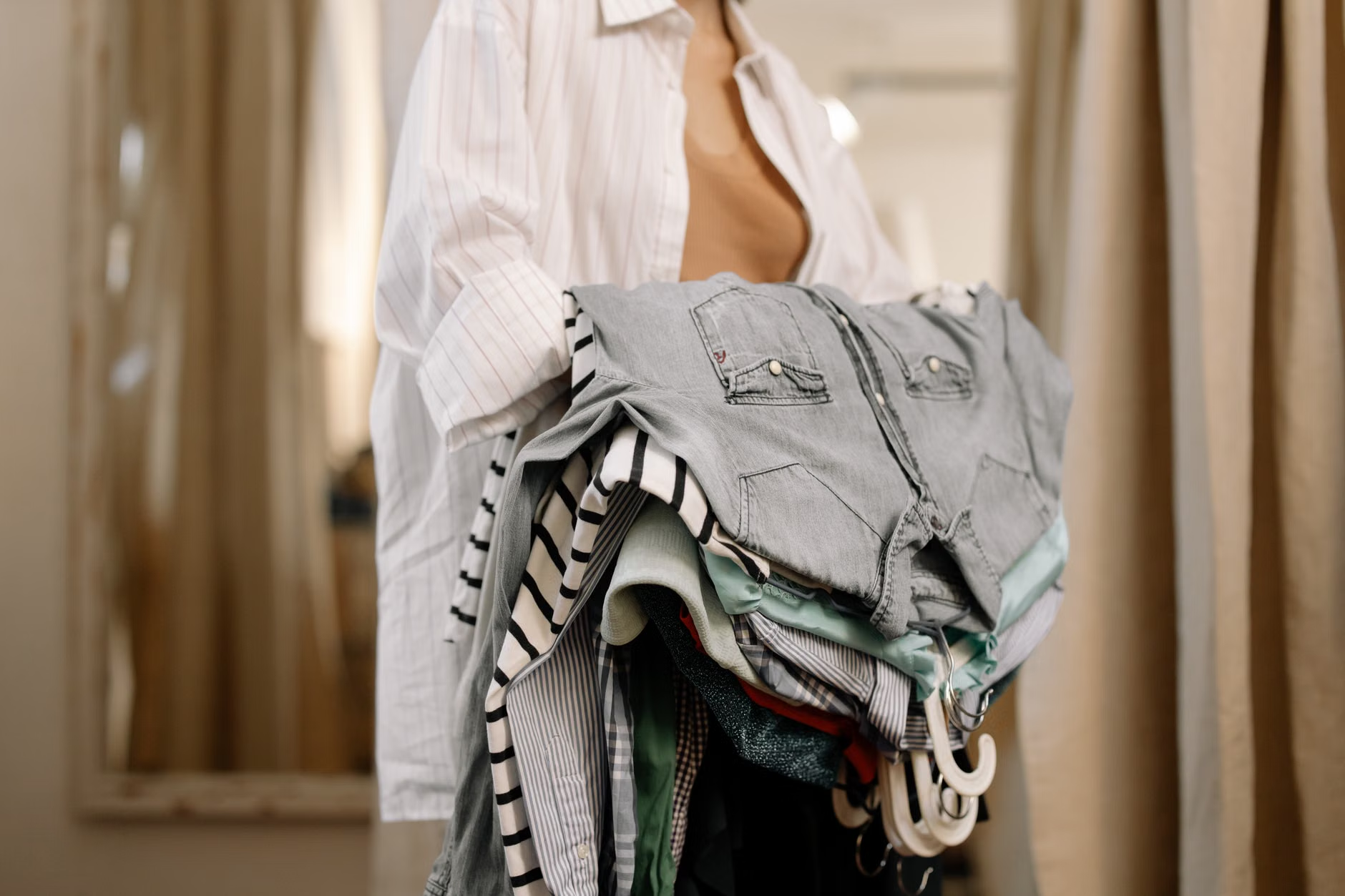
The “swap economy” is not merely a thrifty hack; it is a response to the staggering waste generated by the global fashion industry. Recent data suggests that the average consumer throws away significantly more clothing today than they did two decades ago, largely due to the rise of ultra-fast fashion brands that prioritize trends over durability. When you participate in a swap, you are essentially extending the lifecycle of a garment. This is the core tenet of circular fashion: keeping resources in use for as long as possible.
For parents, the swap model is particularly transformative. Children outgrow clothing at a blistering pace, and our own bodies often undergo shifts that render old favorites uncomfortable or impractical. A well-organized swap allows you to offload these items to someone who actually needs them, while simultaneously picking up pieces that fit your current stage of life. It’s an exercise in community building that doubles as a closet audit.
Establishing the Rules of Engagement
A successful swap, whether it is a small gathering of four friends or a larger community event, requires a clear framework. Without ground rules, you risk ending up with a pile of stained, torn, or low-quality items that no one wants. The “golden rule” of swapping is simple: if you wouldn’t give it to a friend, don’t bring it to a swap.
Before you invite anyone, decide on the logistics. Are you using a ticket system? A “one-in, one-out” policy? Or is it a free-for-all? For most groups, a “token” system works best. You receive one token for every item you bring, and you spend that token to take an item home. This prevents the “hoarding” mentality where one person takes everything before others have had a chance to look.
The Art of Curation and Categorization
Do not just dump everything on a bed and hope for the best. The visual presentation of a swap dictates the quality of the experience. If you are hosting, ensure you have enough space to separate items by category. Use simple signs: “Casual Tops,” “Workwear,” “Accessories,” and “Bottoms.” If possible, use rolling racks for hanging items; this prevents the dreaded “clothing mountain” that discourages people from digging through the pile.
| Category | What to Bring | What to Avoid |
|---|---|---|
| Workwear | Blazers, trousers, blouses in good condition. | Items with missing buttons or broken zips. |
| Casual | Clean denim, t-shirts, knitwear. | Stained items or pilled sweaters. |
| Accessories | Scarves, belts, bags, hats. | Worn-out jewelry or damaged shoes. |
Many of us hold onto clothing for emotional reasons. That dress you wore to your sister’s wedding? The jeans you wore in your 20s that serve as a “goal” for weight loss? These items occupy valuable real estate in your brain and your closet. A swap is the perfect environment to let these go because you are not just throwing them in the trash; you are passing them on to someone who will appreciate them.
The “30-Day Rule” is a helpful filter for your own closet before the swap. If you haven’t worn it in the last 30 days (or the last season), ask yourself why. If the answer is “it doesn’t fit,” “it’s not my style anymore,” or “it’s uncomfortable,” it goes into the swap pile. Be ruthless. Your future self will thank you for the extra space in your closet and the reduced morning stress.
Hosting Your Own Swap: A Step-by-Step Guide
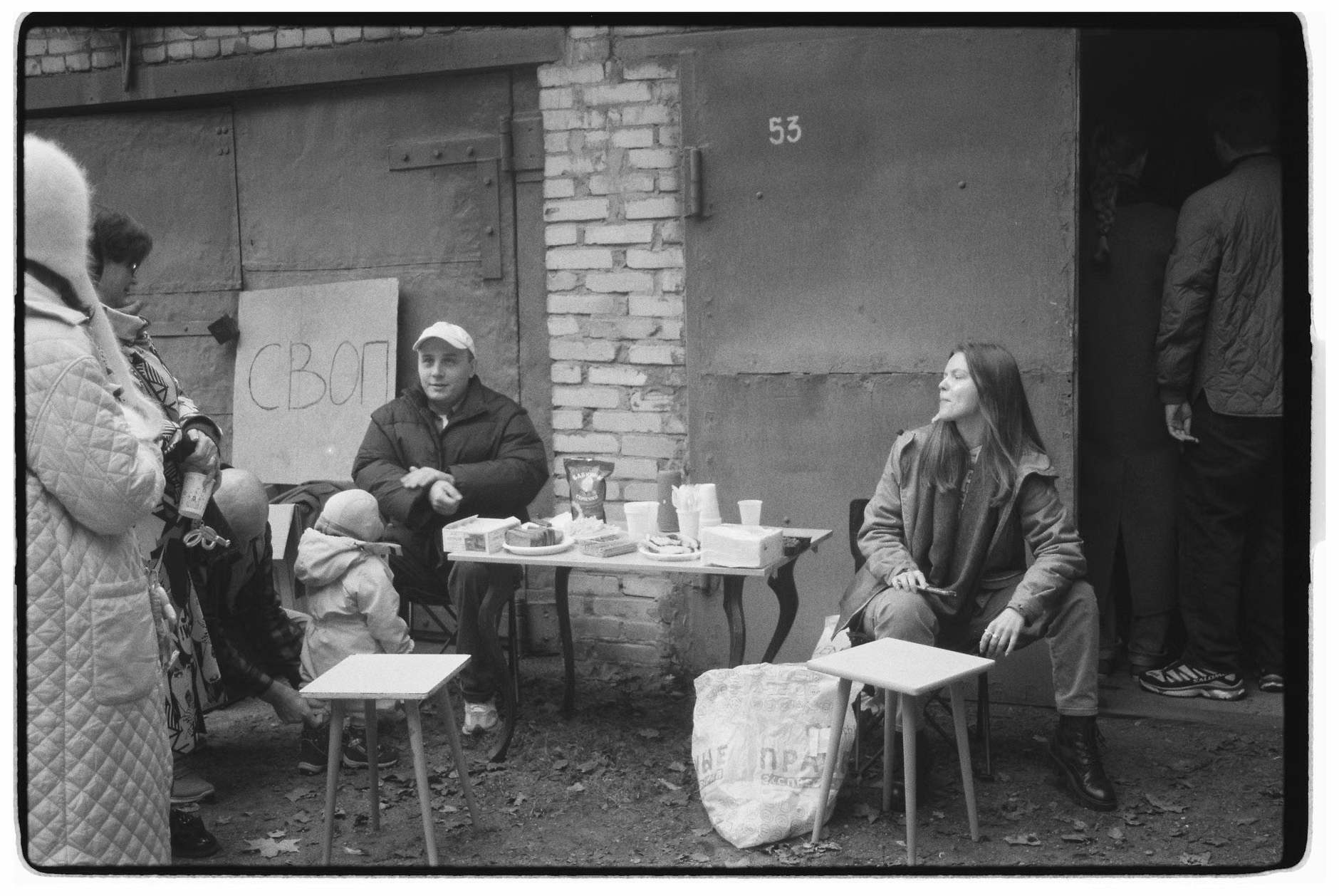
Hosting a swap is a significant contribution to your local community. It requires organization, but the payoff is immense. Start by defining your scope. Are you focusing on adult clothing, children’s clothes, or a mix? Mixing categories can sometimes lead to confusion, so staying focused is usually better for the first event.
1. The Intake Process: Set a specific time for people to drop off their items. This allows you to inspect them. If someone brings a bag of items that are clearly damaged, have a pre-prepared, polite “no thank you” ready. It is better to have a smaller, high-quality swap than a large, low-quality one.
2. The Setup: Lighting is everything. Try to host in a space with natural light. If you are doing this in your home, clear the living room completely. Use folding tables for accessories and shoes.
3. The “Leftovers” Plan: This is the most important part of hosting. What happens to the items that nobody claims? Do not let them sit in your living room indefinitely. Research local charities, textile recycling centers, or shelters that accept donations *before* the event. Make sure you have a plan to transport the remaining items immediately after the swap concludes.
Common Mistakes and How to Avoid Them
The most common mistake is failing to set expectations. If you don’t explicitly state that items must be clean and in good condition, you will inevitably end up with a bag of rags. Be clear in your invitation. Send a digital flyer or email that outlines the “quality standard.”
Another pitfall is the “pressure to take.” Guests often feel obligated to take items home just because they are free. Encourage a “less is more” mindset. The goal is to declutter, not just move the clutter from one house to another. If a guest finds nothing they love, that is a success—they have maintained their personal style and avoided bringing home unnecessary items.
Integrating Slow Fashion into Your Daily Routine
Once you have experienced the joy of a successful swap, you might find your relationship with shopping begins to shift. You will start to notice the quality of fabrics. You will begin to value the construction of a garment over the trendiness of its cut. This is the essence of slow fashion. It is about moving away from the “disposable” mindset and toward a “stewardship” mindset.
Consider creating a “Swap Kit” for your home. Keep a dedicated bin in your closet for items that no longer serve you. When the bin is full, it’s time to host a small swap or take the items to a local exchange event. By making this a regular part of your routine, you avoid the seasonal panic of having a closet full of clothes that don’t reflect who you are.
Practical Considerations for Busy Parents
We know that as parents, time is your scarcest resource. Don’t let the idea of a “perfect” swap prevent you from starting. If a full-blown event feels too daunting, start with a “Swap Circle” with two or three friends whose style you admire. You can meet for coffee, exchange a few items, and be done in an hour. The smaller the group, the easier the logistics.
Furthermore, ensure that the swap is kid-friendly if you are inviting other parents. Have a designated play area for the children so that the adults can focus on the clothing. If you are swapping children’s clothing, organize by size range. This makes it incredibly easy for parents to grab what they need for the next growth spurt without digging through an entire pile of clothes.
The Environmental and Financial Implications
The environmental impact of clothing production is immense, involving massive water usage, chemical dyes, and carbon emissions from shipping. By choosing to swap, you are effectively reducing the demand for new production. Even if you only swap five items a year, that is five fewer items that need to be manufactured, packaged, and transported. Over a decade, that adds up to a significant reduction in your personal carbon footprint.
Financially, the benefits are obvious. High-quality clothing is expensive. By accessing a pool of pre-loved items, you can acquire pieces that you might not be able to afford at retail prices. You are essentially getting a wardrobe upgrade for the cost of a bit of organization and social time.
Addressing Potential Challenges
What if someone brings something that is clearly not suitable? This is the most awkward part of hosting. The best approach is to be kind but firm. “Thank you so much for bringing these! Unfortunately, our guidelines for this event focus on items that are ready to wear without repairs, so I’m going to pass on these, but I appreciate your contribution.” Keep it brief and don’t apologize excessively. You are providing a service to the group by maintaining standards.
Another challenge is the “imbalance of items.” What if one person brings twenty items and another brings two? This is why the token system or a “bring what you can” philosophy is important. Don’t make it a strictly transactional “one-for-one” swap unless you have the time to track it. Most people find that the social benefit of the event outweighs the exact mathematical parity of the items exchanged.
Final Thoughts on Building a Conscious Wardrobe
At the end of the day, a clothing swap is about more than just swapping shirts and pants. It is about building a community that values sustainability, intentionality, and connection. It challenges us to look at our possessions not as temporary fix-its for our moods, but as resources to be managed and shared.
As you navigate your 30s and 40s, you are likely becoming more discerning about what you allow into your life—whether that is your schedule, your home, or your closet. A swap is a physical manifestation of that discernment. Keep your standards high, your events organized, and your focus on the joy of sharing. You don’t need a massive budget to have a closet that makes you feel confident and ready for the day; you just need a better way of circulating what you already have.
For those looking to dive deeper into the mechanics of textile recycling and sustainable fashion, the Ellen MacArthur Foundation provides excellent resources on the circular economy. Additionally, check local community boards or platforms like Freecycle to see if there are existing swap networks in your area that you can join to get a feel for how others are managing their events.
Start small, stay consistent, and enjoy the process of refreshing your space without the environmental and financial cost of the traditional retail cycle.
Frequently Asked Questions
- How do I handle items that are left over after the swap?
The best practice is to pre-arrange a donation site. Contact local women’s shelters, community clothing closets, or textile recycling centers well in advance. Never leave items on the curb or drop them off at a charity bin without checking if they accept bulk donations, as this can cause logistical issues for the organization. - Is a clothing swap appropriate for children’s clothes?
Absolutely. Children’s clothing is perhaps the most logical category for swapping because the turnover rate is so high. Organize by size (e.g., 2T, 3T, 4T) and ensure items are clean and free of significant wear. Parents are usually very happy to participate in these, as it saves them a significant amount of money on items that are only used for a few months. - What if I don’t have enough “high-quality” items to bring?
Don’t let this stop you. Quality is relative. If you have a few well-loved pieces that are in good condition, that is enough. A swap is a collective effort; some people will bring more, some will bring less. The goal is to contribute what you can and participate in the community. You can also contribute by helping with the setup or the cleanup, which is just as valuable as the clothing itself.
For further reading on circular fashion principles, visit The Ellen MacArthur Foundation.