The secret to surviving a family vacation isn’t just about picking the right destination; it is about proactively managing the sensory environment of your journey to prevent meltdowns before they start.
- Proactive Regulation: A sensory-friendly kit is not just for neurodivergent children; it is a tool for anyone who experiences travel fatigue or overstimulation.
- The “Big Three”: Focus your kit around sound control, tactile comfort, and predictable engagement to mitigate the most common triggers of travel stress.
- Preparation Over Reaction: Building a kit that is accessible and easy to deploy at a moment’s notice is more effective than scrambling for distractions once a stressful situation has already escalated.
We have all been there. You are standing in the middle of a crowded terminal, the fluorescent lights are humming, the announcements are blaring, and your child—or perhaps even you—is reaching a breaking point. Travel is inherently chaotic. It forces us into environments where we have little control over temperature, noise levels, lighting, or social proximity. For those of us in our 30s and 40s, juggling professional responsibilities with the demands of parenting, this lack of control can feel like the final straw in an already busy week.
The concept of a “sensory-friendly” travel kit isn’t about coddling; it is about building a portable safety net. By curating a set of items that provide sensory regulation, you can turn a stressful transit experience into a manageable one. Whether you are flying across the ocean or taking a long train ride, the right tools can make all the difference.

Understanding the Sensory Landscape of Travel
To build an effective kit, you first need to recognize why travel is so taxing on the nervous system. Our brains are constantly processing stimuli. Under normal circumstances, we filter out background noise, flickering lights, and the feel of our clothes. When we travel, we are bombarded with new and unpredictable sensory inputs. This is often referred to as “sensory overload.”
For children, this can manifest as irritability, physical outbursts, or a complete shutdown. For adults, it often looks like “travel brain”—that feeling of being unable to make simple decisions, irritability, or exhaustion that lingers long after you have arrived at your hotel. A sensory-friendly approach acknowledges that these reactions are physiological, not behavioral. By addressing the input, you can regulate the output.
The Three Pillars of Sensory Regulation
When selecting items for your kit, categorize them based on the type of sensory input they manage. Most effective kits focus on the “Big Three”: auditory control, tactile comfort, and visual/cognitive focus.
| Category | Purpose | Example Items |
|---|---|---|
| Auditory | Dampen overwhelming ambient noise | Noise-canceling headphones, earplugs, white noise app |
| Tactile | Provide grounding physical sensation | Fidget spinners, weighted lap pads, textured fabrics |
| Visual/Cognitive | Create a predictable, calming focus | Tablets, coloring books, visual timers |
Curating Your Auditory Shield
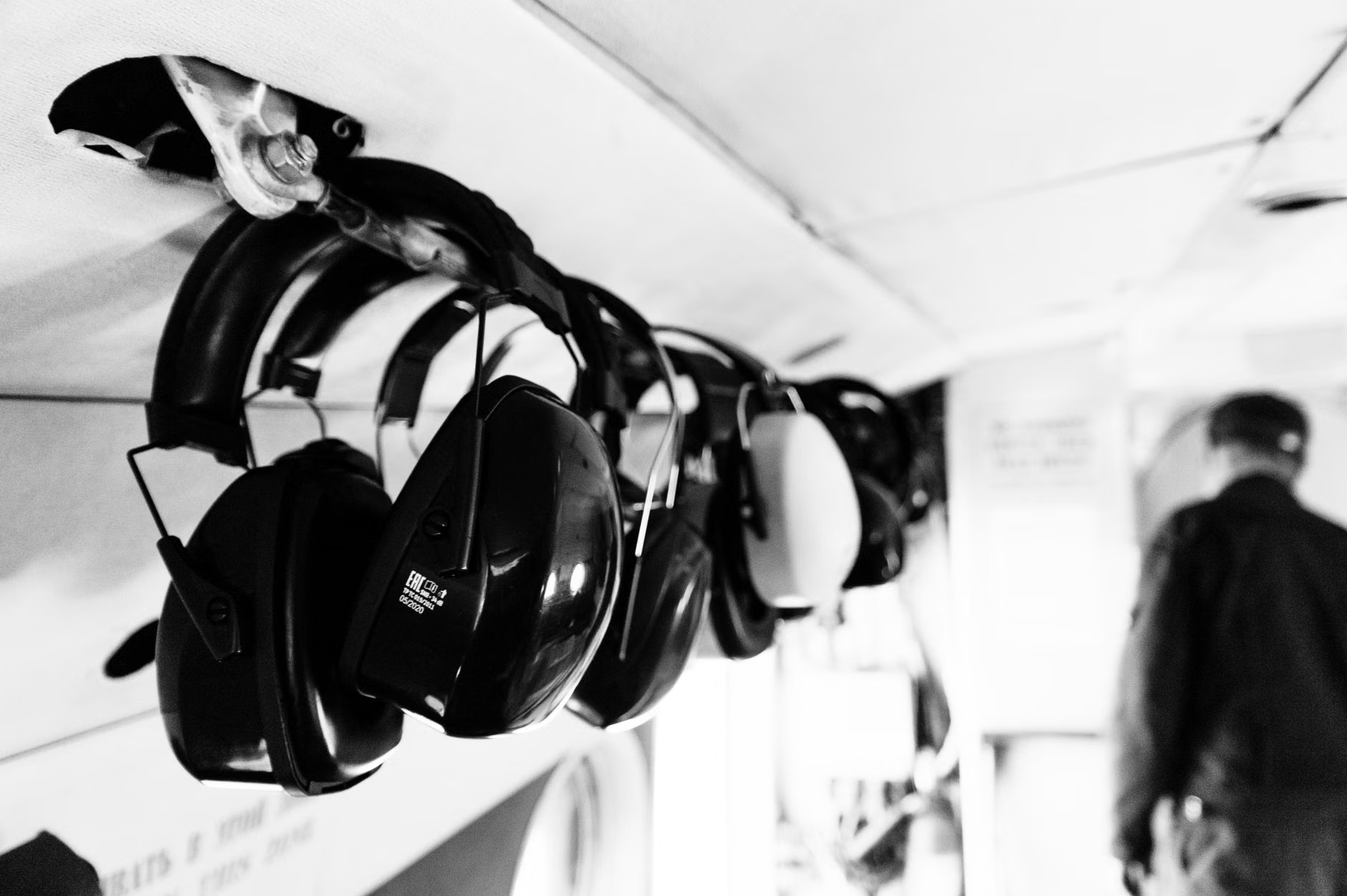
Auditory input is perhaps the most significant trigger for travel-related stress. The low-frequency rumble of a plane engine, the sharp shriek of a train whistle, and the constant chatter of a busy station are all taxing.
Investing in high-quality noise-canceling headphones is arguably the single most important decision you can make. While expensive, they offer a level of environmental control that is difficult to replicate. If your budget is tighter, or if you are worried about losing expensive tech, consider high-fidelity earplugs. These are designed to lower the decibel level of ambient noise without muffling human speech, allowing you to remain aware of your surroundings while taking the edge off the chaos.
Don’t forget the power of “controlled sound.” For some, silence is actually uncomfortable. Having a pre-downloaded playlist of calming music, nature sounds, or even a familiar audiobook can provide a “sensory anchor” that overrides the unpredictable noise of the travel environment.
Tactile Comfort: Grounding Yourself in Motion
When we move through space, our proprioceptive system—the sense that tells us where our body is in space—can get confused. This is exacerbated by the vibration of vehicles. To counter this, many people find comfort in “heavy work” or tactile feedback.
Consider including a small, weighted item in your kit. A weighted lap pad or even a heavy scarf can provide a sense of security and “grounding.” If space is an issue, a simple fidget tool—something that requires manual manipulation—can serve a similar purpose. The act of clicking, squeezing, or rubbing a textured surface forces the brain to focus on fine motor skills rather than the overwhelming environment.
Think about the materials you bring as well. A soft, familiar blanket—even if it is just a small travel-sized one—carries the scent and texture of home. This “home base” object is a powerful psychological tool that can help a child (or an adult) transition from a high-stress environment to a place of relative safety.
Managing Visual and Cognitive Overload
Airports and train stations are designed to be visually overwhelming. Bright signage, moving crowds, and flickering advertisements are all designed to grab your attention. When your brain is already tired, this constant visual input can lead to fatigue.
A “visual shield” is often as simple as a pair of sunglasses or a cap pulled low. For children, a tablet loaded with familiar, low-stimulation content can provide a “visual island” of predictability. The key here is to avoid high-stimulation, fast-paced games or videos, which can actually increase irritability over time. Instead, opt for slow-paced documentaries, drawing apps, or reading materials.
Visual timers are another under-utilized tool. If you are traveling with children, the concept of “how much longer” is often abstract and anxiety-inducing. A simple visual timer—either a physical one or an app—that shows the passage of time can provide a sense of control. Knowing exactly when a transition (like boarding or landing) will occur helps manage expectations and reduces the “uncertainty anxiety” that often leads to meltdowns.
Building the Kit: A Step-by-Step Approach
Don’t try to build the perfect kit overnight. Start by observing your family’s specific triggers during a short trip, like a trip to the grocery store or a commute. What makes them irritable? Is it the noise? The physical movement? The waiting?
Once you have identified these triggers, follow this implementation framework:
- The Audit: List the top three stressors for each family member.
- The Selection: Choose one item per stressor. Do not overpack. A heavy bag is a sensory nightmare in itself.
- The Accessibility Test: Can you reach these items while seated in a cramped middle seat? If not, move them to the top compartment of your bag.
- The Trial Run: Use the kit on a “low stakes” trip before your big vacation.
One common mistake is treating the kit as a “last resort.” If you wait until someone is already crying or having a panic attack, it is often too late for the tools to be effective. Instead, introduce the sensory tools early. Use the headphones while waiting at the gate, not just after you have boarded. Use the fidget tool while standing in the security line. By using the tools preventatively, you keep the nervous system in a “regulated” state rather than trying to pull it back from an “overwhelmed” state.
Addressing Common Misconceptions
A frequent pushback I hear is that this approach “coddles” children or prevents them from learning how to deal with the real world. This is a misunderstanding of how sensory regulation works. We all have sensory needs; we have just learned to mask them. Adults drink coffee to wake up, listen to podcasts to drown out office noise, or tap their pens during meetings. These are all sensory-regulation strategies.
By providing these tools to children, you are not preventing them from learning how to cope. You are providing them with the vocabulary and the tools to understand their own nervous system. Over time, you will find that as they get older, they will begin to advocate for these needs themselves—asking for their headphones or reaching for their fidget tool before they reach a breaking point. That is not coddling; that is emotional intelligence.
Another misconception is that these kits need to be expensive. While noise-canceling headphones are an investment, the rest of your kit can be incredibly affordable. A piece of textured fabric, a smooth stone from the garden, a simple notebook, and a pair of cheap earplugs can be just as effective as expensive gadgets. The value is not in the item, but in its function as a tool for regulation.
Practical Considerations for Different Modes of Travel
Your kit should adapt to your mode of transport. A flight requires different considerations than a road trip or a train journey.
For Air Travel: Focus on items that are TSA-compliant and lightweight. The biggest challenge here is the lack of physical space. Your kit must be “seat-pocket friendly.” Avoid items that have many small parts that can roll under the seat.
For Road Trips: You have more space, but you have the added challenge of motion sickness. If someone is prone to motion sickness, avoid screens or reading for extended periods. Instead, focus on audio-based sensory regulation—audiobooks or podcasts are excellent here. Also, consider the “sensory environment” of the car itself. Is it too hot? Is the sun glaring? A simple window shade or a fan can be a life-saver.
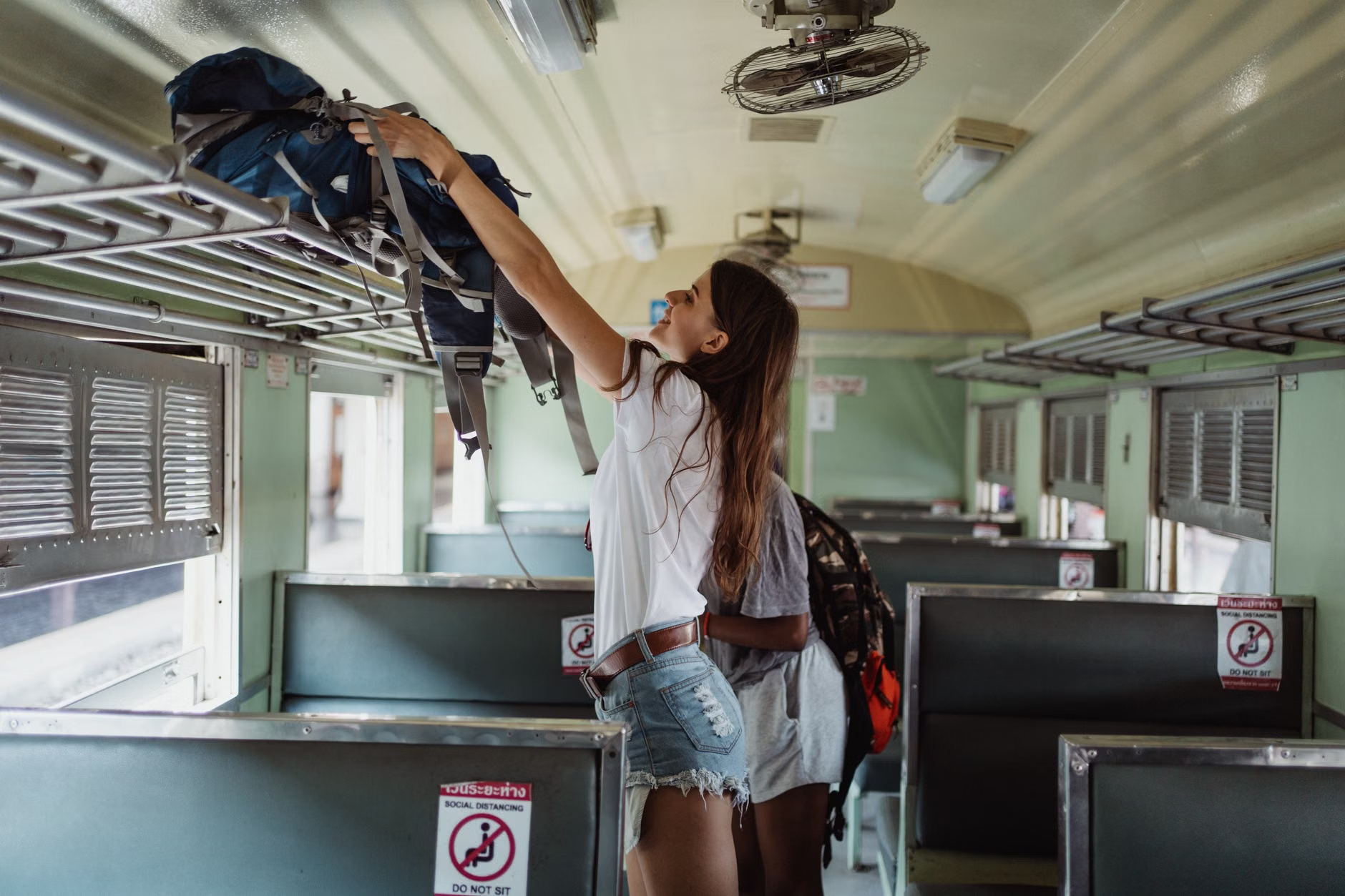
For Train Travel: Trains offer a unique blend of comfort and unpredictability. You have more room to move, but you are also in a shared space with strangers. Noise-canceling headphones are essential here, as you cannot control the conversations or activities of the people sitting near you. Use the extra space to bring a slightly larger “comfort object,” like a small pillow.
The Role of Nutrition and Hydration
While often overlooked, your physiological state plays a massive role in sensory processing. When we are hungry or dehydrated, our “sensory threshold” drops significantly. This means we get overwhelmed much faster than we would if we were well-fed and hydrated.
Include “sensory-friendly snacks” in your kit. These are foods that provide a consistent texture and flavor. Avoid foods that are overly crumbly, messy, or have strong odors that might bother others in a confined space. Think of things like apple slices, cheese sticks, or granola bars that are easy to eat and provide a stable blood sugar level. Hydration is equally important. A reusable water bottle that is easy to open and close is a must-have for every member of the family.
Maintaining the Kit
A kit is only useful if it is ready. After every trip, take 10 minutes to “reset” the kit. Replace the snacks, recharge the electronic devices, and check for any broken toys. Treat this like a standard operating procedure for your family travel. If you wait until the morning of your next trip to check your gear, you will inevitably find that the headphones are dead or the fidget toys are missing. By keeping the kit in a “ready-to-go” state, you remove one more source of pre-travel anxiety.
Also, involve your children in the process. Ask them what items make them feel calm. If they feel a sense of ownership over their sensory kit, they are much more likely to use it effectively. Let them choose the fidget toys or the headphones. When they feel like they have agency, the entire travel experience becomes a collaborative effort rather than a top-down management task.
Finally, remember that things will go wrong. Even the best-prepared kit cannot account for every variable. If a meltdown happens, don’t view it as a failure of your preparation. View it as a data point. What was the trigger? Was it the noise? The wait time? The hunger? Use that information to refine your kit for the next time. Travel is a skill, and like any skill, it takes practice.
Frequently Asked Questions
Is a sensory-friendly travel kit only for neurodivergent children?
Absolutely not. While these kits are essential for neurodivergent individuals who may have sensory processing differences, anyone can benefit from them. Travel is inherently overstimulating, and having tools to regulate your environment can help anyone—including adults—avoid the fatigue and irritability that often accompany long journeys.
What should I do if my child refuses to use the items in the kit?
If your child is refusing to use the items, it might be that they don’t find them helpful, or they simply aren’t in the mood to use them at that moment. Try to involve them in selecting the items before the trip so they feel a sense of ownership. Don’t force the tools; instead, model the behavior by using your own headphones or fidget items. Often, children will mirror what they see you doing.
How do I manage the weight and bulk of a sensory kit?
The key to a manageable kit is “purpose over quantity.” Do not try to bring every possible tool. Focus on the three biggest triggers for your specific situation. Choose multi-functional items when possible—like a tablet that can be used for drawing, reading, and listening to calming audio. Keep the kit in a dedicated, lightweight bag that is easy to carry, and make sure it is accessible at all times so you aren’t digging through your main luggage.
Travel should be an opportunity for connection and discovery, not a test of your endurance. By building a sensory-friendly kit, you are acknowledging the reality of the travel experience and giving yourself the tools to navigate it with grace. It isn’t about creating a perfect, stress-free bubble, but about creating a cushion that makes the bumps in the road a little easier to handle. Take the time to prepare, keep your tools accessible, and remember that even the smallest amount of regulation can make a significant difference in your journey. Happy travels.
For more information on sensory processing and travel, you can consult resources from the National Autistic Society or the STAR Institute for Sensory Processing Disorder. These organizations provide excellent evidence-based strategies for managing sensory needs in various environments.