Starting in 2026, many regions are implementing significant updates to carbon pricing mechanisms, which will directly influence the cost of heating your home if you rely on fossil fuels like natural gas, heating oil, or propane.
- Direct Impact: Carbon taxes are designed to make fossil-fuel-based heating more expensive to encourage the transition to cleaner energy.
- Strategic Planning: Early investments in home insulation and high-efficiency heat pumps can shield your household from future price hikes.
- Government Rebates: Many jurisdictions offer tax credits or direct subsidies to offset the costs of upgrading to low-carbon heating systems.
If you are in your 30s or 40s, you probably spend a fair amount of time thinking about the “big picture” of your household finances. Between school runs, grocery inflation, and planning for the future, the last thing you want to see is an unexpected spike in your winter utility bills. Yet, as we approach 2026, talk of “carbon taxes” and “emissions pricing” is moving from political headlines into the practical reality of our monthly budgets.
It is easy to get overwhelmed by environmental policy jargon. Let’s break down what is actually happening, why it matters to your wallet, and what you can realistically do about it without turning your life upside down.
Understanding the “Carbon Tax” Logic
At its simplest, a carbon tax is a fee imposed on the burning of carbon-based fuels—like coal, oil, and natural gas. The idea is simple: if it costs more to pollute, people and businesses will naturally look for cheaper, cleaner alternatives. Governments use these funds in various ways, sometimes returning them to citizens as rebates or reinvesting them into green infrastructure projects.
By 2026, many international jurisdictions are scheduled to increase their carbon pricing tiers. This isn’t just a random shift; it is part of a multi-year plan to meet international climate commitments. For a household, this means that every cubic meter of natural gas or gallon of heating oil you burn will essentially carry a higher “environmental surcharge.”
Think of it like a toll road. If you keep driving the same route (using traditional fossil fuel heating), you will pay more at every toll booth as the years go by. The goal of the policy is to nudge you toward taking a different route—perhaps a more fuel-efficient home or a different heating source—so that you don’t have to pay that toll anymore.

The Impact on Your Heating Bill
How much will your bill actually go up? That depends on three things: your local government’s specific tax rate, the type of fuel you use, and the efficiency of your home. Natural gas, while cleaner than coal or oil, still produces emissions, and many jurisdictions are ending their “grace periods” for residential gas usage.
If you live in an older home with poor insulation, you are essentially paying a “leaky house tax.” Your furnace has to work twice as hard to keep the temperature comfortable, meaning you are consuming more fuel and paying more carbon tax than necessary. In 2026, this inefficiency will become significantly more expensive than it was in 2023 or 2024.
It is important to look at your utility bill today. Does it break down the carbon cost separately? In some regions, it is listed as a line item. In others, it is rolled into the total cost of the fuel. Knowing which one applies to you is the first step in understanding your exposure to these 2026 price hikes.
Practical Steps to Shield Your Household Budget
You don’t have to panic, but you should prepare. There are three levels of action you can take, ranging from “zero-cost” behavior changes to long-term investments.
Level 1: Low-Cost Efficiency (The “Do It This Weekend” List)
You can make a dent in your consumption without spending a fortune. These steps reduce the load on your heating system, meaning you burn less fuel regardless of the price.
- Seal the Gaps: Use weatherstripping around doors and windows. A drafty window is a direct pipeline for your hard-earned money to escape.
- Programmable Thermostats: If you don’t have one, get one. Dropping the temperature by just two degrees while you sleep or are at work can reduce heating costs by 5-10% annually.
- Water Heater Maintenance: Lower your water heater temperature to 120°F (49°C). It’s safer for the kids and saves energy.
Level 2: Mid-Range Upgrades
If you have some budget set aside for home improvements, focus on “envelope” repairs. This is the structural integrity of your house.
- Attic Insulation: Heat rises. If your attic is poorly insulated, your furnace is essentially heating the sky. Adding insulation is one of the highest-return investments you can make.
- Smart Vents: These allow you to direct heat only to the rooms you are currently using, preventing the waste of heating empty bedrooms or storage areas.
Level 3: Long-Term Transition
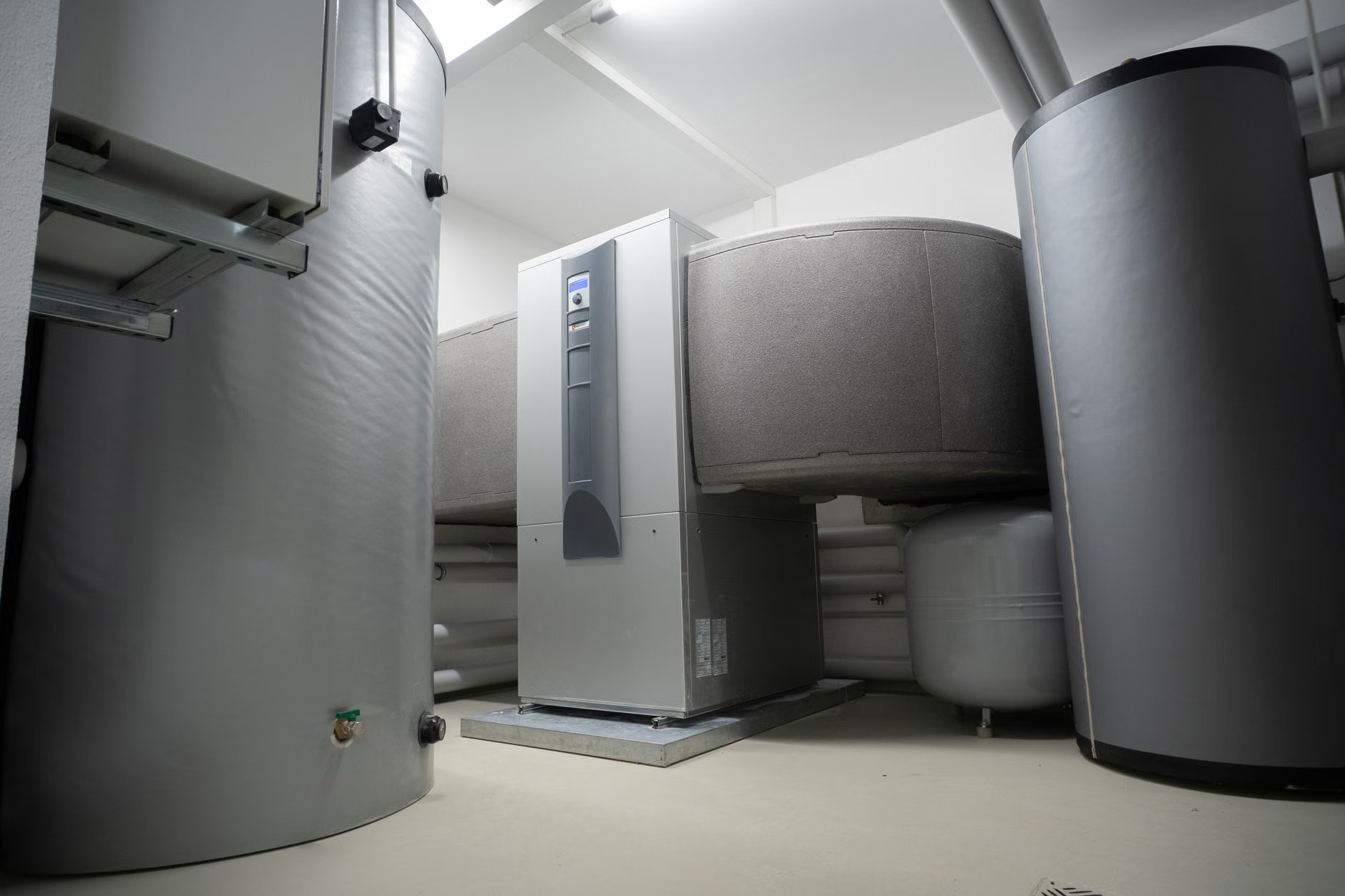
This is where the 2026 policy shift really pushes homeowners toward heat pumps. Heat pumps are essentially air conditioners that work in reverse. They don’t generate heat by burning fuel; they move existing heat from the outside air into your home. They are incredibly efficient—often 300% to 400% efficient compared to the 80-95% efficiency of a gas furnace.
Why Heat Pumps are Becoming the Standard
If you are replacing your furnace in the next few years, a heat pump is the most logical choice. While the upfront cost is higher, the long-term savings—compounded by the rising carbon tax—make them the financially prudent option. Many governments offer massive rebates or low-interest loans specifically for this transition.
Some people worry: “Do they work in the cold?” The answer is yes. Older models struggled in sub-zero temperatures, but modern “cold-climate” heat pumps are designed to operate efficiently even in harsh winter conditions. They are the standard in many Nordic countries where winter temperatures are much lower than in most of the world.
Before you commit, check if your local utility provider offers an “energy audit.” Many will send a professional to your home to tell you exactly where you are losing heat. This is often free or heavily discounted and provides a roadmap for which upgrades will give you the biggest return on investment.
Comparing Heating Methods Under Carbon Pricing
To help you visualize the cost structure, consider this comparison of common heating methods based on their exposure to future carbon levies.
| Heating Source | Carbon Tax Exposure | Energy Efficiency | Future Outlook |
|---|---|---|---|
| Natural Gas | High (Increasing) | Medium | Becoming less viable |
| Heating Oil | Very High | Low/Medium | Likely to be phased out |
| Electric Heat Pump | Low | Very High | Most stable cost profile |
| Wood/Pellet | Variable | Medium | Dependent on local regulations |
Managing the “Green Transition” Stress
It is normal to feel a bit of “green fatigue.” We are constantly told to change our lightbulbs, upgrade our appliances, and rethink our commutes. It can feel like the burden of climate change is being placed entirely on the shoulders of the individual.
However, the shift toward 2026 isn’t just about saving the planet—it’s about insulating your household from volatile commodity markets. Fossil fuel prices are notoriously unpredictable. By moving toward a more efficient, electrified home, you are effectively “decoupling” your monthly budget from the global oil and gas market. You are buying yourself peace of mind.
When you look at these upgrades, don’t view them as a “green” expense. View them as a home improvement project that increases your property value and lowers your fixed monthly overhead. Real estate agents are increasingly noticing that homes with high energy efficiency ratings sell faster and for higher prices.
Common Misconceptions About Carbon Taxes
There is a lot of noise surrounding this topic. Let’s clear up a few myths that might be clouding your decision-making.
Myth 1: “The tax will bankrupt me.”
While the taxes are designed to be noticeable, most systems are structured to be revenue-neutral. This means the money collected is often returned to households via tax rebates or dividends. The goal is to make the *inefficient* use of energy expensive, not to make basic survival unaffordable. Check your local government website to see if you are eligible for these rebates—many people leave money on the table because they don’t apply.
Myth 2: “I have to switch everything at once.”
You do not need to replace your entire heating system tomorrow. Most experts recommend the “fix the envelope first” approach. If you spend your money on insulation and draft sealing, you might find that your current furnace is perfectly adequate for a few more years. Only replace the system when it reaches the end of its life or when you have the financial capacity to make the switch to a high-efficiency alternative.
Myth 3: “Only new homes can be energy efficient.”
While it is easier to build a net-zero home from scratch, existing homes can be retrofitted to be remarkably efficient. It is not about turning your home into a laboratory; it is about plugging the leaks and optimizing the delivery of heat.
Planning for 2026 and Beyond
As we get closer to 2026, the best strategy is to become an active manager of your home’s energy profile. Start by tracking your usage. Most utility companies have an online portal where you can see your consumption patterns. Are you using more energy than your neighbors? Is your usage spiking for no apparent reason?
If you are planning to stay in your home for the next five to ten years, start a “sinking fund” for energy upgrades. Even if you only save a small amount each month, you will be prepared when the time comes to replace your water heater or furnace. Being proactive beats being reactive, especially when the utility company sends you a bill that is 20% higher than you expected.
Remember that you are not alone in this. Millions of households are going through the exact same transition. The technology is improving, the costs for heat pumps are slowly coming down as adoption increases, and the government incentives are becoming more targeted. You have time to plan, research, and execute these changes on your own terms.
Frequently Asked Questions
Will the carbon tax apply to electricity as well?
In most regions, the carbon tax applies to the *fuel* used to generate electricity (like coal or natural gas). If your local grid is powered by renewables, your electricity might be exempt from the carbon tax. Even if your grid is fossil-fuel-heavy, heat pumps are so efficient that they often still use less total energy than a traditional furnace, even after accounting for the carbon cost of the electricity.
Are there immediate rebates I can claim for home insulation?
Yes, most developed nations have federal or state-level programs. In the U.S., for example, the Inflation Reduction Act provides tax credits for energy-efficient home improvements, including insulation and high-efficiency HVAC systems. Always check your national or regional energy authority website before starting any work to ensure you qualify for the specific rebates available in your area.
How do I know if my home is a good candidate for a heat pump?
A good candidate is a home that is relatively well-insulated. If your home has significant heat loss, a heat pump will struggle to keep up. Before installing a heat pump, it is highly recommended to perform a “Manual J” load calculation—a professional assessment that determines exactly how much heating and cooling your home needs. A qualified HVAC contractor can perform this for you.
The transition to a lower-carbon future is a shift that affects us all, but it doesn’t have to be a source of constant stress. By breaking down the problem, focusing on small, actionable steps, and taking advantage of the incentives available, you can keep your family comfortable while keeping your finances on track. Keep an eye on your local policy updates, stay informed, and don’t be afraid to ask for professional audits. Your future self—and your bank account—will thank you.
For further information on energy efficiency programs and regional carbon tax updates, you can consult your national energy department’s official portal or the International Energy Agency (IEA) website at https://www.iea.org.