Subscribing to a second-hand toy service is the most effective way to declutter your home while providing your child with a constant stream of age-appropriate, developmental play. By shifting from a model of ownership to a model of access, parents can bypass the “toy graveyard” of forgotten plastic and embrace a more sustainable, minimalist lifestyle.
Key Takeaways
- Reduced Clutter: Toy subscriptions operate on a rotation basis, meaning you only have the toys your child is currently using, significantly reducing household mess.
- Economic & Environmental Value: Renting pre-loved toys reduces individual plastic waste and saves money compared to buying new items that are quickly outgrown.
- Developmental Alignment: Subscription services curate toys based on specific developmental milestones, ensuring your child always has toys that match their current skill level.
If you have spent any time in a home with young children, you know the cycle: a shiny new toy arrives, it is played with for exactly forty-eight hours, and then it finds a permanent home under the sofa or deep within a plastic bin, never to be touched again. We live in an era where we are constantly told that more toys equal better development, but the reality is often the opposite. Too many toys can actually overwhelm a child’s ability to focus, leading to less creative play and more “boredom” despite a room full of options.
This is where the second-hand toy subscription model enters the frame. It is not just about saving money; it is about reclaiming your living space and your sanity. But how does it actually work, and is it a sustainable choice for your family?
The Mechanics of the Toy Subscription Economy
The concept is straightforward: you pay a monthly or quarterly fee, and in exchange, you receive a curated box of toys tailored to your child’s current age and developmental stage. When your child is ready for a change, you pack the current set back into the box, send it back, and receive a new shipment. It is essentially a library for play.
Most of these services focus on high-quality, often wooden or ethically sourced plastic toys that are built to last. Because these items are designed to be circulated, they are rigorously cleaned and sanitized between families. This is a critical point for many parents: the hygiene standards of these services are generally far higher than the “pre-loved” toys you might find at a local garage sale or a thrift store.
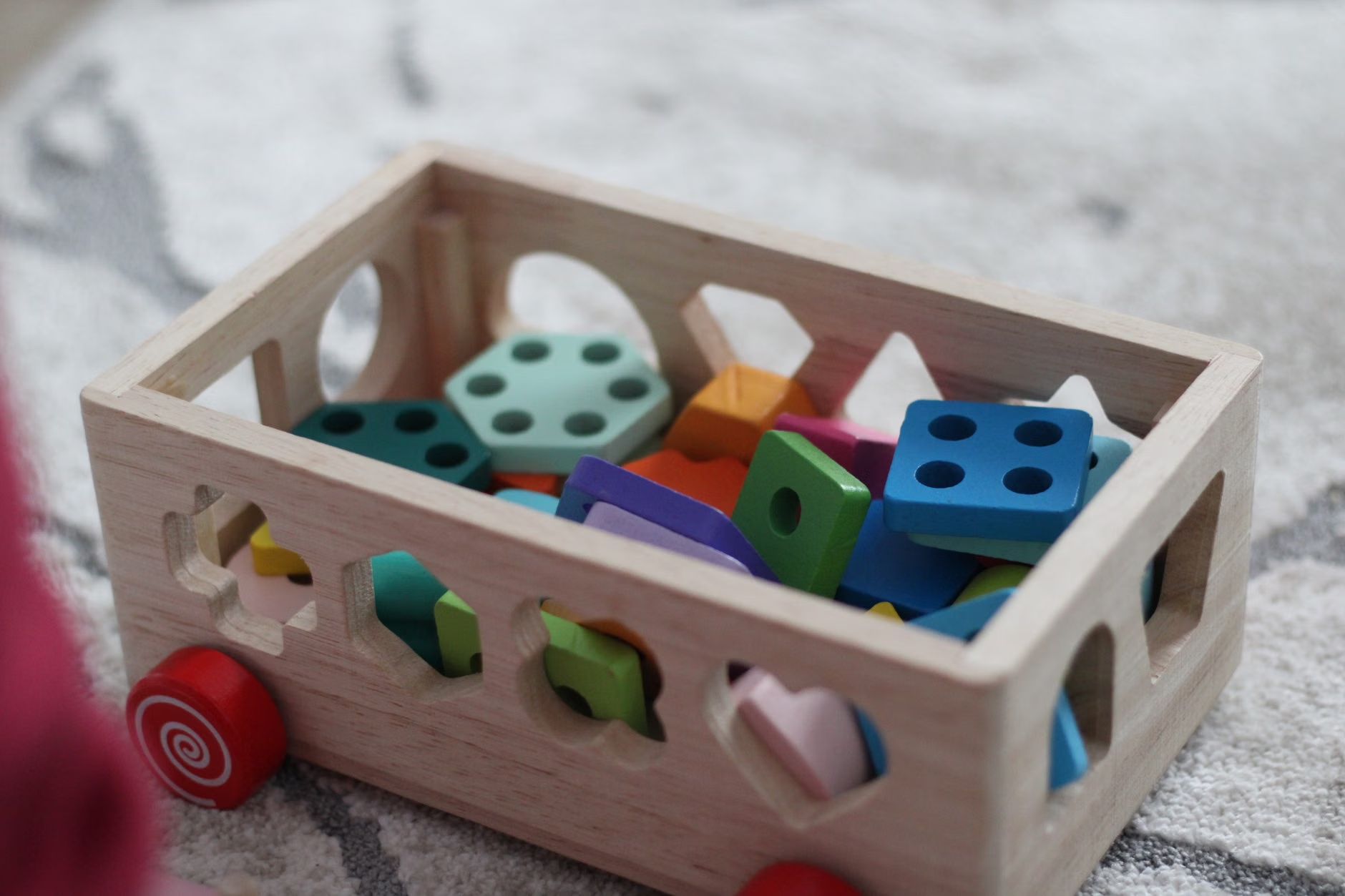
Think of it as a professional curation service. Instead of spending hours scrolling through online marketplaces trying to find a high-quality shape sorter or a Montessori-style stacking tower, you have an expert team selecting the best developmental tools for your child. The “second-hand” nature is the secret sauce—it keeps prices lower and keeps perfectly functional toys in circulation rather than in a landfill.
Why Less Really Is More in the Toy Room
There is a growing body of research, including studies from the University of Toledo, suggesting that a smaller number of toys encourages higher-quality play. When children have fewer choices, they are forced to use their imagination to repurpose what they have. They engage more deeply with each item, learning how things work, how to balance them, and how to create narratives around them.
When you subscribe to a toy service, you are essentially outsourcing the “decluttering” process. Because you know the toys are going back in a few weeks, you don’t feel the pressure to store them permanently. This creates a rotating environment where the “newness” of the toys is preserved. Every time a new box arrives, it feels like a special event, which often leads to more engagement than a room permanently filled with the same old objects.
Furthermore, this model helps parents identify what their child is actually interested in. If your child plays with a specific type of puzzle for three weeks straight, you know that is a skill they are mastering. If they ignore a set of blocks entirely, you can mark that as a “not-yet” and move on to something else in the next shipment without feeling guilty about the sunk cost of a purchase.
Evaluating the Costs: Is It Cheaper Than Buying?
One of the most common questions is whether the subscription fee is truly cost-effective. To answer this, we need to compare the subscription model against the “buy and discard” cycle. Let’s look at a typical breakdown.
| Feature | Buying New | Subscription Service |
|---|---|---|
| Initial Cost | High per item | Consistent monthly fee |
| Storage | Permanent space required | Zero permanent space |
| Longevity | Outgrown quickly | Always age-appropriate |
| Resale Value | Effort required to sell | Not applicable |
If you are the type of parent who buys high-quality, sustainable wooden toys, the subscription fee is often less than the monthly cost of buying those same items new. If you are a bargain hunter who buys cheap plastic toys at big-box stores, the subscription might seem more expensive initially. However, when you factor in the “cost of clutter”—the time spent organizing, the stress of a messy house, and the environmental impact of cheap plastics—the subscription model offers a much higher value proposition.
The Environmental Argument
We cannot ignore the elephant in the room: the sheer volume of plastic waste generated by the toy industry. According to reports from the United Nations Environment Programme, toys are one of the most plastic-intensive industries in the world. Most of these toys are made from a mix of plastics that are difficult to recycle, meaning they often end up in landfills.
By opting for a subscription service, you are participating in a circular economy. A single high-quality toy can be enjoyed by dozens of children over its lifespan. This significantly reduces the demand for new manufacturing and the carbon footprint associated with shipping and packaging individual items. For parents who are conscious of the world their children will inherit, this is a tangible way to reduce consumption without sacrificing the quality of play.
Common Pitfalls and How to Avoid Them
No system is perfect, and there are a few things to watch out for when signing up for a subscription. The biggest concern for most parents is the “missing piece” anxiety. What happens if your child loses a block or a puzzle piece?
Most reputable services have a built-in policy for this. They usually charge a small fee for lost parts or have a “forgiveness” policy for a certain number of missing items per year. It is vital to read the terms of service before subscribing so you aren’t blindsided by unexpected charges. If you are a parent of a child who is prone to losing things, look for services that prioritize durable, “all-in-one” toys rather than sets with dozens of tiny components.
Another potential issue is the “transition period.” Sometimes, a child might be deeply attached to a specific toy when the time comes to send it back. A practical tip here is to keep a list of the toys your child truly loves. If they are still obsessed with a specific item after three months, consider purchasing that one item from the service—many platforms offer a “keep it” option at a discounted price for subscribers.
Integrating Subscriptions into Your Daily Routine
To make the most of a subscription service, treat it as a deliberate part of your home management. Don’t just dump the new box in the middle of the room. Instead, introduce the toys gradually. Maybe pick two items to put out on the first day, and keep the others in the storage bin to rotate in later in the week.
This “toy rotation” strategy is a classic Montessori technique. By limiting what is available, you prevent sensory overload. When the child gets bored with the current selection, you swap them out for the ones you held back. This makes the subscription service last longer and keeps the child’s interest piqued for the entire duration of the rental period.
Sustainability Beyond the Subscription
While toy subscriptions are a fantastic tool, they are only one part of the puzzle. To really commit to a sustainable play environment, consider combining the subscription with a “toy library” mentality in other areas of your life. Can you trade books with neighbors? Can you host a toy swap party with other parents?
The goal is to move away from the mindset of “acquisition” and toward a mindset of “experience.” When you teach your child that toys are meant to be shared and passed on, you are teaching them valuable lessons about community, sustainability, and the true value of objects. It shifts the conversation from “I want that new thing” to “What fun thing can I play with today?”
Final Thoughts on Modern Play
Choosing to use a second-hand toy subscription is a small but meaningful change in how we manage our family lives. It acknowledges that we don’t need to own everything to enjoy it, and that our homes serve a better purpose as spaces for living rather than warehouses for plastic. It requires a bit of logistical management—packing boxes and keeping track of returns—but for many, the trade-off of having a cleaner, more focused, and more environmentally friendly home is well worth the effort.
If you are feeling overwhelmed by the sheer volume of toys in your home, start by auditing what you currently have. Identify the items that never get played with and donate them. Then, try a subscription service for a few months. You may find that your child is not only playing more effectively but that you are finally enjoying a living room that feels like a home, not an aisle in a toy store.
Frequently Asked Questions
1. How do these services ensure the toys are clean and safe for my child?
Reputable subscription services use industrial-grade, non-toxic sanitizing processes. They inspect every item for damage, wear, and potential hazards before cleaning and packing them for the next customer. Most services provide detailed information about their cleaning protocols on their websites.
2. What happens if my child breaks a toy while playing with it?
Most services understand that toys are meant to be played with and that accidents happen. Normal wear and tear is usually covered by the subscription fee. However, if a toy is destroyed beyond repair due to misuse, there is often a replacement fee. Always check the specific “damage policy” of the company you choose.
3. Are these services available globally?
Many toy subscription services are regional due to the logistics of shipping heavy boxes. While some have expanded internationally, many operate within specific countries or regions to keep shipping costs and carbon footprints low. Check the shipping policy on the service’s website to see if they deliver to your specific area.
For further information on sustainable consumption and child development, visit the following resources:
– United Nations Environment Programme (UNEP)
– Zero Waste Europe
– National Association for the Education of Young Children (NAEYC)