Key Takeaways
- The Anti-Binge: Unlike traditional media designed to trigger dopamine spikes, Slow TV relies on long, uninterrupted takes to lower cortisol levels and foster calm.
- Cognitive Reset: For parents and children constantly bombarded by high-speed content, Slow TV acts as a “visual white noise,” allowing the brain to transition from a state of high alert to a state of rest.
- Practical Integration: You don’t need to change your lifestyle; start by replacing 30 minutes of high-intensity evening screen time with ambient, nature-focused, or rhythmic “slow” content.
The most effective way to help your family decompress after a day of high-speed digital input isn’t necessarily to turn the screens off—it’s to change what you are watching. While we are often told that all screens are created equal, the “Slow TV” movement proves that the pacing, editing, and content of what we consume can actually serve as a tool for nervous system regulation rather than a source of overstimulation.
If you are a parent in your 30s or 40s, you know the feeling: the day is a blur of Slack notifications, school emails, social media scrolling, and the relentless pace of a household. By the time 8:00 PM rolls around, the idea of watching another high-stakes drama with rapid-fire editing feels less like entertainment and more like a chore. This is where the quiet, meditative power of Slow TV comes in.
What Exactly Is ‘Slow TV’ and Why Does It Feel Different?
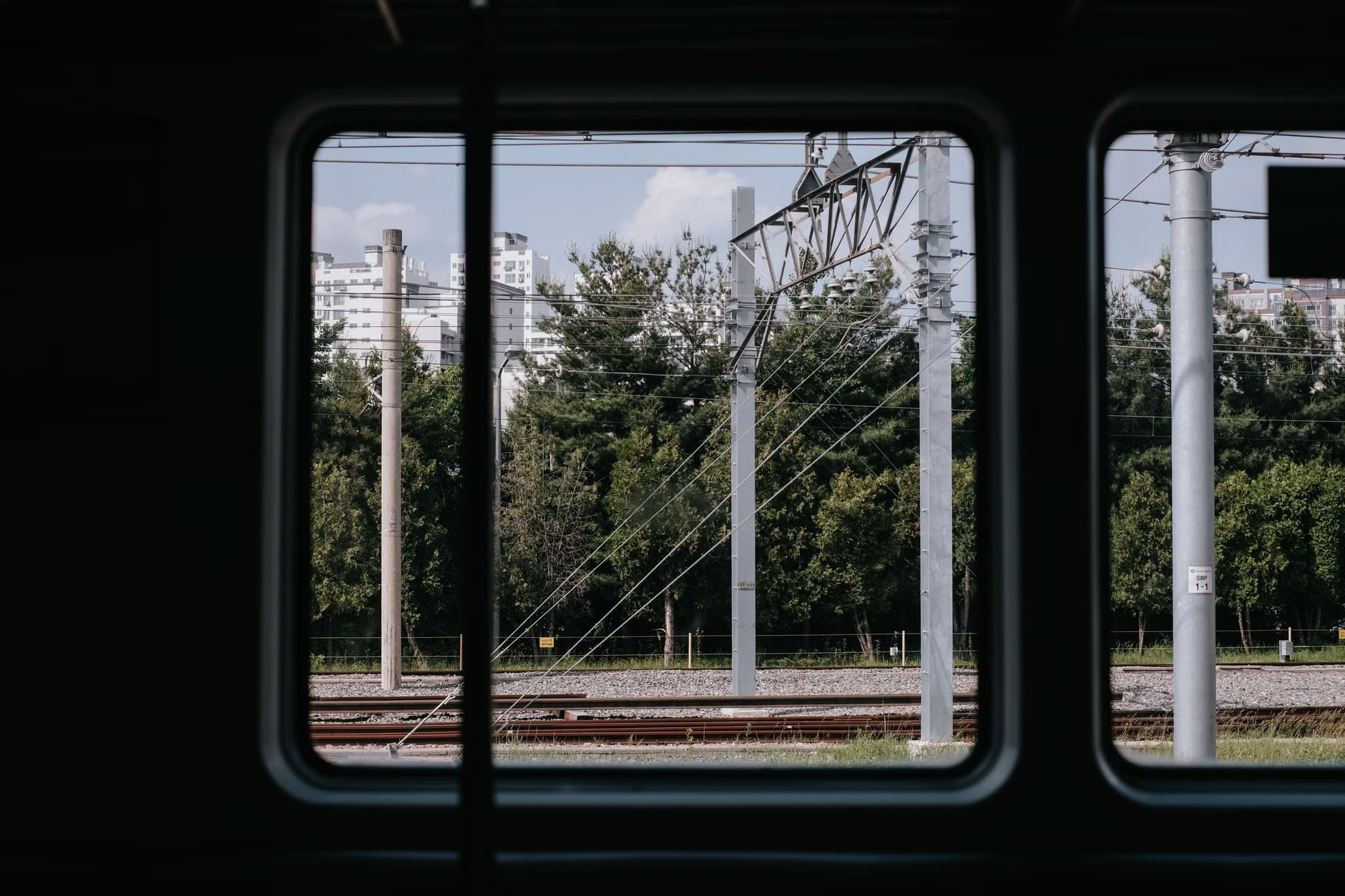
At its core, Slow TV is a genre of television programming that records ordinary events in their entirety, with minimal editing, narration, or dramatic structure. It originated in Norway—most famously with the 2009 broadcast of a seven-hour train journey from Bergen to Oslo—and has since evolved into a global phenomenon. Think of it as the visual equivalent of lo-fi beats or a white noise machine.
Standard media is designed to keep you engaged through “information density.” Quick cuts, loud soundtracks, and cliffhangers are all engineered to keep your brain in a state of high arousal. Slow TV does the exact opposite. It provides a “low-arousal” experience. When you watch a boat travel down a canal for three hours or a fireplace burn for a full afternoon, your brain stops scanning for threats or plot twists. It is allowed to enter a state of “soft fascination,” a term coined by environmental psychologists to describe the relaxed attention we give to nature or rhythmic movement.
For a generation that grew up in the transition from analog to digital, we are uniquely susceptible to the “always-on” nature of modern life. Our brains are essentially running too many apps at once. Slow TV offers a way to close those background processes without having to completely power down the device.
The Science of Low-Arousal Media
Why should you care about the “speed” of your television? Research into media psychology suggests that the pacing of visual content directly impacts our autonomic nervous system. High-intensity content—like action movies or news cycles—activates the sympathetic nervous system, the “fight or flight” response. This is why you might feel “wired but tired” after a long Netflix binge.
Slow TV operates on the parasympathetic nervous system, which governs our “rest and digest” states. By removing the need for the brain to predict what happens next, you reduce the cognitive load. You aren’t processing complex social interactions, plot developments, or high-contrast imagery. Instead, you are observing a steady, predictable flow of information.
This is particularly useful for families. If your children are overstimulated from school or extracurricular activities, a high-octane cartoon is the last thing they need. Slow TV can act as a bridge between the chaos of the day and a restful bedtime, providing a shared experience that doesn’t demand intense focus from anyone.
Curating Your Family’s ‘Slow’ Environment
You don’t need to commit to a seven-hour train ride to reap the benefits. The beauty of the Slow TV trend is its flexibility. You can incorporate it into your home in ways that feel natural rather than forced. Here is how to curate your own environment:
| Method | Best For | Implementation |
|---|---|---|
| The Background Loop | During dinner or homework | Use a fireplace or aquarium video at low volume to ground the room. |
| The ‘Wind-Down’ Window | Pre-bedtime routine | Switch from tablets/phones to a 20-minute nature walk video on the main TV. |
| The Weekend Reset | Saturday mornings | Keep a long-form landscape video on while drinking coffee and reading. |
The key here is avoiding “content creep.” If you find yourself checking your phone while the Slow TV is on, that’s perfectly fine. The goal isn’t to be mesmerized; the goal is to create a peaceful atmosphere. If you’re looking for content, start with reputable sources like public broadcasting archives (which often have hours of raw, unedited footage) or high-quality nature channels on YouTube that focus on 4K ambient footage without annoying music overlays.
Common Pitfalls and How to Avoid Them
It’s easy to get this wrong if you treat Slow TV like standard entertainment. Here are a few mistakes parents often make when introducing this into their routine:
1. The “Entertainment Trap”: Don’t try to “watch” it. If you sit down expecting a plot, you will be bored, and you will reach for your phone. View it as a visual background, not a show. If you treat it like a movie, you’ll miss the point of the sensory reset.
2. Audio Overload: Some “ambient” videos have terrible, repetitive, or jarring music. Look for videos that focus on natural soundscapes (wind, water, crackling logs). If the audio is annoying, mute it and play your own calm music or simply leave it silent.
3. High-Contrast Screens: If you are using a very bright, high-contrast LED screen, turn the brightness down. The goal is to make the screen feel like a window, not a spotlight. Many modern smart TVs have a “warm” or “night” picture setting that makes the light feel softer on the eyes.
Building a Family Habit Without the Resistance
If you have children, you know that “turning off the TV” is often met with resistance. The beauty of transitioning to Slow TV is that you aren’t removing the screen—you are changing the content. It’s a compromise. You get the peace and quiet you need, and they still get to watch “the TV.”
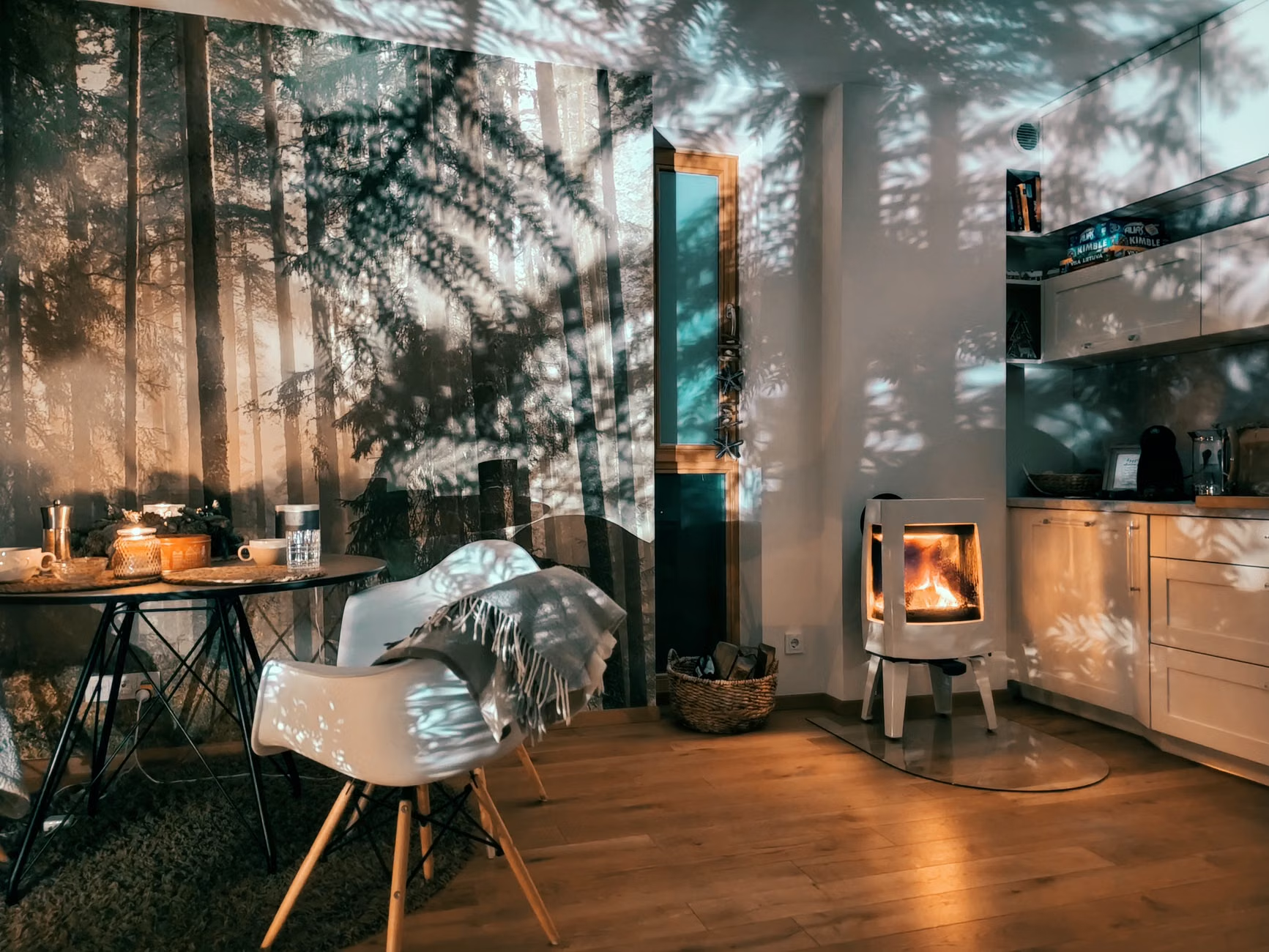
Try framing it as “cozy time.” During the colder months, a fireplace video is a natural fit. During warmer times, look for slow-motion underwater scenes or time-lapse videos of gardens growing. These visuals are inherently engaging to children without being addictive. They encourage observation rather than consumption.
Another tip: Let the children help pick the scene. Whether it’s a bustling city street in Japan or a quiet beach in the Caribbean, giving them a choice helps them feel involved in the “cozy time” ritual. It turns the act of relaxing into a shared family activity rather than a parental decree.
The Deeper Implications of Slow Media
Why is this trend catching on now? In many ways, Slow TV is a reaction to the “attention economy.” We live in an era where every app, website, and streaming service is fighting for the smallest fraction of our attention. By choosing to watch something that doesn’t demand your attention, you are making a quiet political statement against the constant need to be “engaged.”
For parents in their 30s and 40s, this is a form of digital boundary setting. We often feel guilty about screen time, but we also realize that we are too tired to be “on” all the time. Slow TV provides a middle ground. It is intentional screen time. It is a way to use technology to create a calm environment, rather than a frantic one.
Furthermore, it teaches our children that screens don’t always have to be about high-speed dopamine hits. It helps them regulate their own stimulation levels. If they learn that a screen can be a tool for relaxation, they are less likely to view it solely as a source of intense excitement or social validation.

Practical Steps to Get Started Today
If you want to try this tonight, don’t overcomplicate it. You don’t need a subscription or expensive hardware. Just follow these steps:
- Audit your evening: Identify the 30-minute block where the “after-work/after-school” chaos is at its peak.
- Find the resource: Search for “4K nature ambient” or “slow train journey” on your preferred video platform.
- Adjust the room: Dim the lights. The screen should be the primary, soft light source.
- Set the rule: No phones allowed for the family during this time. The goal is to observe the screen or just sit together in the quiet.
- Observe the shift: After a few days, notice if the collective mood of the house changes. Do the kids settle down faster? Do you feel less “wired”?
It’s important to remember that this isn’t a cure-all for stress. It won’t fix a broken schedule or eliminate the pressures of your job. However, it is a low-effort, high-reward habit that can make the transition to evening hours significantly more manageable. It is about reclaiming the pace of your life, one hour at a time.
As you experiment with this, keep in mind that different people respond to different types of “slow.” Some find the sound of rain on a roof incredibly grounding, while others find it distracting and prefer the visual of a forest in autumn. Experiment with different types of content until you find the “flavor” of calm that works for your household. The goal is not to find the “perfect” video, but to find the one that helps your family breathe a little deeper.
The slow TV trend is a gentle reminder that we have more control over our digital environment than we think. We often feel like victims of the content we consume, but we can be curators of it. By choosing content that respects our need for rest, we can turn our homes into a sanctuary from the relentless pace of the outside world. Take it slow, keep the volume low, and enjoy the quiet.
Frequently Asked Questions
1. Is ‘Slow TV’ just boring?
It can feel that way if you are expecting the narrative structure of a traditional show. However, that “boredom” is exactly what allows your brain to shift out of high-alert mode. Think of it as a reset button for your nervous system rather than entertainment.
2. Can I use this for toddlers?
Yes, in many cases, nature-based Slow TV is far better for young children than fast-paced animations. It provides a steady, non-threatening visual experience that can help with calming down before nap or bedtime. Always monitor their reaction to ensure it doesn’t cause overstimulation.
3. How do I find quality Slow TV content that doesn’t have ads?
Many public broadcasting archives offer high-quality, ad-free, long-form content. Additionally, many premium streaming services have “ambient” categories now. If you are using platforms like YouTube, look for channels that explicitly state “no ads” or “commercial-free” in their descriptions, or consider using a browser extension to block interruptions if you find them jarring.
For further reading on the effects of low-arousal environments, you can look into the research regarding environmental psychology and cognitive restoration. Staying mindful of the content you invite into your home is the first step toward a more balanced digital life.