Key Takeaways
- Quality over Quantity: A growth-mindset toy library prioritizes toys that challenge problem-solving skills rather than those that provide passive entertainment.
- Economic and Environmental Impact: Subscription-based toy libraries significantly reduce household plastic waste and save hundreds of dollars annually compared to purchasing new toys.
- Psychological Development: Rotating toys based on developmental stages fosters a “growth mindset” by encouraging children to master new skills and embrace challenges without the distraction of clutter.
The most effective way to foster a growth mindset in your toddler is not by buying more, but by curating less. If your living room currently looks like a toy store exploded, you aren’t alone—but you are likely hindering your child’s ability to focus and learn.
We live in an era of “convenience consumption.” A quick search online, a click of a button, and a new plastic toy arrives on the doorstep. It’s a dopamine hit for the parent, but for the toddler, it often leads to a cycle of overstimulation and rapid disinterest. A growth-mindset toy library changes this dynamic entirely. Instead of accumulating items that serve one purpose for two weeks, you gain access to a circulating collection of high-quality, developmental tools that evolve alongside your child.
The Psychology of the “Too Many Toys” Phenomenon
Have you ever noticed that when your child is surrounded by dozens of toys, they often end up playing with the cardboard box or a kitchen spoon instead? This isn’t just a quirky toddler habit; it’s a response to sensory overload. Research in environmental psychology suggests that when a child’s environment is cluttered, their attention span shortens. They move from one toy to the next, touching but not engaging.
A “growth mindset,” a term coined by psychologist Carol Dweck, is the belief that intelligence and ability can be developed through hard work and persistence. When a child has too many toys, the “work” part of play becomes optional. If a toy is too hard, they simply toss it aside and grab another. By limiting the number of available toys through a library system, you force a different kind of engagement. The toy becomes a puzzle to be solved, not a passive object to be discarded.
What is a Growth-Mindset Toy Library?
A toy library operates much like a public book library. You pay a membership fee, borrow a set number of toys for a specific duration, and then return them to swap for new ones. However, a “growth-mindset” library takes this a step further by curating its collection based on developmental milestones rather than current pop-culture trends.
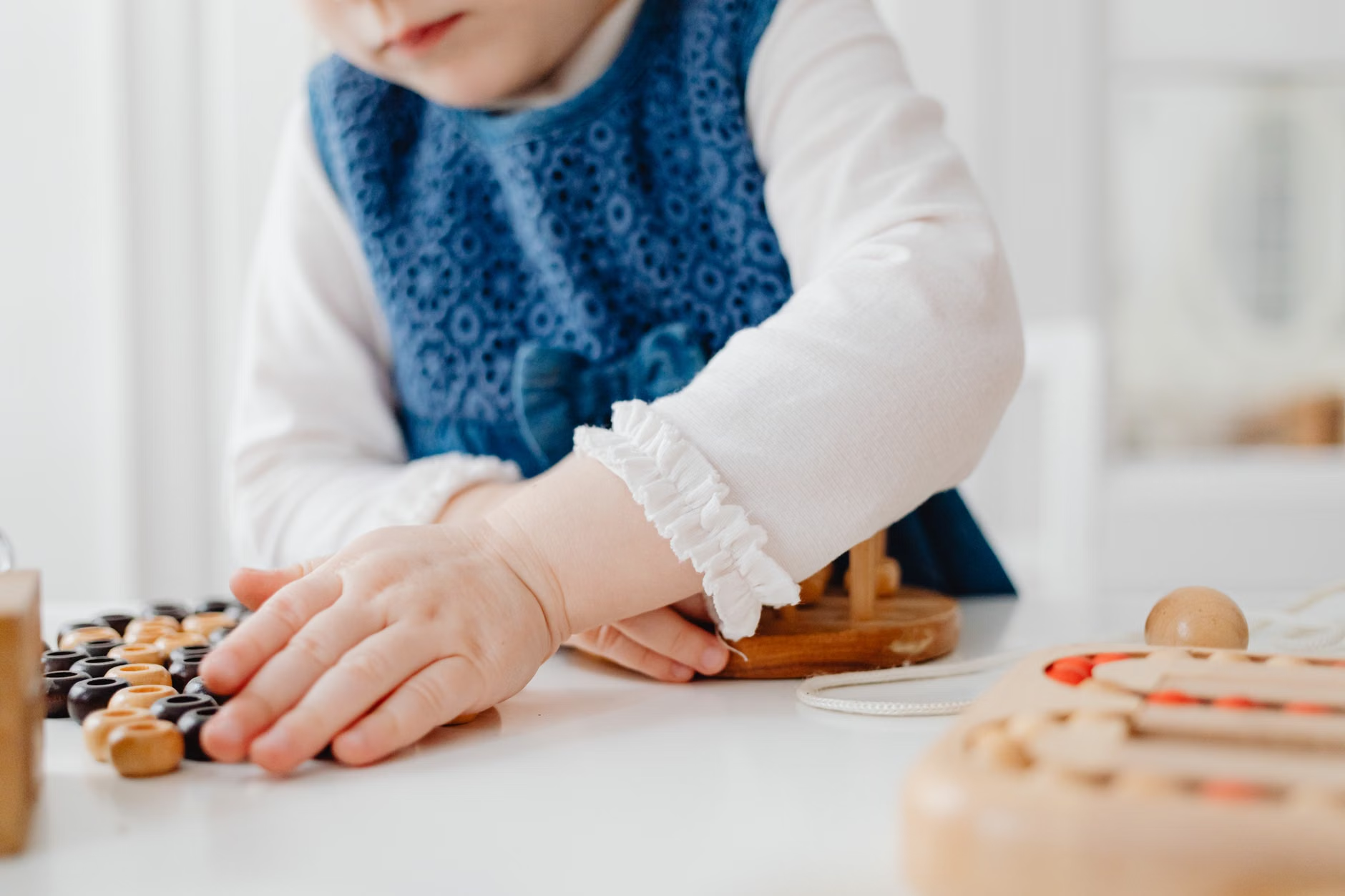
These libraries typically focus on open-ended play. Think unit blocks, magnetic tiles, complex puzzles, and balancing games. These items don’t have a “right” way to be played with, nor do they rely on batteries or flashing lights to entertain. They require the child to use their imagination and logical reasoning. When the challenge is met, the child feels a sense of mastery—the core foundation of a growth mindset.
The Economics of Borrowing
Let’s look at the numbers. The average parent spends hundreds, if not thousands, of dollars on toys during a child’s first five years. Most of these toys are used for a very narrow window of development—perhaps three to six months. Once the child hits the next milestone, that toy becomes dead weight, eventually ending up in a donation bin or a landfill.
| Feature | Retail Purchase | Toy Library Subscription |
|---|---|---|
| Initial Cost | High (Per item) | Low (Monthly fee) |
| Storage | Permanent clutter | Rotating/Minimal |
| Developmental Fit | Fixed | Adaptive/Curated |
| Sustainability | High waste | Circular economy |
Implementing the Strategy: How to Start
You don’t necessarily need a formal subscription service to adopt this mindset. You can start a “mini-library” in your own home. The goal is to rotate toys so that only a small, manageable selection is available at any given time. Here is how to execute this effectively without making it a chore.
Step 1: The Audit
Gather every toy currently in your home. Be ruthless. Categorize them into three piles: “Developmentally Appropriate,” “Broken/Missing Pieces,” and “Outgrown.” The broken items should be recycled. The outgrown items should be donated or sold. You will likely find that you have three times as many toys as your child actually uses.
Step 2: The Rotation Schedule
Divide your remaining toys into four or five bins. Keep one bin out for your child to play with. Store the others in a closet or an out-of-the-way space. Every two to three weeks, swap the bins. When you bring out a “new” bin, the toys will feel fresh and exciting again, reigniting your child’s interest and focus.
Step 3: Focus on “Open-Ended” Materials
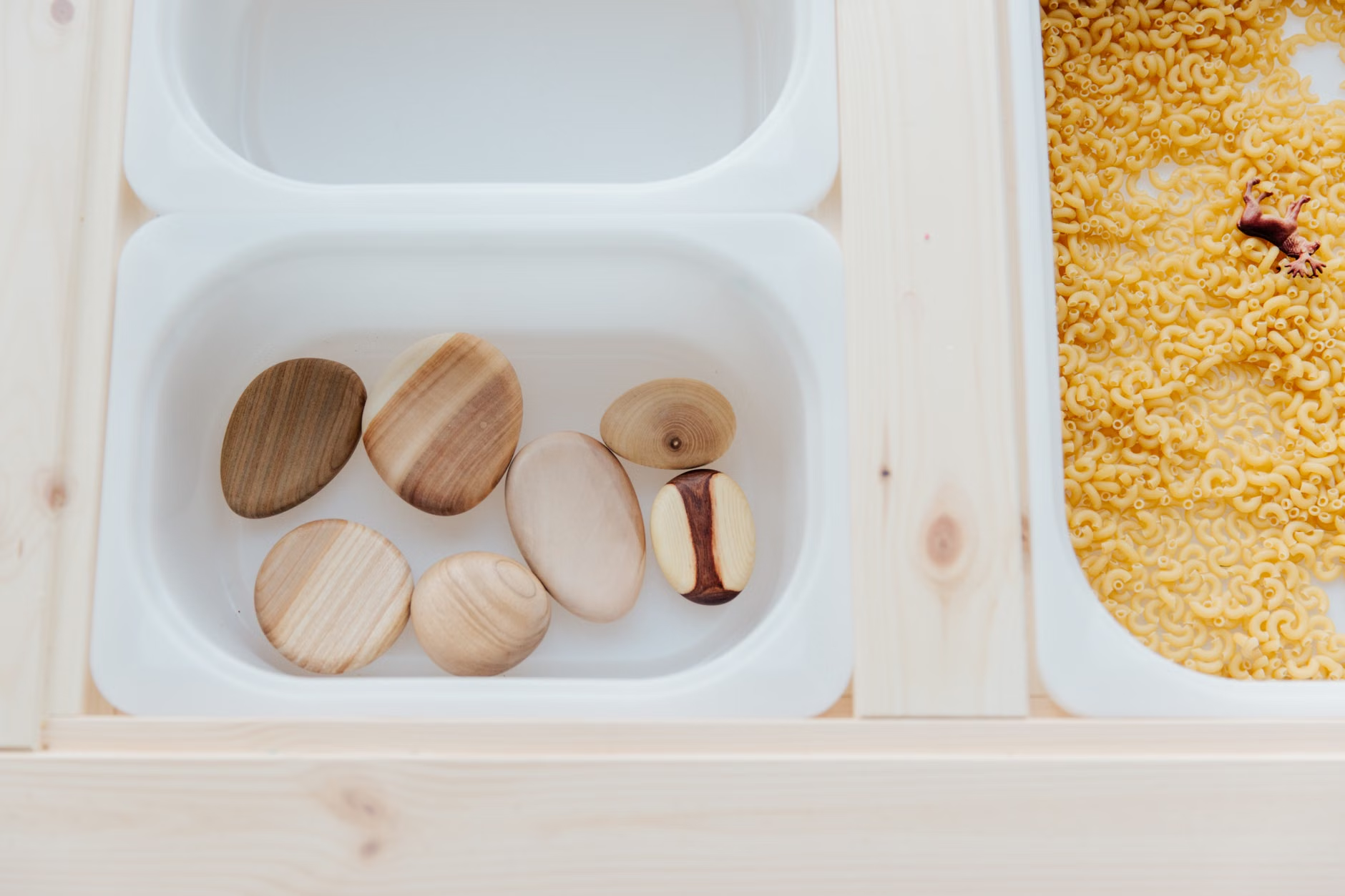
When selecting toys to keep, prioritize items that foster creativity. A plastic toy that makes a sound when you press a button is a closed loop—the interaction starts and ends with the button press. A set of wooden blocks, by contrast, is an open loop. The child can build a tower, a bridge, or a car. This is where the growth mindset thrives: the child is the architect of their own play.
Common Mistakes and How to Avoid Them
Even with the best intentions, parents often fall into traps that defeat the purpose of a toy library or rotation system. Let’s look at the most common pitfalls.
- The “Too Many Toys” Trap: Even if you are rotating, having too many toys in a single rotation bin causes the same distraction as having them all out at once. Keep the number of items per rotation low—usually 6 to 8 items is the sweet spot for a toddler.
- Ignoring the Child’s Interest: A growth-mindset approach isn’t about forcing your child to play with “educational” toys you think they should like. If they aren’t interested in a specific puzzle, don’t force it. Rotate it out and try again in a month. Persistence is key, but so is autonomy.
- Neglecting Hygiene: If you are using a public toy library, ensure you understand their sanitization process. If you are doing home rotations, make it a habit to wipe down toys during the rotation process. It’s a small step that ensures longevity for the toys.
The Long-term Implications of Minimalist Play
When we talk about the “growth mindset,” we aren’t just talking about academic success in the future. We are talking about emotional regulation and problem-solving skills today. A child who learns to stick with a difficult puzzle is learning that frustration is a temporary state, not a permanent barrier.
By removing the constant influx of new, easy-to-use plastic toys, we provide our children with the space to be bored. It sounds counterintuitive, but boredom is the precursor to creativity. When a child isn’t being constantly entertained by a screen or a battery-operated toy, they are forced to look inward and outward at their environment. They start to ask questions: “What happens if I stack these this way?” or “How can I make this work?”
Sustainability as a Secondary Benefit
While the focus here is on child development, we cannot ignore the environmental footprint of modern parenting. The toy industry is notoriously plastic-heavy. Many toys are made from low-quality materials that are difficult to recycle. By participating in a toy library, you are contributing to a circular economy. You are sharing resources, reducing the demand for new manufacturing, and teaching your child that value is found in the experience of playing, not in the ownership of the object.
This is a lesson that will serve them long after they have outgrown their toddler years. It teaches them about stewardship, about the value of shared community resources, and about the difference between “wanting” and “needing.”
Final Thoughts and Cautions
Transitioning to a growth-mindset toy library or a rotation system is not about creating a “perfect” home. It’s about creating a functional one. You might find that your child initially protests when you take away their mountain of toys. This is normal. The initial reaction to change is often resistance, but once the dust settles, you will likely see a significant improvement in their concentration and the quality of their play.
Remember that this is a journey. There will be days when the house is a mess, and that is okay. The goal is to build a system that supports your child’s growth, not to add another layer of stress to your parenting life. Start small, be consistent with your rotations, and observe how your child’s engagement changes. You might be surprised to find that the less you give them, the more they actually learn.
For further reading on the developmental benefits of play, you can explore the resources provided by the National Association for the Education of Young Children (NAEYC), which offers extensive research on how environment and play structure influence early childhood development.
Frequently Asked Questions
1. How do I know which toys are “growth-mindset” friendly?
Look for toys that are “open-ended.” These are items that do not have a single, pre-determined outcome. Good examples include unit blocks, magnetic tiles, art supplies, and simple wooden puzzles. If the toy does the work for the child (flashing lights, speaking, or moving on its own), it is likely not a growth-mindset tool.
2. My child gets upset when I rotate their toys. What should I do?
This is a common reaction. Try involving your child in the process. Ask them, “Which toys do you want to put to sleep for a while so we can bring out the new ones?” By giving them a sense of agency, you turn the rotation into a collaborative task rather than a loss of their possessions.
3. Are toy libraries hygienic?
Reputable toy libraries have strict sanitization protocols that are often more rigorous than what happens in a typical home. They use child-safe, non-toxic cleaners and follow specific quarantine periods for toys to ensure they are safe for the next user. If you are using a library, don’t be afraid to ask about their specific cleaning process.
Disclaimer: This content is based on general research and should not be considered professional medical or psychological advice. Always observe your child’s unique needs and consult with a pediatrician if you have concerns about their development.