Repairing your clothes is not just an eco-friendly trend; it is a practical, cost-saving strategy that transforms your relationship with your wardrobe and teaches your children the value of maintenance over consumption.
- Economic Sense: Extending the life of a garment by just nine months can reduce its carbon, water, and waste footprint by 20-30%, while saving you significant replacement costs.
- Skill Building: Learning basic mending turns “unwearable” items into functional pieces and provides a hands-on educational activity for children.
- Mindset Shift: Moving from a “disposable” culture to a “repair” culture reduces the mental load of constant shopping and decision fatigue.
We have all been there. You are rushing to get the kids ready for school, and suddenly, you notice the dreaded hole in the knee of your child’s favorite pants, or perhaps you find that your own go-to sweater has developed a snag. The instinct for many of us in our 30s and 40s, juggling professional responsibilities and the chaotic demands of parenting, is to toss the item into the “to be donated” pile—or worse, the trash—and hop onto a website to order a replacement.
But the “slow-fashion” movement is shifting the narrative. It isn’t about being a master tailor or spending hours hunched over a sewing machine. It is about reclaiming the utility of the things we already own. When we treat clothing as a resource rather than a temporary commodity, we stop being passive consumers and start becoming stewards of our own belongings.
The Hidden Cost of the “Fast-Fashion” Cycle
The modern clothing industry is designed to make us feel that a garment is “done” the moment it shows a sign of wear. This is a psychological trick as much as a business model. When we see a loose button or a small rip, we interpret it as a failure of the object, which triggers a need for a replacement. However, if we look at the data, the environmental and financial costs of this cycle are staggering.
According to reports from the World Economic Forum, the fashion industry is responsible for up to 10% of global carbon emissions. By simply keeping our clothes in rotation for longer, we drastically reduce the demand for new resource extraction. For a parent, this isn’t just about saving the planet; it’s about modeling a lifestyle for your children where things are valued for their history and utility, not just their brand name or their shiny, new exterior.
Consider the “Cost Per Wear” (CPW) metric. If you buy a pair of jeans for $80 and wear them 10 times before they rip and you throw them away, your CPW is $8. If you mend that rip and wear them 100 times, your CPW drops to $0.80. The math is simple, yet we often ignore it because we are too busy to pick up a needle.
Why Mending is the Ultimate Parenting Life Hack
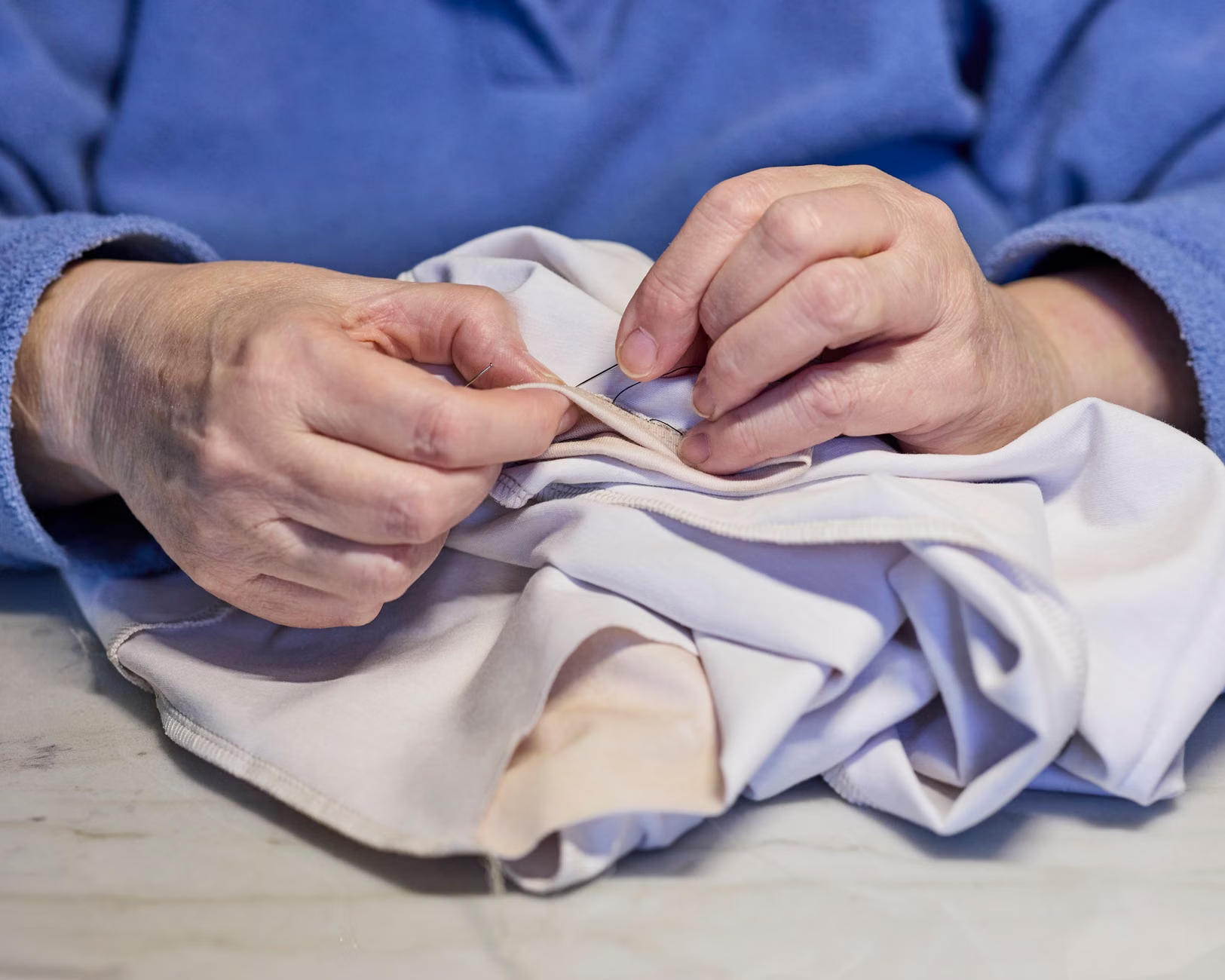
Beyond the environmental benefits, there is a surprising amount of “mental load” relief that comes from knowing how to repair things. When you have a small kit of supplies ready, you no longer have to panic when an accident happens. That stress of “Oh no, they can’t wear these to school tomorrow!” evaporates because you know you can fix the issue in fifteen minutes.
Furthermore, this is a fantastic way to engage with your children. In a digital world where kids are constantly consuming content, showing them how to perform a simple whip stitch or sew on a button is a grounding, tactile experience. It teaches patience, fine motor skills, and the reality that objects require care. It turns a “broken” moment into a “bonding” moment.
The Basic “Repair Kit” for Busy Households
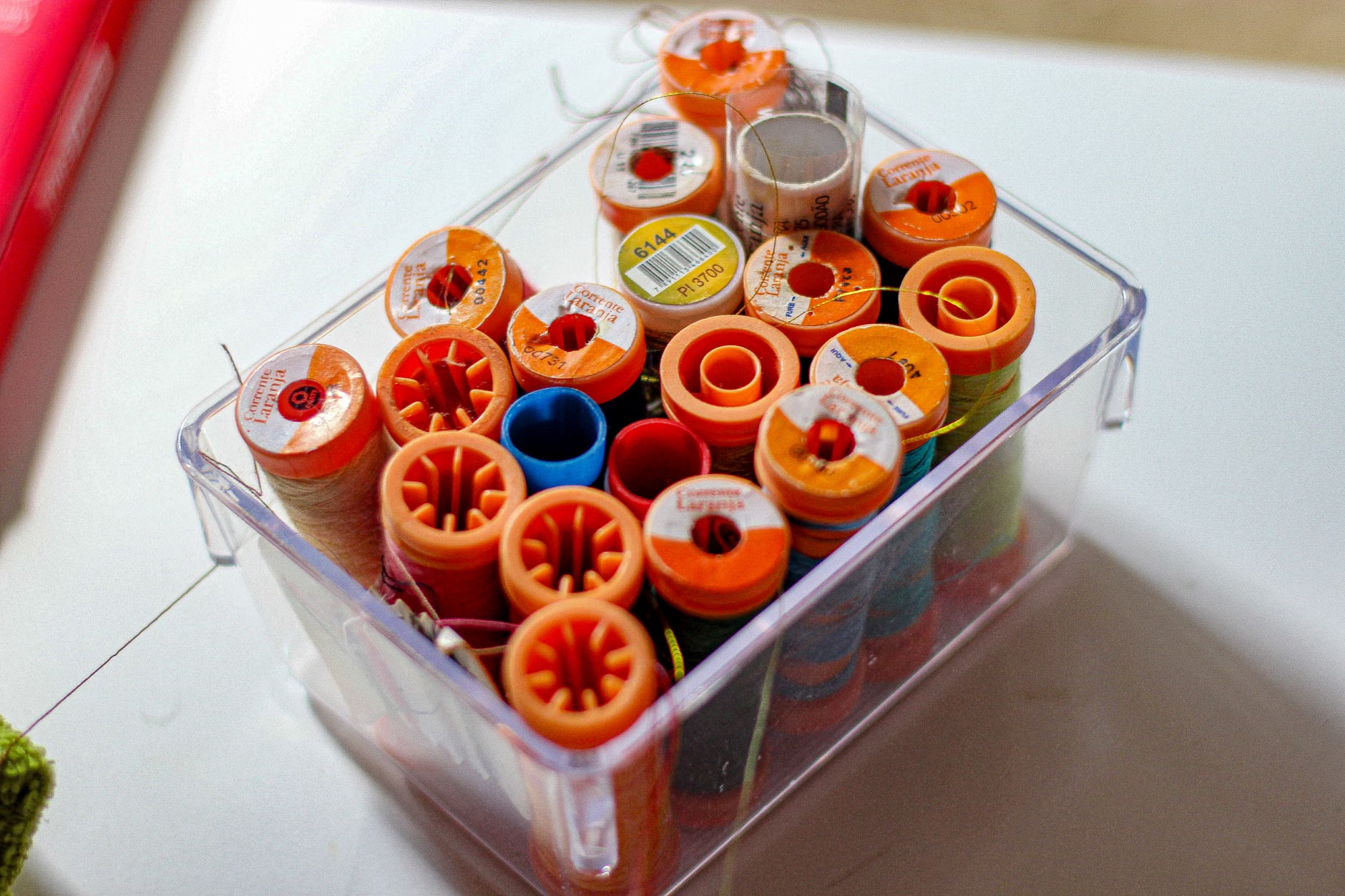
You do not need a professional sewing studio. In fact, most of the “mending” you will do requires very little equipment. Here is what you should keep in a small, accessible box:
| Item | Why you need it |
|---|---|
| All-purpose needles | Different sizes for different fabric thicknesses. |
| Polyester thread | Stronger and more durable than cotton for everyday repairs. |
| Fabric scissors | Keep these sharp—and never use them on paper! |
| Darning mushroom | Essential for fixing holes in socks or knitwear. |
| Safety pins | The ultimate “emergency” fix for broken zippers or hems. |
Keep this box in a drawer near where you fold laundry. If you see something that needs a repair, put it in a designated “Mending Basket” instead of the closet. When you have a few minutes of downtime—perhaps while the kids are doing homework or after they are in bed—you can tackle one item. It’s not a chore; it’s a quick, meditative reset.
Practical Techniques for the Everyday Mend
You don’t need to be a tailor to fix 90% of the problems you encounter. Most of the time, it’s just about reinforcing a seam or closing a hole. Here are three techniques that every parent should know.
1. The Running Stitch (The Universal Fix)
This is the most basic stitch. You simply weave the needle in and out of the fabric in a straight line. It’s perfect for closing a seam that has popped open on a child’s pajama leg or a pillowcase. It’s fast, effective, and forgiving.
2. The Whip Stitch (The Edge Protector)
If you have a frayed edge or need to reattach a patch, the whip stitch is your best friend. You bring the needle up through the fabric from the back and wrap it over the edge, creating a series of small, slanted loops. This is particularly useful for stopping a hole from getting any larger.
3. The Button Reinforcement
Buttons rarely fall off without warning. Usually, they start to hang by a thread. If you notice a button is loose, take thirty seconds to tighten the existing thread. It is infinitely easier to reinforce a button than it is to find a matching one after it has been lost in the school hallway.
Addressing Common Misconceptions About Repair
There is a persistent myth that mended clothes look “cheap” or “unkempt.” This is a remnant of a consumer culture that equates newness with status. In the slow-fashion movement, visible mending is often celebrated as a badge of honor. Using a contrasting thread to patch a pair of jeans doesn’t make them look broken; it makes them look unique and well-loved.
Another misconception is that you need “time” to mend. We often think of mending as a three-hour project. But most daily repairs take less time than it takes to browse an online store for a replacement. If you factor in the time spent searching for a new item, comparing prices, reading reviews, and waiting for delivery, mending is actually the faster option.
Finally, there is the fear of failure. “What if I ruin it?” The reality is that the item is already damaged. If you attempt a repair and it doesn’t look perfect, you haven’t lost anything—you’ve still kept the garment in circulation for a bit longer, and you’ve learned something for the next time.

How to Involve Your Kids in the Process
When my own children see me mending, they are naturally curious. Instead of shooing them away, I invite them to help. Even a five-year-old can help sort buttons, hold the fabric taut, or pick out the color of the thread they want to use for a patch. This builds a sense of ownership over their clothes.
When a child is involved in the repair, they are significantly more likely to take care of the item afterward. They understand that there was labor involved in keeping those pants wearable. It changes their perspective from “I can just get another one” to “I helped fix this, so I should be careful not to rip it again.”
For older children, this is a great time to introduce the concept of “upcycling.” If a shirt has a stain that won’t come out, maybe we can use fabric paint to turn it into a piece of art. If a pair of jeans has a hole that is too big to patch, maybe we can cut them into shorts. The repair movement is fundamentally about creativity, not just restoration.
Not all fabrics are created equal, and knowing a little bit about what you are working with can save you a lot of frustration. Natural fibers like cotton, wool, and linen are generally the easiest to mend. They hold stitches well and are forgiving of minor mistakes.
Synthetic fabrics, like the ones used in most modern athletic wear, can be trickier. They are often slippery and can develop “runs” if you use the wrong needle. For these items, sometimes a small iron-on patch is a more practical solution than traditional sewing. Don’t be afraid to use iron-on patches—they are a perfectly valid part of the slow-fashion toolbox.
Remember that the goal is functionality. If you are mending a pair of gym shorts, the repair doesn’t need to be invisible; it just needs to be secure. If you are mending a formal dress or a high-quality wool coat, you might want to take your time with a “blind stitch” (a stitch that is hidden inside the fold of the fabric) to keep the aesthetic clean.
The Long-Term Impact on Your Household
When you start to repair your clothes, you notice a shift in your shopping habits. You become more discerning. You start to look for quality fabrics and well-constructed seams because you know you’ll be responsible for maintaining them. You start to move away from “fast-fashion” retailers that use cheap materials designed to fall apart after three washes.
This is the ultimate goal of the slow-fashion movement: to slow down our consumption. By choosing to mend, you are making a political and personal statement that your time and your belongings have value. You are opting out of the cycle of constant replacement and opting into a cycle of stewardship.
If you are feeling overwhelmed, start small. Don’t try to fix everything at once. Pick one item—that pair of socks with a hole in the heel, or that shirt with a missing button—and commit to fixing just that one thing this week. You will find that the satisfaction of finishing that small task is a powerful motivator to keep going.
Final Thoughts on Building a Resilient Wardrobe
Mending is not about being “perfect.” It’s about being present. In our 30s and 40s, we are constantly bombarded with messages that we need to buy more to be better parents, better professionals, or more stylish individuals. The act of mending is a quiet rebellion against that pressure. It is a way of saying, “This is enough. This is good. I can take care of this.”
Be kind to yourself as you learn. Some of your early repairs might look a bit messy, and that is perfectly okay. Every stitch is a lesson. Every mended item is a win for your wallet, your home, and the environment. Take the time to build your kit, start with the simplest tasks, and enjoy the peace of mind that comes from knowing you are capable of maintaining what you own.
For further reading and resources on textile sustainability and repair techniques, consider these organizations:
- Fashion Revolution: A global movement calling for greater transparency and ethics in the fashion industry.
- Textile Exchange: Provides extensive data and research on the environmental impact of fibers and manufacturing.
- iFixit: While known for electronics, their philosophy of “repair is a right” applies perfectly to textiles and home goods.
Frequently Asked Questions
1. Is it actually cheaper to mend clothes than to buy new ones?
In most cases, yes. While a new item might seem inexpensive, the cumulative cost of replacing items every few months is significant. When you factor in the cost of thread and a needle—which can last for years—the cost of a repair is pennies. The real saving, however, is in the reduction of “impulse buying” that happens when we are constantly replacing things.
2. What if I don’t have any sewing experience?
You don’t need a formal background. There are thousands of free, high-quality video tutorials online that show you how to perform basic stitches like the running stitch or the whip stitch. Start with a scrap piece of fabric to practice before moving on to your actual clothes. You’ll be surprised at how quickly you pick it up.
3. How do I know if an item is worth repairing?
A good rule of thumb is to look at the overall quality of the garment. If the fabric is worn thin throughout, it might be reaching the end of its natural life. However, if the garment is high-quality and the damage is localized (like a tear or a lost button), it is almost always worth repairing. If you love the item and it fits well, that is the best indicator that it is worth your time.
Start small, be patient with your progress, and remember that every repair is a step toward a more intentional and sustainable home.