The most important thing you need to know about the modern travel landscape is that the era of relying on a single mode of transport—or a single app—is officially over; “multi-modal” travel is now the gold standard for navigating our cities efficiently.
- Unified Planning: Multi-modal apps combine public transit, bike-shares, ride-hailing, and walking into one seamless route.
- Time-Saving Benefits: By comparing real-time delays across different services, you can pivot your plans instantly when a bus is late or a train is delayed.
- Family-Friendly Logistics: These tools are essential for parents who need to factor in strollers, school drop-offs, and unpredictable traffic without losing their sanity.
Have you ever stood on a street corner, your child’s backpack digging into your shoulder, while staring at three different apps—one for the subway, one for your ride-share, and one for the local bus schedule—just to figure out how to get to the pediatrician on time? It is a specific kind of modern-day frustration. You are not alone in this digital maze. As our cities become more complex, the way we move through them has shifted from a linear path to a fragmented web of choices.
What Exactly is ‘Multi-Modal’ Travel?
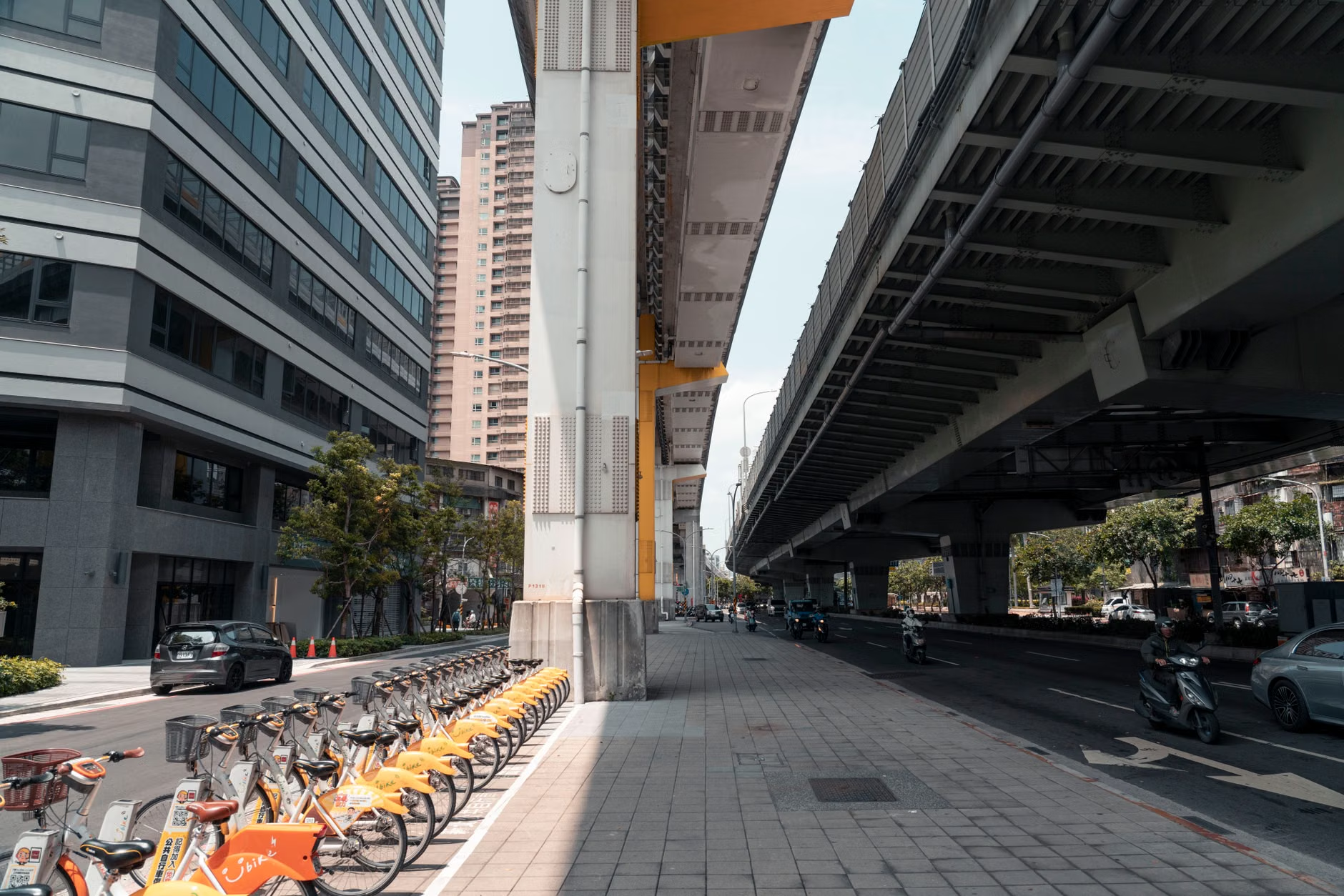
In the simplest terms, multi-modal travel means using two or more different modes of transportation to complete a single journey. Think of it as the difference between taking a direct flight and booking a trip that involves a train to the airport, a flight, and a shuttle to your hotel. In your daily life, it might look like cycling to the train station, taking the subway, and then walking the final three blocks to your office.
The “multi-modal app” ecosystem is the digital layer that sits on top of this physical reality. These apps don’t just show you one route; they provide a “menu” of options. They account for the “first-mile/last-mile” problem—that awkward stretch of distance between your front door and the nearest transit hub. By integrating data from disparate providers, these apps act as a master conductor for your commute.
Why does this matter for those of us in our 30s and 40s? Because our lives are no longer about a simple “home-to-office” commute. We are juggling school runs, grocery pick-ups, and social commitments. Efficiency isn’t just about speed; it’s about reliability and the ability to pivot when the inevitable happens—like a train breakdown or a sudden downpour.
The Evolution of Transit Intelligence
Ten years ago, we were lucky if a transit app told us when the next bus was coming. Today, we expect much more. We want to know if the bike-share dock near our destination is full, if the ride-share price is surging, and whether the walking path is safe for a toddler. This shift toward “Mobility-as-a-Service” (MaaS) is the driving force behind the current generation of travel apps.
These platforms are increasingly becoming “super-apps.” Instead of just showing you a map, they handle the payment, the ticketing, and the real-time tracking. When you use a platform that integrates these services, you aren’t just saving time; you are reducing the “cognitive load” of travel. You don’t have to keep a dozen different apps installed or manage separate accounts for every transit provider in your city.
The Benefits for Busy Parents
Parenting adds a layer of unpredictability that makes standard commute planning difficult. When you are traveling with children, you aren’t just moving yourself; you are managing gear, safety, and patience levels. Multi-modal apps offer several distinct advantages:
| Feature | Why it helps parents |
|---|---|
| Real-time Alerts | Avoid waiting in the cold or rain when a transit line is delayed. |
| Integrated Payments | No fumbling for change or paper tickets while holding a child’s hand. |
| Accessibility Filters | Find routes that avoid stairs, which is vital for stroller users. |
| Multi-Modal Routing | Choose a faster ride-share leg if the public transit connection is too long. |
The ability to filter for accessibility is perhaps the most underrated feature of modern transit apps. Many platforms now allow you to toggle on “stroller-friendly” or “wheelchair accessible” routes. This simple setting can save you from the nightmare of discovering that the subway station you planned to use only has stairs at the exit.
Not all travel apps are created equal. Some are hyper-localized, focusing on a single city, while others are global giants. When choosing the right app for your family, consider your specific needs. Are you living in a dense urban center like London or Tokyo, or are you in a sprawling suburban environment where you might need to combine driving with light rail?
Look for apps that prioritize “interoperability.” This means the app can “talk” to the bike-share company, the local transit agency, and the ride-hailing service all at once. If an app requires you to switch to another platform to actually book the ride, it’s not truly multi-modal—it’s just a directory.

Another factor is the quality of the data. Does the app provide “live” updates or just “scheduled” data? Scheduled data is fine for planning a trip, but it is useless when there is an unexpected delay. You want an app that uses GPS data from the vehicles themselves to give you a true picture of where your transport is in real-time.
Common Mistakes to Avoid
Even the best app cannot predict the future. Here are a few things to keep in mind so you don’t get stuck:
- Over-reliance on technology: Always have a backup plan. If your phone battery dies, do you know the main bus route back home?
- Ignoring “Transfer Times”: Apps often suggest tight connections that might work for a solo traveler but are impossible with children in tow. Always add a 5-10 minute “buffer” to your transition times.
- Ignoring localized quirks: Some cities have “closed-loop” transit systems that don’t share data with major global apps. If you live in a city with a unique transit card or system, prioritize the local government’s official app first.
The Future of Urban Mobility
We are moving toward a future where we don’t own our transport; we subscribe to it. The concept of “Mobility-as-a-Service” suggests that in the near future, you might pay a monthly fee that covers all your transit needs—bus, train, bike, and a set amount of ride-shares—all bundled into one digital wallet. This would fundamentally change how we plan our lives, shifting the focus from “how do I get there” to “what is the most efficient way to get there right now.”
As cities invest more in smart infrastructure, these apps will become even more predictive. They won’t just tell you that a train is late; they might suggest an alternative route before you even leave your house because they “know” the train is going to be crowded or delayed based on historical patterns. For the busy parent, this is the ultimate luxury: the gift of time and predictability.
Practical Steps to Simplify Your Commute Today
If you want to start leveraging multi-modal travel, don’t try to change everything at once. Start small. Pick one day a week to try a new route or a new combination of transport. Maybe it’s biking to the train instead of driving to the station, or using a ride-share for the final leg of a trip that usually involves a long, tiring walk.
Here is a quick checklist for auditing your current transit setup:
- Audit your current apps: Delete the ones you haven’t used in three months. Keep only the ones that provide real-time updates.
- Check your local transit agency’s website: Often, they have an official app that is more accurate than third-party aggregators.
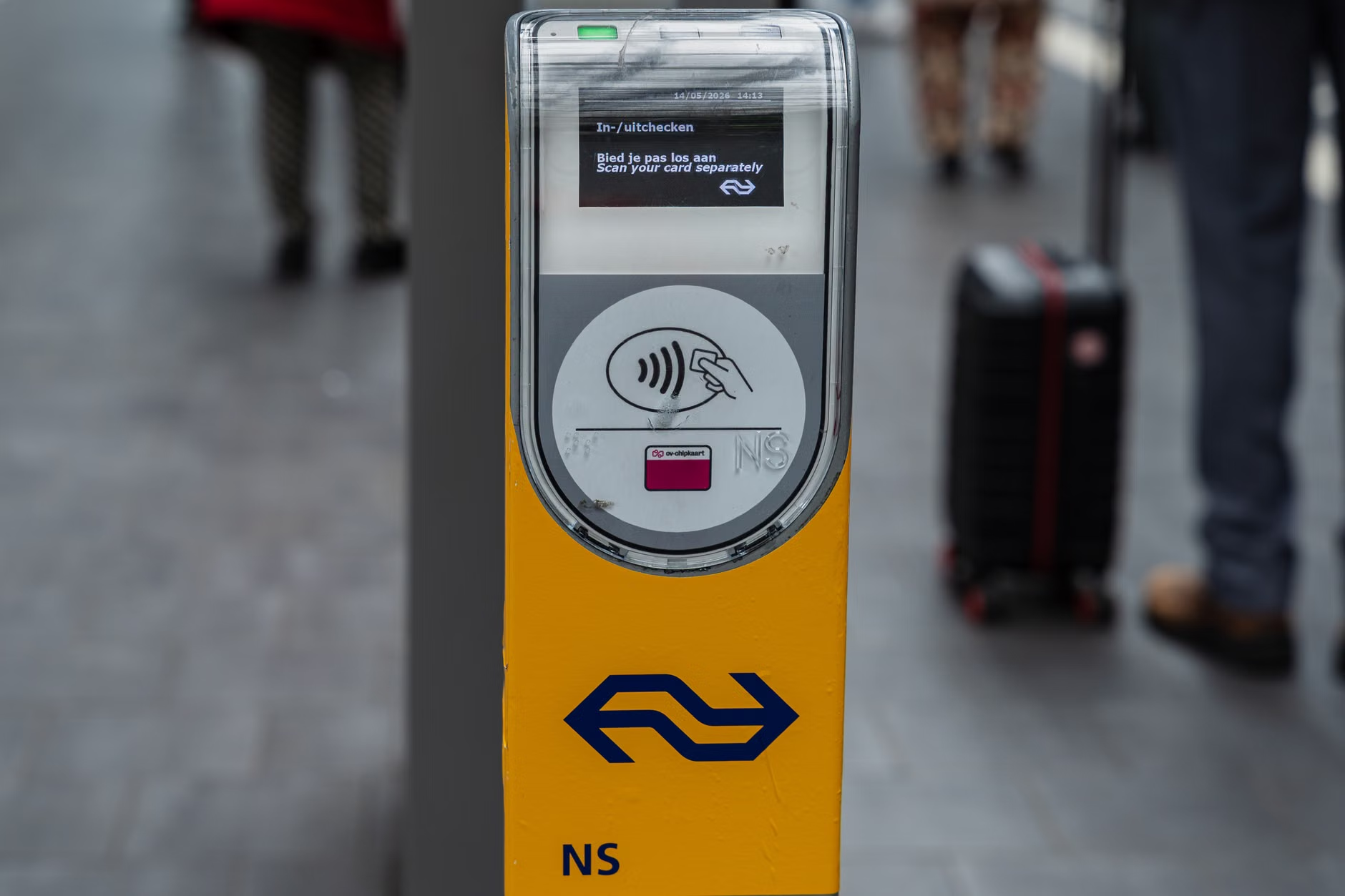
- Set up mobile payments: If your local transit uses a digital wallet (like Apple Pay or Google Pay), make sure it is linked and ready to go.
- Create a “Transit Folder” on your phone: Group your transit, parking, and ride-share apps together so they are easy to find when you are in a rush.
Reflecting on the Shift
The transition to multi-modal travel is about more than just convenience; it is about reclaiming our time. When we stop struggling against the limitations of our transit systems and start working with them, we lower our daily stress levels. It’s a small change in behavior, but when you multiply it by the hundreds of trips you take each year, the impact is significant.
As you navigate this transition, remember that the goal is not to be a “power user” of every tech tool available. The goal is to find the path of least resistance for your family. If that means sticking to a tried-and-true bus route because it’s easy for the kids, then that is the right choice. Use the technology to serve your life, not the other way around.
Stay curious about the options in your city. Sometimes, the most efficient way to cross town isn’t the one you’ve been taking for the last five years. A little bit of digital planning can make a surprisingly big difference in your daily routine.
Frequently Asked Questions
Q: Are multi-modal apps free to use?
A: Most transit-planning apps are free to download and use. However, some may charge a small service fee for booking tickets or reserving ride-shares directly through the platform. Always check the app’s terms before making a purchase.
Q: How accurate is the real-time data in these apps?
A: Accuracy depends on the data provided by your local transit agency. Most major cities provide high-quality, real-time data, but smaller or rural transit systems may only provide “scheduled” data, which does not account for day-of traffic or delays.
Q: Can I use these apps for international travel?
A: Yes, many major multi-modal apps (like Google Maps, Citymapper, or Transit) work globally. However, keep in mind that they may not cover every niche local provider in smaller towns or specific countries. It is always wise to download the local city-specific app when traveling abroad.
Official Resources and Further Reading:
For more information on the future of urban mobility and smart city initiatives, you can explore the following resources:
- U.S. Department of Transportation: Intelligent Transportation Systems (ITS)
- UITP (International Association of Public Transport)
- C40 Cities: Sustainable Urban Mobility Initiatives
Note: Always verify your travel plans with local signage, as digital data can occasionally lag behind physical service disruptions.