You can significantly lower your monthly electricity costs and support renewable energy projects without ever touching a screwdriver or installing a single solar panel on your own roof.
- No Installation Needed: Community solar is ideal for renters, apartment dwellers, or homeowners with shaded roofs.
- Direct Savings: Subscribers receive credits on their monthly utility bills, typically resulting in a 5% to 15% reduction in electricity costs.
- Low Barrier to Entry: Most programs require no upfront investment, making it a flexible, low-risk way to participate in the green energy transition.
If you are in your 30s or 40s, life is likely a juggling act. Between managing school runs, handling professional responsibilities, and trying to keep a household budget under control, the idea of “going green” often feels like just one more expensive, time-consuming project. We’ve all seen the ads for rooftop solar panels. They look great, but they come with a laundry list of hurdles: a roof that needs to be in perfect condition, a high upfront cost, or, for many of us, the simple fact that we don’t own the property we live in.
This is where the concept of “community solar” starts to sound less like a buzzword and more like a genuine, practical solution. It’s essentially a way to subscribe to a remote solar farm, much like you would subscribe to a streaming service. You aren’t buying the panels; you are essentially buying a “share” of the power they produce. And the best part? The math actually works in your favor.
What Exactly is Community Solar and How Does It Work?
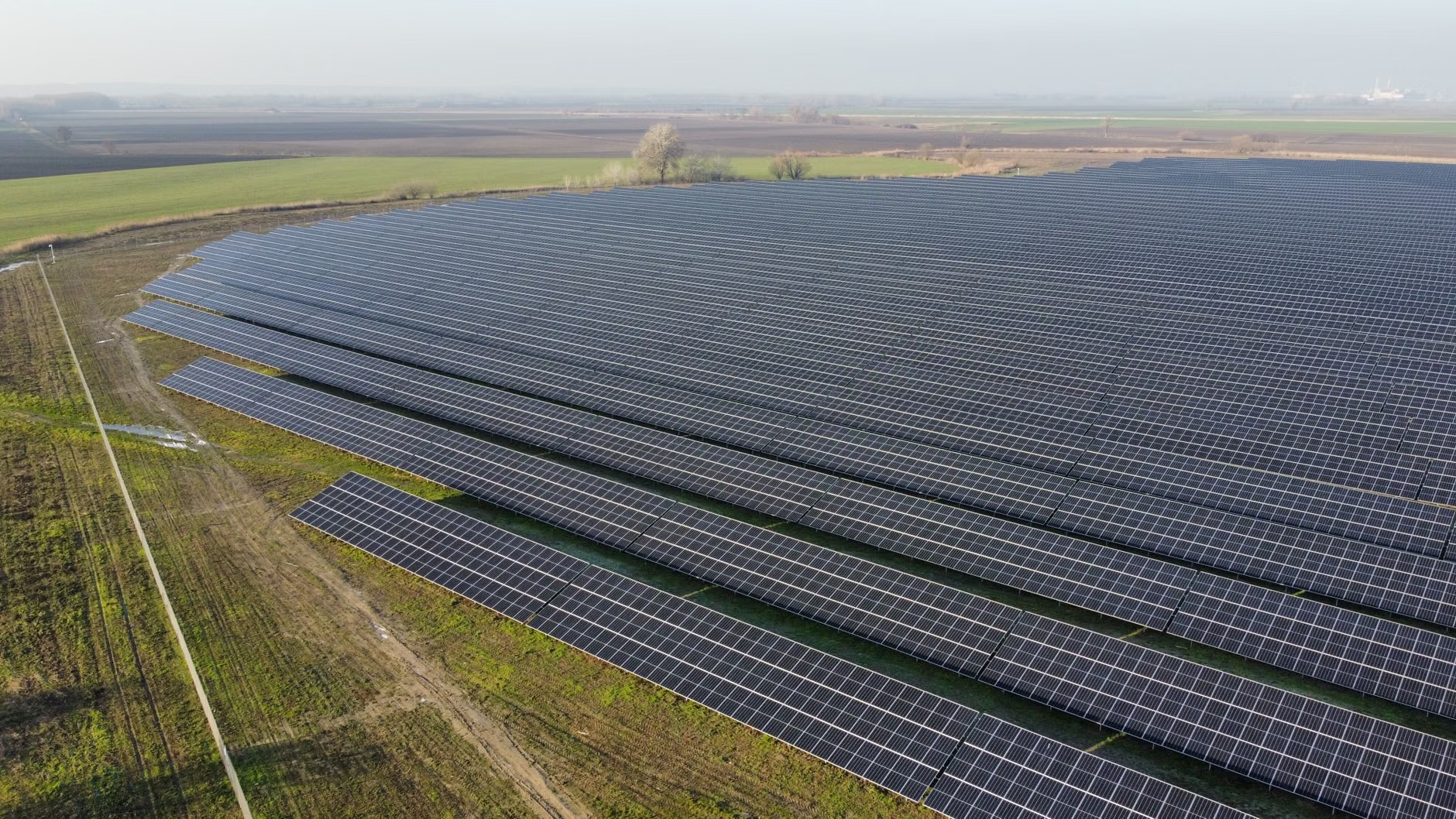
At its core, community solar—often called shared solar or a solar garden—is a project that allows multiple households to benefit from a single, large-scale solar array located off-site. Think of it as a community garden, but instead of growing tomatoes or kale, you are “growing” electricity.
When you sign up for a community solar program, you are essentially leasing a portion of that solar farm’s output. The energy generated by those specific panels is fed directly into the local electrical grid. Because you are a subscriber, your local utility company tracks the power your “share” of the farm produces and applies a credit to your monthly electricity bill.
This is where the confusion often sets in. You aren’t getting a separate line from the solar farm to your house. Your home still receives power from the grid just like it always has. However, the credits you earn from the solar farm offset your usage. If your utility bill is $100 and your solar credits for that month are $15, you pay the utility $85. It’s a seamless financial transaction that happens behind the scenes.
Why This Makes Sense for Busy Households
For those of us balancing hectic daily schedules, the traditional solar route is often a non-starter. Here is why the subscription model is gaining traction among people in their 30s and 40s:
- Zero Maintenance: You don’t have to worry about cleaning panels, monitoring inverters, or dealing with roof repairs. The solar farm operator handles all of that.
- Portability: If you move to a new apartment or house within the same utility territory, you can often take your subscription with you.
- No Credit Hurdles: While some programs have credit checks, many are designed to be accessible to a wide range of consumers, unlike the heavy financing required for rooftop systems.
- Immediate Impact: You start seeing the credit on your bill as soon as the project is live and your account is linked.
It’s the “set it and forget it” aspect that makes this appealing. You don’t need to become an expert in electrical engineering or spend your weekends researching panel efficiency ratings. You sign up, you get the credit, and you move on with your day.
Breaking Down the Costs and Savings
The primary driver for most people considering this is the potential for cost savings. But how much can you actually save? The reality is that community solar is generally designed to save you money, but it won’t make you rich. Most programs offer a discount on the solar credits themselves. For example, if you are credited $100 for the energy your share produced, you might only pay the solar company $85 for that credit. That leaves you with a net savings of $15.
It’s important to look at the contract terms. Some programs operate on a subscription model where you pay a flat fee, while others use a “discounted credit” model. Before signing up, ask these specific questions:
- Is there a cancellation fee? If I move or decide I don’t want to participate, am I locked in for a year or more?
- Are there any hidden administrative or sign-up fees?
- How is the savings guaranteed? Is it a fixed percentage, or does it fluctuate with market energy prices?

Common Misconceptions and Risks
Like any financial service, there is a fair amount of misinformation out there. Let’s clear the air on a few common points of confusion.
“Will I lose power if the sun goes down?” No. Your power comes from the grid. Even when the solar farm isn’t producing (at night or on cloudy days), your house remains powered by the utility company’s standard infrastructure. You are simply using the solar credits to offset the cost of that grid power.
“Is this a scam?” Unfortunately, whenever there is a “new” way to save money on bills, scammers follow. Always verify the company. Check with your state’s public utility commission or look for established, reputable companies. If a company is pressuring you to sign a contract immediately or asking for your utility account password, walk away. You should only ever need to provide your utility account number and perhaps a copy of a recent bill to verify your eligibility.
“Will this affect my existing utility service?” No. Your relationship with your utility company remains unchanged. They are still responsible for keeping your lights on, handling outages, and maintaining the lines. The community solar subscription is simply a financial arrangement that appears as a line item on your existing bill.
Step-by-Step: How to Get Started
If you have decided that community solar is the right move for your household, the process is usually straightforward. Here is how you can navigate the path from interest to active subscription.
1. Check Your Eligibility
Not every state or utility territory allows community solar. Start by checking your local utility company’s website or searching for “community solar [your state].” If your state has legislation supporting community solar, you will see a list of approved providers.
2. Compare Providers
Once you find providers in your area, don’t just sign up for the first one you see. Compare their terms. Look for transparency in their pricing. Do they have a clear, easy-to-read contract? Are their customer service reviews reasonable? Remember, you are entering into a financial agreement, so treat it with the same caution you would a new internet or cell phone plan.
3. Review Your Utility Bill
You need to know your average monthly usage. Most solar subscription sizes are based on your annual electricity consumption. If you sign up for a share that is too large, you might end up with more credits than you can use, which may or may not roll over to the next month depending on your state’s specific laws.
4. Sign the Subscription Agreement
Once you’ve selected a provider, you will sign up online. Again, avoid any company that demands upfront payments. A legitimate community solar program should be low-friction. After signing, there might be a waiting period—sometimes months—before the project is fully operational and your credits begin to appear on your bill.
The Bigger Picture: Why It Matters
Beyond the 5% to 15% savings on your bill, there is the environmental impact. For many in their 30s and 40s, we are increasingly concerned about the world our children will inherit. Investing in renewable energy, even through a simple subscription, contributes to the overall demand for clean power. It signals to the energy market that consumers want alternatives to fossil fuels.
It’s a form of “passive activism.” You aren’t chaining yourself to a tree or spending thousands of dollars on home upgrades. You are simply making a consumer choice that supports a cleaner grid. When thousands of households make this same choice, it creates a real, measurable shift in how our electricity is generated.
While the benefits are clear, it is important to acknowledge that community solar isn’t a silver bullet for everyone. There are edge cases where it might not be the right choice.
If you are planning on moving in the next six months, it might not be worth the effort of setting up the account. If your electricity consumption is extremely low—for example, if you live in a very small, energy-efficient studio apartment—the amount you save might be negligible. In these cases, the time spent managing the subscription might outweigh the financial benefit.
Also, keep an eye on your local utility regulations. Sometimes, utilities change their net metering policies or how they handle third-party energy credits. While these changes are usually grandfathered in for existing subscribers, it’s worth keeping a casual eye on local news regarding energy policy.
Another point of caution is the “subscription trap.” Some companies might offer a “guaranteed savings” plan that sounds great but actually ties you into a long-term contract with high exit fees. Always read the fine print regarding termination. You want a flexible contract that allows you to cancel if your circumstances change.
Comparing Energy Solutions
To help you decide if community solar is the right fit, let’s compare it to other common energy-saving methods.
| Feature | Community Solar | Rooftop Solar | Energy Efficiency Upgrades |
|---|---|---|---|
| Upfront Cost | Typically $0 | High ($10k – $30k+) | Moderate |
| Ease of Install | None (Subscription) | Professional Install | DIY or Professional |
| Ownership | None (Lease/Sub) | You Own It | You Own Improvements |
| Maintenance | None | Required by Owner | Minimal |
| Best For | Renters/Small Homes | Homeowners with Sunny Roofs | Everyone |
As the table shows, energy efficiency upgrades—like LED lighting, smart thermostats, and better insulation—should always be your first priority. These reduce your overall consumption, which makes your electricity bill smaller regardless of where the power comes from. Community solar is a great secondary step to reduce the cost of the energy you do use.
Final Thoughts on Making the Switch
Ultimately, community solar is a practical tool for the modern, busy household. It removes the barriers that traditionally kept people from participating in the renewable energy transition. It’s not about grand gestures; it’s about making small, calculated decisions that benefit your wallet and the environment simultaneously.
Before you jump in, take a moment to look at your last three electricity bills. Understand your average monthly usage and your current rate per kilowatt-hour. Use this data as your baseline. When you approach a provider, you will know exactly what you are looking for, and you will be less likely to be swayed by aggressive sales tactics.
If you are a renter, this is likely the only way you will ever directly support solar energy. If you are a homeowner with a shaded roof, it’s your best alternative to rooftop panels. In a world where we are constantly bombarded with “life hacks” and “get rich quick” schemes, community solar stands out as a genuinely useful, transparent, and logical upgrade to your home management strategy.
Start small, do your research, and keep your expectations grounded. You won’t eliminate your electricity bill overnight, but you will be taking a clear, measured step toward a more efficient and sustainable household.
Frequently Asked Questions
1. Can I participate in community solar if I rent my apartment?
Yes, that is one of the primary benefits. Since the solar panels are located off-site, you do not need to own your home or have a roof to participate. As long as your utility company supports community solar and there is an available project in your area, you are eligible to join.
2. What happens to my subscription if I move to a different city?
Most community solar programs allow you to transfer your subscription if you move within the same utility territory. If you move outside that territory, you will likely need to cancel your subscription. Be sure to check the contract for any early termination or moving-related fees before you sign up.
3. Will my electricity bill stop arriving from my utility company?
No, you will still receive your regular bill from your utility company. The community solar credits will appear as a separate line item or a reduction in the total amount due. You will continue to pay your utility for the delivery of electricity and any remaining balance after your solar credits have been applied.
For more information on energy regulations and to find legitimate community solar programs in your area, visit the U.S. Department of Energy’s Community Solar resources or check your local state government’s energy office website. Always verify that any provider you choose is registered and approved by your state’s utility commission.