The most effective way to maintain a thriving garden while juggling a busy household is to switch to a low-energy smart irrigation system that relies on hyper-local weather data rather than a rigid, timer-based schedule.
- Data-Driven Efficiency: Smart controllers use real-time local weather forecasts to skip watering cycles when rain is imminent, saving significant water and energy.
- Low-Power Protocols: Opt for systems using Zigbee, Z-Wave, or Thread to ensure your sensors run for years on a single battery rather than draining power constantly.
- Zoning for Success: Dividing your garden into zones based on sun exposure and plant water needs prevents overwatering and minimizes electricity waste from unnecessary pump usage.
If you are anything like me, your garden is usually the last thing on your mind until you notice the hydrangeas drooping or the lawn turning a suspicious shade of brown. We all want a green space to relax in, but adding “manual irrigation management” to a to-do list that already includes school runs, work deadlines, and grocery shopping is a recipe for burnout. The frustration isn’t just the time; it’s the guilt of watching the water meter spin while you’re out of town, or worse, realizing you’ve been watering the sidewalk for three weeks because the timer was set incorrectly.
The good news is that the “smart home” ecosystem has finally moved past the gimmicky stage and into the realm of genuine utility. Modern low-energy irrigation systems aren’t just about turning taps on and off; they are about understanding the micro-climate of your specific backyard. Let’s dive into how you can automate this process without turning your home into a power-hungry server farm.
Understanding the Low-Energy Advantage
When we talk about “low-energy” irrigation, we aren’t just talking about your electricity bill. We are talking about the entire footprint of the system. Traditional “smart” controllers from a decade ago were often power-hungry monsters that required constant Wi-Fi connectivity and high-voltage power supplies. They were effectively small computers that struggled to stay cool and consumed energy 24/7 just to check a weather forecast.
Today’s low-energy controllers utilize low-power wide-area network (LPWAN) protocols or efficient mesh networking. These systems wake up only when necessary, check the weather, adjust the watering duration, and then return to a “sleep” mode. This shift is critical for those of us who want to maintain a smart home without seeing a spike in our monthly utility costs. By choosing devices that communicate via protocols like Zigbee or Thread, you are ensuring that your irrigation system stays connected to your smart home hub without requiring a dedicated, high-energy Wi-Fi connection for every individual sensor.

The Anatomy of a Smart Irrigation Setup
To build a system that doesn’t require constant babysitting, you need to understand the three core components: the controller, the soil moisture sensors, and the weather integration bridge. Think of these as the brain, the nerves, and the eyes of your garden.
1. The Controller (The Brain)
The controller is the box that physically opens and closes your irrigation valves. In a low-energy setup, you want a controller that supports “smart scheduling.” This means it shouldn’t just run at 8:00 AM every Tuesday. Instead, it should look at the forecast. If your local weather station predicts a 60% chance of rain, a smart controller will automatically hold off on the cycle. This saves thousands of gallons of water over a season and ensures your plants aren’t drowning in mud.
2. Soil Moisture Sensors (The Nerves)
While weather data is helpful, it isn’t always perfect. A storm might miss your neighborhood by two miles, leaving your garden bone-dry while the official forecast says it rained. This is where soil moisture sensors become invaluable. By placing these in your garden beds, you get actual, real-time data on the hydration levels of your soil. Low-energy sensors typically use a capacitive measurement method, which is more durable and accurate than the older, resistive sensors that would corrode over time.
3. The Gateway (The Communicator)
If you’re already running a smart home hub (like Home Assistant, SmartThings, or Apple HomeKit), you want an irrigation controller that speaks that language. By integrating your irrigation into your existing hub, you can create “scenes.” For example, if your smart home detects that you are on vacation, it can trigger a “Vacation Mode” for the garden, ensuring deeper, less frequent watering to encourage stronger root growth while you’re away.
Practical Zoning: Why One Size Does Not Fit All
One of the most common mistakes people make when installing irrigation is treating their entire yard as a single zone. Your lawn, your vegetable patch, and your shaded flower beds all have vastly different water requirements. If you blast them all with the same amount of water, you are either killing your vegetables or wasting water on your lawn.
A smart system allows you to define “zones.” You can set the lawn to a “high-frequency, low-depth” cycle, while your shrubs might benefit from a “low-frequency, high-depth” cycle. This is where the energy saving really kicks in. You aren’t just saving water; you are saving the electricity used by your water pump. By grouping plants with similar needs, you minimize the “run time” of your system, which, over the course of a year, significantly reduces the wear and tear on your pump and irrigation hardware.

Common Pitfalls and How to Avoid Them
Even the smartest system can fail if it’s installed incorrectly. After researching various user experiences, a few consistent themes emerge regarding common failures. Avoiding these will save you hours of troubleshooting later.
| Problem | The “Smart” Solution |
|---|---|
| The “Set and Forget” Fallacy | Check your sensor data once a month. Even the best tech can get a faulty reading if a sensor is buried too deep or hit by a lawnmower. |
| Connectivity Dead Zones | Ensure your gateway is centrally located. If your garden is large, use a repeater to maintain a stable mesh network connection. |
| Ignoring Local Regulations | Some municipalities have strict “watering hours.” Ensure your controller is programmed to respect these, or you might face a fine that negates all your water savings. |
| Battery Neglect | Use lithium-based batteries for outdoor sensors. They handle temperature swings much better than standard alkaline batteries, preventing mid-season failures. |
Installation: A Weekend Project for the Busy Parent
You don’t need to be a plumber or an electrical engineer to install a modern smart irrigation system. Most systems are designed for the “DIY-enthusiast” level. The hardest part is usually the initial setup—mapping out where your current lines go and ensuring your zones are clearly labeled.
Start by identifying your existing valve manifold. This is usually a box in the ground where all your irrigation pipes meet. Most smart controllers simply replace the old “dumb” timer box on your wall. Once the controller is wired in, you pair it with your home network. Then, add your sensors one by one. If you have a busy household, try to do this in stages. Tackle the lawn zone one weekend, and the flower beds the next. This prevents the “overwhelmed” feeling and allows you to test the system in segments.
The Environmental and Economic Implications
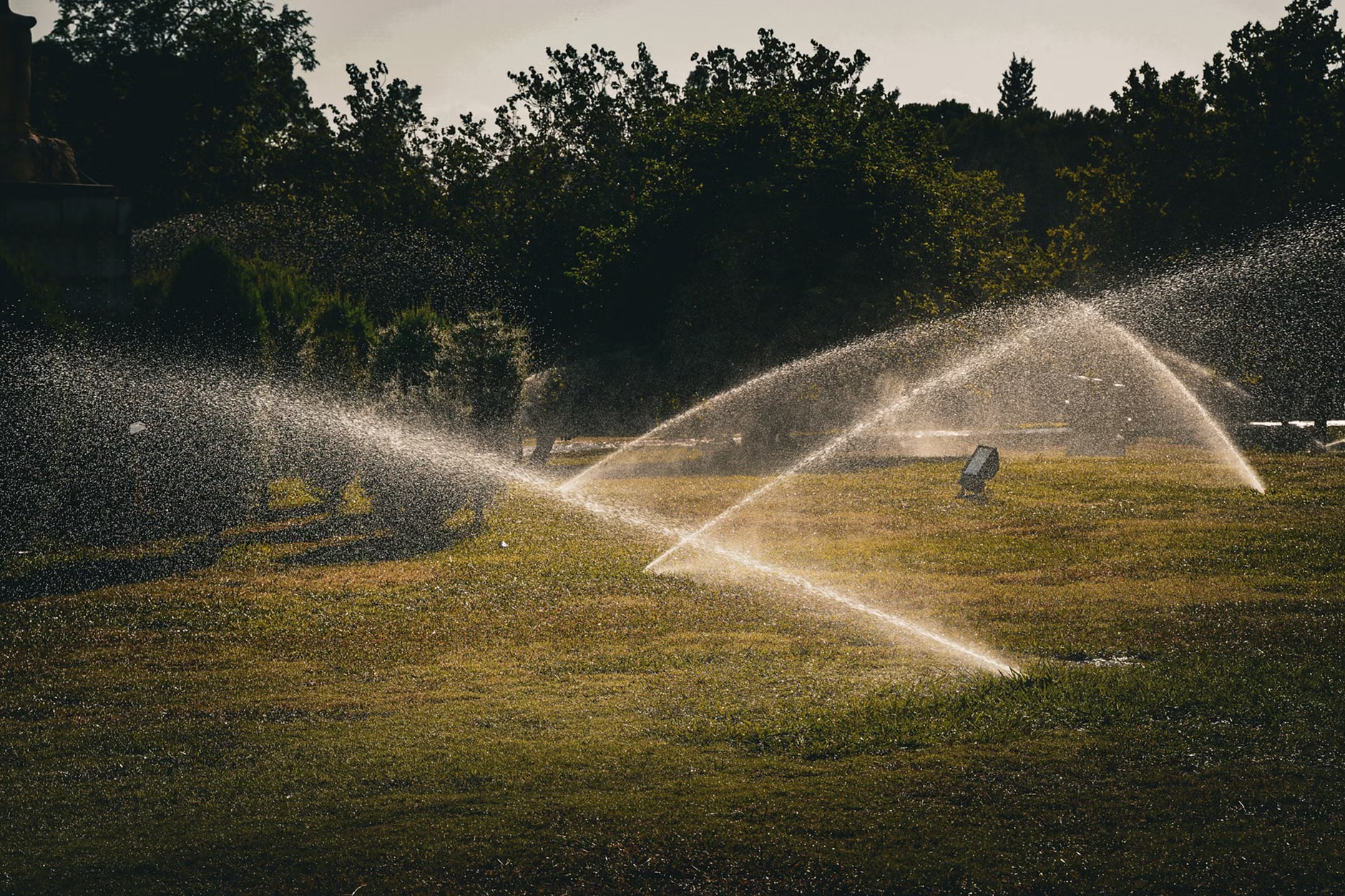
It’s easy to focus solely on the convenience factor, but the long-term implications of smart irrigation are broader. Residential irrigation is one of the largest contributors to urban water waste. By moving to a system that uses evapotranspiration (ET) data—a calculation that estimates how much water has evaporated from the soil and transpired from plants—you are actively participating in local conservation efforts.
Economically, the ROI (Return on Investment) on these systems is often realized within two to three years, depending on your local water rates. In regions where water is expensive, or where tiered pricing is in effect, the savings are even more pronounced. You aren’t just buying a gadget; you are buying a tool that pays for itself while preserving your home’s curb appeal.
Integrating with Your Lifestyle
The beauty of a truly “smart” garden is that it adapts to you, not the other way around. If you are planning a garden party, you can quickly toggle the irrigation off from your smartphone. If you are teaching your kids about gardening, you can show them the app and explain how the soil moisture sensor “talks” to the controller. It turns a chore into a learning opportunity.
However, a word of caution: don’t over-automate. Keep a manual override switch accessible. If the Wi-Fi goes down or the system hits a glitch, you need to be able to turn the water on manually to save your plants. Always have a “Plan B” that involves a physical switch, regardless of how stable your digital infrastructure is.
Final Thoughts on Smart Gardening
Adopting low-energy smart irrigation is a classic example of “small tech, big impact.” It doesn’t require a total home renovation, and it doesn’t demand a degree in computer science. By focusing on efficient, low-power components and intelligent, data-driven scheduling, you can reclaim your time and reduce your household’s environmental footprint.
As you start your journey, remember that the goal is not to create a perfectly robotic garden, but to give yourself the breathing room to enjoy the space you’ve worked so hard to create. Take it one zone at a time, keep an eye on your battery levels, and let the technology handle the mundane task of hydration so you can focus on the things that really matter—like actually spending time in your garden with your family.
Official Resources and Further Reading:
- EPA WaterSense: Tips for Water-Efficient Landscapes
- Irrigation Association: Best Practices for Residential Systems
- USDA Natural Resources Conservation Service: Soil Moisture Management
Frequently Asked Questions
1. Will a smart irrigation system work if my Wi-Fi signal is weak in the backyard?
Most modern smart irrigation controllers use mesh networking (like Zigbee or Z-Wave) rather than direct Wi-Fi for their sensors. Even if the controller itself needs a stable connection to your router, you can use a Wi-Fi range extender or a dedicated mesh node to ensure the gateway stays connected. If your yard is very large, consider a system that utilizes a long-range protocol like LoRaWAN, which is designed specifically for outdoor, long-distance communication with minimal power consumption.
2. Can I install these systems if I already have a traditional irrigation timer?
Yes, absolutely. In most cases, you can simply disconnect the wires from your old timer and connect them to the new smart controller. The wiring for irrigation valves is typically standard (24V AC), which is compatible with almost all smart irrigation controllers on the market. Just make sure to label your wires before removing the old unit so you know which zone is which.
3. How often do the batteries in the soil moisture sensors need to be replaced?
In a well-designed low-energy system, the sensors should last anywhere from 12 to 24 months on a single set of batteries. The key is to use high-quality lithium batteries, which perform significantly better in the variable temperatures of an outdoor environment compared to standard alkaline batteries. Most apps will notify you when the battery level drops below 20%, giving you plenty of time to swap them out before the sensor goes offline.
Stay patient with your setup. Gardening, even with the help of technology, is a process of observation and adjustment. Your plants will thank you for the extra attention to detail.