The secret to surviving school holiday travel isn’t about having a perfect itinerary; it is about adopting an “Adaptive-Routine” that prioritizes predictable anchor points while allowing for the inevitable chaos of transit.
Key Takeaways:
- Anchor Points: Maintain fixed meal and sleep windows regardless of your location to provide children with a sense of security.
- The 70/30 Rule: Plan for 70% of the day to be structured and allow 30% for spontaneous exploration or downtime to handle travel fatigue.
- Modular Packing: Use packing cubes to categorize items by activity, making it easier to adapt to changing weather or sudden schedule shifts.
If you have spent your 30s or 40s trying to recreate the high-octane, jam-packed vacations of your 20s, you have likely realized that adding children to the mix renders that strategy obsolete. School holidays are notoriously stressful for parents. You are fighting against peak-season pricing, crowded airports, and the relentless pressure to make “core memories” for your kids. The result? You return home more exhausted than when you left.
The “Adaptive-Routine” is a framework designed to bridge the gap between rigid scheduling—which breaks the moment a flight is delayed—and total anarchy, which usually ends in a toddler meltdown in the middle of a museum. It is about identifying the non-negotiables that keep your family unit functioning and building flexibility around them.
Understanding the Architecture of an Adaptive-Routine
At its core, the Adaptive-Routine is a psychological safety net. Children, especially those under 12, rely heavily on predictability. When you travel, you strip away their physical environment; if you also strip away their temporal environment (when they eat, when they sleep, how they transition between tasks), you are essentially inviting a behavioral crisis.
To implement this, you must first define your “Anchor Points.” These are the three pillars of your day that remain consistent, no matter what time zone you are in or what excursion you have planned:
| Anchor Point | Purpose | Implementation Strategy |
|---|---|---|
| The Morning Wake-up | Sets the tone for the day. | Keep a consistent morning snack or beverage ritual. |
| The Mid-day Reset | Prevents sensory overload. | A mandatory 60-minute quiet period in a hotel or park. |
| The Evening Wind-down | Signals the end of social stimulation. | A consistent book or audio story before lights out. |
The “Adaptive” part of this routine comes into play during the hours between these anchors. If your morning flight gets pushed back by four hours, you don’t panic. You simply shift your “Mid-day Reset” to the airport gate. You maintain the function of the routine even if the form changes.
Designing Your Travel Infrastructure
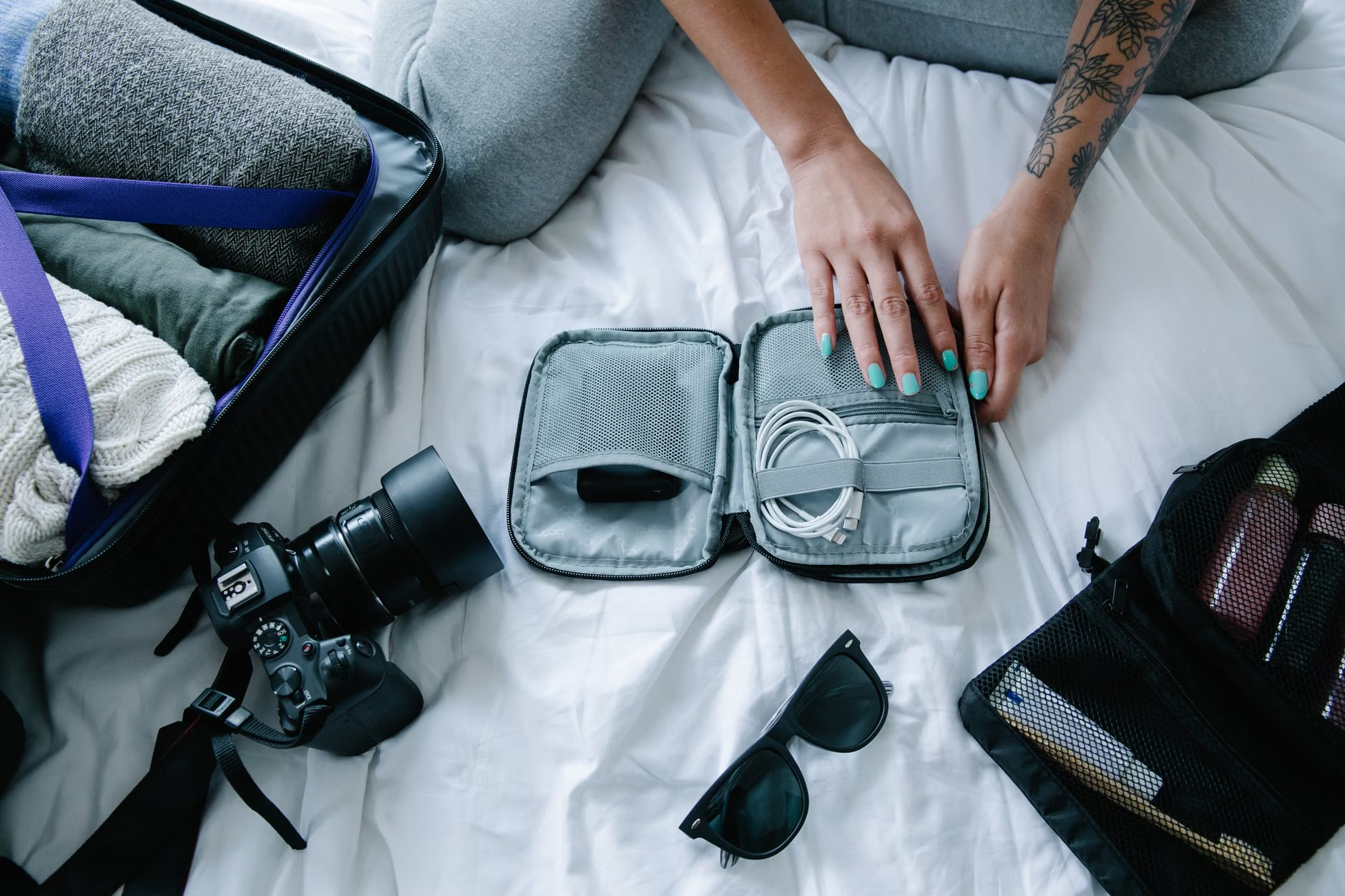
Most travel stress is actually just logistics failure in disguise. When we talk about “routine,” we aren’t just talking about your child’s nap schedule; we are talking about the routine of your gear. If you are fumbling for passports at the bottom of a backpack while a child is crying, your routine has failed.
Effective travel infrastructure requires a modular approach. Avoid the “one giant suitcase” method. Instead, categorize your gear based on the “Adaptive-Routine.”
The Transit Kit
This is your “Go-Bag.” It should contain everything you need to survive six hours of travel without opening your main luggage. This includes noise-canceling headphones, a portable power bank, specific snacks that you know your children will eat, and a digital tablet pre-loaded with offline content.
The Activity Modules
Instead of bringing a loose pile of toys, use small, clear pouches to create “Activity Modules.” Label them by the type of engagement: “Quiet Drawing,” “New Sticker Set,” “Travel Games.” By rotating these modules, you provide the novelty children crave while keeping the mess contained. When you arrive at a restaurant or a hotel room, you aren’t dumping out a bag of toys; you are selecting one specific module.
Handling the “Transition Gap”
The biggest enemy of the family traveler is the “Transition Gap”—the space between leaving one location and arriving at the next. This is when the routine breaks. Whether it’s a train ride, a layover, or a long drive, this is when children feel the most vulnerable and parents feel the most exposed to public scrutiny.
To manage this, apply the “Micro-Routine” technique. A Micro-Routine is a mini-script for transitions. For example, every time you board a plane, follow the same three steps: 1. Set up the seat (cushions, blankets). 2. Distribute the “Transit Kit.” 3. Initiate a specific audio story or game. By doing this every single time, you create a Pavlovian response. Your children learn that boarding the plane means “calm activity time.”
Why “Core Memories” Are a Trap
One of the reasons we struggle with holiday travel is the immense pressure to make everything “magical.” We treat the vacation like a performance. If the day goes wrong, we feel like the vacation is a failure. The Adaptive-Routine helps you shift your mindset from “optimizing for perfection” to “optimizing for resilience.”
If you have an afternoon planned at a local theme park and it starts pouring rain, a rigid itinerary dictates that you stay and suffer through it to “get your money’s worth.” An Adaptive-Routine allows you to pivot. If the rain persists, the routine dictates that you seek an indoor “reset” environment—perhaps a quiet cafe or the hotel room—where the family can regroup. You haven’t failed; you have adapted.
Data from recent travel studies suggest that the most satisfied family travelers are those who prioritize “low-friction” activities over high-intensity sightseeing. When you reduce the number of forced interactions (lines, ticket checks, tight schedules), you reduce the cognitive load on both parents and children.
The Physics of Packing: Less is More
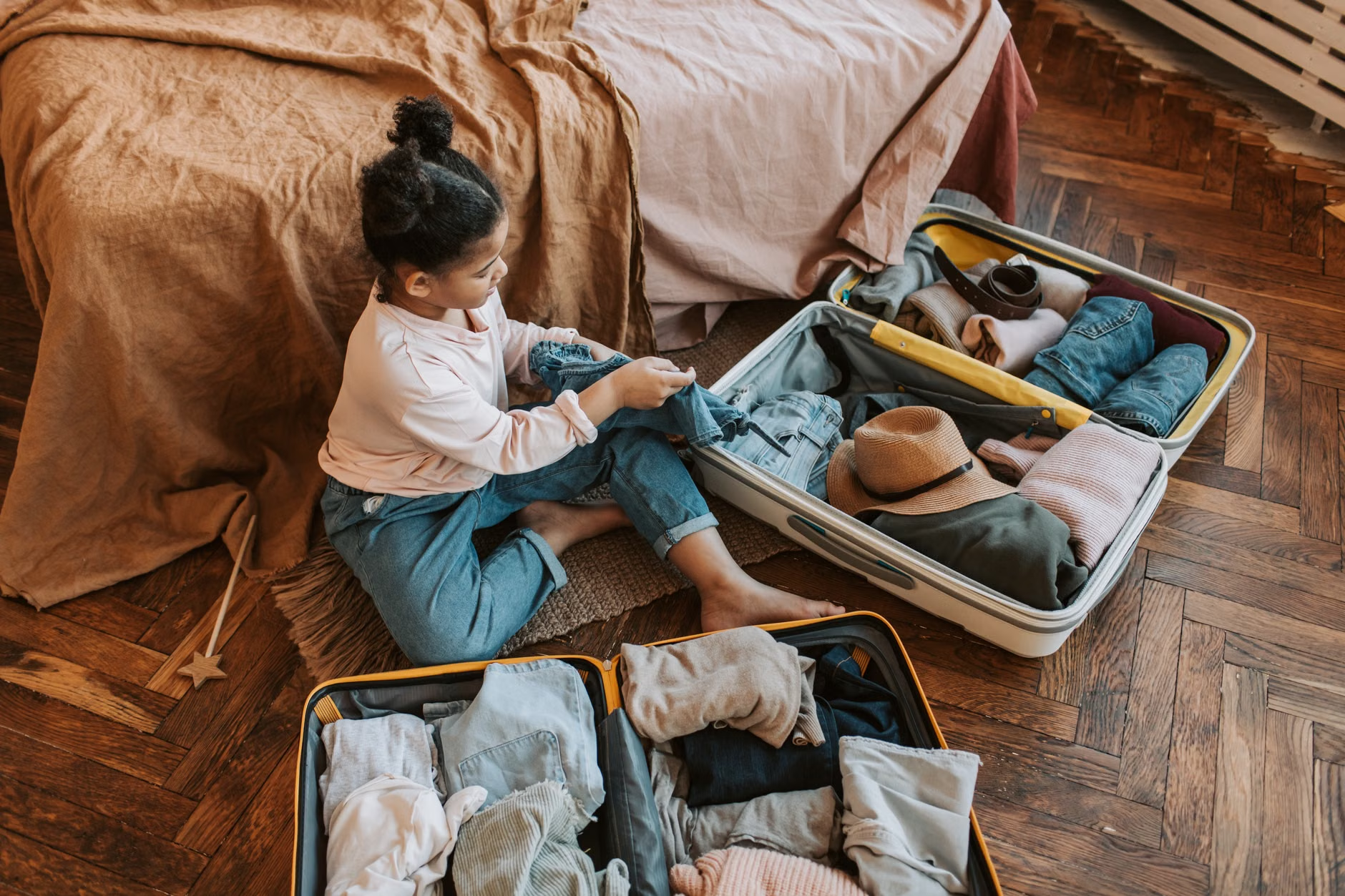
It is a common mistake for parents to over-prepare. We pack for every possible contingency: the blizzard in July, the sudden formal dinner, the extra four outfits “just in case.” This results in luggage that is impossible to manage, which in turn ruins your mobility.
The Adaptive-Routine demands a minimalist approach. Use the “Rule of Three”:
- Three outfits that can be layered.
- Three pairs of shoes (one on, two in the bag).
- Three days of clothing, with a plan to do laundry.
When you carry less, you move faster. When you move faster, you have more time to buffer against delays. It is a virtuous cycle. If you are spending 30 minutes at every hotel check-in just managing your luggage, you are losing valuable time that could be spent resting or exploring.
The Digital Buffer
In the 30s and 40s demographic, we often feel guilty about “screen time.” But during travel, screens are not an indulgence; they are a utility. Accept that your rules at home may not apply on the road. The Adaptive-Routine treats the tablet as a tool for regulation, not a reward.
Ensure that your digital buffer is robust:
- Offline Maps: Download Google Maps for your destination before you leave.
- Entertainment: Ensure all movies and games are downloaded to the device’s local storage. Do not rely on airplane or hotel Wi-Fi.
- The “Emergency” App: Keep one or two games on the device that the children have never seen before. Save these specifically for the most difficult moments of the trip.

Managing Expectations: The 70/30 Split
We touched on this briefly, but it bears repeating: the 70/30 rule is your best defense against burnout. Dedicate 70% of your day to your “must-see” or “must-do” items, and 30% to the “buffer zone.”
The buffer zone is not “wasted time.” It is the time where you get coffee, sit on a bench, watch the locals, or let your child play in a park. This is often when the best experiences happen. If you find yourself constantly checking your watch to see if you are “on schedule,” you are not on vacation; you are on a forced march.
If you find that your children are hitting a wall, use the buffer zone immediately. Do not push through. Pushing through a meltdown in a public space is the fastest way to ruin a day for everyone involved. If you have built in that 30% buffer, you can afford to cut a museum visit short by an hour to go back to the hotel for a nap or a snack.
Addressing Common Travel Mistakes
Even with the best routine, things will go wrong. Here is how to handle the most common pitfalls:
1. The “Jet Lag” Fallacy
Parents often try to force their children onto the local time zone immediately. This rarely works. Instead, use the first 24 hours to “bridge” the gap. If you arrive in a new time zone, keep the morning routine consistent with home time, but allow for an earlier nap. Gradually shift the routine by one hour each day. This is much less traumatic than a “cold turkey” adjustment.
2. The “Over-Plan” Trap
Never book more than one major activity per day. If you book a morning museum tour and an afternoon walking tour, you have zero room for error. If the morning tour runs long, the afternoon is already doomed. Limit your “hard” bookings (things with specific start times) to one per day, preferably in the morning when energy levels are highest.
3. The “Healthy Food” Obsession
While nutrition is important, travel is not the time to fight over broccoli. Keep your routine flexible regarding food. If your child wants the same snack they eat at home, pack it. If you need to rely on “less than ideal” food to keep a meltdown at bay, do it. You can return to a balanced diet when you get home.
Refining Your Routine Post-Trip
The most successful travelers treat every trip as a data-gathering exercise. When you get home, take five minutes to write down what worked and what didn’t. Did you bring too many clothes? Did the morning anchor point fail? Was the “Transit Kit” missing something vital?
This feedback loop is what turns an average traveler into a pro. You aren’t just “going on vacation”; you are refining your family’s travel system. Over time, these small adjustments will make your trips feel less like an ordeal and more like a genuine break.
Final Thoughts on Resilience
At the end of the day, travel is about exposure—exposure to new places, new cultures, and new ways of seeing the world. It isn’t about the perfect photo or the flawless itinerary. If your children remember that you were calm, present, and willing to adapt when things went sideways, you have succeeded. The Adaptive-Routine is simply the tool that allows you to remain that version of yourself.
Don’t be afraid to scrap the plan entirely if the situation calls for it. The goal is to return home with a sense of shared experience, not a completed checklist. Stay flexible, keep your anchor points, and remember that you are building a life, not just a travel schedule.
For more insights on managing family logistics, you can look into resources like the CDC Travelers’ Health site for safety tips, or check out local tourism boards for “family-friendly” filters on their activity maps.
Frequently Asked Questions
What should I do if my child has a meltdown in public while traveling?
Remove them from the immediate environment if possible, but don’t feel the need to “escape” the trip. Find a quiet corner, a park bench, or even a bathroom stall to reset. Use your “Activity Module” or a familiar snack to provide a sensory anchor. Remember: you are a stranger to everyone around you; their judgment is irrelevant. Focus on your child’s regulation, not the public’s perception.
How do I handle time zone changes without ruining the sleep schedule?
Focus on light exposure. Morning sunlight is the most powerful tool for resetting the internal clock. Regardless of how tired everyone is, try to get outside in the morning light for at least 30 minutes. Avoid heavy, late-night meals, which can exacerbate the “groggy” feeling of jet lag. Use the first day to lean into the fatigue rather than fighting it, then slowly extend the awake periods.
Is it worth it to travel with young children if it’s this much work?
The work is front-loaded. Yes, it takes significant effort to plan, pack, and maintain an Adaptive-Routine. However, the exposure to new environments—even if the children don’t remember the specific details later—builds cognitive flexibility and social confidence. You are also building your own resilience as a parent. The goal isn’t “easy” travel; it’s “meaningful” travel, and the routine is the bridge that makes that possible.
Disclaimer: SoCooly is a lifestyle blog providing general research-based advice. Always consult with your pediatrician regarding health-related travel concerns and check official travel advisories for your destination before booking.