The most effective way to foster a growth mindset in your child—while simultaneously reclaiming your living room from the avalanche of plastic—is to transition from a culture of “owning” toys to a culture of “borrowing” them through the toy library model.
- Growth Mindset Integration: Toy libraries encourage children to view play as a temporary exploration rather than a permanent possession, fostering adaptability.
- Economic and Environmental Impact: Borrowing reduces household waste and saves significant money on high-quality, developmental toys that children quickly outgrow.
- Clutter Management: Rotating toys through a library system keeps your home environment stimulating without the constant burden of storage.
If you are a parent in your 30s or 40s, you likely know the specific, sharp pain of stepping on a stray LEGO brick in the middle of the night. Or perhaps you’ve experienced the frustration of spending a significant amount of money on a “must-have” educational gadget, only to watch your child abandon it after three days of lukewarm interest. It is a cycle that feels both financially irresponsible and mentally exhausting.
The toy library model isn’t just about saving space; it is a pedagogical shift. By treating toys as resources to be curated, used, and returned, we teach our children that the value lies in the experience of learning, not the accumulation of objects. Let’s dive into how this works, why it works, and how you can implement it in your own life.
What Exactly Is the Toy Library Model?
At its core, a toy library functions exactly like a book library. You pay a membership fee—often quite modest—or contribute a small amount of volunteer time, and you gain access to a rotating inventory of high-quality, age-appropriate toys. These are not your typical mass-produced plastic trinkets; most toy libraries specialize in sustainable, developmental, and open-ended play equipment.
Think of it as the “sharing economy” applied to the nursery. In an era where we subscribe to streaming services for music and movies, the idea of subscribing to play is a logical progression. It acknowledges a fundamental truth of child development: a child’s interests shift rapidly. What fascinates a two-year-old on Monday might be completely irrelevant by Friday. The toy library provides a dynamic environment that matches this developmental velocity.
From a psychological perspective, this model supports the “growth mindset”—a term coined by psychologist Carol Dweck. When a child learns that a toy is temporary, they are often more inclined to engage with it deeply while they have it. They understand that the toy will eventually go back to the library, which creates a natural rhythm of “learning, mastering, and moving on.”
The Developmental Benefits of Curated Play
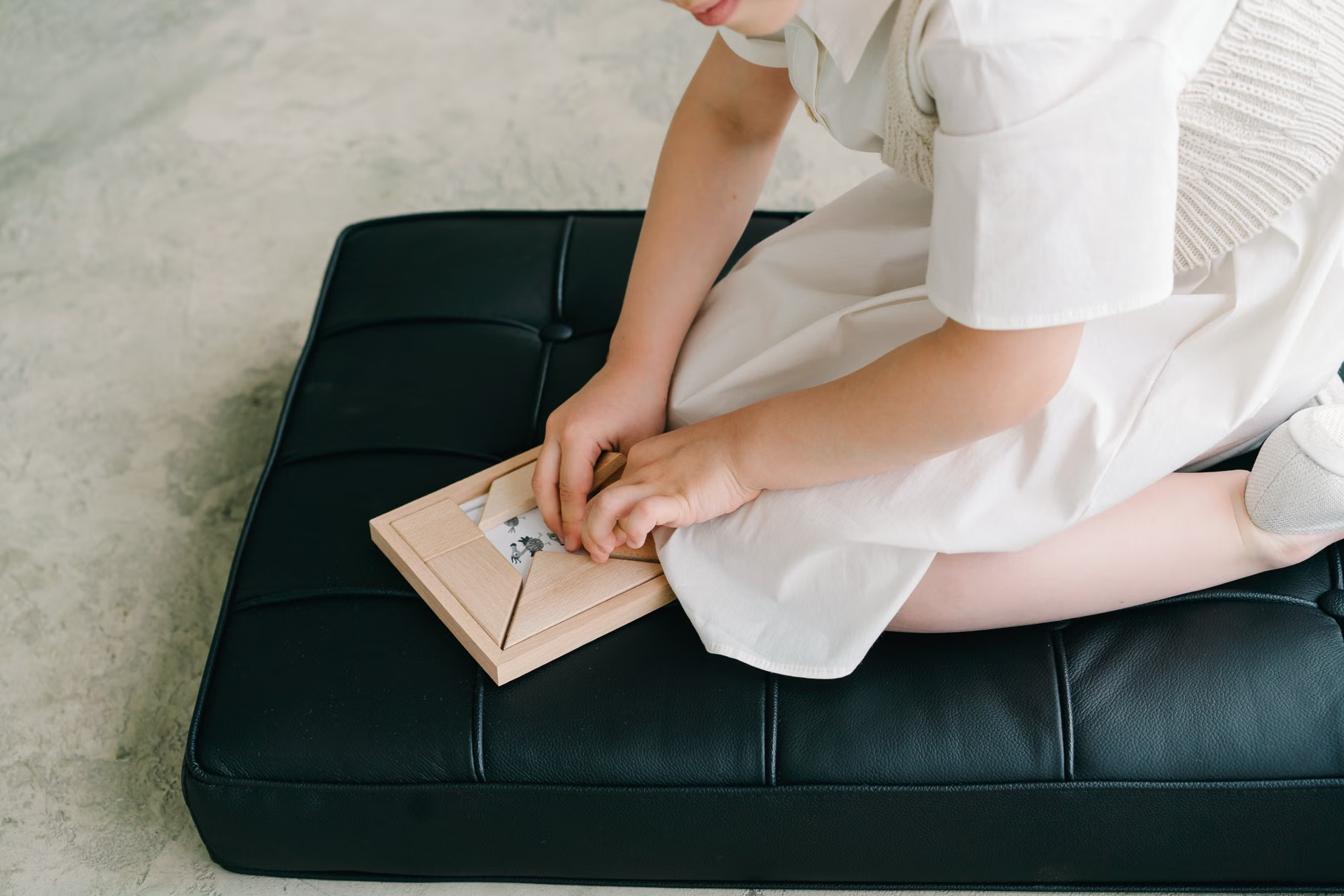
When you have a toy box overflowing with fifty different items, you often trigger what psychologists call “the paradox of choice.” When there are too many options, children struggle to focus. They become overwhelmed, flitting from one toy to the next without truly engaging in deep, imaginative play. This is the opposite of a growth mindset; it is a cycle of distraction.
By limiting the number of toys available at any given time—a hallmark of the library model—you naturally encourage your child to explore every facet of a single object. If they borrow a complex marble run, they have two weeks to master the physics of the track. If they have a toy kitchen, they have time to practice social roles and narrative play. The scarcity created by the library system actually fosters abundance in creativity.
Furthermore, toy libraries often carry high-quality, Montessori-style, or STEM-focused materials that are prohibitively expensive to buy outright. By providing access to these premium tools, libraries level the playing field. Your child gets to experience the tactile feedback of high-quality wooden blocks, the logic of magnetic tiles, or the complexity of advanced puzzles, which might otherwise be out of budget.
Managing the Practical Logistics
Implementing this model in your life requires a shift in how you view household management. You aren’t just “getting rid of things”; you are “optimizing for development.” Here is how you can practically manage the transition:
| Phase | Action Item | Growth Mindset Goal |
|---|---|---|
| Audit | Sort current toys by engagement level. | Identifying what truly sparks curiosity. |
| Curate | Select 3-5 items to keep, donate/sell the rest. | Reducing cognitive load for the child. |
| Subscribe | Join a local or online toy library. | Embracing the value of temporary resources. |
| Rotate | Swap items every 2-4 weeks. | Maintaining novelty and sustained interest. |
The most common mistake parents make is trying to do too much at once. Do not attempt to clear the entire playroom in a weekend. Start by identifying the “anchor” toys—the ones your child plays with every single day. Keep those. Then, look at the toys that have gathered dust for months. Those are the candidates for donation or for being replaced by a library rotation.
When you visit the library, involve your child in the process. Ask them, “What skill do you want to work on this week?” This shifts the conversation from “What do I want to own?” to “What do I want to learn?” It is a subtle but powerful linguistic shift that reinforces the growth mindset.
Economic and Environmental Considerations
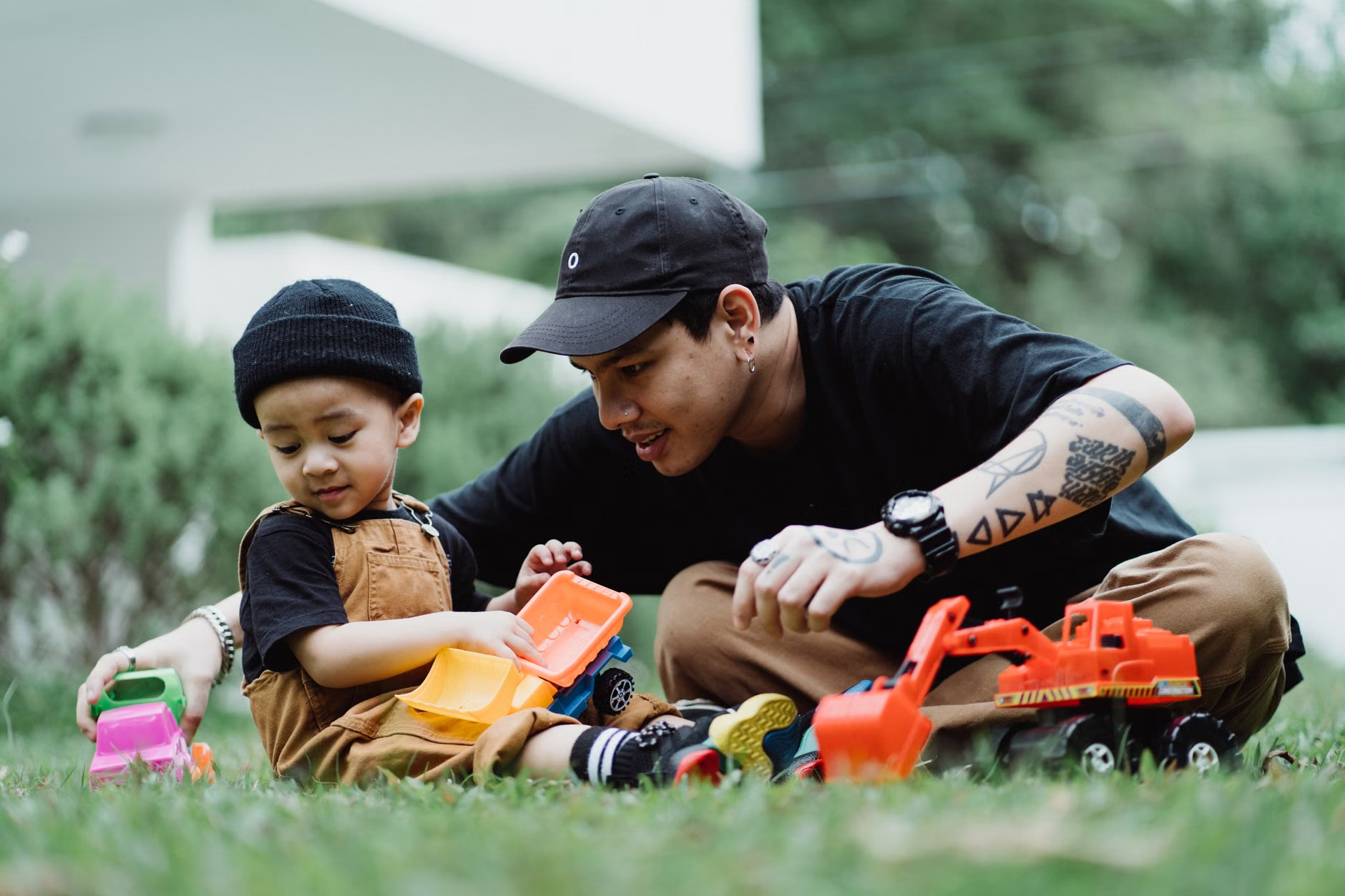
Let’s talk about the elephant in the room: the cost of parenting. Between childcare, education, and the general rising cost of living, the toy budget is often the first thing that should be scrutinized. Buying new toys frequently is a drain on your bank account and creates massive amounts of plastic waste that eventually ends up in landfills.
The toy library model is inherently circular. One high-quality wooden train set can serve dozens of families over its lifetime. By participating, you are reducing your personal carbon footprint and teaching your children about sustainability by example. You aren’t just telling them to recycle; you are showing them that the cycle of use is a standard part of responsible living.
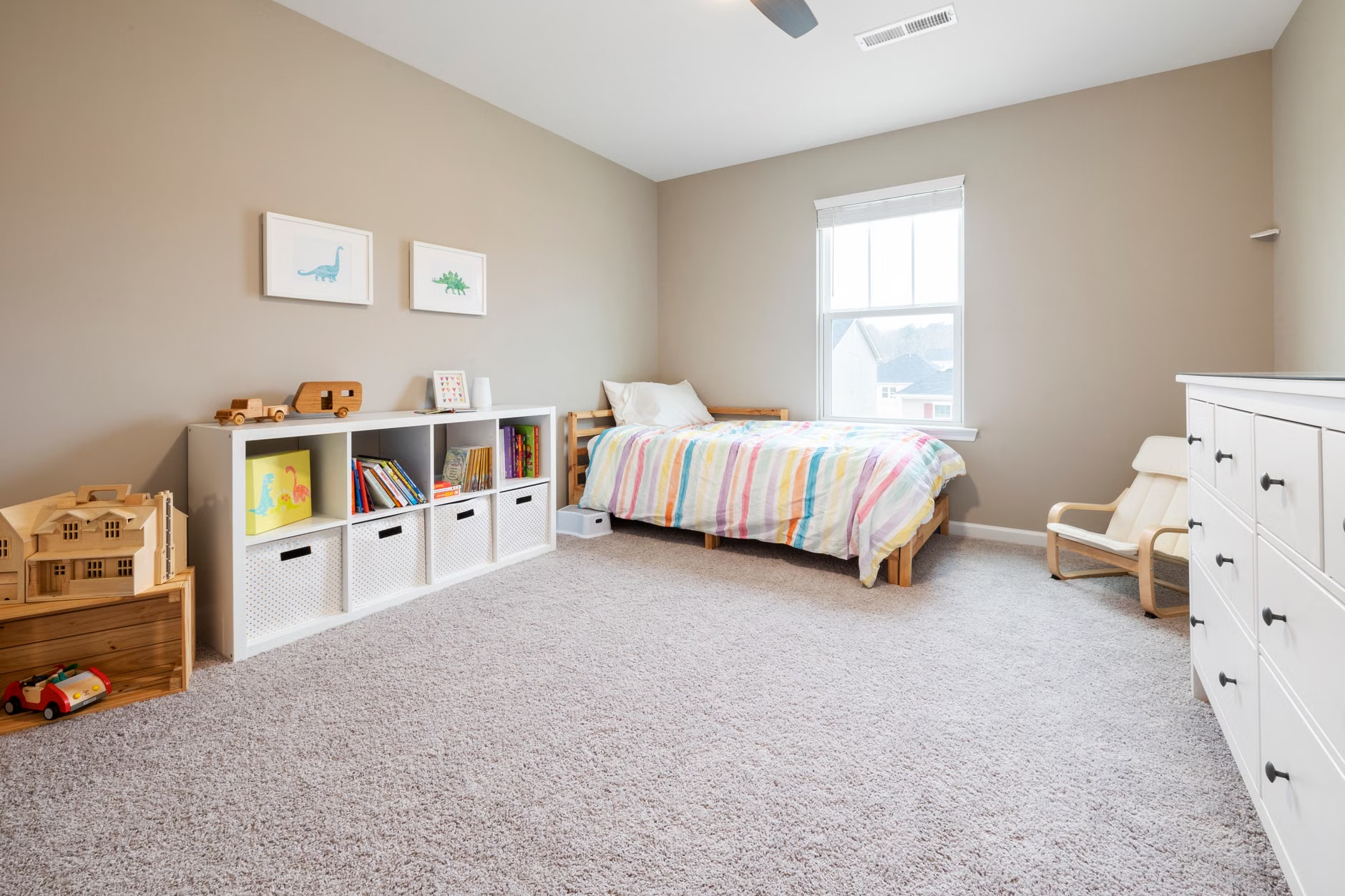
There is also the matter of storage. If you live in an urban environment or a smaller home, the “toy explosion” is a real threat to your mental health. A home filled with clutter is a home that is harder to clean and, for many adults, harder to relax in. By outsourcing the storage of toys to a library, you reclaim your square footage. Your living room becomes a place for family connection rather than a warehouse for plastic inventory.
Common Challenges and How to Overcome Them
No system is perfect, and the toy library model comes with its own set of hurdles. The most frequent concern parents raise is the fear of losing pieces or breaking items. This is a valid anxiety. However, most toy libraries have a very reasonable policy for lost parts, often charging a nominal fee that is still significantly cheaper than buying a new set.
Another challenge is the “attachment” phase. What if your child falls in love with a toy and refuses to return it? This is actually a great teaching moment. It is an opportunity to discuss the concept of “community property.” Explain that because we return the toy, another child gets to have the same fun we did. This builds empathy and helps children understand that their actions are part of a larger social ecosystem.
If you find that your child is consistently struggling with the return process, consider creating a “goodbye ritual.” Take a photo of them with the toy, or let them write a little thank-you note to the next child who will use it. These small, intentional acts help bridge the emotional gap between owning and sharing.
Why This Matters for the Next Generation
The world our children will inherit is one of finite resources and increasing complexity. The skills they need—adaptability, resilience, and the ability to find value in temporary experiences—are exactly what the growth-mindset toy library fosters. By moving away from the consumerist trap of “more is better,” we are setting them up for a more mindful adulthood.
Furthermore, the habit of rotating toys creates a rhythm of anticipation. There is a genuine excitement in going to the library to pick out something new. It turns the act of getting a “new toy” into an event rather than an impulsive, everyday occurrence. This builds patience and delayed gratification, two traits that are increasingly rare in our modern, instant-delivery world.
As parents in our 30s and 40s, we are the bridge between the old way of doing things—buying, consuming, discarding—and a new, more sustainable future. Every time you choose to borrow rather than buy, you are casting a vote for a world that values intelligence, creativity, and sustainability over mere accumulation.
Frequently Asked Questions
1. How do I find a toy library near me?
Start by searching online for “toy library” combined with your city or region. If there isn’t a physical location nearby, look for national or regional online toy subscription services that ship curated boxes to your door. Many community centers and public libraries are also beginning to host “Library of Things” programs that include toys.
Reputable toy libraries have strict cleaning and sanitization protocols. They use non-toxic, eco-friendly cleaners to disinfect items between loans. If you are ever concerned, you can always perform a quick wipe-down with a safe, natural cleaner when you bring the items home, but generally, these organizations operate to a standard that is as safe as, if not safer than, the toys sitting on a retail shelf.
3. How do I handle it if my child breaks something?
Do not panic. Most libraries understand that toys are meant to be played with and that accidents happen. Contact the library staff immediately, be honest about what happened, and pay the replacement fee if required. Most libraries have a tiered system for minor vs. major damage, and they are usually very understanding, especially if you communicate clearly.
Final Thoughts on Mindful Play
Transitioning to a toy library model is a significant step toward a more organized, sustainable, and educationally rich home environment. It requires a shift in mindset, but the rewards—both for your child’s development and your own peace of mind—are profound. You are moving from a state of reactive consumption to one of proactive curation.
Remember that the goal is not perfection. The goal is to provide your child with the best possible tools for their cognitive and emotional growth while keeping your home a sanctuary. If you can manage that, you are doing a great job. Take it one toy, one rotation, and one library visit at a time.
For more information on the benefits of open-ended play and how it supports child development, you may want to explore resources from the National Association for the Education of Young Children (NAEYC), which provides comprehensive research on early learning environments.