The secret to a thriving garden that doesn’t demand your entire weekend is transitioning to a low-energy smart irrigation system that waters only when your plants actually need it. Most of us are guilty of the “set it and forget it” approach—or worse, the “panic-water at 2:00 AM because I forgot it hasn’t rained in weeks” method. By shifting to a localized, sensor-driven setup, you can cut your outdoor water usage by up to 50% while ensuring your hydrangeas and tomatoes don’t suffer during your busy work week.
Key Takeaways
- Sensor-Driven Intelligence: Use soil moisture sensors or local weather data to prevent unnecessary watering during rain.
- Drip vs. Spray: Drip irrigation systems are significantly more energy-efficient and water-conservative than traditional sprinklers.
- The “Set-Once” Principle: Focus on zoning your garden by water needs to prevent over-watering hardy plants while under-watering thirsty ones.
If you are in your 30s or 40s, you know the feeling: you want a beautiful outdoor space for the kids to run around in or for your own sanity after a long day of meetings, but you simply don’t have the bandwidth to manage a complex manual irrigation schedule. Between school runs, grocery shopping, and keeping up with the house, your plants often end up at the bottom of the priority list. This isn’t just about laziness; it’s about efficiency. Smart irrigation is the technological answer to the “parental time deficit.”
Understanding the Basics of Low-Energy Automation
Before we dive into the hardware, let’s clear up what “low-energy” actually means in this context. It isn’t just about electricity consumption—though modern controllers are remarkably efficient—it’s about the energy you spend. A low-energy smart system is one that requires minimal intervention once installed. It operates on the principle of “precision watering.”
Traditional systems operate on a timer. They turn on at 6:00 AM regardless of whether it poured rain all night. That is the opposite of smart. A low-energy smart system, however, talks to the internet or checks local soil conditions. If the humidity is high or the forecast predicts rain, the system stays off. This saves water, prevents root rot, and reduces your utility bill. It’s a classic case of the technology working for you, rather than the other way around.
When you start building your system, think in terms of “Zones.” Not all plants are created equal. Your lawn might need a daily misting, while your vegetable patch requires a deep soak, and your ornamental bushes might only need water twice a week. By grouping these plants into zones, you can set specific schedules that respect the biology of your garden.
Choosing the Right Controller for Your Lifestyle
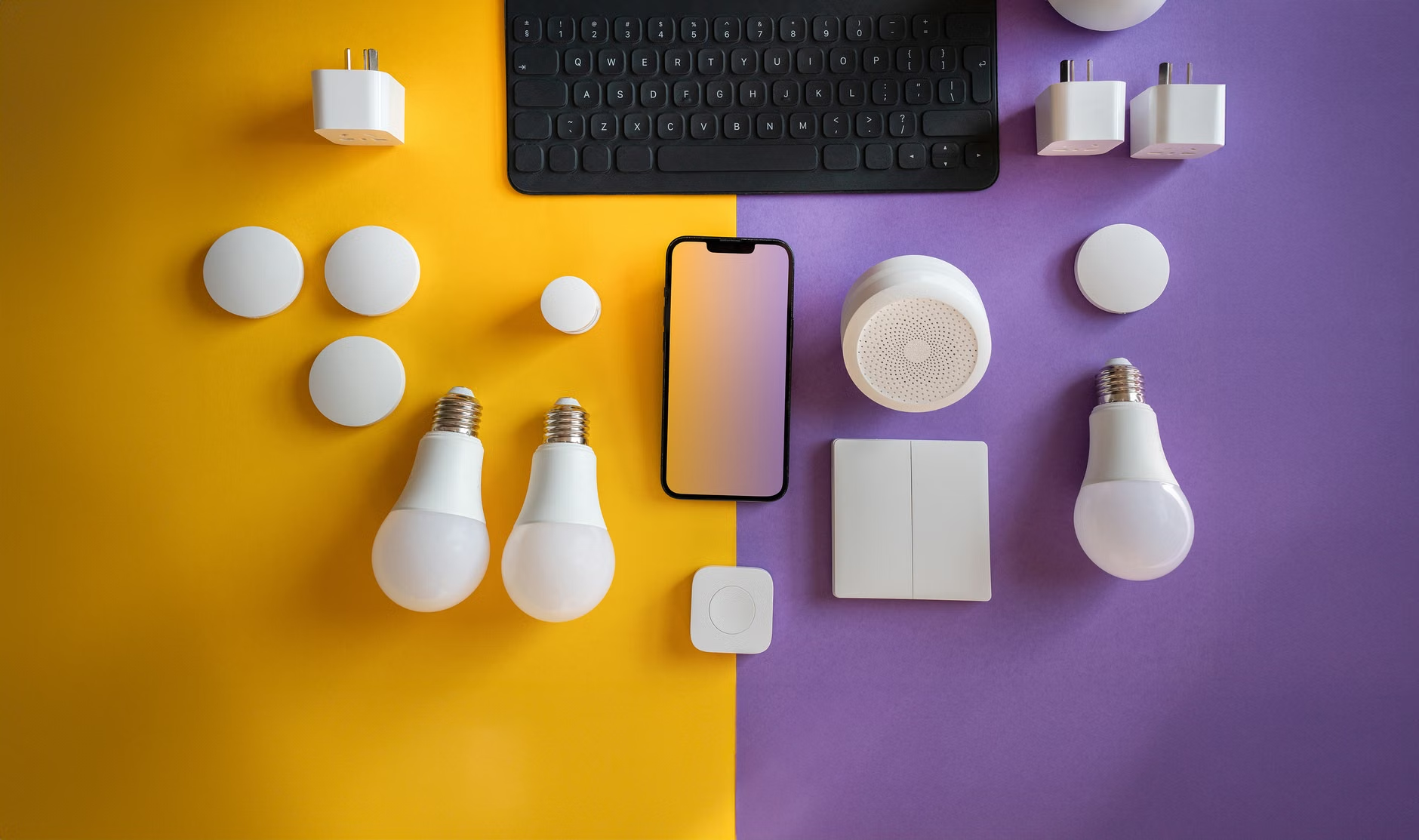
The controller is the brain of your irrigation system. When shopping for one, you’ll encounter two main types: Wi-Fi-enabled controllers and standalone sensor-driven controllers. For most busy parents, a Wi-Fi-enabled controller is the gold standard.
Why Wi-Fi? Because it connects to local weather stations. If the weather forecast changes, your controller updates its schedule automatically. You don’t have to touch a dial. Look for models that integrate with your existing smart home ecosystem—whether that’s Apple HomeKit, Google Home, or Amazon Alexa. Being able to say, “Hey, pause the sprinklers,” while you’re trying to wrangle kids into the car for soccer practice is a genuine quality-of-life upgrade.
When evaluating controllers, check for these three features:
| Feature | Why it matters |
|---|---|
| Weather Intelligence | Automatically skips cycles if rain is detected in your area. |
| Multi-Zone Control | Allows for different watering needs for grass, shrubs, and veggies. |
| App Connectivity | Gives you remote control from anywhere, even on vacation. |
The Case for Drip Irrigation: Why Spraying is Outdated
If you are still using oscillating sprinklers that spray water into the air, you are losing a massive percentage of that water to evaporation. In the middle of summer, a significant portion of the water from a spray head never even hits the soil; it evaporates before it lands. Drip irrigation is the low-energy solution to this problem.
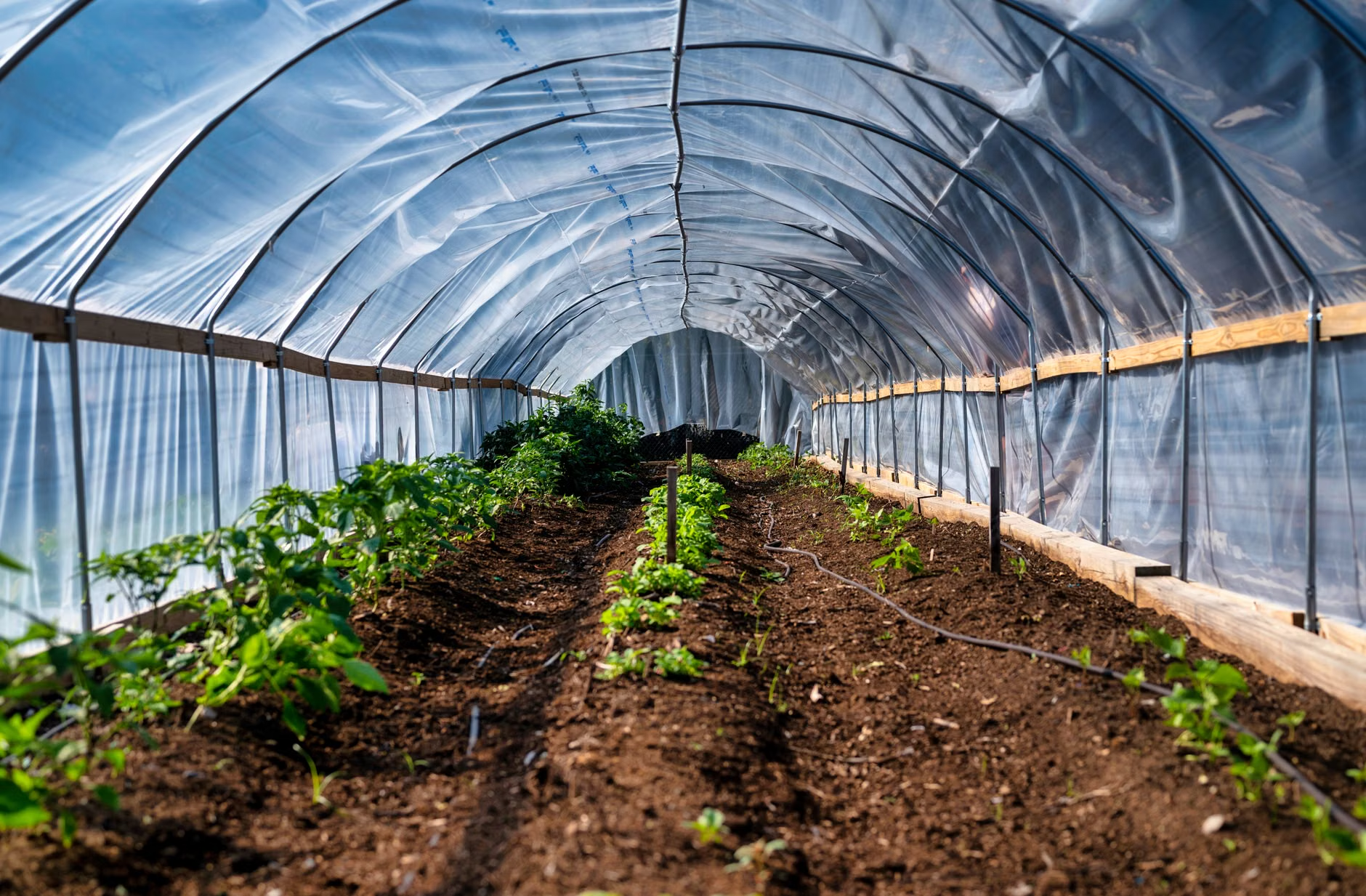
Drip irrigation delivers water directly to the root zone of the plant. It’s essentially an IV drip for your garden. Because the water is applied slowly and directly to the soil, there is almost zero evaporation. It’s also better for your plants; it keeps the foliage dry, which reduces the risk of fungal diseases. If you have ever dealt with powdery mildew on your squash or roses, you know exactly why keeping the leaves dry is a win.
Setting up a drip system sounds intimidating, but it’s essentially like playing with a life-sized construction set. You run a main line (the primary hose) along your garden bed, and then use smaller, flexible tubes (spaghetti tubing) to direct water to individual plants. You can install this in a single afternoon. It requires no specialized plumbing skills, just a few connectors and a pair of shears.
Maintaining Your System Without Losing Your Mind
The “low-energy” philosophy extends to maintenance. A system that breaks constantly is not low-energy; it’s a chore. The biggest mistake people make is failing to “winterize” their system. In climates where temperatures drop below freezing, water trapped in your hoses will expand and crack the plastic lines and connectors. This is the #1 cause of irrigation failure.
To avoid this, build a “seasonal checklist” into your calendar. In the fall, you should flush the system and shut off the water supply. In the spring, check the nozzles for clogs. If you use a drip system, grit can get into the emitters. Most modern drip emitters are “self-flushing,” but it’s still wise to walk the garden once a year to make sure everything is actually dripping where it should be.
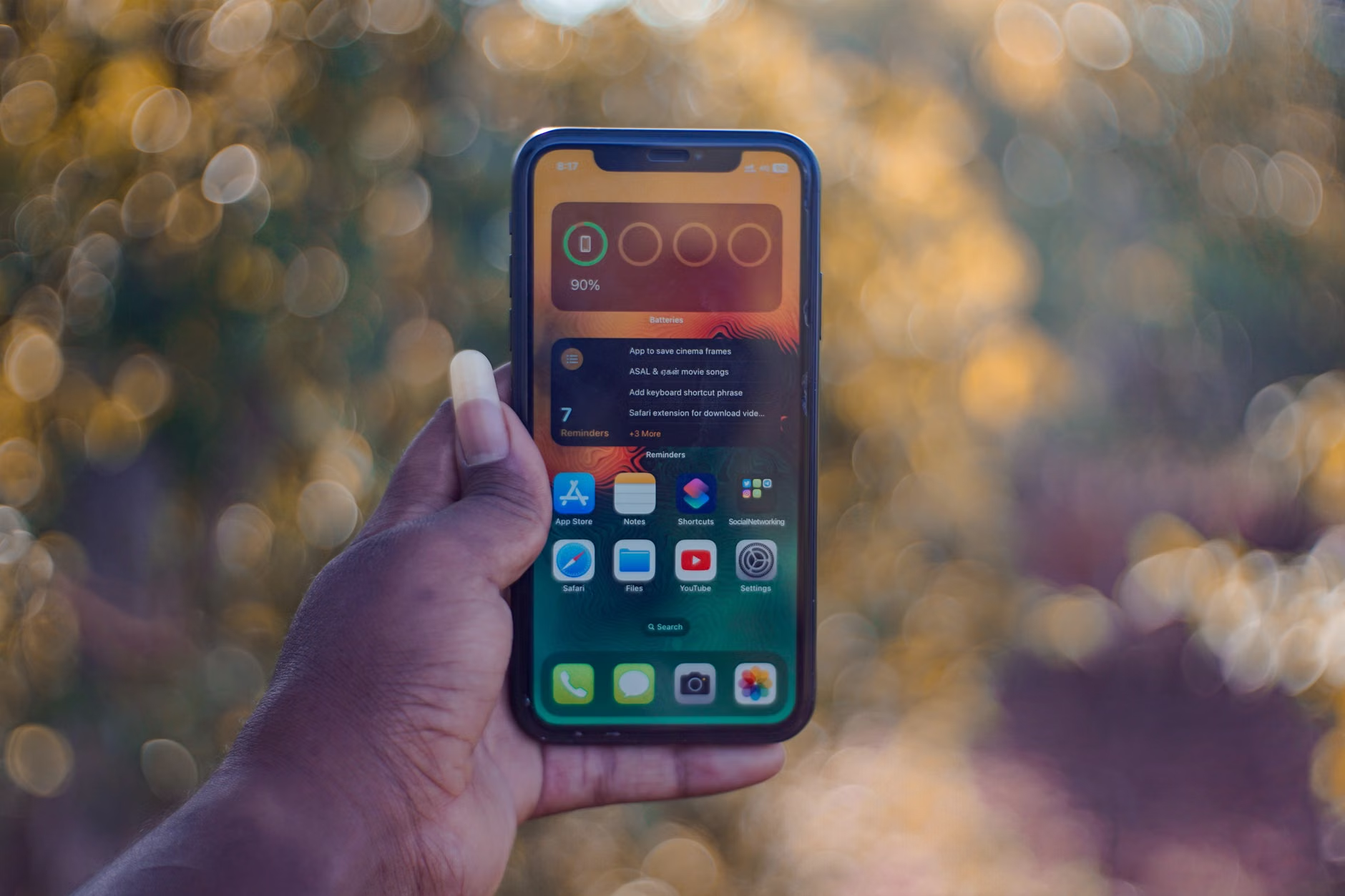
Another common pitfall is ignoring the “battery” aspect. Even if your controller is hard-wired, many sensors use batteries. Set a recurring reminder in your digital calendar for six months out to check these batteries. It takes two minutes, and it prevents the system from failing during a critical heatwave.
Analyzing the ROI: Is it Worth the Investment?
Let’s talk numbers. A smart controller can cost anywhere from $100 to $300, and a drip irrigation setup for a medium-sized garden will run another $100 to $200. It sounds like a decent chunk of change, but consider the alternative. Replacing dead plants is expensive. High water bills due to inefficient watering are recurring, monthly expenses. And your time? That is the most expensive commodity of all.
Most households see a return on investment within two to three years simply through water savings. In some regions, local water authorities even offer rebates for installing smart irrigation controllers. Always check your local utility website before purchasing your gear; you might be surprised to find a discount or credit waiting for you.
Beyond the financial aspect, think about the peace of mind. When you go on a family vacation, you don’t have to worry about finding a neighbor to water the plants. You can check the status of your garden from the beach, or better yet, forget about it entirely, knowing the system is smart enough to skip a cycle if it rains at home.
Troubleshooting Common Smart Irrigation Glitches
Even the best systems have hiccups. The most common issue with smart controllers is “connectivity loss.” If your Wi-Fi signal doesn’t reach the garage or the side of the house where the controller is mounted, the system might lose its weather data. If this happens, most controllers revert to a “default” schedule, which is often just a generic timer. It won’t kill your plants, but it won’t be as efficient as it could be.
If you have connectivity issues, a simple Wi-Fi range extender is usually the fix. Don’t overcomplicate it. Another issue is the “sensor ghosting” problem. Sometimes, a moisture sensor can get stuck in a patch of soil that stays wet, telling the system not to water even when other parts of the garden are bone dry. The solution here is to ensure you place your sensor in a “representative” area—somewhere that gets average sun and average soil drainage, not in the deepest shade or the most exposed patch of dirt.
Finally, remember that smart irrigation is a guide, not a dictator. If you see your plants wilting, override the system. Technology is there to assist your observations, not replace them. If the smart system says the soil is moist but your petunias are drooping, trust your eyes. Adjust the sensor threshold or tweak the zone settings in the app. You are the final authority on your garden’s health.
The Sustainable Future of Home Gardening
We are living in an era where water conservation is becoming a necessity rather than a suggestion. Smart irrigation is one of the most impactful ways a household can reduce its environmental footprint. By using water only when necessary and delivering it precisely where it is needed, you are contributing to a more sustainable community. It’s a small change in infrastructure that leads to a big difference in long-term resource management.
As you build your system, don’t feel pressured to automate everything at once. Start with your most water-intensive zone—perhaps the vegetable garden or the lawn—and expand from there. This “modular” approach keeps the project manageable and allows you to learn how your garden responds to the system. You will find that as you gain confidence, the technology becomes second nature.
Ultimately, a low-energy smart irrigation system is about reclaiming your time. By delegating the repetitive, tedious task of watering to a machine that is actually better at it than you are, you free yourself to spend those hours doing things that matter more. Whether that’s playing with your kids, reading a book on the patio, or just enjoying the garden you’ve spent so much effort cultivating, the goal is to make the garden a source of relaxation, not a source of stress.
Stay grounded in your approach, start small, and let the technology handle the heavy lifting. You might find that your garden—and your schedule—thank you for it.
Frequently Asked Questions
1. Do I need professional installation for a smart irrigation system?
Not necessarily. Many smart controllers are designed for DIY installation and can replace existing manual controllers using standard wiring. Drip irrigation kits are also designed for non-professionals, often using “push-fit” connectors that require no tools other than a pair of scissors. If you are comfortable with basic home DIY, you can handle this.
2. What happens if my Wi-Fi goes down?
Most high-quality smart irrigation controllers have “on-board memory.” If they lose their connection to the internet, they will continue to run the last known good schedule or default to a safe, pre-programmed routine. Your plants will not be left high and dry just because the internet router needs a reboot.
3. Can I use smart irrigation if I have a small balcony garden?
Absolutely. There are “micro-irrigation” kits designed specifically for container gardening and balconies. These use small, low-flow emitters that connect to a simple faucet-mounted timer. It is a fantastic way to keep potted plants healthy while you are away or just busy with daily life.
For further research on water conservation and irrigation standards, please refer to the US EPA WaterSense program, which provides comprehensive guidelines on efficient water use in residential landscapes. Additional technical specifications for irrigation components can often be found on the Irrigation Association website.