The most effective way to manage the endless cycle of your child outgrowing their wardrobe isn’t by buying more, but by embracing a circular economy through community clothing swaps.
- Economic Sense: A clothing swap eliminates the “fast-fashion trap” where families spend thousands annually on clothes worn for only a few weeks.
- Sustainability: Extending the lifecycle of a garment by just nine months can reduce its carbon, waste, and water footprint by 20-30%.
- Community Building: Swapping is a low-stress way to connect with other parents in your neighborhood while clearing out your own clutter.
If you have spent any time in the trenches of parenting, you know the specific, sharp frustration of the “growth spurt scramble.” You buy a brand-new pair of jeans or a cute seasonal jacket, and before you have even managed to take the tags off—or perhaps just two weeks after—the hem is hitting mid-calf and the sleeves are hovering near the elbows. It is a universal rite of passage for parents, but it is also a massive drain on the family budget and a significant contributor to the textile waste crisis.
Most of us in our 30s and 40s are hyper-aware of the environmental impact of our consumption. We try to buy less, choose better quality, and recycle where we can. Yet, when it comes to children, the sheer speed of their physical development makes “slow fashion” feel like an impossible ideal. How can you commit to durable, ethical clothing when your toddler grows out of a size 2T in the blink of an eye?
The answer lies in shifting our perspective from ownership to stewardship. By participating in or organizing a clothing swap, you aren’t just getting rid of old clothes; you are participating in a local, sustainable loop that treats children’s clothing as a shared resource rather than a disposable commodity.
Understanding the True Cost of the “Fast-Fashion” Cycle
The fashion industry is one of the largest polluters globally. When we talk about “fast fashion,” we are referring to the rapid production of inexpensive, low-quality garments designed to mirror current trends. For children, this is particularly problematic. Because children grow so quickly, the industry relies on parents constantly purchasing new items, often made from synthetic materials that are difficult to recycle.
Consider the lifecycle of a typical infant onesie. From raw material extraction (cotton farming or petroleum-based polyester production) to manufacturing, dyeing, shipping, and eventual disposal, the resource cost is staggering. When that onesie is worn for three weeks and then tossed into a donation bin—or worse, the trash—it becomes a significant environmental liability. By keeping that garment in circulation through a swap, you are effectively dividing that environmental cost across three, four, or five different children.
The Mechanics of a Successful Clothing Swap
A clothing swap is not just a free-for-all pile of old clothes in someone’s garage. While that can work, it often leads to frustration when the quality doesn’t match the expectations. To make a swap effective for busy parents, it needs to be organized, curated, and respectful of everyone’s time.
1. Setting the Ground Rules
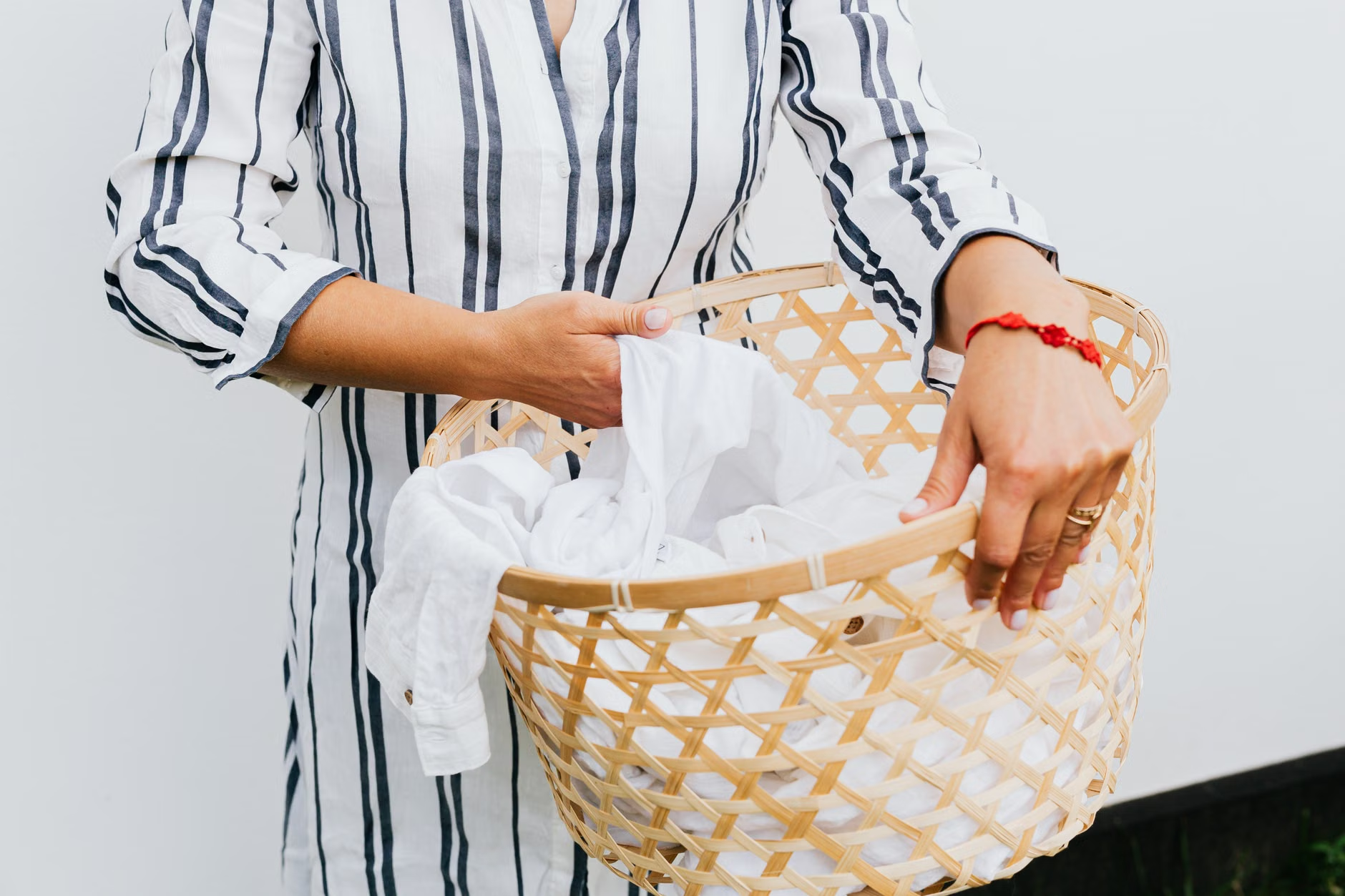
The most successful swaps operate on a “quality over quantity” mandate. If you wouldn’t give it to a friend, don’t bring it to the swap. This means no stained, ripped, or heavily pilled items. Encourage participants to wash everything beforehand. This simple step removes the “second-hand stigma” and makes the experience feel more like shopping at a boutique and less like digging through a donation bin.
2. The Categorization Strategy
Nothing kills the efficiency of a swap faster than a chaotic pile of mixed sizes. Organize the space by size (e.g., 0-3 months, 3-6 months, 6-12 months, and then by year for older children). Use simple cardboard signs or masking tape to mark the areas. If you have enough volunteers, assign one person to “restock” the tables as items are removed, keeping the displays tidy.
3. Defining the “Entry Fee”
Some groups prefer a simple “take what you need, leave what you can” model. Others, especially those with many participants, might use a ticket system. For every five items a parent brings, they receive five tokens. This prevents the “hoarder effect,” where one person takes everything, leaving nothing for others. It keeps the exchange equitable and encourages a steady flow of high-quality items.
Why This Matters for the Modern Parent
Beyond the obvious financial savings—which, let’s be honest, can be substantial—there is a psychological benefit to the clothing swap. Parenting in the modern era can feel incredibly isolating. We are often glued to our screens, managing calendars, and trying to keep up with the demands of work and home. A clothing swap is a low-stakes way to meet other parents in your community.
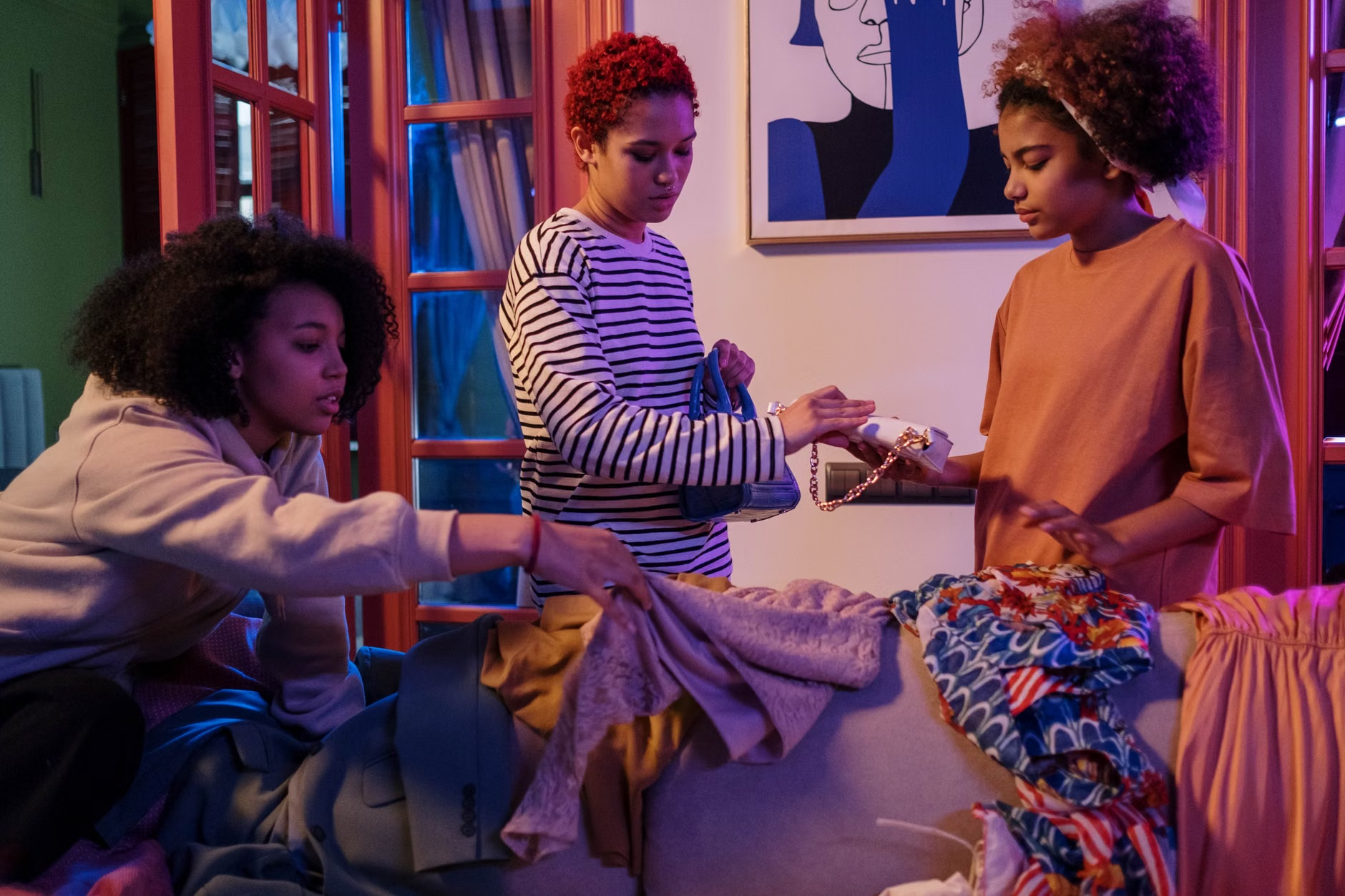
It provides a venue for the “parent-to-parent” knowledge transfer. While you are browsing through a pile of toddler shirts, you might end up chatting with a neighbor about which local preschool has a good program, or how they finally got their child to sleep through the night. These casual connections are the glue of a healthy neighborhood, and they happen much more naturally when you are focused on a shared, practical task.
Addressing Common Concerns and Myths
There are valid concerns about second-hand clothing, particularly regarding hygiene and safety. Let’s address these head-on.
| Concern | The Reality |
|---|---|
| “Are used clothes unhygienic?” | Standard laundry detergent and a hot wash cycle are more than sufficient to sanitize clothing for children. |
| “Will I find anything actually nice?” | Most parents are happy to pass on high-quality items that their children have outgrown, provided there is a place for them to go. |
| “Is it a waste of time?” | When compared to the time spent driving to a store, shopping, and paying for new items, a bi-annual swap is highly efficient. |
It is also important to note that you don’t have to be a “minimalist” to benefit from this. You don’t have to have a perfectly curated closet. The goal is simply to create a circular flow. If you find yourself with too much, host a swap. If you find yourself needing more, attend one. It’s a flexible system that adapts to your life, not the other way around.
Practical Steps to Launch Your Own Swap
If you’ve decided that a clothing swap is the next project on your list, don’t overcomplicate it. Start small. You don’t need a venue; a living room or a backyard works perfectly for a neighborhood group of five to ten families.
- Select a Date and Time: Choose a weekend morning when parents are usually looking for low-cost activities.
- Digital Coordination: Use a shared document or a simple group chat to track who is bringing what. This prevents everyone from showing up with only newborn clothes when you actually need sizes for a four-year-old.
- The “Post-Swap” Plan: What happens to the leftovers? This is the most important logistics step. Do not leave the host with twenty bags of clothes. Decide in advance that any unclaimed items will be donated to a specific local charity or shelter.

The Environmental Impact: Beyond the Wardrobe
When we discuss the “slow-fashion” movement, we often focus on the aesthetic—the linen dresses, the neutral colors, the high price tags. But true slow fashion is about longevity. It is about honoring the resources that went into the production of a garment. By participating in a swap, you are extending the life of a piece of clothing by years rather than months.
There is also a lesson here for our children. When they see us swapping, mending, and valuing the items we have, they learn that clothing is not just a disposable product of marketing. They learn that their clothes have a history and a future. This is a subtle but powerful way to raise children who are more conscious of their own consumption habits.
One of the biggest hurdles in a swap is the “quality disparity.” Some parents bring high-end, organic cotton pieces, while others bring worn-out fast-fashion basics. This is where communication is key. Be clear in your invitations about what constitutes “swap-ready” clothing.
If you are organizing, you can set “tiers” or “categories” if the group is large enough. For example, a “gear swap” (strollers, high chairs) might require a different set of rules regarding safety recalls and cleanliness than a “clothing swap.” Always prioritize safety for items like car seats or cribs—these should generally be avoided in casual swaps unless you are 100% certain of their history and safety status.
There is something deeply grounding about the act of passing a favorite sweater on to a neighbor’s child. You remember your own child wearing it for their first birthday, or the way they looked in that specific shade of blue. It isn’t just a piece of fabric anymore; it’s a shared memory. This emotional connection to our belongings is something that gets lost in the modern retail experience.
When you buy a shirt from a massive online retailer, you have no connection to the item. When you pick up a shirt at a swap, you might hear a story about it. “Oh, he wore that to his first day of kindergarten!” That human element adds value that no price tag can replicate. It makes the clothes feel special, even if they are second-hand.
Common Pitfalls and How to Avoid Them
Even with the best intentions, swaps can go sideways. Here are a few things to watch out for:
1. The “Dumping Ground” Syndrome: Sometimes, people use a swap as a way to clear their own clutter without regard for the quality. If you are the organizer, don’t be afraid to pull items aside that are clearly trash. Have a designated “recycling” bin for items that are too worn to be passed on, so they don’t end up in the swap pile.
2. The “FOMO” (Fear of Missing Out): If you are worried that you won’t find anything in your size, don’t panic. The beauty of the swap is that it is a cycle. You might not find anything this time, but next time you might be the one who finds a treasure trove. Keep an open mind and enjoy the social aspect.
3. The “Retail Mentality”: If you approach a swap expecting the same level of variety and sizing as a department store, you will be disappointed. Treat it as a treasure hunt. You aren’t looking for a specific item; you are looking for whatever is available and useful.
Ensuring Longevity in Your Own Wardrobe
Once you have acquired items through a swap, you want to make sure they last as long as possible. This is the “slow” part of slow fashion. Follow the care labels. Wash in cold water, avoid the dryer when possible, and learn basic mending skills. A small hole in a knee doesn’t mean a pair of pants is trash; it means it’s an opportunity to learn how to patch.
Teaching your children how to care for their clothes is also a vital life skill. When they understand the effort it takes to keep a garment in good condition, they are less likely to treat it carelessly. It turns “getting dressed” into a process of respecting the items you own.
Scaling the Concept: Community and Beyond
If your local neighborhood swap takes off, consider how you can scale it. Could your local library host it? Could a community center provide space? There are many ways to turn a small, informal gathering into a broader community initiative. The more people involved, the better the variety of sizes and styles available.
You can also look for existing platforms. Many cities have “Buy Nothing” groups on social media, which are essentially digital, year-round clothing swaps. These are excellent resources for finding items you need immediately without having to wait for an event.
Conclusion: A Sustainable Future, One Shirt at a Time
The “growth spurt” is a challenge that every parent faces, but it doesn’t have to be a source of stress or waste. By embracing the clothing swap, we can reclaim our budgets, reduce our environmental impact, and build stronger, more connected communities. It’s a simple shift, but it has profound implications for how we live and how we teach our children to interact with the world.
Start small, stay organized, and keep the focus on the community. You might be surprised at how much you gain—not just in clothes, but in the connections you make along the way. After all, the best way to handle the speed of childhood is to slow down and share the journey with others.
Frequently Asked Questions
1. What should I do with clothes that are stained or damaged?
Do not bring them to a swap. If they are beyond repair, look for local textile recycling programs. Many cities have drop-off points for “rag” clothing that is no longer wearable but can be shredded and used for insulation or industrial stuffing.
2. Is it okay to charge money at a clothing swap?
Generally, no. The spirit of a swap is to move items within a community without financial barriers. If you want to cover the costs of a venue or refreshments, ask for a small, voluntary contribution rather than selling the clothing.
3. How do I handle a swap if I don’t have enough clothes to bring?
Most hosts are happy to have you participate even if you don’t have much to contribute, especially if you are a new parent. Just be transparent with the host beforehand so they don’t expect a large contribution from you.
For more information on sustainable textile practices and the impact of the fashion industry, you can visit the Ellen MacArthur Foundation, which provides comprehensive research on the circular economy.