The rise of the “micro-community” housing model is a direct response to the modern epidemic of isolation, offering families a way to trade square footage for a richer, more connected life.
Key Takeaways
- Beyond Roommates: Micro-communities are designed for families and professionals, not just students, focusing on shared resources like tools, gardens, and childcare.
- The Economic Trade-off: While private living space may be smaller, the reduction in costs for utilities, high-end appliances, and shared amenities provides significant financial relief.
- Intentional Connection: These housing models rely on “co-housing” principles where residents actively participate in the management and maintenance of their shared environment.
Do you ever feel like you’re doing the “parenting shuffle” entirely on your own? Between managing the school run, keeping up with home maintenance, and trying to find a moment of peace, the standard suburban model—a single-family home with a fence—can sometimes feel less like a sanctuary and more like a fortress of solitude. You are not alone in this feeling. Many of us in our 30s and 40s are realizing that the traditional housing dream might actually be a source of stress rather than support.
What Exactly Is a Micro-Community?
At its core, a micro-community is a intentional housing development that balances private living space with significant, high-quality shared areas. Think of it as a hybrid between a traditional apartment complex and a neighborhood of single-family homes, but with a philosophy rooted in collaboration rather than just proximity.
While apartment living is common in cities, the “micro-community” distinguishes itself by design. These developments are built with the explicit intention of fostering social interaction. They often include “common houses” that feature large kitchens, dining halls for group meals, workshops, guest rooms for visitors, and even shared laundry or childcare facilities. The goal is to move away from the “every home for itself” mentality and toward a model where resources are pooled to create a higher quality of life for everyone involved.
For a parent in their late 30s, this means the possibility of a communal play area that is visible from your kitchen, or a shared tool shed that eliminates the need to buy a lawnmower you only use three times a year. It’s about practicality, sustainability, and—perhaps most importantly—sanity.
Shared living isn’t new; it’s ancient. For most of human history, we lived in tribes or extended families where the burden of childcare, cooking, and maintenance was distributed across a group. The post-war suburban dream of the 1950s was an anomaly—a brief moment in history where we prioritized individual privacy above all else. Now, as the costs of housing skyrocket and the demands of modern parenting increase, we are seeing a massive swing back toward the collective.
In the 1970s, the “co-housing” movement began in Denmark, focusing on creating communities that were designed by the people who would live in them. Today, this has evolved into modern micro-communities that cater to tech-savvy, busy, and mobile generations. These aren’t just hippie communes; they are sophisticated, often eco-friendly, and highly planned developments that prioritize efficiency.
Why Families Are Choosing This Path
If you’re wondering why a family would choose to live in a smaller home with shared walls and shared amenities, the answer usually comes down to three factors: cost, time, and community.
1. Financial Efficiency
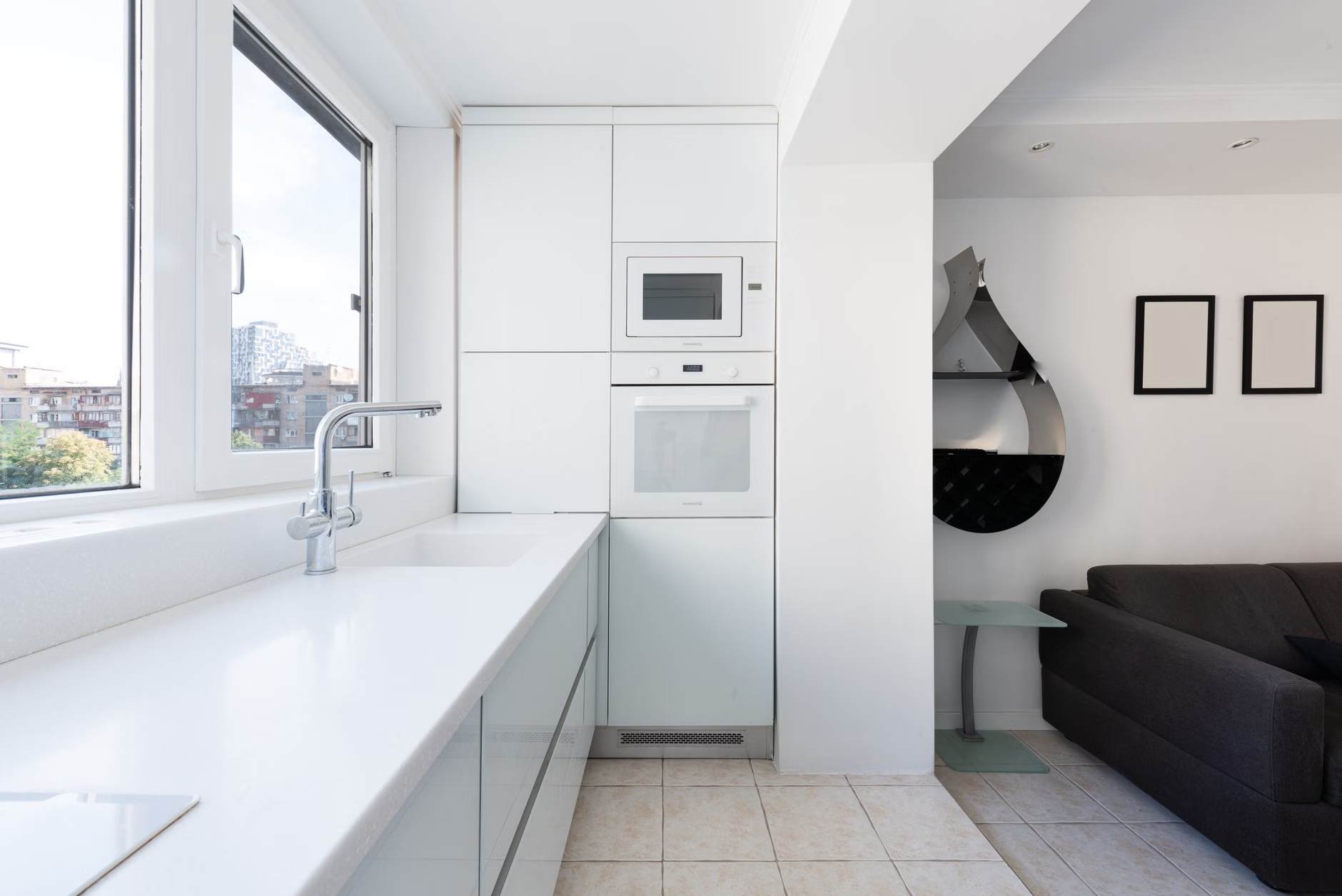
Housing prices in major global cities have reached a point where the traditional “three-bedroom, two-bath” home is becoming a luxury item. Micro-communities often allow families to live in desirable areas for a fraction of the cost. By sharing ownership of expensive assets—like high-end kitchen appliances, gardening tools, or even vehicles—residents save thousands of dollars annually. When you stop paying for things you rarely use, you suddenly have more room in your budget for experiences, travel, or savings.
2. The “Village” Effect
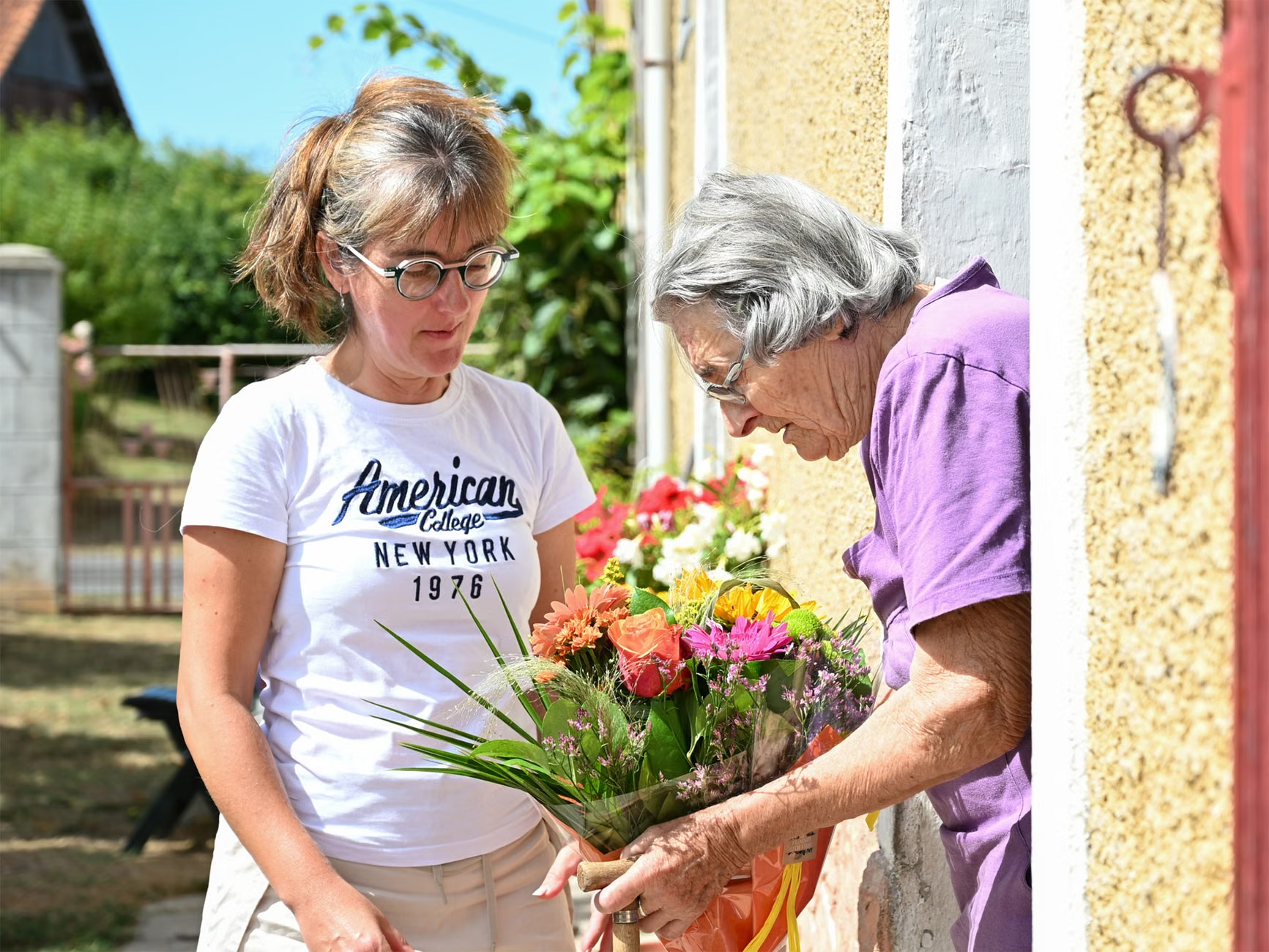
We’ve all heard the saying, “It takes a village to raise a child.” In the modern world, the village has largely disappeared. In a micro-community, the village is built into the architecture. When you live among people who share your values and your schedule, informal childcare becomes much easier. You might trade a few hours of babysitting with a neighbor on Tuesday so you can attend a gym class or finish a work project. This isn’t just convenient; it’s a mental health lifeline.
3. Reducing the Environmental Footprint
Modern micro-communities are often built with sustainability in mind. Shared heating systems, solar arrays, and high-density construction mean that the carbon footprint of each household is significantly lower than that of a sprawling suburban home. For parents who are worried about the climate their children will inherit, this is a tangible way to live more responsibly without sacrificing comfort.
The Practical Realities: A Comparison Table
To understand if this is right for you, it helps to compare the traditional model with the micro-community model. It isn’t just about space; it’s about the trade-off between private maintenance and collective benefit.
| Feature | Traditional Home | Micro-Community |
|---|---|---|
| Ownership | Individual | Shared ownership/co-op |
| Maintenance | Sole responsibility | Shared/Professional service |
| Social Life | Requires effort to initiate | Built-in daily interaction |
| Resources | Duplicate appliances per home | Shared high-end tools/kitchens |
Before you run off to join a co-housing startup, we have to be realistic. This lifestyle is not for everyone. It requires a high level of communication and a willingness to compromise. If you are the type of person who needs total autonomy over every detail of your living environment, a micro-community might feel stifling.
The biggest challenge is conflict resolution. When you share a common kitchen or a garden, you are essentially entering into a mini-democracy with your neighbors. Decisions about maintenance, rules, and common expenses are made collectively. This can lead to “meeting fatigue” and interpersonal friction if expectations aren’t clearly defined from the start.
Another point to consider is privacy. While you have your own private unit, the nature of these spaces often encourages “porch culture,” where you are expected to be somewhat open to interaction. If you are a hardcore introvert who needs hours of silence to recharge, you must ensure your private unit is truly soundproof and designed for seclusion.
Is It Right for Your Family?
If you are in your 30s or 40s and feeling the pressure of balancing a career, parenting, and home management, the micro-community offers a compelling alternative. But it requires a mindset shift. You are moving from a consumer model of housing to a participant model.
Ask yourself these questions before looking into local options:
- Are you comfortable with shared decision-making? Can you handle a disagreement about how the common budget is spent without it ruining your week?
- Do you value community over square footage? If you have a choice between a large basement you never use and a shared workshop where you can build furniture with your kids, which one matters more?
- What is your tolerance for social interaction? If you want to know your neighbors, this is ideal. If you want to be a ghost in your own home, this might be a struggle.
The Future of Housing
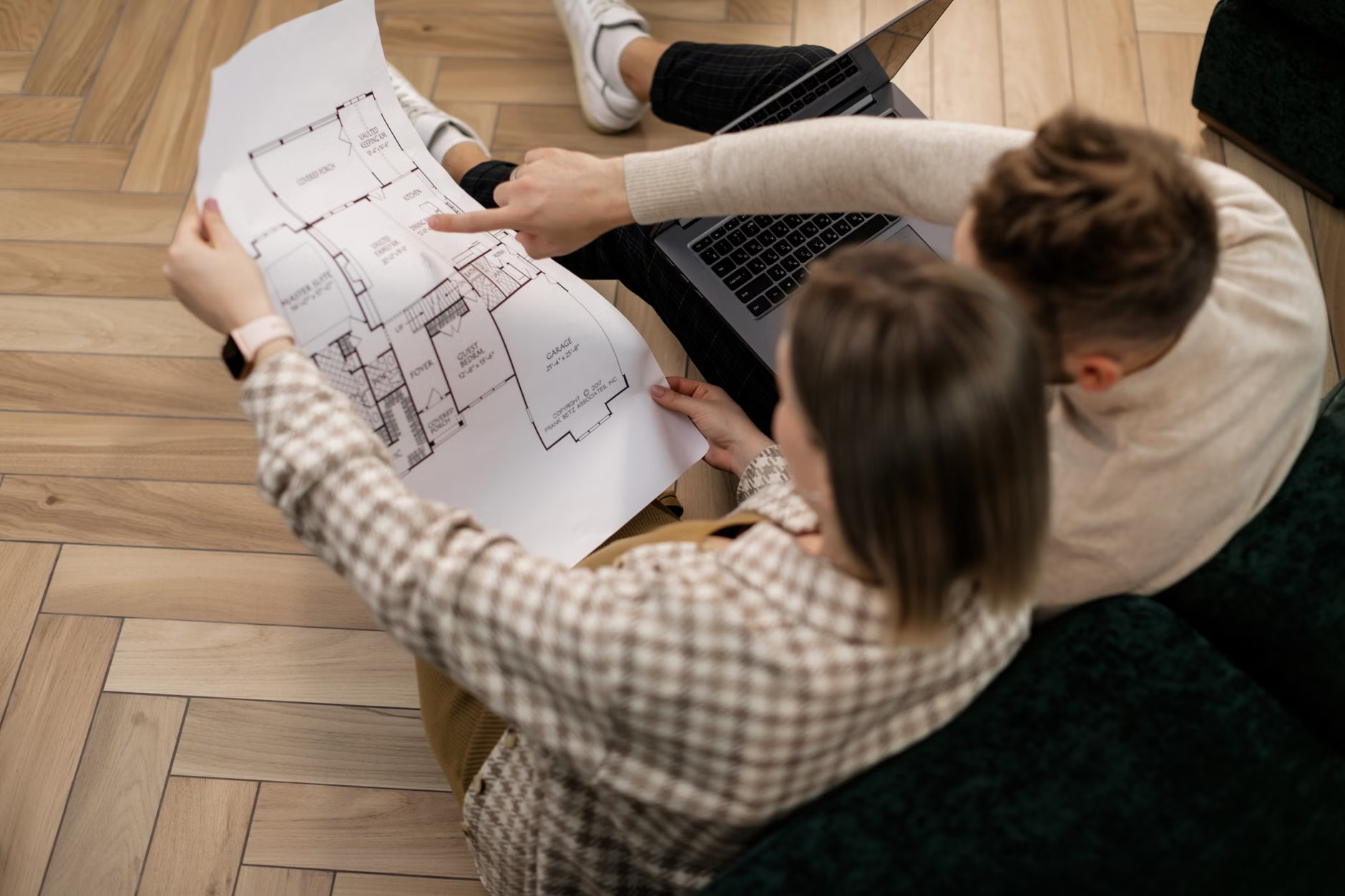
As cities continue to densify and the cost of living remains a primary concern for young families, the micro-community will likely move from a niche trend to a mainstream housing solution. We are already seeing developers integrate “community managers” into high-density buildings—essentially building managers whose job is to facilitate social events and ensure the communal spirit remains healthy.
This is a significant shift in the real estate industry. It’s no longer just about selling a unit; it’s about selling a lifestyle. For those of us navigating the middle years of life, this shift could be the key to reclaiming our time and building a support network that doesn’t rely on expensive services, but on the simple, human act of being a good neighbor.
If you’re curious about exploring this further, start by searching for “co-housing” or “intentional communities” in your specific region. Many of these groups hold open days or informational sessions. Visiting one, even if you don’t intend to move, can provide a fascinating look at how people are successfully reinventing the way we live together.
Frequently Asked Questions
What is the difference between a micro-community and a traditional apartment building?
Traditional apartment buildings are typically designed for privacy and individual utility. Micro-communities are architecturally and socially designed to encourage interaction, offering shared high-quality amenities (like large kitchens or workshops) that residents manage together as a group.
Is this model only for young, single people?
Not at all. In fact, many successful micro-communities are specifically designed for families with children or intergenerational groups. They often include play spaces, safety features, and a mix of unit sizes to accommodate different family structures, making them a great fit for people in their 30s and 40s.
How do I find a micro-community in my area?
The best place to start is the Global Co-housing Network or local real estate directories that filter by “co-housing” or “intentional community.” Many of these developments are formed by groups of residents before construction begins, so looking for community-led projects can be a great way to get involved from the ground up.
For further reading on the history and development of co-housing, you can consult the official resources at The Cohousing Association of the United States or look for local government urban planning white papers regarding “density and community living.”
Making the leap into a different way of living is always a big decision. It requires a bit of research and a lot of honesty about what your family truly needs to thrive. But as the world gets busier and more expensive, looking for ways to share the load might just be the smartest move you make this decade. Take your time, visit a few spots, and see if the “village” life feels like home to you.